
Latest world news
Pakistan Angry Over New US Afghan Policy

Asks senior US official to postpone Islamabad visit
Donald Trump’s new Afghan policy has caused severe rift in US ties with Pakistan. In an unprecedented move Islamabad has, on Sunday, asked US Acting Assistant Secretary Alice Wells to postpone her visit. She was supposed to land in Pakistan on Monday for a meeting with the civil and military leadership.
Earlier, Foreign Minister Khwaja Asif had postponed his scheduled visit to Washington on August 25. Instead he is preparing to leave for Russia, China and Turkey for consultation.
US President, while unveiling his Afghan policy on Tuesday last, said, “We can no longer be silent about Pakistan’s safe havens for terrorist organizations, the Taliban, and other groups that pose a threat to the region and beyond. Pakistan has much to gain from partnering with our effort in Afghanistan. It has much to lose by continuing to harbor criminals and terrorists.”
He was also quoted saying, “We have been paying Pakistan billions and billions of dollars at the same time they are housing the very terrorists that we are fighting. But that will have to change, and that will change immediately.”
During the landmark speech, Trump had appreciated India’s contribution in stability in Afghanistan and desired that New Delhi should extend more economic assistance for pursing “shared objectives” for peace and security in South Asia and broader “Indo-Pacific region.”
According to The Nation, US embassy spokesman Richard Snesire has confirmed the development saying, “At the request of the government of Pakistan, Acting Assistant Secretary Wells trip has been postponed until a mutually convenient time.”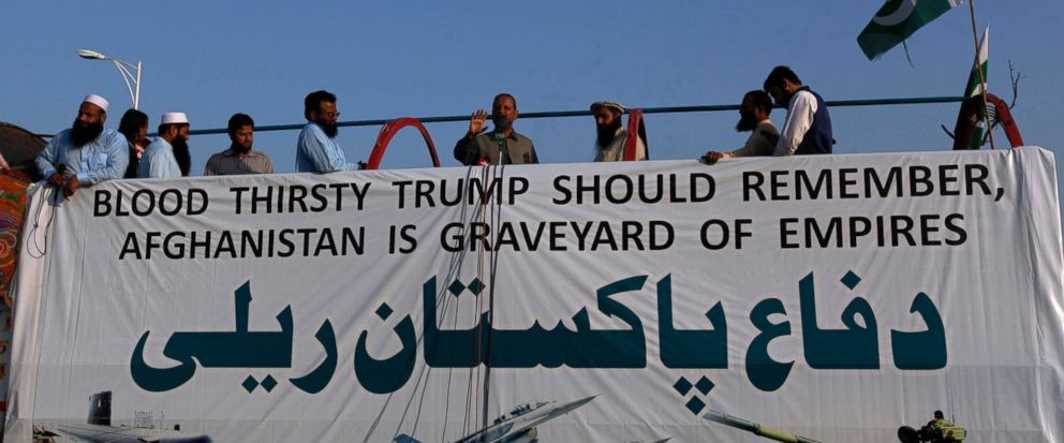
Pakistan’s Foreign Office statement has also said: “At the request of the government of Pakistan, the visit of the US delegation has been postponed until a mutually convenient time.”
Alice Wells had earlier visited Islamabad during the first week of this month. She was expected to discuss President Donald Trump’s new Afghanistan policy with Pakistani leadership. Ms Wells is also Washington’s acting Special Representative for Afghanistan.
During her earlier introductory trip she held meetings with Foreign Minister Khwaja Asif, Foreign Secretary Tehmina Janjua, Finance Minister and Chairman of the Joint Chiefs of Staff Committee. She also visited New Delhi during that trip.
Meanwhile, Prime Minister Shahid Khaqan Abbasi, during an interview with Bloomberg News in Karachi on Saturday, stressed the need for a political settlement in Afghanistan, saying that “like previous US plans President Donald Trump’s new strategy for the America’s longest-running war in that country will also fail.”
“From day one we have been saying very clearly the military strategy in Afghanistan has not worked and it will not work. We do not intend to allow anybody to fight Afghanistan’s battle on Pakistan’s soil” he said.
Foreign Minister Khwaja Muhammad Asif, while talking to Associated Press of Pakistan (APP) in Sialkot said that world should recognize the sacrifices of Pakistan to wipe out terrorism. “No country has done more than Pakistan to end terrorism and no country has suffered more than Pakistan,” he said. He further said “We are minutely reviewing the new US strategy about Afghanistan and South Asia”.
In another development US Commander in Afghanistan Gen John W. Nicholson, told Afghani media outlet Tolo News on Saturday that US “knows the Afghan Taliban leadership is in Quetta and Peshawar.” He also said that US military would continue to put pressure on Taliban sanctuaries inside and outside Afghanistan. He also claimed that the matter of alleged terrorist sanctuaries was being addressed “in private” by Pakistan and US governments.
Responding to Nicholson’s assertions, Pakistan army chief Gen Qamar Javed, while addressing a four nation meeting on Sunday in Dushanbe, Tajikistan, said that Pakistan had cleared its areas of terrorists. He also assured fullest cooperation to Afghanistan and said that Pakistan could not bring the Afghan war into Pakistan.
Representatives of China, Pakistan, Tajikistan and Afghanistan participated the meeting of Quadrilateral Counter Terrorism Coordination Mechanism (QCCM) in Tajikistan.Pakistan, Tajikistan and Afghanistan participated the meeting of Quadrilateral Counter Terrorism Coordination Mechanism (QCCM) in Tajikistan.
Earlier US State Department was also quoted by the media as having said that terrorists’ heavens existed on both sides of the Pak-Afghan border, demanding Pakistan eliminate them on its side of the border.
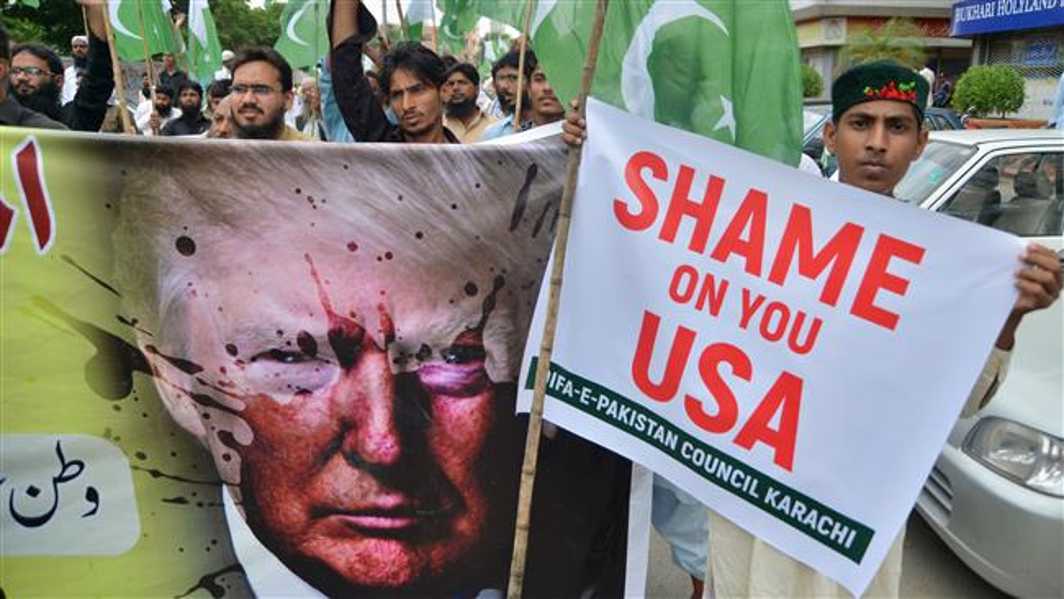
Meanwhile, Pakistani police used tear gas shells and batons on Sunday to disperse anti-US protesters in Karachi. A police officer while describing the incident said that police took action when a group of Shiite students tried to march toward the US consulate and an officer was injured in the process. A peaceful “Defense of Pakistan” rally also condemned US policy in Islamabad.
Asif Shahid, a Pakistani journalist writes from Washington, that rescheduling of Ms Wells’ visit was the second such request from Islamabad in less than a week. Earlier Pakistan had requested rescheduling of Foreign Minister Khwaja Asif visit to Washington, who was expected there on August 25.
He further writes that apparently a third visit of a US delegation led by senior white House National Security Council official Lisa Curtis will also be rescheduled. Ms Curtis has reportedly played key role in formulating new US strategy for South Asia.







Latest world news
Magnitude 7 earthquake strikes Tibet after floods
A magnitude 7 earthquake struck northern Tibet on Thursday, October 22. The tremor came weeks after deadly flash floods and landslides hit the mountainous region near the Nepal-China border. Initial reports did not confirm casualties or damage from the earthquake.


Latest world news
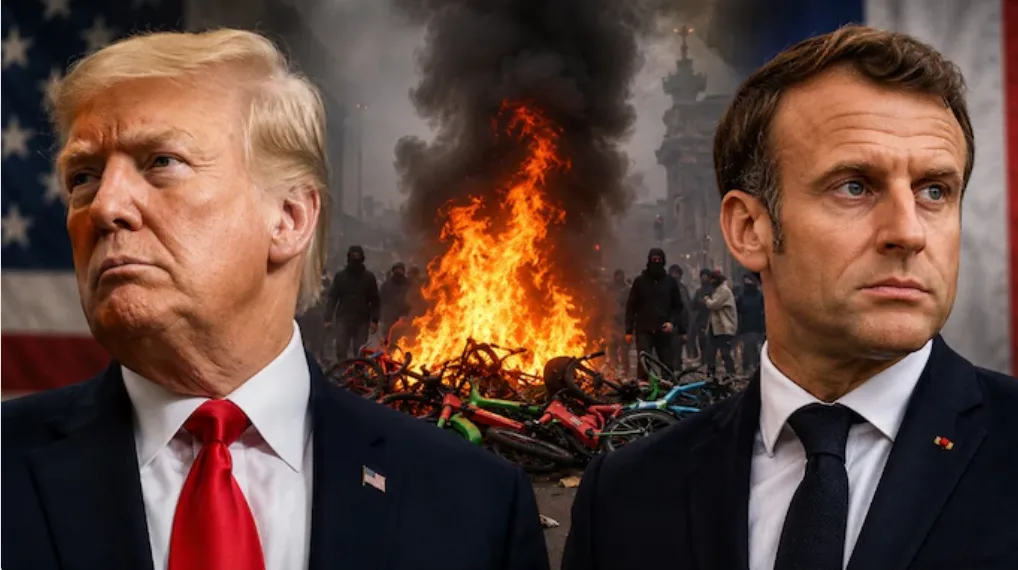
Macron rejects Trump’s immigration claims over France riots
French President Emmanuel Macron criticised Donald Trump and other foreign leaders over their comments on France’s recent unrest. Macron rejected claims that the country was being overrun by migrants and Islamists, calling such assertions false.
Latest world news
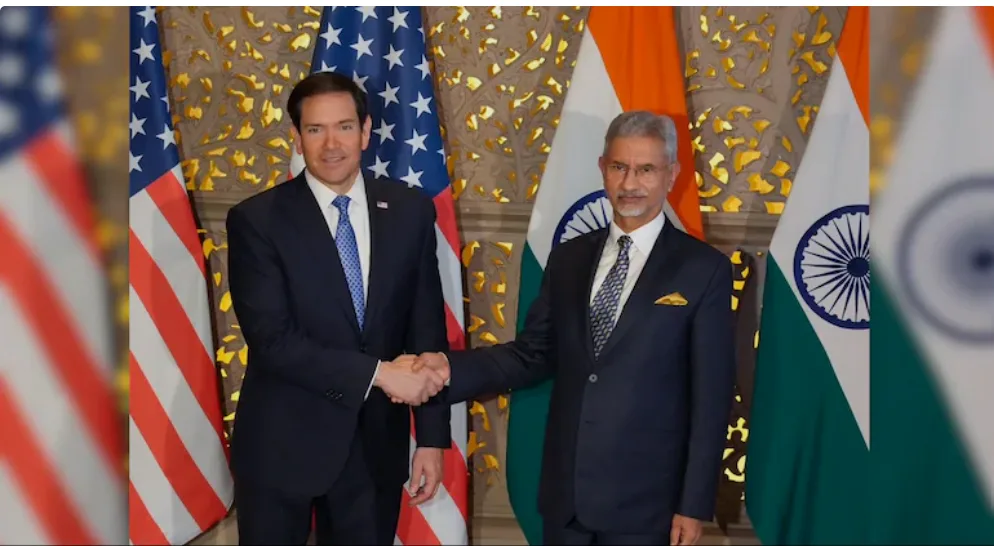
Marco Rubio says India and US share extraordinary alignment on key issues
US Secretary of State Marco Rubio said India and the United States share an extraordinary alignment on core issues, even though disagreements between the two countries may arise.

Punjab strike hits public services as 3 lakh employees and roadways workers protest

Two election commissioners complained against senior poll officer, RTI reveals

Om Prakash Mathur sworn in as Keralam Governor

Delhi High Court rejects Neha Bora’s plea against peace bond notice

PM Modi to inaugurate Rs 169-crore RBI data centre in Odisha on October 25

MEA responds after ITBP chief flags ongoing face-offs with China in Arunachal
Delhi High Court rejects Neha Bora’s plea against peace bond notice
PM Modi to inaugurate Rs 169-crore RBI data centre in Odisha on October 25
Om Prakash Mathur sworn in as Keralam Governor
Two election commissioners complained against senior poll officer, RTI reveals

Afghan Men Try To Hang With The Jet Engine Of The Aircraft in Kabul- Afghanistan News – Kabul News
Trending Top 10 News: 10000 Crore Fine on Flipkart, Apple to Launch Unique Feature, Hdfc Bank Job Ad

Trending Top 10 News: Nokia 6310, Apple sales, Bachpan ka Pyar Video Kid, Dainik Bhaskar IT Raid

Trending Top 10 News: Canada bans Indian flights, Rain in Delhi NCR, AIMIM Twitter hacked, Raj Kundra case

Trending Top 10 News: Shein India, Apple New Service, Pocket Oxygen, Oppo Launched New Phone
-
 India News18 hours ago
Punjab strike hits public services as 3 lakh employees and roadways workers protest
-
 India News18 hours ago
Two election commissioners complained against senior poll officer, RTI reveals
-
 India News7 hours ago
Om Prakash Mathur sworn in as Keralam Governor
-
 India News6 hours ago
Delhi High Court rejects Neha Bora’s plea against peace bond notice
-
 India News7 hours ago
PM Modi to inaugurate Rs 169-crore RBI data centre in Odisha on October 25
-
 India News5 hours ago
MEA responds after ITBP chief flags ongoing face-offs with China in Arunachal
