English हिन्दी
Connect with us

Latest world news

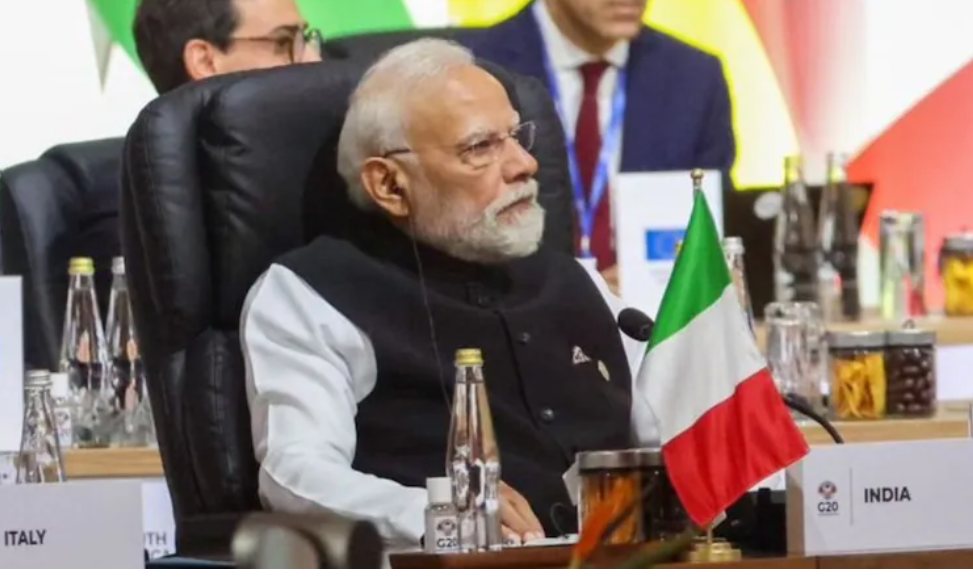
PM Modi proposes six global initiatives at G20 to boost inclusive development

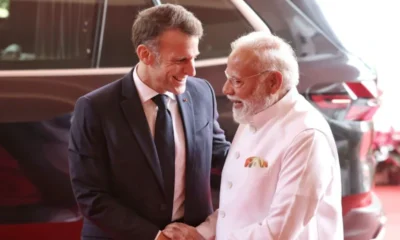
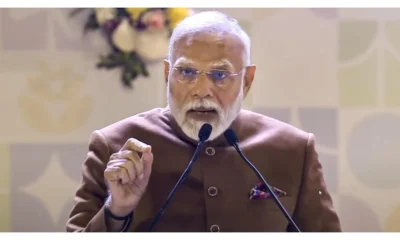
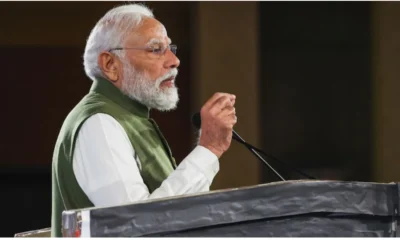
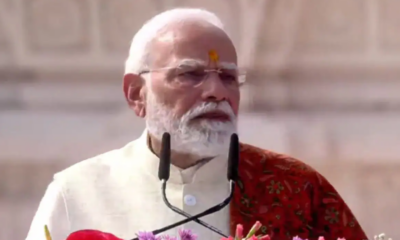
At the G20 Summit in Johannesburg, Prime Minister Narendra Modi proposed six global initiatives aimed at boosting sustainable development, skilling, health preparedness and supply chain resilience.

Published

on

Prime Minister Narendra Modi outlined six major global initiatives during the G20 Leaders’ Summit in Johannesburg, emphasising that India’s civilisational values can guide sustainable and inclusive global progress.

Six key initiatives for global growth

At the first session of the summit, the Prime Minister presented a set of proposals aimed at strengthening development cooperation, capacity building and climate-aligned progress. The initiatives he announced include a Global Traditional Knowledge Repository, Africa Skills Multiplier Initiative, Global Healthcare Response Team, Initiative on Countering the Drug-Terror Nexus, Open Satellite Data Partnership, and a Critical Minerals Circularity Initiative.

He said these efforts are designed to support all-round development while promoting solutions rooted in shared global wisdom.

Focus on traditional knowledge and Africa’s development

Explaining the concept of a Global Traditional Knowledge Repository, PM Modi said it would document sustainable living practices that have benefitted communities for generations, adding that India has a rich legacy in this field. The initiative aims to preserve and pass on this collective wisdom to future generations.

Reiterating India’s long-standing solidarity with Africa, Modi highlighted that the Africa Skills Multiplier Initiative will operate on a train-the-trainers model. The goal is to prepare one million certified trainers in Africa over the next decade, who will further skill young people across the continent.

Health emergencies, drug-terror nexus and satellite data

Proposing a G20 Global Healthcare Response Team, the Prime Minister said coordinated teams of medical experts from G20 nations could provide rapid assistance during global health crises and natural disasters.

He also called for a dedicated effort to combat the drug-terror nexus, warning that the spread of dangerous substances, including fentanyl, requires unified financial, governance and security mechanisms.

On the technological front, PM Modi pitched an Open Satellite Data Partnership under which space agencies of G20 nations can share satellite information with developing countries for sectors such as agriculture, fisheries and disaster management.

Push for circularity in critical minerals

To enhance supply chain security, the Prime Minister proposed a Critical Minerals Circularity Initiative, encouraging recycling, urban mining and second-life battery applications. He said such steps would help countries adopt cleaner and more resilient development pathways.

Latest world news

Anything less than US control of Greenland unacceptable, says Trump

Donald Trump has said American control of Greenland is vital for national security and missile defence, reigniting debate over the Arctic island’s strategic importance.

Published

on

donald-trump

US president Donald Trump has said that American control over Greenland is essential for the United States’ national security, describing it as “vital” for a planned air and missile defence system known as the Golden Dome.

In a social media post on Wednesday, Trump claimed the United States “needs Greenland for the purpose of National Security” and asserted that the Arctic island plays a key role in the proposed defence architecture. He further said that NATO would become “far more formidable and effective” if Greenland were under US control, adding that “anything less than that is unacceptable.”

Comments ahead of US-Denmark talks

Trump’s remarks came just hours before senior Danish and Greenlandic officials were scheduled to hold talks at the White House with US Vice President JD Vance and Secretary of State Marco Rubio. The discussions are focused on Greenland and broader security issues in the Arctic region.

Responding to US concerns, Denmark’s defence minister Troels Lund Poulsen said the country was increasing its military presence in Greenland. He also noted that Copenhagen was in discussions with allies regarding a stronger NATO footprint in the Arctic.

NATO role and strategic concerns

Trump said NATO “should be leading the way” in building the proposed multi-layer missile defence system. He warned that if the alliance did not act, rival powers could step in, stating that Russia or China might otherwise take the lead.

The US president has repeatedly spoken about taking control of Greenland, a strategically located and sparsely populated island that is an autonomous territory within the Kingdom of Denmark. His renewed comments underline continued US interest in the Arctic’s strategic importance amid rising global security competition.

Continue Reading

Latest world news

Iran set to execute anti-Khamenei protester as Trump warns of strong US action

Iran is preparing to execute a protester linked to anti-regime demonstrations as US President Donald Trump warns of strong action amid a deadly crackdown.

Published

on

unrest in iran

Iran is reportedly preparing to execute an anti-government protester on Wednesday, triggering sharp warnings from US President Donald Trump, who said Washington would take “very strong action” if the hanging goes ahead. The development comes amid a sweeping crackdown on nationwide protests that rights groups say has killed more than 2,000 people.

According to human rights groups, 26-year-old Erfan Soltani, arrested last week during protests in Karaj near Tehran, has been sentenced to death and faces execution without a proper trial. Iranian authorities have not publicly detailed the charges or judicial process in his case.

Trump urges Iranians to keep protesting

Trump has publicly encouraged Iranians to continue protesting, saying “help is on its way”, while warning Tehran against executing demonstrators. Speaking to media, the US president said the United States would respond forcefully if Iran began hanging protesters arrested during the unrest.

Earlier, Trump posted messages urging people in Iran to continue demonstrations and said he had cancelled meetings with Iranian officials until the killing of protesters stops. He did not specify what assistance the US might provide or which meetings had been cancelled.

Iranian prosecutors have reportedly threatened capital punishment under charges of “moharebeh”, or waging war against God, for some detainees linked to the protests.

Rising death toll and reports from morgues

Rights groups say the crackdown has been one of the deadliest in recent years. According to activist organisations, the death toll has crossed 2,500, including civilians and members of the security forces. Iranian officials, however, have blamed what they described as “terrorists” for the deaths and have not provided a clear breakdown.

Videos circulating on social media show bodies lined up at the Kahrizak mortuary near Tehran, wrapped in black bags, as families search for missing relatives. Authorities have declared national mourning for security personnel killed during the unrest and announced mass funeral ceremonies in the capital.

Internet blackout and Starlink access

Iran has imposed a widespread internet blackout, now extending beyond five days, limiting communication and information flow. Amid the restrictions, SpaceX has reportedly waived subscription fees for its Starlink satellite service in Iran, allowing users with receivers to access the internet without payment, according to groups working to restore connectivity.

Some international phone links were partially restored, but reports indicate services remain unstable and limited.

Political tensions and international reaction

Iranian leaders have insisted that control has been restored following days of protests described as one of the biggest challenges to the clerical leadership since the 1979 revolution. Supreme Leader Ayatollah Ali Khamenei has hailed pro-government rallies as evidence that the protest movement has failed.

Senior Iranian officials have accused Trump and Israeli leadership of responsibility for violence in Iran. Meanwhile, Western leaders have condemned the use of force against protesters, with some warning that sustained repression could further destabilise the country.

Analysts note that while the protests represent a serious challenge to Iran’s leadership, the government retains powerful security and enforcement mechanisms, making the outcome uncertain.

Continue Reading

Latest world news

Nearly 2,000 killed as Iran acknowledges high death toll in nationwide protests

Iran has for the first time acknowledged that nearly 2,000 people were killed during nationwide protests sparked by economic distress, as authorities continue a strict security crackdown.

Published

on

unrest in iran

Iran has acknowledged for the first time that close to 2,000 people, including members of the security forces, have been killed during two weeks of widespread protests across the country, according to an Iranian official.

The official said the deaths occurred amid violent clashes during nationwide unrest that erupted over worsening economic conditions. The figure marks the highest acknowledged toll so far from the current wave of demonstrations, which has posed one of the most serious internal challenges to Iran’s leadership in recent years.

Official blames “terrorists” for violence

According to the official, those described as “terrorists” were responsible for the deaths of both protesters and security personnel. However, no detailed breakdown was provided regarding how many civilians or security forces were killed.

Iran’s clerical leadership has accused the United States and Israel of instigating unrest in the country, alleging that external actors exploited public anger and escalated the demonstrations into violent confrontations.

Dual approach to protests

Authorities have attempted to balance their response by distinguishing between what they describe as legitimate protests over economic hardship and acts of violence. While acknowledging public frustration over living conditions, the government has simultaneously enforced a strict security crackdown to contain the unrest.

The protests are reported to be the most significant challenge to the Iranian establishment in at least three years and come at a time of heightened international pressure following military strikes by the US and Israel last year.

Rights groups cite arrests and casualties

Human rights organisations had earlier reported that hundreds of people were killed during the protests and said thousands were detained as security forces moved to suppress demonstrations across several cities.

The flow of information from inside Iran has been severely restricted due to communications curbs, including recent internet blackouts, making independent verification difficult.

Clashes captured on video

Despite restrictions, multiple videos circulating online have shown intense nighttime clashes between demonstrators and security forces. Some of these visuals, verified by media, depict gunfire, burning vehicles, and damage to buildings, highlighting the scale of violence during the unrest.

Continue Reading

Trending

© Copyright 2022 APNLIVE.com