English हिन्दी
Connect with us

Latest world news

Saudi Arabia: Qatar Not Allowing Riyadh for Lifting Hajj Pilgrims

Published

on

Saudi Arabia: Qatar Not Allowing Riyadh for Lifting Hajj Pilgrims
[vc_row][vc_column][vc_column_text]Experts believe crisis far from over

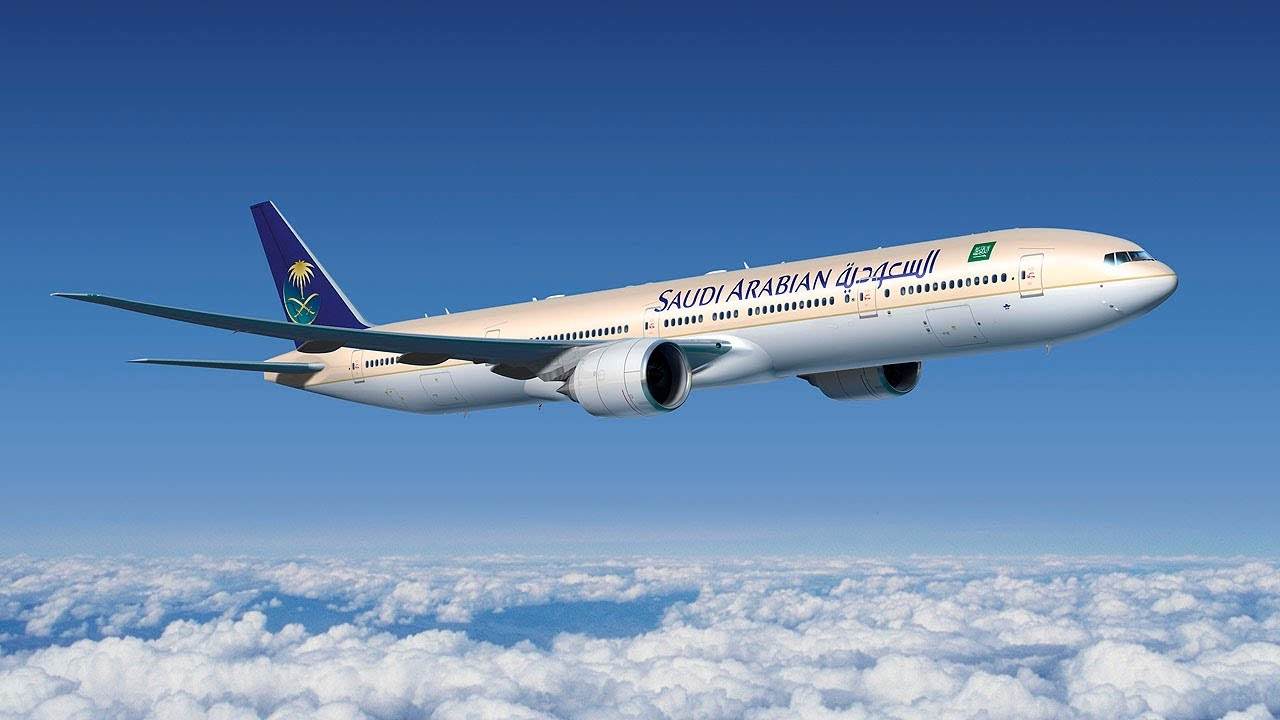
Saudi Arabia, which led three other countries in severing ties with Qatar in early June this year, is now complaining Doha of not allowing its plane to lift Qatari pilgrims for performing Hajj. King Salman has recently offered free transportation of Qatari citizens by their official carrier Saudi Airlines.

According to Saudi Press Agency, Saleh al-Jasser, the Director General of the airline, said on Sunday that their aircraft have not been given permission to land in Doha to pick up pilgrims. He further elaborated saying, “Qatari authorities have not allowed the aircraft to land as it did not have the right paperwork, although the paperwork was filed days ago.”

Earlier on Wednesday King Salman had ordered the dispatch of a Saudi Arabia Airlines plane to fly Qatari pilgrims to Jeddah at his own expense. Riyadh had also announced re-opening of its land borders with Qatar to allow pilgrims’ access to Mecca. However, not a single convoy has registered movement on the immigration point till date. The Hajj will be performed between August 30 and September 4 this year. All pilgrims should be present in the kingdom during this time.

Aljazeera reports that Qatar’s Civil Aviation Authority (CAA) has denied Saudi claim of refusing permission to Saudi Airlines to fly Qatari Hajj pilgrims. Qatari News Agency says that Saudi Airlines was advised to coordinate the request with the Ministry of Islamic Affairs through the Qatari Hajj Delegation. The two offices function under Doha government’s supervision. CAA says that their response was in accordance with the procedures followed in the past.

However, Qatar hailed the Saudi move, but stressed that it was politically motivated and voiced concern about the safety of its citizens in Saudi Arabia during the Hajj pilgrimage.

Since the blockade Doha has not fulfilled any of  the13 demands put forwarded by Saudi led quartet. They included severing ties with Iran, closing Turkish army base in its territory and shutting down Aljazeera news network. Qatar has not only denied supporting terrorism, instead Qatar Special Envoy Mutlaq Majed al-Qahtani, in an opinion piece recently published in Wall Street Journal has  recalled  that fifteen of the 19 hijackers in 9/11 attacks were Saudis. He has also alleged that thousands of Saudi citizens have taken up arms to join Islamic State (IS) and other radical groups.

Saudi Arabia, Bahrain, Egypt, and the UAE had severed their diplomatic ties and transport links with Qatar on June 5. They advised their citizens to return from Qatar and also asked Qataris to leave from their respective countries within 48 hours.

The four boycotting countries also closed their airspace for Qatar Airways. Since then the airline has stopped using their airspace by rerouting their flights through alternative paths including Iranian skies.

In a bid to relax the Saudi led siege, Qatar has recently announced to allow citizens of 80 countries, including India, to travel to their country without obtaining prior visa.

It would be interesting to note that a little known Sheikh Abdullah Bin Ali Al-Thani of Qatar was recently welcomed in Riyadh by Crown Prince Mohammd bin Salman and then jetted off to Morocco, where Saudi King Salman hosted him at his vacation spot in Tangir. However Qatari government said that he was on a personal visit while some media outlets, considered to be close to Riyadh, portrayed it as a triumphant diplomatic effort.

According to Saudi owned Al-Arabia news network, the Sheikh is a scion of a ruling branch that was in power for decades until 1972. His brother Ahmad was deposed by Sheikh’s Tamim’s grandfather. The little known Sheikh has written on his twitter handle, “The king has honored me by accepting my mediation on behalf of my people in Qatar.” He has become social media celebrity attracting 250,000 followers within three days.

The visit of the Qatari prince was followed by Riyadh’s announcement of opening borders with Qatar and offered to dispatch planes at its own expanses.

Meanwhile, Al-Bayan, a Dubai based daily, quoted political analyst Abdulkhaleq Abdulla saying that promoting Sheikh Abdullah Bin Ali Al-Thani is probably part of a plan to add pressure on Qatari ruler Sheikh Tamim Bin Hamad Al Thani, who has refused to capitulate to the quartet’s 13 conditions for ending the feud.

Abdulkhaleq Abdullah further said, “Saudi Arabia has many pressure tools that it hasn’t used until now and this is one of them.” He denied that Saudi led alliance is currently pursuing a policy to change the Qatari leadership. Yet should Saudi Arabia decide that is needed, it can mobilize a support network within Qatari society and the ruling family “to spur a palace coup,” he said.

Meanwhile Andreas Krieg, a lecturer at King’s College in London has said that sheikh is a London based businessman with commercial interests in the Gulf, but lacks public support that will help propel him to power. His emergence serves as a way of telling Qatari leaders and global powers that the crisis is far from over.

So far several mediation efforts have failed in resolving Qatar crisis. Kuwait’s emir has tried for mediation while US Secretary of State Rex Tillerson, and foreign ministers of France and Germany have also visited the region.[/vc_column_text][/vc_column][/vc_row]

Latest world news

Israel-Lebanon ceasefire to begin within hours as Trump announces 10-day truce

Israel and Lebanon may begin a 10-day ceasefire within hours after a proposal announced by Donald Trump amid ongoing tensions.

Published

on

Donald Trump

A temporary halt in hostilities between Israel and Lebanon is expected to begin within hours after US President Donald Trump announced a proposed 10-day ceasefire between the two sides, amid ongoing tensions in the region.

According to his statement, the ceasefire is likely to take effect around 5 p.m. Eastern Time, although independent confirmation from both sides is still awaited.

The development follows discussions involving Israeli Prime Minister Benjamin Netanyahu and Lebanese President Joseph Aoun, with mediation efforts led by the United States.

Officials indicated that the proposed truce is aimed at creating a limited window to reduce violence and potentially pave the way for broader diplomatic engagement. The situation along the Israel-Lebanon border has remained tense in recent weeks, with escalation linked to the activities of Hezbollah.

Diplomatic efforts have intensified in recent days, with discussions facilitated by the United States, including the involvement of US Secretary of State Marco Rubio. However, details of the agreement and the extent of coordination between the parties remain unclear.

The situation remains fluid, and the success of the ceasefire will depend on adherence by all sides involved. The conflict has already led to significant humanitarian and geopolitical consequences, including displacement and disruption in affected areas.

While the proposed ceasefire is being seen as an important step toward de-escalation, broader negotiations involving regional stakeholders are expected to be necessary for any lasting resolution.

Continue Reading

Latest world news

US ends oil sanctions waiver for Iran and Russia, impact likely on India’s energy imports

The US decision to end the Iran and Russia oil waiver may impact India’s oil imports, fuel prices and global energy markets.

Published

on

US oil tanker

The United States has decided not to extend a temporary sanctions waiver that allowed limited trade in Iranian and Russian oil, marking a shift towards stricter enforcement of economic restrictions.

The waiver, introduced in March 2026, had permitted the sale of oil already loaded on ships to stabilise global supply during heightened geopolitical tensions. However, it is now set to expire around mid-April without renewal.

US officials have indicated that the move is part of a broader strategy to increase pressure on both Iran and Russia amid ongoing conflicts and geopolitical tensions.

What the waiver did and why it mattered

The short-term waiver allowed millions of barrels of oil—estimated at around 140 million barrels—to enter global markets, helping ease supply shortages and prevent sharp price spikes.

It also enabled countries like India to purchase discounted crude oil from Russia and resume limited imports from Iran after years of restrictions.

Impact on India

India, one of the world’s largest oil importers, is expected to feel the impact of the decision in several ways:

  • Reduced access to discounted oil
    India had been buying cheaper Russian crude and recently resumed Iranian imports under the waiver. Its end may limit these options.
  • Potential rise in fuel costs
    With fewer discounted supplies available, India may need to rely more on costlier sources, which could increase domestic fuel prices.
  • Supply diversification pressure
    India may need to explore alternative suppliers in the Middle East, Africa, or the US to maintain energy security.
  • Geopolitical balancing challenge
    The move adds pressure on India to align with US sanctions while managing its own economic interests.

Global energy market concerns

The end of the waiver comes at a time when global oil markets are already under stress due to conflict in West Asia and disruptions in key routes like the Strait of Hormuz.

Analysts warn that tightening sanctions could:

  • Reduce global oil supply
  • Increase price volatility
  • Intensify competition among major buyers like India and China

Bigger picture

The US decision reflects a broader shift from temporary relief measures to stricter enforcement of sanctions, even if it risks tightening global energy markets.

For India, the development highlights a recurring challenge—balancing affordable energy access with geopolitical realities.

Continue Reading

Latest world news

Sanctioned tanker fails to breach US blockade, turns back near Strait of Hormuz

A US-sanctioned tanker failed to cross the Hormuz blockade and turned back, underscoring rising tensions and disruption in global shipping routes.

Published

on

A US-sanctioned oil tanker failed to break through a newly imposed American naval blockade and was forced to turn back near the Strait of Hormuz, highlighting growing tensions in the region.

The vessel, identified as the Rich Starry, reversed its course after attempting to exit the Gulf, according to shipping data. The development comes just days after the United States enforced restrictions on ships linked to Iranian ports.

The blockade was announced by Donald Trump following the collapse of recent diplomatic talks with Iran. The move aims to restrict maritime traffic associated with Iranian trade.

Officials said that during the first 24 hours of enforcement, no vessel successfully crossed the blockade. Several ships, including the sanctioned tanker, complied with instructions from US forces and turned back toward regional waters.

The tanker is reported to be linked to a Chinese company previously sanctioned for dealing with Iran. It was carrying a cargo of methanol loaded from the United Arab Emirates at the time of the incident.

The situation underscores the rising risks in one of the world’s most critical oil transit routes. The Strait of Hormuz typically handles a significant share of global energy shipments, but traffic has sharply declined due to ongoing geopolitical tensions.

The blockade, which applies specifically to vessels travelling to or from Iranian ports, has added further uncertainty for shipping companies, insurers and global energy markets.

Continue Reading

Trending

© Copyright 2022 APNLIVE.com