English हिन्दी
Connect with us

Latest world news

Trump-Putin Tango

Published

on

The Trump Putin Tango

[vc_row][vc_column][vc_column_text]It’s the issue that’s gripping America

By Kenneth Tiven in Washington

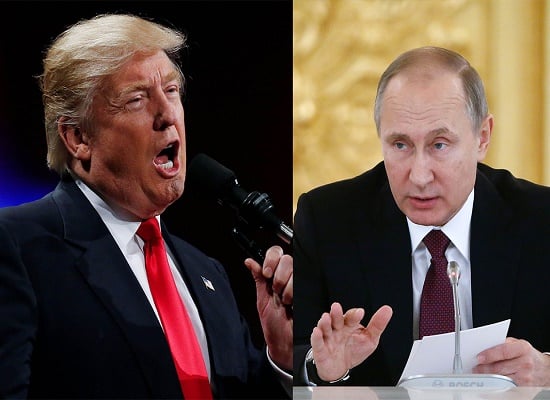
US President-elect Donald Trump has zero experience in his adult life with management by consensus, which underpins most democratic societies. He is more at home as the Oligarch, the Owner, the Bestower. In this respect, he has not attempted to minimize his respect for Russian President Vladimir Putin as an authoritarian leader. Trump claimed Putin was a better leader than President Barack Obama, and I am sure he believes that. During the Cold War, the US and the Soviet Union engaged in a great deal of spying on each other. The U-2 spy plane the Russians shot down was a victory for them. The technical expertise involved in American navy submarines parking over undersea cables near Vladivostok in southern Siberia recording all naval communications between the pacific command and Moscow was unknown to the Russians. Similarly, undersea spying revealed how Russia quieted its Juliette class diesel submarines, a discovery that led to catching an American spying for Russia, James Walker.[/vc_column_text][vc_column_text]That the internet makes electronic spying a more obvious choice for effort is not a surprise. The surprise is that Trump believes he can cast enough doubt about the conclusion of the intelligence agencies to make the matter go away. That it has happened is believed conclusively proven by the intelligence agencies, who are not about to give away how they know it. Trump can believe if he wants that it made no difference in the election. But he is missing an essential point: all intelligence is information, but not all information is intelligence. If it hasn’t been analyzed, processed or exploited in some form, information is not intelligence. That’s the function of intelligence organisations — to task, collect, process, exploit and disseminate information that then becomes useful due to its timeliness, accuracy and relevancy to whatever operation it is in regards to (and is because of this process now deemed classified information). This is before considering if the information was hacked. The election is over and Trump is now about to be the leader of the free world. His behavior in this matter suggests to many people and leaders around the globe that he is ill-suited to deal with authoritarian leadership in nations that want to see the US slip into second-rate status in the global community.[/vc_column_text][vc_column_text]The Vlad Connection

Professional political leadership in the US and Russia makes it their business to know a great deal about each other and their people. Imagine the surprise in the Kremlin in the summer of 2015 when the Trump phenomenon began to play in the ultra-long American presidential process. One should not underplay the skill and depth of research in both capital cities when it comes to knowing things. Facts are more important than ideology. We should assume that within a day or two of asking about Trump,  Vladimir Putin would have a list of every visit Trump ever made to Russia or a former Soviet satellite nation and with whom he has business dealings. Incidentally, Trump is married to a Slovenian woman, Melania. Google might have supplied some facts they did not know about his financial problems and debts, his business having become largely as a licensor of his “rich and terrific” name for buildings.

Although many revelations and some revulsion with Trump’s tweets seemed to not make an impression on a block of American voters, the reaction at the Kremlin was probably different. This is not an ordinary American politician, Putin must have thought. And research supported the notion that he was that special kind of capitalist–not just arrogant but claiming to be rich when in truth he was carrying as much as a billion dollars in debt and not paying US taxes. Vladimir Putin, as with Trump, sees opportunity where most would see conflict. How much does he owe “us”, Putin might have asked, meaning Russian oligarchs always eager to launder money offshore.

We know in his own words and in his ghost-written books that Donald Trump has spent his adult life bullying his way to notoriety in New York City real estate circles as a man of taste, wisdom and business success. In a stream of self-delivered superlatives, he has generally managed to blame his bankruptcies on others or circumstances beyond his control. His long involvement with politicians in New York City had been agnostic. He’d demand tax abatements and zoning favours from whoever was in office. After the election of Barack Obama, Trump took an unexpected interest in the issue of Obama’s birth in Hawaii. In short order, he made himself head birther (in American politics, a birther is a believer that Obama was not born in that country, and therefore, ineligible for presidency). President Obama ridiculed him at a Washington dinner in 2013.[/vc_column_text][vc_column_text]But the failure of his over-reaching efforts in gambling casinos made it harder to do real estate deals. Few American banks would loan to him. Most of his borrowings, reported by Forbes magazine and others, have been with European banks and Russian oligarchs awash in dollars. What better way to avenge the Obama slights than to claim that job? Building on the animosities that underpinned the birther and Tea Party movements, Trump expanded his target to include immigrants, especially Mexicans. He bullied and ridiculed the other 16 Republican candidates to win the primaries with less than 50 percent of the vote. In the presidential race, he didn’t get 50 percent either. But in the seemingly arcane nature of 240-year-old US election rules, he still won the presidency.

The writer has been a journalist in American media for more than 50 years, including stints at The Washington Post, TV network news with NBC, ABC and CNN and was involved in the start up of Aaj Tak and continues to work with several Indian news channels[/vc_column_text][/vc_column][/vc_row]

Latest world news

Trump approves nearly $9 billion weapons sales to Israel, UAE and other allies amid Iran tensions

The US has fast-tracked nearly $9 billion in weapons sales to Israel, UAE and other allies as tensions linked to the Iran conflict continue despite a fragile ceasefire.

Published

on

Donald Trump statement

The United States has approved nearly $9 billion worth of weapons sales to key Middle Eastern allies, including Israel and the United Arab Emirates, amid ongoing tensions linked to the Iran conflict.

The decision, cleared by the administration of Donald Trump, includes expedited military transfers to Israel, the UAE, Qatar, and Kuwait. The approvals were granted under an emergency provision, allowing authorities to bypass the usual congressional review process.

Emergency clearance amid ongoing conflict

Officials said the move was necessary due to the evolving security situation in the region, particularly as the conflict involving Iran continues despite a fragile ceasefire. The war, which began earlier in 2026, has heightened instability across West Asia.

US Secretary of State Marco Rubio invoked emergency powers to fast-track the deals, citing urgent defence requirements for allied nations.

What the arms package includes

The approved package includes a mix of advanced defence systems and precision weapons:

  • Patriot missile defence replenishments worth over $4 billion for Qatar
  • Precision-guided weapon systems for multiple countries
  • Integrated battle command systems for Kuwait
  • Additional advanced weapons support for Israel and the UAE

The total value of these deals is estimated at over $8.6 billion, often rounded to nearly $9 billion.

Timing linked to iran war

The approval comes nearly nine weeks into the conflict involving the US, Israel, and Iran, with tensions still high despite a ceasefire that has been in place for several weeks.

Analysts note that the move signals continued US military backing for its regional allies, particularly in strengthening air defence and precision strike capabilities during uncertain conditions.

Criticism and concerns

The decision to bypass congressional oversight has drawn criticism from some quarters, particularly over transparency and the broader implications of increasing arms supplies in a conflict-prone region.

Continue Reading

Latest world news

Trump and Putin hold over 90-minute call, discuss Iran war and Ukraine conflict

Trump and Putin held a 90-minute call focusing on Iran tensions and the Ukraine conflict, with warnings over escalation and talks of ceasefire.

Published

on

Vladimir Putin and Donald Trump

US President Donald Trump and Russian President Vladimir Putin held a phone conversation lasting more than 90 minutes, focusing on escalating tensions in the Middle East and the ongoing war in Ukraine.

According to official statements, the discussion was described as “frank and businesslike,” with both leaders addressing key global security concerns. A major part of the conversation centred on the situation involving Iran and developments in the Persian Gulf.

Putin supported Trump’s decision to extend the ceasefire related to Iran, suggesting that continued restraint could create space for negotiations and help stabilise the region. However, he also issued a strong warning, stating that renewed military action by the United States or Israel could lead to “extremely damaging consequences” not only for Iran but for the wider international community.

Ukraine conflict also discussed

The leaders also discussed the ongoing war in Ukraine, which has continued for several years since Russia’s invasion in 2022. During the call, there were indications of potential efforts toward a temporary ceasefire, although no final agreement has been confirmed.

Reports suggest that the idea of a short-term pause in hostilities was explored, possibly linked to upcoming symbolic dates, but significant differences between the parties remain unresolved.

Focus on diplomacy amid global tensions

The call highlights ongoing diplomatic engagement between Washington and Moscow at a time of heightened geopolitical tensions involving both the Middle East and Eastern Europe.

While both sides acknowledged the importance of dialogue, the situation on the ground in both conflict zones remains complex, with no immediate resolution in sight.

Continue Reading

Latest world news

Trump rejects Iran peace plan as tensions rise, Tehran signals military readiness

Trump rejects Iran’s peace plan, keeping focus on nuclear concerns as Tehran signals readiness and tensions continue to rise.

Published

on

Donald Trump statement

U.S. President Donald Trump has rejected a proposal from Iran aimed at easing ongoing tensions, signaling a continued deadlock between the two countries.

The proposal reportedly included steps linked to easing restrictions around the Strait of Hormuz, a key global oil route. However, the United States declined the offer, maintaining that any agreement must address concerns related to Iran’s nuclear programme.

Washington has made it clear that resolving nuclear issues remains a priority and that partial measures without broader commitments will not be accepted.

Nuclear issue remains central

The U.S. position continues to focus on preventing Iran from advancing its nuclear capabilities. Officials believe that without a comprehensive agreement, temporary arrangements could delay a long-term resolution.

The rejection of the proposal indicates that negotiations remain stalled, with both sides holding firm on key demands.

Iran issues warning

Following the rejection, Iranian officials have issued strong statements, indicating readiness to respond if pressure from the U.S. continues.

Reports suggest that Iran has asserted its military preparedness, warning that any escalation could lead to serious consequences. The remarks reflect growing tensions as diplomatic efforts struggle to produce results.

Rising geopolitical tension

The situation remains volatile, with both countries engaged in a prolonged standoff. Measures such as restrictions on trade routes and strategic pressure points continue to impact the broader region.

The Strait of Hormuz remains a critical factor in the conflict, given its importance for global energy supplies.

Outlook uncertain

With no immediate breakthrough in sight, tensions between the United States and Iran are expected to persist. The lack of agreement on key issues, particularly the nuclear programme, continues to hinder progress toward de-escalation.

Continue Reading

Trending

© Copyright 2022 APNLIVE.com