
Latest world news
Trump want money from Saudi Arabia for staying US forces in Syria


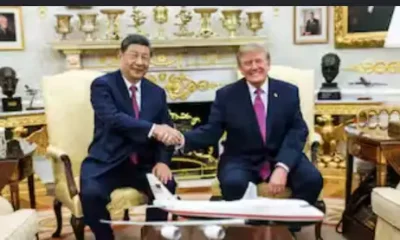
US President Donald Trump, who was recently seen with Saudi Crown Prince Mohammed Bin Salman in White House describing huge defence deals with the kingdom, has now said that Saudi Arabia might have to pay if it wants continuing US presence in Syria.
Trump had recently announced his intention of withdrawing US forces “very soon” from Syria after “completion of mission” against IS.
Trump has reiterated calls to end US presence in the region, after he made similar statements at an event in Ohio last week. While addressing a joint press conference with three leaders of Baltic countries, he said, “I want to get out. I want to bring our troops back home. We do a lot of things in this country, we do them for a lot of reasons, but it is very costly for our country, and it helps other countries a hell of a lot more than it helps us.”
Trump also railed against ongoing US intervention in the Middle East and its growing cost. He was quoted saying, “Think of it, $7 trillion over a 17-year period. We have nothing. Nothing except death and destruction. It’s a horrible thing. So it is time. It is time.”
“We were very successful against ISIL. We’ll be successful against anybody militarily. But sometimes it is time to come back home. And we’re thinking about that very seriously.”
 Saudi Crown Prince MBS has recently told Time Magazine that US should maintain its military presence in Syria at least in the near future to prevent “Iranian expansion” in the war ravaged nation.
On Tuesday, Trump, said, “We’ve almost completed that task [of defeating ISIL] and we’ll be making a determination very quickly, in coordination with others in the area, as to what we’ll do.”
He further said, “Saudi Arabia is very interested in our decision, and I said, ‘Well, you know, you want us to stay, maybe you’re going to have to pay’.”
According to reports Trump spoke on Monday with the King Salman bin Abdulaziz of Saudi Arabia, over the phone to discuss a range of regional issues, including a peace plan between Israelis and Palestinians and opportunities to strengthen the American-Saudi strategic partnership.
Read More: Trump’s U turn: US forces to pull out of Syria soon
However, after the telephonic conversation between King Salman and President Trump White House statement, released on Tuesday, did not mention any discussion about Saudi Arabia’s boosting funding for US military efforts in Syria.
Saudi Arabia’s most powerful Crown Prince Mohammed Bin Salman is currently visiting US for three weeks. Besides meeting President Donald Trump, he has widely visited different states mainly to attract investment for implementing his Vision 2030. He has also met with IT and Bollywood personalities for transforming the conventional image of his country.
In one of his interviews with The Atlantic magazine, Bin Salman was quoted saying “Israelis and Palestinians have the right to their lands”. This is considered by several observers that it was a step ahead in recognising Israel as a state, a big shift in Kingdom’s foreign policy.
Trump’s remarks about withdrawal from Syria were contradictory to those of Defense Secretary Jim Mattis and former Secretary of State Rex Tillerson who had pledged an enduring presence in Syria last year.
Meanwhile senior US administration official has told NBC that Trump has reluctantly agreed give the effort more time when advisors reminded that he has spoken against setting deadlines in foreign military operations in the past.
Read More: Syrian forces clear 90 per cent of Eastern Ghouta
Some US officials say Trump has been persuaded not to withdraw troops from Syria immediately despite his recent announcement that US would “be coming out of Syria very soon.”
The Obama administration launched a war in 2014 against the Daesh (IS) after the group flourished in the chaos of the Syrian civil. However, US has been supporting anti-Bashar al-Assad groups and the Kurdish separatists demanding establishment of Kurdistan in the country.
Meanwhile Al-Jazeera’s senior political analyst Marwan Bishara has said that US leader is taking advantage of tension in the Middle East, He said that US President is “milking Gulf countries” and exploiting tensions in the Middle East to bolster its arms race.
Bishara said that US was acting like a “mercenary” and putting itself forward for the service whoever was willing to pay highest. He has alleged that US was also benefiting financially from both sides of the ongoing Gulf crisis, erupted early June last year when Saudi-let quartet, including UAE, Bahrain and Egypt suddenly severed ties with Qatar. He further said “He’s done that with UAE, with Qatar, with Saudi Arabia, with Kuwait and so forth.”






Latest world news
S Jaishankar says India is a natural option for Russia amid Europe tensions
External Affairs Minister S Jaishankar said India remained a natural option for Russia as Moscow increasingly turned towards Asia amid strained relations with Europe. He highlighted the continuity of India-Russia ties and their significance for the balance of power in Asia.


Latest world news
Putin praises PM Modi, says he has very good ideas on Ukraine war
Russian President Vladimir Putin has praised Prime Minister Narendra Modi for repeatedly raising the need to end the Ukraine war, describing his ideas for a settlement as “very good”.

Latest world news
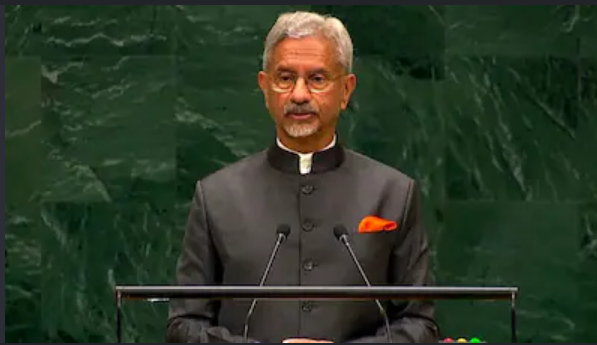
S Jaishankar calls Pakistan a “serial practitioner of terrorism” at UN
S Jaishankar criticised Pakistan at the UN General Assembly, referring to a “serial practitioner of terrorism” and warning against attempts to normalise terrorism.

CJP leaders Saurav Das, Ashutosh Ranka, Ajinkya Shinde sent to 5-day judicial custody

S Jaishankar says India is a natural option for Russia amid Europe tensions

PM Modi speaks to Mark Carney as India and Canada push to strengthen ties

Meerut murder: Muskaan Rastogi and Sahil Shukla get death sentence

Rahul Gandhi joins India Gate protest by Ankita Bhandari’s parents

Supreme Court questions EC over missing records in Sringeri election dispute
Rahul Gandhi joins India Gate protest by Ankita Bhandari’s parents
Meerut murder: Muskaan Rastogi and Sahil Shukla get death sentence
PM Modi speaks to Mark Carney as India and Canada push to strengthen ties
S Jaishankar says India is a natural option for Russia amid Europe tensions

Afghan Men Try To Hang With The Jet Engine Of The Aircraft in Kabul- Afghanistan News – Kabul News
Trending Top 10 News: 10000 Crore Fine on Flipkart, Apple to Launch Unique Feature, Hdfc Bank Job Ad

Trending Top 10 News: Nokia 6310, Apple sales, Bachpan ka Pyar Video Kid, Dainik Bhaskar IT Raid

Trending Top 10 News: Canada bans Indian flights, Rain in Delhi NCR, AIMIM Twitter hacked, Raj Kundra case

Trending Top 10 News: Shein India, Apple New Service, Pocket Oxygen, Oppo Launched New Phone
-
 India News23 hours ago
CJP leaders Saurav Das, Ashutosh Ranka, Ajinkya Shinde sent to 5-day judicial custody
-
 Latest world news23 hours ago
S Jaishankar says India is a natural option for Russia amid Europe tensions
-
 India News22 hours ago
PM Modi speaks to Mark Carney as India and Canada push to strengthen ties
-
 India News12 hours ago
Meerut murder: Muskaan Rastogi and Sahil Shukla get death sentence
-
 India News11 hours ago
Rahul Gandhi joins India Gate protest by Ankita Bhandari’s parents
-
 India News11 hours ago
Supreme Court questions EC over missing records in Sringeri election dispute
