English हिन्दी
Connect with us

India News

India’s Economy | Economy System in India

India has risen as the quickest developing significant economy on the planet and is relied upon to be one of the best three financial forces on the planet throughout the following 10-15 years, sponsored by its hearty vote based system and solid associations.

Published

on

indian economy

india has risen as the quickest developing significant economy on the planet and is relied upon to be one of the best three financial forces on the planet throughout the following 10-15 years, sponsored by its hearty vote based system and solid associations.
Market size

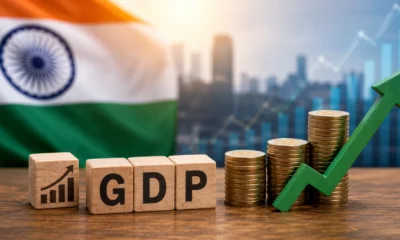
India’s (GDP) (at steady 2011-12 costs) was assessed to be Rs 145.65 lakh crore (US$ 2.06 trillion) for 2019-20, becoming 4.2 percent over the earlier year.

India held its situation as the third biggest beginning up base on the planet with more than 8,900-9,300 new businesses as 1,300 new companies got consolidated in 2019 as per a report by NASSCOM. India likewise saw the expansion of 7 unicorns in 2019 (till August 2019), taking the absolute count to 24.

India’s workforce is relied upon to contact 160-170 million by 2020 dependent on the pace of populace development, expanded workforce interest and advanced education enrolment among different variables.

India’s unfamiliar trade holds arrived at Rs 37.31 lakh crore (US$ 493.48 billion) in the week up to May 29, 2020 as per the information from RBI.

Latest Developments

With an improvement in the financial situation, there have been ventures across different areas of the economy. The mergers and securing (M&A) movement in India remained at US$ 28 billion out of 2019, while private value (PE) bargains arrived at US$ 48 billion. A portion of the significant late improvements in Indian economy are as per the following:

Product fare and import (in US$ terms) declined by 4.8 percent and 9.1 percent, separately, in 2019-20.

Nikkei India Manufacturing Purchasing Managers’ Index (PMI) remained at 30.8 in May 2020, demonstrating withdrawal in the area on account of Covid related limitations.

Net expense income remained at Rs 15.04 lakh crore (US$ 215.28 billion) in 2019-20 – pay charge assortment contributed Rs 4.80 lakh crore (US$ 68.14 billion) to it..

In 2019, organizations in India raised around US$ 2.5 billion through 17 beginning public offers (IPO).

India’s Foreign Direct Investment (FDI) value inflow arrived at US$ 469.99 billion between April 2000 to March 2020, with top level input from administrations, PC programming and equipment, broadcast communications, development, exchanging, and autos.

India’s Index of Industrial Production (IIP) for 2019-20 remained at 129.2.

The joined record of eight center enterprises remained at 137 in March 2020. Its combined development was 0.6 percent in 2019-20.

Customer Price Index (CPI) – Combined expansion was 5.9 percent in March 2020 when contrasted with 6.6 percent in February 2020. The yearly purchaser cost swelling expanded to 4.8 percent in 2019-20 from 3.4 percent in 2018-19.

Around 12 million positions in a year were made in India during 2015-19.

India improved its positioning in World Bank’s Doing Business Report by 14 spots over a year ago and was positioned 63 among 190 nations in the 2020 version of the report.

India is relied upon to have 100,000 new businesses by 2025, which will make work for 3.25 million individuals and create US$ 500 billion in esteem according to Mr T V Mohan Das Pai, Chairman, Manipal Global Education.

Government Initiatives

The principal Union Budget of the third decade of 21st century was introduced by Minister for Finance and Corporate Affairs, Ms Nirmala Sitharaman in the Parliament on February 1, 2020. The financial plan pointed toward empowering the Indian economy through a blend of present moment, medium-term, and long haul measures.

Complete use for 2020-21 is planned at Rs 37.14 lakh crore (US$ 531.53 billion), an expansion of 13 percent from 2019-20 (amended spending gauges).

Various unfamiliar organizations are setting up their offices in India because of different Government activities like Make in India and Digital India. Mr Narendra Modi, Prime Minister of India, dispatched Make in India activity with a mean to support nation’s assembling area and increment buying intensity of a normal Indian shopper, which would additionally drive interest and spike advancement, accordingly profiting financial specialists. The Government has likewise concocted Digital India activity, which centers around three center parts: making of advanced foundation, conveying administrations carefully and to build the computerized proficiency.

A portion of the ongoing activities and improvements attempted by the Government are recorded beneath:

Pradhan Mantri Garib Kalyan Package (PMGK) was acquainted in April 2020 with give alleviation to oppressed and assist them with facing the conflict against COVID-19. The spending plan dispensed to the plan was Rs 1.70 lakh crore (US$ 24.12 billion).

India is required to draw in speculation of around US$ 100 billion in building up the oil and gas foundation during 2019-23.

The Government of India will build general wellbeing spending to 2.5 percent of the GDP by 2025.

For usage of Agriculture Export Policy, Government affirmed a cost Rs 206.8 crore (US$ 29.59 million) for 2019, pointed toward multiplying ranchers salary by 2022.

Under the Pradhan Mantri Awas Yojana (Urban), Government has endorsed more than 96.50 lakh houses under PMAY(U) and affirmed 606 recommendations for the development of 3,31,075 houses with a general venture of Rs 15,125 crore (US$ 2.16 billion).

The Cabinet Committee on Economic Affairs has affirmed to expand the approved capital of Food Corporation of India (FCI) from the current Rs 3,500 crore (US$ 500.79 million) to Rs 10,000 crore (US$ 1.43 billion).

India has enlisted a 26.9 percent decrease in Maternal Mortality Ratio (MMR) since 2013: Sample Registration System Bulletin-2016.

Around 26.02 million family units were charged by 31st March 2019 under Pradhan Mantri Sahaj Bijli Har Ghar Yojana (SAUBHAGYA).

In the mid-term survey of Foreign Trade Policy (FTP) 2015-20, the Ministry of Commerce and Industry improved the extent of Merchandise Exports from India Scheme (MEIS) and Service Exports from India Scheme (SEIS), expanded MEIS motivation for instant articles of clothing and made-ups by 2 percent, SEIS impetus by 2 percent and expanded the legitimacy of Duty Credit Scrips from year and a half to two years. In April 2020, Government broadened FTP for one more year (up to March 31, 2021).

Street Ahead

India’s GDP is relied upon to arrive at US$ 5 trillion by FY25 and accomplish upper-center salary status on the rear of digitization, globalization, great socioeconomics, and changes.

Read Also: Importance of Money | What is the importance of Money?

India is likewise zeroing in on sustainable sources to create energy. It is intending to accomplish 40% of its energy from non-fossil sources by 2030, which is as of now 30%, and have plans to expand its sustainable power limit from to 175 gigawatt (GW) by 2022.

India is required to be the third biggest buyer economy as its utilization may significantly increase to US$ 4 trillion by 2025.

India News

India-US trade deal first phase finalised, drafting underway

The first phase of the India-US trade agreement has been finalised and is undergoing legal drafting, Commerce Minister Piyush Goyal said. The deal is expected to be operationalised once India secures a competitive advantage over peer countries.

Published

on

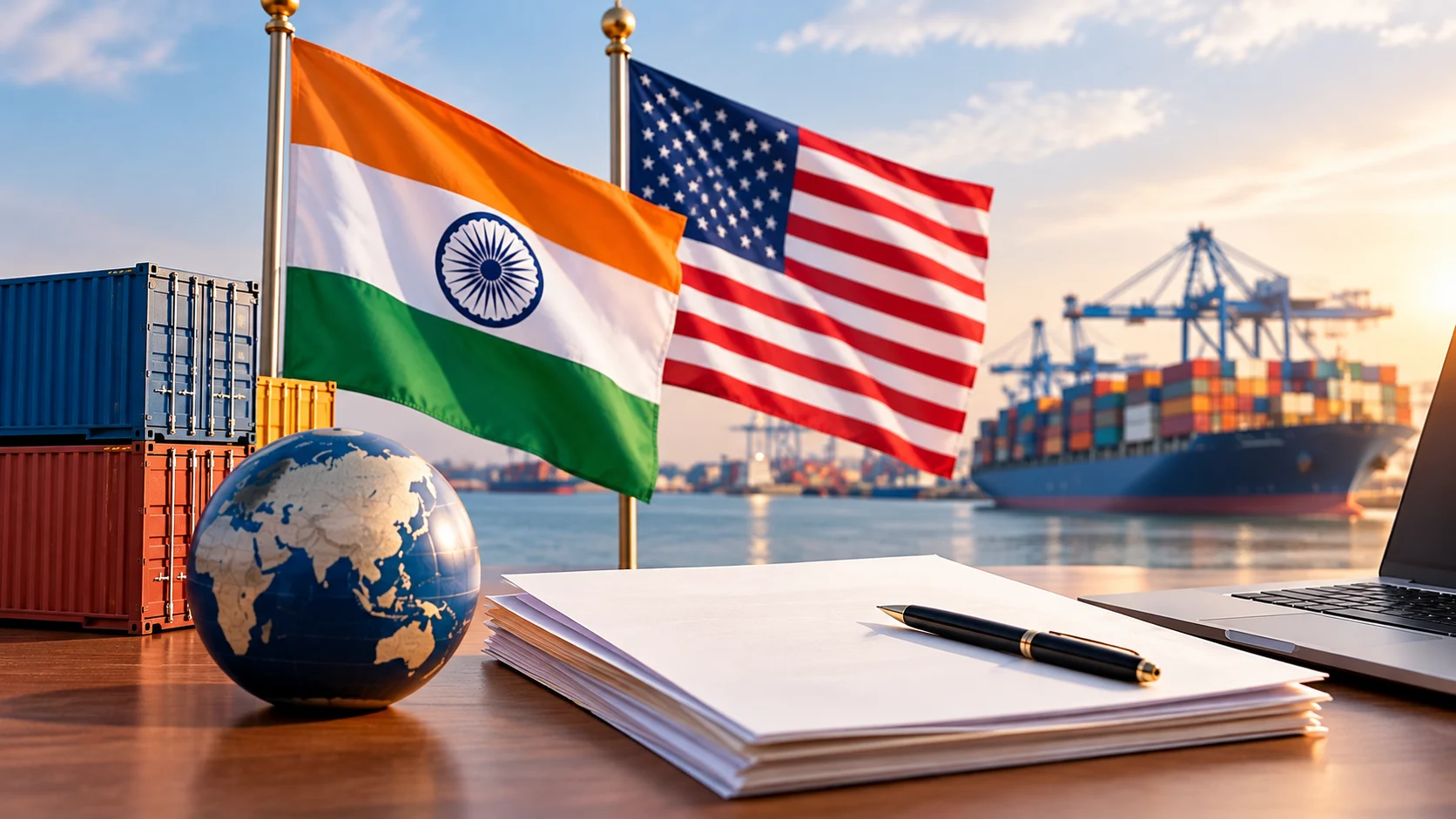
The first phase of the proposed India-US trade agreement has been finalised and is undergoing legal drafting, Commerce and Industry Minister Piyush Goyal said on Thursday. However, the agreement is yet to be fully finalised and implemented, with India seeking a competitive advantage over other countries before putting it into operation.

Speaking at the SRCC Centenary Conclave in New Delhi, Goyal said the first tranche of the bilateral agreement had been finalised and was going through the legal drafting process. He expressed hope that the process would be completed soon.

The minister said implementation would follow once India secured a comparable or competitive advantage over its peer countries in the American market.

India seeks an advantage over competing exporters

India wants its exporters to receive favourable market access and tariff terms compared with competitors. Goyal’s remarks indicate that the relative position of Indian goods in the US market remains an important consideration before the agreement becomes operational.

External Affairs Minister S Jaishankar also spoke about the negotiations at the Bloomberg New Economy Forum this week. He said the discussions were approaching a possible resolution but noted that India’s position relative to competing economies remained an issue.

Jaishankar said the outcome would depend partly on the terms negotiated between India and the United States and partly on how India fares against other competing economies.

Trade negotiations moving forward, says Commerce Secretary

Commerce Secretary Rajesh Agrawal said the negotiations were progressing in the right direction and that both countries hoped to conclude and sign the agreement at the earliest possible time.

He explained that the signing would depend on the formalisation of the broader tariff structure in the United States. Parallel work was also underway in Washington, including processes linked to Section 301.

Agrawal indicated that the two sides would move towards signing the agreement at a mutually agreed time after the relevant tariff framework was formalised.

Earlier this month, US Trade Representative Jamieson Greer said India and the United States were working to resolve outstanding issues, although an agreement was not imminent at that point.

India-US trade talks and bilateral relations

India and the United States have been negotiating the proposed bilateral trade pact since early 2025. The discussions aim to address tariff-related differences, reduce non-tariff barriers and improve market access between the two countries.

The negotiations have taken place against the backdrop of broader strains in bilateral relations, including disputes over tariffs and differences concerning other policy issues.

While the finalisation of the first tranche marks progress in the negotiations, the agreement still needs to move through the remaining legal and procedural steps before it can be signed and implemented.

The next steps will depend on the completion of legal drafting, the finalisation of the US tariff framework and the two countries’ agreement on the terms governing the pact.

Continue Reading

India News

Nobody can browbeat judiciary, Chief Justice warns over Rahul Gandhi’s march

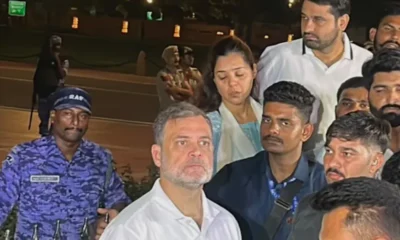
The Supreme Court issued notices to opposition leaders, including Rahul Gandhi and Akhilesh Yadav, over their march to the court on October 12 concerning irregularities in the Special Intensive Revision of electoral rolls.
Published

on

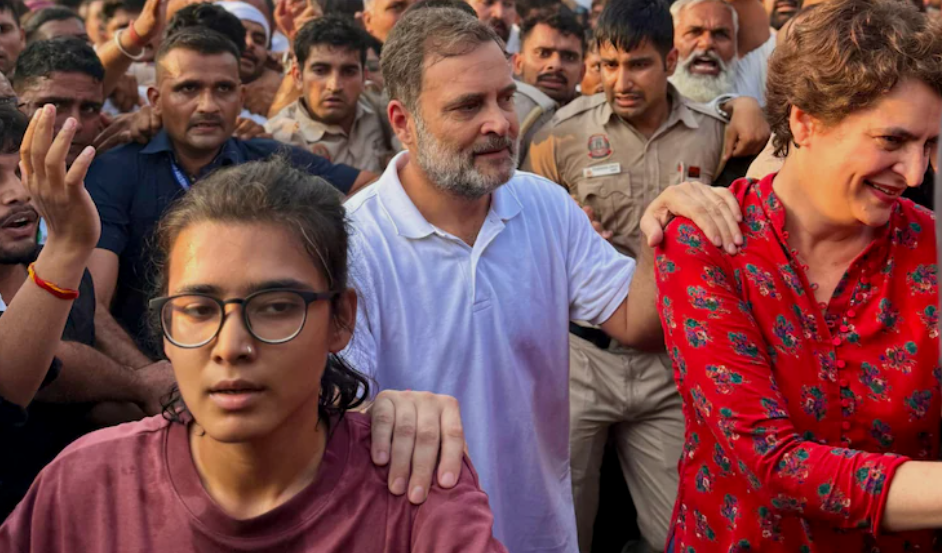
The Supreme Court has issued notices to Congress leader Rahul Gandhi, Samajwadi Party chief Akhilesh Yadav and other protesters over the opposition’s October 12 march to the apex court. The march was organised to raise concerns about alleged irregularities in the Special Intensive Revision (SIR) of electoral rolls.

The court’s remarks that nobody can browbeat the judiciary have brought the focus back to the dispute over the opposition’s protest and the appropriate way to raise grievances before the court.

Why the opposition marched to the Supreme Court

The march was part of the opposition’s campaign against what it described as irregularities in the voter-list revision process. The opposition has raised concerns over alleged electoral malpractice and demanded action concerning the Election Commission and the revision of electoral rolls.

Rahul Gandhi had led the march to the Supreme Court after Chief Justice of India Surya Kant declined a request to meet opposition leaders, including Gandhi and Congress president Mallikarjun Kharge.

The Chief Justice had advised the leaders to approach the court through the judicial process rather than seek an administrative meeting to discuss issues already pending before the Supreme Court.

Chief Justice’s position on approaching the court

The Chief Justice had said that the Supreme Court’s doors were open to every citizen and that people could approach it through petitions. He also indicated that matters affecting citizens would be considered in accordance with the law.

The distinction between the administrative and judicial functions of the court was central to the disagreement over the opposition leaders’ request for a meeting. The Chief Justice’s position was that pending legal issues should be addressed through judicial proceedings.

Supreme Court issues notices over the march

The Supreme Court issued notices to Rahul Gandhi, Akhilesh Yadav and other protesters concerning the October 12 march. The proceedings relate to the protest over irregularities in the Special Intensive Revision of electoral rolls.

The opposition’s allegations about the voter-list revision remain allegations and should not be treated as established findings merely because the matter has reached the court.

The developments have placed the opposition’s protest, its concerns over electoral rolls and the judiciary’s role in addressing such disputes at the centre of the ongoing debate.

Continue Reading

India News

Dhruv Rathee gets fresh summons in 2018 BJP IT cell video case

YouTuber Dhruv Rathee has received fresh summons from a Delhi court in a 2018 criminal defamation case filed by Vikas Pandey over a video concerning the BJP IT Cell. The matter will next be heard on October 17.
Published

on

Dhruv Rathi

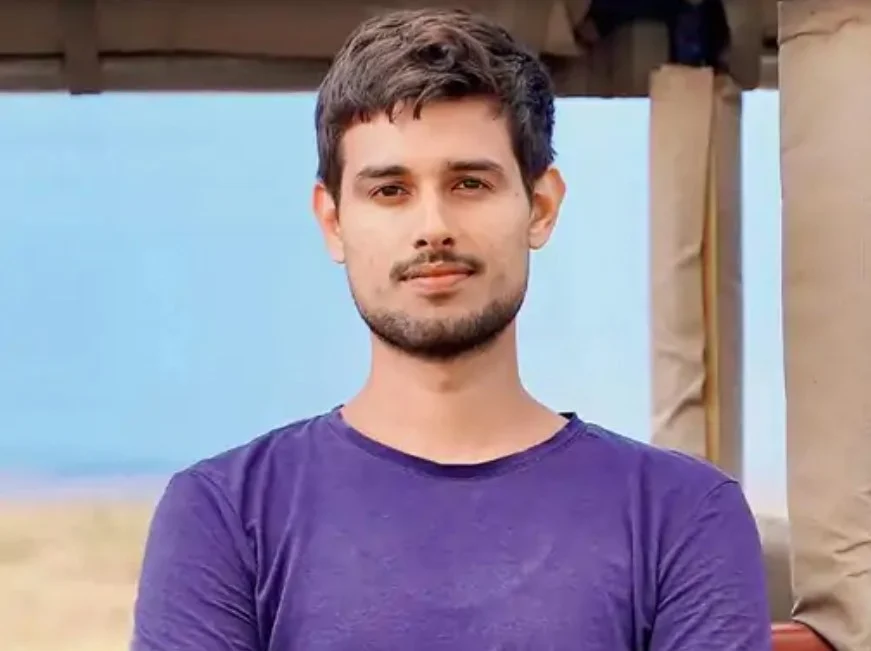
YouTuber Dhruv Rathee has received fresh summons from a Delhi court in a criminal defamation case linked to his 2018 video titled “BJP IT Cell Part 2”. The complaint was filed by Vikas Pandey, who alleged that the video contained defamatory claims about him.

The latest court action follows renewed efforts to serve Rathee with the summons while he is in India. The matter is scheduled to be heard next on October 17.

Judicial Magistrate Rahul Jain of the Saket District Court passed the order on October 12. The fresh summons were issued after the complainant’s lawyer informed the court that Rathee, who usually resides abroad, was in India in connection with the ongoing Cockroach Janta Party (CJP) protests in Delhi.

What is the case against Dhruv Rathee?

The criminal defamation complaint concerns Rathee’s video, “BJP IT Cell Part 2”, which was published in 2018.

Pandey, who founded the social media page “I Support Narendra Modi”, alleged that Rathee’s video accused him of being associated with the BJP IT Cell and offering Rs 50 lakh through an intermediary to Mahavir Prasad. According to the complaint, the money was allegedly offered to persuade Prasad to withdraw allegations that the BJP IT Cell spreads fake news.

These claims form part of the complainant’s allegations. The court’s issuance of summons does not establish that the allegations against Rathee are true or amount to a finding of guilt.

Why has the court issued fresh summons?

According to the court proceedings, the complainant’s side had been attempting to serve Rathee with summons for several years. The court had initially summoned him through an order dated July 23, 2019, but the process of serving the summons had faced delays.

The complainant’s lawyer sought an earlier hearing after learning that Rathee was in India. The application argued that his presence in the country offered an opportunity to complete the service of summons without further delay.

The court subsequently directed that fresh summons be issued. The latest report states that the summons were served at Rathee’s Gurugram residence during his visit to India.

How is Arvind Kejriwal linked to the case?

The case also involved Aam Aadmi Party (AAP) leader Arvind Kejriwal, who had re-shared Rathee’s video on X, then known as Twitter, in 2018.

Pandey filed a separate complaint against Kejriwal over the re-sharing of the video. The Delhi High Court later declined to quash the summons issued to Kejriwal.

In February 2024, the Supreme Court stayed the trial court proceedings against Kejriwal in the matter. During the proceedings, his lawyer told the court that Kejriwal acknowledged making a mistake by re-tweeting the video.

The proceedings against Rathee continued, leading to the fresh summons issued by the Saket court.

What happens next?

The case is scheduled for its next hearing on October 17. The proceedings concern the pending criminal defamation complaint and the steps taken to serve Rathee with the court’s summons.

The allegations in the complaint remain allegations unless established through the legal process.

Continue Reading

Trending

© Copyright 2022 APNLIVE.com