English हिन्दी
Connect with us

India News

Trumpism’s first innocent victim

Published

on

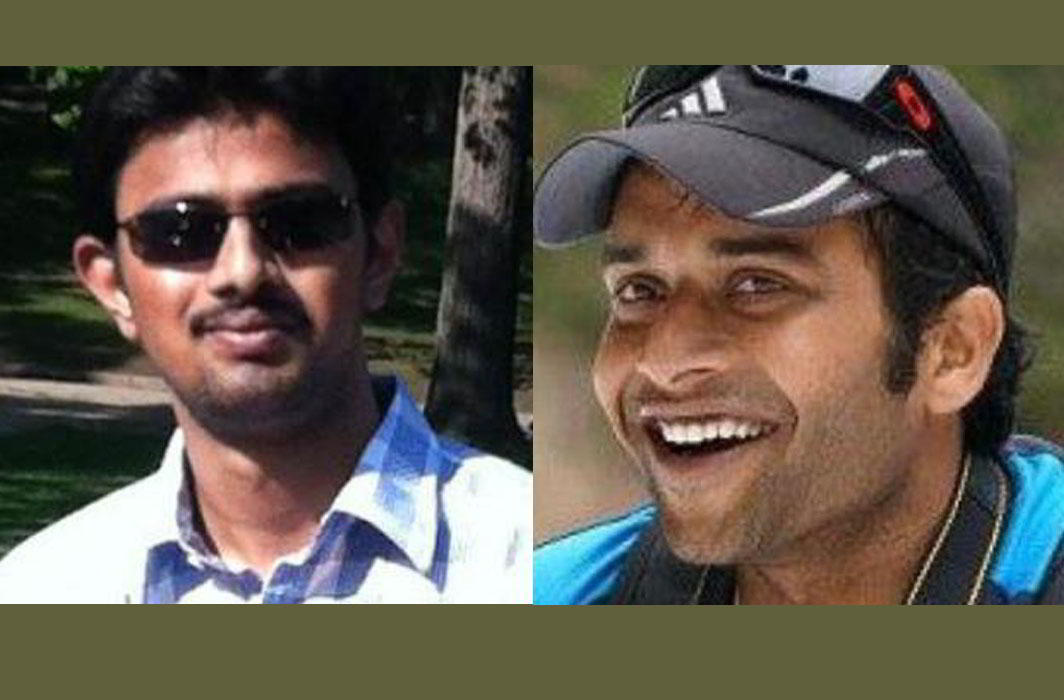
Srinivas Kuchibhotla (left) and Alok Madasani

[vc_row][vc_column][vc_column_text]Indian techie shot dead, his friend badly injured in Kansas bar hate killing

By Sujit Bhar

How the social fabric in the US has changed with President Donald Trump’s vitriolic tirade against immigrants and even his fight against H1B visas for technically skilled immigrants was evident in the shooting down of an Indian techie in Olathe, Kansas on February 22 night.

Srinivas Kuchibhotla and Alok Madasani, engineers from India, worked at a tech company called Garmin, dealing in GPS technology, and were considered “top-of-the-class types” by their boss. Their only fault was being present at the restaurant at the same time when Adam Purinton, a 51-year-old American army veteran-turned tech worker, was around, drinking and hurling racial abuses. Purinton was shouting: “Get out of my country.”

The result of the inescapable confrontation, in which the two Indians were supported by Ian Grillot, an American, was that Purinton left for his home, returned with a gun and fired on the Indians. Kuchibhotla (32) died, while Madasani and Grillot were injured. Purinton, the coward that he obviously is, fled the scene.

The situation has gotten so out of hand that there is little fear or remorse among these semi-literate cowards in American society today. Purinton fled the scene of his shooting and landed at an Applebee’s restaurant in Clinton, Missouri, about 90 miles away some hours later. There, he confessed to the bartender, who reiterated later that Purinton had told him “he had killed two Middle Eastern men” and was looking for a place to hide.

The bartender had the sense to call the police and Purinton was taken into custody. He has been charged with premeditated murder and two counts of attempted murder.[/vc_column_text][/vc_column][/vc_row][vc_row css=”.vc_custom_1487937838202{margin-top: 10px !important;margin-right: 10px !important;margin-bottom: 10px !important;margin-left: 10px !important;background-color: #e0e0e0 !important;}”][vc_column][vc_column_text css=”.vc_custom_1487937879550{margin-top: 5px !important;margin-right: 5px !important;margin-bottom: 5px !important;margin-left: 5px !important;}”]The Indian victims

Srinivas Kuchibhotla: A graduate of Jawaharlal Nehru Technological University, Hyderabad; masters degree in electrical and electronic engineering, University of Texas, El Paso, 2007. First job: Software engineer at Rockwell Collins, then to Garmin International.

Alok Madasani: Graduated from Vasavi College of Engineering, Hyderabad. Masters from University of Missouri-Kansas City. Aviation program coordinator at Garmin.[/vc_column_text][/vc_column][/vc_row][vc_row][vc_column][vc_column_text]The scenario has created reverberations of fear, protest and disgust. Indian foreign minister Sushma Swaraj has tweeted: “We will make all arrangements to transport the mortal remains of Srinivas Kuchibhotla to Hyderabad.”

Condemning the shooting, the US embassy’s Charge d’Affaires Mary Kay Carlson in New Delhi said in a statement: “The United States is a nation of immigrants and welcomes people from across the world to visit, work, study and live. US authorities will investigate thoroughly and prosecute the case, though we recognize that justice is small consolation to families in grief.”

Yes, it is small consolation. It is also a situation in the US today that is getting more and more recognition around the world: a situation where intolerance is being bred among the illiterate and semi-literate extreme right wing masses, who cannot even tell the difference between citizens of a “Middle Eastern” country and highly educated and skilled Asian people who have added hugely to American wealth.

These are possibly direct fallouts of Trump’s weird and whimsical decisions, starting from the H1B Act that has raised the minimum salary package to US $ 130,000 and done away with Masters Degree exemption, to the travel ban (which was halted by federal courts but is expected to come back as a different avatar). It also reflects Trump’s hatred for stricter gun laws and its outcomes.

The bile today starts at the President’s Oval Office, trickling down to the common man, who doesn’t know any better. This regressive attitude of the administration can result in a huge section of the super high-tech industry of the country shifting focus to more favourable climates. Already Canada has shown interest in setting up its own version of Silicon Valley and Mexico has indicated that Indian techies were welcome there.

Indian tech companies have to readjust. If they can adjust with a haircut that will bring down their foreign income from over 60 percent from the US to a lot less (possibly upping their domestic commitments, as Reliance chairman Mukesh Ambani has suggested), the overall dependence on US will decrease.

If the US is bent on its isolation from the global village, the globe will have to readjust and this will not benefit the Trump administration. World commerce will not exist in a vacuum.

Apart from IT, there are hundreds of thousands of highly educated Indians in other H1B field: Pharmaceuticals, teaching, robotics, etc. These, too, will be affected.

Howsoever much the lure of lucre, it cannot override personal safety, safety of family and a level of self worth and respect that is developed through education and proper upbringing. The final say, unfortunately, does not lie with the US.[/vc_column_text][/vc_column][/vc_row]

Entertainment

Bharti Singh, Haarsh Limbachiyaa welcome second child after she’s rushed to hospital mid-shoot

Comedian Bharti Singh and her husband Haarsh Limbachiyaa welcomed their second child after she was rushed to hospital during a television shoot.

Published

on

Bharti

Popular comedian and television personality Bharti Singh and her husband, writer-host Haarsh Limbachiyaa, have welcomed their second child. The baby was born on Friday after Bharti was taken to the hospital following a sudden medical emergency earlier in the day, according to media reports.

Emergency during television shoot led to hospitalisation

As per available information, Bharti Singh was scheduled to shoot for the television show Laughter Chefs on Friday morning when her water broke unexpectedly. She was immediately rushed to a nearby hospital, where she later delivered her second child. No further details about the baby have been shared publicly so far.

The news of the delivery comes weeks after the couple announced Bharti’s second pregnancy on social media.

Pregnancy announcement and maternity shoot

Bharti Singh and Haarsh Limbachiyaa had revealed the pregnancy during a family vacation in Switzerland. A few weeks ago, Bharti also shared pictures from her maternity photoshoot, where she was seen wearing a blue silk gown with white floral patterns.

Sharing the photos online, Bharti wrote, “2nd Baby Limbachiya coming soon,” along with a baby emoji.

Family background

Bharti Singh and Haarsh Limbachiyaa became parents for the first time in 2022, when they welcomed their son, Lakshya.

The couple is among the most well-known faces on Indian television. Bharti is widely recognised for her comic timing and distinctive on-screen persona, while Haarsh has made his mark as a writer and host. Apart from their television work, the two also co-host a podcast together.

Continue Reading

India News

Renaming MGNREGA removes core spirit of rural employment law, says Shashi Tharoor

Published

on

Shashi Tharoor

Congress MP Shashi Tharoor has strongly criticised the renaming of the Mahatma Gandhi National Rural Employment Guarantee Act (MGNREGA), saying the move strips the rural employment programme of its core essence. His remarks came after Parliament cleared the Viksit Bharat Guarantee for Rozgar and Ajeevika Mission (Gramin) Bill, also referred to as the VB-G RAM G Bill.

Speaking to media, Tharoor said the decision to remove Mahatma Gandhi’s name from the scheme “takes out the heart” of the rural employment programme that has been in place for years. He noted that the identity and philosophy associated with Mahatma Gandhi were central to the original law.

Tharoor also objected to the way the new name was framed, arguing that it unnecessarily combined multiple languages. He pointed out that the Constitution envisages the use of one language in legislation, while the Bill’s title mixes English and Hindi terms such as “Guarantee”, “Rozgar” and “Ajeevika”, along with the conjunction “and”.

‘Disrespect to both names’

The Congress leader said that inserting the word “Ram” while dropping Mahatma Gandhi’s name amounted to disrespecting both. Referring to Mahatma Gandhi’s ideas, Tharoor said that for Gandhi, the concepts of Gram Swaraj and Ram Rajya were inseparable, and removing his name from a rural employment law went against that vision.

He added that the name of Lord Ram could be used in many contexts, but questioned the rationale behind excluding Mahatma Gandhi from a programme closely linked to his philosophy of village self-rule.

Protests over passage of the Bill

The VB-G RAM G Bill was passed by the Lok Sabha on December 18 and cleared by the Rajya Sabha in the early hours of December 19 amid protests from Opposition members. Several MPs opposed the manner in which the legislation was pushed through, with scenes of sloganeering and tearing of papers in the House.

Outside Parliament, members of the Trinamool Congress staged a sit-in protest near Samvidhan Sadan against the passage of the Bill. Congress also announced nationwide protests earlier this week, accusing the government of weakening rights-based welfare schemes.

Despite opposition criticism, the government has maintained that the new law will strengthen rural employment and livelihood security. The Bill raises the guaranteed employment from 100 days to 125 days per rural household and outlines a 60:40 cost-sharing formula between the Centre and states, with a higher central share for northeastern, Himalayan states and certain Union Territories.

Continue Reading

India News

Rahul Gandhi attacks G RAM G bill, says move against villages and states

Rahul Gandhi has criticised the G RAM G bill cleared by Parliament, alleging it dilutes the rights-based structure of MGNREGA and centralises control over rural employment.

Published

on

Rahul Gandhi

Leader of the Opposition Rahul Gandhi has launched a sharp attack on the Modi government after Parliament cleared the Viksit Bharat Guarantee for Employment and Livelihood Mission (Rural) Bill, commonly referred to as the ‘G RAM G’ bill. He described the proposed law as “anti-state” and “anti-village”, arguing that it weakens the core spirit of the Mahatma Gandhi National Rural Employment Guarantee Act (MGNREGA).

The new legislation, which is positioned as an updated version of MGNREGA, was passed amid protests by opposition parties and is expected to replace the existing scheme once it receives presidential assent.

‘Bulldozed without scrutiny’, says Rahul Gandhi

Rahul Gandhi criticised the manner in which the bill was cleared, saying it was pushed through Parliament without adequate debate or examination. He pointed out that the opposition’s demand to refer the bill to a standing committee was rejected.

According to him, any law that fundamentally alters the rural employment framework and affects crores of workers should undergo detailed scrutiny, expert consultation and public hearings before approval.

Claim of dilution of rights-based guarantee

Targeting the central government, the Congress leader said the proposed law dismantles the rights-based and demand-driven nature of MGNREGA and replaces it with a rationed system controlled from Delhi. He argued that this shift undermines the autonomy of states and villages.

Rahul Gandhi alleged that the intent behind the move is to centralise power and weaken labour, particularly impacting rural communities such as Dalits, OBCs and Adivasis.

Defence of MGNREGA’s impact

Highlighting the role of MGNREGA, Gandhi said the scheme provided rural workers with bargaining power, reduced distress migration and improved wages and working conditions, while also contributing to rural infrastructure development.

He also recalled the role of MGNREGA during the Covid period, stating that it prevented crores of people from slipping into hunger and debt. According to him, any rationing of a jobs programme first affects women, landless workers and the poorest communities.

Opposition to name change and provisions

The Congress has also objected to the renaming of the scheme, accusing the government of attempting to erase the legacy associated with Mahatma Gandhi. Opposition MPs staged a dharna within the Parliament complex, questioning provisions of the bill that they claim dilute the “soul and spirit” of the original law enacted in 2005.

Under MGNREGA, the government guaranteed 100 days of work in rural areas along with an unemployment allowance if work was not provided. The ‘G RAM G’ bill proposes to raise the guaranteed workdays to 125, while retaining other provisions. However, critics have flagged concerns over employment being linked to pre-approved plans.

The bill was cleared after a midnight voice vote in the Rajya Sabha, following its passage in the Lok Sabha amid protests and walkouts. It will become law once approved by the President.

Continue Reading

Trending

© Copyright 2022 APNLIVE.com