English हिन्दी
Connect with us

Latest world news

Coming soon, a new Trump version: A friend of Saudi Arabia

Published

on

Coming soon, a new Trump version: A friend of Saudi Arabia
[vc_row][vc_column][vc_column_text]Reports said the Kingdom of Saudi Arabia has allocated $ 68 million for preparations to host Trump.

Abu Turab

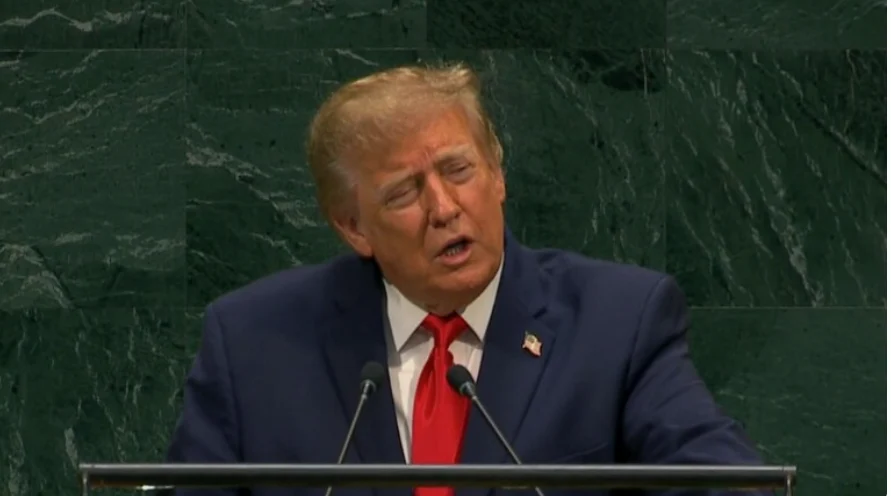
US President Donald Trump, who is known for his controversial statements on a plethora  of issues including Saudi Arabia’s role in spreading radical Islam, will be shortly seen in a new avatar when he visits Riyadh on May 20 and 21. It would the first stop of his maiden foreign trip where he will meet most Arab monarchs and other heads of Muslim states.

According to Washington Post, President Trump will visit Saudi Arabia, Israel and Vatican (Italy) and attend the NATO summit in Belgium.

A senior Trump administration official, while describing the visit, was quoted saying that the US President chose Saudi Arabia as his first stop to show his commitment to improving US relations with the Muslim world.  He will meet King Salman and other leaders where they are expected to discuss efforts to defeat terrorism and discredit radical ideologies.

At the White House Rose Garden on May 4, President Trump said his foreign trip would “begin with a truly historic gathering in Saudi Arabia with leaders all across the Muslim world”.  He was generous enough saying, “Saudi Arabia is the custodian of the two holiest sites in Islam and it is there that we will begin to construct a new foundation of cooperation and support with our Muslim allies to combat extremism, terrorism and violence and to embrace a more just and hopeful future for young Muslims in their countries.”

Saudi Arabian Foreign Minister Adel al Jubeir told reporters in Washington that Trump’s visit would send a clear message that the US harbours no ill-will towards Muslim countries, which he said was a “misconception” spread by Iran and extremists like the Islamic State (IS). He said, “This historic summit is going to change the narrative in the Islamic world and the world.’

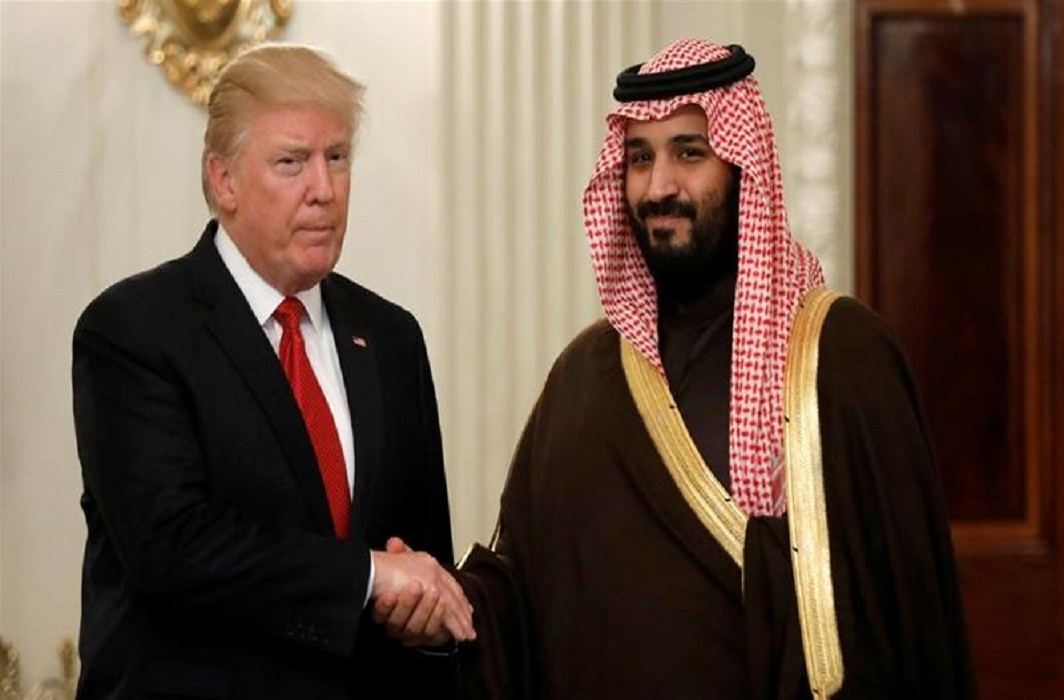
Trump’s change of heart towards Saudi Arabia was revealed for the first time after becoming President, when he rolled out the red carpet for Deputy Crown Prince Mohammad bin Salman and his accompanying high-level delegation on March 14 this year.

The Saudi government had hailed it as a “historic turning point” in US-Saudi relations after eight contentious years with the Obama administration. The royal statement said that the prince considers Trump “a true friend of Muslims” and that the meeting marked a “significant shift in relations” across all fields.

Meanwhile, a White House statement said Trump and Salman had directed their teams to find ways “to further strengthen and elevate the United States-Saudi strategic relationship”.

During his campaign, Trump said, “They (Saudi Arabia) are loaded with money to the gills. The US protects them. We get practically nothing. Do you know why? Because our leaders don’t have business instinct!”

He further said, “Here’s what’s going to happen. We’ll say to Saudi Arabia, ‘Fellas, you’ve got to help us out.’ They’ll say, ‘No.’ We’ll say, ‘Bye, bye.’ About two days later, they’ll call and say ‘Get back here fast, somebody’s going to make a raid.’ We’ll go back. They’ll pay us so much money. And you know what? That’s fine.”

King Salman is said to have invited the heads of the Gulf Cooperation Council members:  Kuwait, Qatar, Bahrain, United Arab Emirates and Oman along with several other Muslim states.

The other invitees to the Arab-American Summit include King Abdullah II of Jordan, Iraqi President Fuad Masum, Algerian President Abdelaziz Bouteflika, Niger’s Mahamadou Issoufou, Morocco’s King Mohammed VI, Palestinian Authority President Mahmoud Abbas, Yemen’s virtually ousted President Abedrabbo Mansour Hadi, Tunisian President Beji Caid Essebsi and Prime Minister Nawaz Sharif from Pakistan.

The leaders of Egypt, Syria and Iran are missing from the list. In January, immediately after his inauguration, President Trump imposed ban on travellers from seven countries – Iran, Iraq, Libya, Somalia, Sudan, Syria and Yemen.

According to Saudi Foreign Minister Adel al Jubeir, separate meetings will also take place between monarchs of GCC countries and Trump, as well as bilateral talks between Saudi and US leaders.

Reports said the Kingdom of Saudi Arabia has allocated nearly $ 68 million to the preparations for hosting Trump.

During the US presidential campaign, New York Daily News had reported that Trump made millions of dollars from his deals with Saudi Arabia, which included leasing an apartment to former Al Qaeda leader Osama bin Laden’s half brother Shafiq. The Saudis paid $ 4.5 million in June 2001 and bought the 45th floor of the real estate mogul’s Trump World Tower in Manhattan. Shafiq met then US President George Bush on September 11, 2001, which was cut short due to the 9/11 attack.

Meanwhile, Gulf News, the largest circulated English daily in the GCC countries, observed that the Arab world has a historic opportunity to use the new American President Donald Trump’s first trip to make some cogent points on many important issues that challenge the region. It is an extraordinary compliment that Saudi Arabia will host Trump’s first state visit, wisely timed to the Gulf Cooperation Council Summit, the editorial, published on May 10, said.[/vc_column_text][/vc_column][/vc_row]

Latest world news

India closes two more visa centres in Bangladesh amid worsening security concerns

India has temporarily closed visa application centres in Rajshahi and Khulna, citing security concerns following protests near Indian establishments in Bangladesh.

Published

on

India closes two more visa centres in Bangladesh amid worsening security concerns

India has shut two additional Indian Visa Application Centres (IVACs) in Bangladesh — in Rajshahi and Khulna — citing the prevailing security situation in the country. The move comes a day after protests were held near the Indian High Commission in Dhaka by radical groups, raising concerns over safety around Indian establishments.

An official notification issued on the IVAC website said the centres in Rajshahi and Khulna were closed on December 18 due to security reasons. Applicants who had appointments scheduled for the day have been assured fresh slots at a later date.

The decision follows the temporary shutdown of the visa application centre in Dhaka earlier, even as New Delhi flagged a rise in open hostility towards India, particularly targeting the northeastern region, under the interim government led by Muhammad Yunus.

Bangladesh rejects India’s security assessment

Bangladesh’s Foreign Affairs Advisor Touhid Hossain dismissed India’s concerns and denied any deterioration in law and order. He distanced the interim administration from recent inflammatory remarks made by National Citizen Party (NCP) leader Hasnat Abdullah, who had publicly threatened to cut off India’s “seven sisters” and also issued comments against the Indian High Commissioner.

Hossain said the individual was not part of the government and termed his statements irrelevant. He also claimed that security arrangements were in place and that the shutdown of the Dhaka visa centre coincided with a local programme, which raised security-related questions.

Political backdrop and India’s response

The NCP, which emerged from student-led protests that led to the fall of the previous Awami League government, has extended support to the Yunus-led interim setup. Though the party has limited political presence, radical elements associated with it have organised anti-India demonstrations in Dhaka.

India, in an earlier statement, urged the interim government to ensure internal law and order and hold peaceful elections so that Bangladesh can return to an elected administration. However, the interim government appeared dismissive of this advice, with Hossain stating that India need not advise Dhaka on conducting elections.

Observers in Bangladesh have pointed out that delays in elections could benefit the unelected interim government, while radical groups may attempt to create disruptions by projecting India as a hostile actor. New Delhi has so far maintained a measured stance, despite remarks that directly question India’s sovereignty and territorial integrity, particularly in the northeastern region.

Continue Reading

Latest world news

PM Modi receives Ethiopia’s highest civilian honour, first world leader to get award

PM Modi has become the first global leader to be awarded Ethiopia’s highest civilian honour for strengthening bilateral ties and global leadership.

Published

on

PM modi Ethiopias highest civillian award

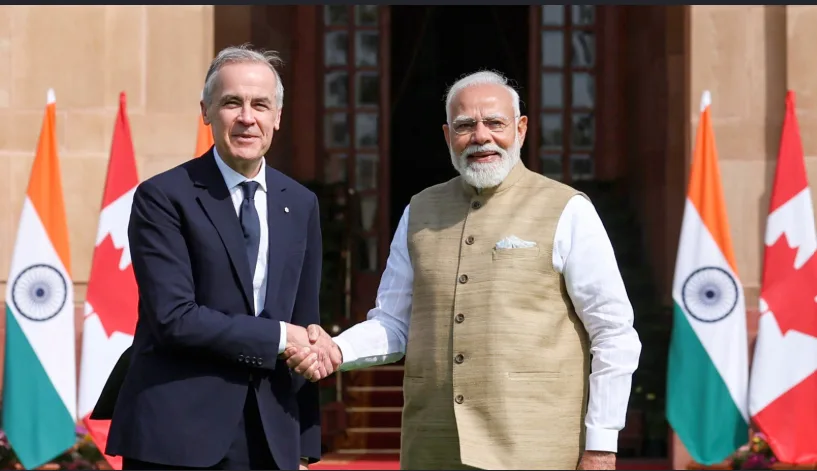
Prime Minister Narendra Modi on Tuesday was conferred with ‘The Great Honour Nishan of Ethiopia’, the highest national award of the African nation, becoming the first head of government or state globally to receive the honour.

The award was presented during a special ceremony held at the Addis International Convention Centre, where Ethiopian Prime Minister Abiy Ahmed Ali honoured Modi for his role in strengthening bilateral relations between India and Ethiopia and for his leadership on global issues.

Recognition of India-Ethiopia partnership

According to an official statement, the honour recognises Prime Minister Modi’s contribution to deepening the long-standing partnership between the two countries and his engagement with issues concerning the Global South. The conferment is being seen as a milestone in India-Ethiopia relations and reflects the growing diplomatic and development cooperation between the two nations.

Prime Minister Modi acknowledged the award and dedicated it to the people of India. In a post on X, he said he was honoured to receive Ethiopia’s highest recognition and attributed it to the collective strength and aspirations of 140 crore Indians.

‘Accepted with humility and gratitude’

Speaking at the ceremony, Prime Minister Modi said it was a privilege to accept the honour from one of the world’s most ancient civilisations. He expressed humility and gratitude while thanking Prime Minister Abiy Ahmed and the people of Ethiopia for the recognition.

He also praised the Ethiopian Prime Minister’s leadership and initiatives aimed at promoting national unity, sustainability and inclusive development. Highlighting the role of knowledge and education in nation-building, Modi noted that Indian teachers have been contributing to Ethiopia’s progress for more than a century.

The Prime Minister dedicated the award to both Indians and Ethiopians who have nurtured bilateral ties over generations and conveyed appreciation on behalf of India’s population for the honour bestowed upon him.

Continue Reading

Latest world news

Trump administration expands US travel ban to 20 more countries, Palestinians also affected

The Trump administration has widened its travel ban, adding 20 more countries and fully restricting entry for Palestinians, citing security and vetting concerns.

Published

on

The Trump administration has widened its travel restrictions, adding 20 more countries to the existing list and imposing a complete ban on travel for people holding documents issued by the Palestinian Authority. The decision significantly expands the scope of the travel limits announced earlier this year and will come into force from January 1.

According to the proclamation issued on Tuesday, the latest move doubles the number of nations impacted by US travel and immigration restrictions. Five additional countries now face a full ban, while 15 others have been placed under partial restrictions. The administration said the measures apply to both visitors and those seeking to immigrate to the United States.

Countries facing full travel ban

The newly added countries under the full ban include Burkina Faso, Mali, Niger, South Sudan and Syria. In addition, people travelling on Palestinian Authority-issued passports or documents have been fully barred from entering or emigrating to the US. South Sudan had already been subject to significant restrictions before this announcement.

Earlier, the administration had imposed a complete ban on travellers from Afghanistan, Myanmar, Chad, the Republic of Congo, Equatorial Guinea, Eritrea, Haiti, Iran, Libya, Somalia, Sudan and Yemen.

15 countries under partial restrictions

The list of countries now facing partial travel restrictions includes Angola, Antigua and Barbuda, Benin, Ivory Coast, Dominica, Gabon, Gambia, Malawi, Mauritania, Nigeria, Senegal, Tanzania, Tonga, Zambia and Zimbabwe.

These join the earlier partially restricted countries such as Burundi, Cuba, Laos, Sierra Leone, Togo, Turkmenistan and Venezuela. The administration also said restrictions on Laos and Sierra Leone have been upgraded, while some limits on Turkmenistan have been eased after an improvement in vetting standards.

Who is exempt from the restrictions

The proclamation clarifies that certain categories of travellers are exempt. These include people who already hold valid US visas, lawful permanent residents, diplomats, athletes, and individuals whose entry is considered to be in the national interest of the United States.

Reasons cited by the administration

The US administration said many of the affected countries suffer from widespread corruption, unreliable civil documents and weak criminal record systems, making proper vetting difficult. It also pointed to high visa overstay rates, refusal by some governments to accept deported nationals, and broader concerns related to immigration enforcement, foreign policy and national security.

The expansion follows the arrest of an Afghan national accused in the shooting of two National Guard troops near the White House during the Thanksgiving weekend. The accused has pleaded not guilty to murder and assault charges.

Criticism and concerns over Afghan visas

The decision has drawn criticism from rights groups and immigration advocates, who argue that national security is being used to justify broad restrictions on entire populations. Concerns have also been raised over the removal of an exception for Afghans eligible for the Special Immigrant Visa, a category meant for those who assisted US forces during the war in Afghanistan.

Advocacy groups said these individuals undergo extensive vetting and that restricting their entry could undermine commitments made by the United States.

New restrictions on Palestinians

The full ban on people holding Palestinian Authority passports marks a further tightening of restrictions imposed earlier, which had already made it extremely difficult for Palestinians to travel to the US for work, education, business or tourism. The administration justified the move by citing the presence of US-designated terrorist groups in the West Bank and Gaza, as well as challenges in vetting due to ongoing conflict.

Governments of some newly affected countries said they were reviewing the decision and seeking clarity from US officials on the implications of the restrictions.

Continue Reading

Trending

© Copyright 2022 APNLIVE.com