Happy Constitution Day 2021: Short essays that can make you win competition on Samvidhan Diwas
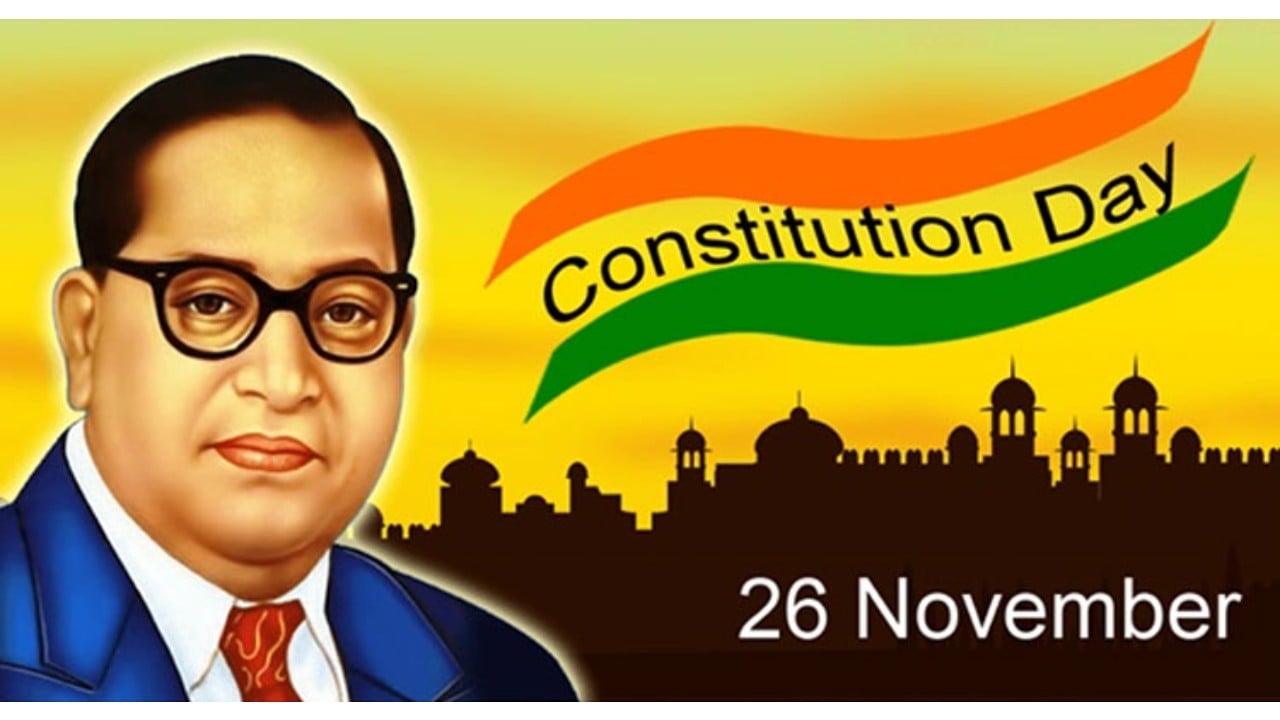
Dr Ambedkar concluded the drafting of the Indian Constitution and presented it to the Constituent Assembly in early 1948. This Constitution Day was adopted on 26th November 1949.
The Constitution of India was adopted by the Constituent Assembly on 26th November 1949 and came into force on 26th January 1950. Also known as Samvidhan Diwas, Dr Bhim Rao Ambedkar concluded the drafting of the Indian Constitution and presented it to the Constituent Assembly in early 1948.
This proposal was accepted on November 26, 1949, with a few amendments.
Following India’s independence, the Constituent Assembly delegated the task of drafting the Constitution to a committee led by Dr Bhimrao Ambedkar. Dr Rajendra Prasad, the first President of India, was the President of the Constituent Assembly.
Here are some essays about the Constitution of India.
Essay 1
The constitution of India is one of the lengthiest constitutions in the whole world which contains a preamble, 22 parts with 448 articles, 12 schedules 5 appendices, and 15 amendments. It is the only constitution in the whole world which was handwritten completely in two languages, Hindi and English. The Constitution of India was handwritten by Prem Behari Narain Raizada.
The constitution of India says that the republic of India is a sovereign, socialist, secular and democratic republic. The constitution also celebrates the values of justice, liberty, equality and fraternity for all the people in the country without any discrimination. The constitution of India assures the citizens their economic and political justice, liberty of thought, expression of faith, belief and worship. Although, in recent years certain articles and clauses of the constitution have been overstepped which is a dangerous precedence for the democratic values of the country.
Essay 2
India is a democratic country and its constitution is the largest constitution in the world. Dr Bhimrao Ambedkar created it and because of this, he has been called the father of the Indian Constitution. The Indian Constitution is inspired by the US Constitution.
The Constitution of India was passed on January 26, 1949, and was fully implemented in 1950. It took 2 years 11 months and 18 days to build the Indian Constitution. The first Constituent Assembly was sitting on December 9, 1946. The constitution is divided into 22 parts. It has 465 articles and 12 recommendations. The last meeting of the Constituent Assembly was held on November 24, 1949.
The constitution of Bharata is in written form. It is needed to give the people their fundamental, political and social rights. The Constitution is protected by the Supreme Court. Its head is indirectly the President and is directly used by the Prime Minister and the Chief Minister. All the rules and laws in the Constitution of India are derived from the constitution of different countries.
Essay 3
The Constitution of India is the supreme law of India. It defines the fundamental political principles and establishes the structure, procedures, powers and duties of the government.
It also describes the fundamental rights, directive principles and duties of citizens. The Indian Constitution was passed by the Constituent Assembly on November 26, 1949, and came into effect on January 26, 1950. The date commemorates the 1930 Declaration of Independence.
The Constitution declares India to be a sovereign, democratic republic and promises justice, equality and liberty to all its citizens. In 1976, the words, ‘socialist’, ‘secular’ and ‘integrity’ were added to the definition by a constitutional amendment. Every year, the country celebrates the day of adoption of the Constitution- 26 January- as Republic Day.
The Indian Constitution is the longest written constitution of any sovereign nation in the whole world. It has 395 articles, 12 schedules, and 94 amendments. It also has a Preamble and five appendices. Apart from the English version, an official Hindi translation is also available. The Constitution replaced the Government of India Act, 1935 which was until then the governing document of the country.
As it is the supreme law of the country, all laws enacted by the government must conform to the constitution. The Preamble describes the basic structure and spirit of the Constitution of India. It does not contain laws that can be enforced in court but no law can be enacted or amended in a way that goes against the spirit of the Preamble.
It also describes the paramount national goals that the government is duty-bound to achieve-justice, liberty, equality and fraternity.
The Central Board of Secondary Education (CBSE) has announced the Class 10 results for 2026, along with key guidelines for students who wish to appear in the second board examination under the newly introduced two-exam policy.
As per the updated system aligned with the National Education Policy (NEP) 2020, students now have an opportunity to improve their performance in selected subjects through a second exam scheduled later in the same academic year.
Who is eligible for second board exam
CBSE has laid down specific conditions for students to appear in the second board examination:
It is mandatory for students to appear in the first board exam
Students must have appeared in at least three subjects in the main exam
Those who have passed can opt for improvement in up to three subjects
Students in the compartment category are also eligible to appear
Improvement is allowed only in subjects already taken in the first exam
The second exam allows students to improve marks in subjects such as Science, Mathematics, Social Science, and languages.
Who is not eligible
Certain categories of students will not be allowed to appear in the second board exam:
Students who did not appear in three or more subjects
Those who failed in three or more subjects
Students placed in specific non-eligible categories by the board
Such students will have to reappear in the next main examination cycle instead.
Important rules students must note
CBSE has also clarified several important rules:
Change of subjects is not permitted in the second exam
No corrections in student data will be allowed
Schools will submit the list of candidates for the second exam
Students can improve performance in a maximum of three subjects
The board aims to reduce exam pressure and give students flexibility to improve scores within the same academic year.
The Central Board of Secondary Education is expected to declare the Class 10 board examination result for 2026 soon, with indications pointing toward an announcement in April. However, the board has not yet confirmed the official date and time.
Students who appeared for the examination are advised to stay prepared and keep their login credentials ready, as the result can be released at any time once the final process is completed.
Result likely earlier than usual
Unlike previous years when CBSE results were typically released in May, the 2026 Class 10 result is expected earlier. The shift is linked to changes in the examination system, including the introduction of multiple exam phases during the academic year.
The board conducted the Class 10 examinations between February 17 and March 11, 2026, with lakhs of students participating across the country.
Where to check CBSE 10th result 2026
Once declared, students will be able to access their results through multiple official platforms, including:
Official websites such as cbse.gov.in and results.cbse.nic.in
DigiLocker platform for digital marksheets
UMANG mobile application
These platforms are expected to host the result simultaneously to ensure smooth access for students.
Advisory for students before result declaration
Students have been advised not to wait until the result day to complete formalities. They should create and verify their DigiLocker accounts in advance to avoid last-minute issues.
Digital marksheets made available through DigiLocker will be considered valid and can be used for further admission and documentation purposes.
Steps to check scorecard
After the result is announced, students can follow these steps:
Visit the official CBSE result website
Click on the Class 10 result link
Enter roll number and required details
Submit and view the result
Download or print the marksheet for future use
Students are advised to carefully verify all details mentioned in the scorecard after downloading it.
No official date yet, results may be released anytime
The Central Board of Secondary Education (CBSE) is expected to announce the Class 10 and Class 12 board exam results for 2026 soon, although an official date and time have not yet been confirmed.
As per the latest updates, Class 10 results are likely to be declared before the last week of April, while Class 12 results may follow by the second week of May. The earlier timeline is being considered due to the introduction of a second examination phase scheduled in May this year.
This year, Class 10 results are expected to be released first, followed by Class 12 results.
Over 40 lakh students await results
The CBSE board exams for 2026 began on February 17. Class 10 exams concluded on March 11, while Class 12 exams ended on April 10.
More than 43 lakh students appeared for the exams this year, including around 25 lakh in Class 10 and over 18 lakh in Class 12, making it one of the largest school-level examinations in the country.
Where to check CBSE results 2026
Once declared, students will be able to check their results on official platforms such as:
results.cbse.nic.in
cbse.gov.in
results.nic.in
DigiLocker
UMANG app
Students will need details such as roll number, school number, admit card ID, date of birth, and security pin to access their marksheets.
Passing marks and key details
To pass the CBSE board exams, students must secure a minimum of 33% marks overall. In some cases, grace marks may be awarded to students who fall short by a small margin.
Digital marksheets and certificates will also be made available on DigiLocker shortly after the declaration of results.
APN News is today the most watched and the most credible and respected news channel in India. APN has been at the forefront of every single news revolution. The channel is being recognized for its in-depth, analytical reportage and hard hitting discussions on burning issues; without any bias or vested interests.