English हिन्दी
Connect with us

India News

No one has right to interfere in marriage of consenting adults: CJI on khap panchayats

Published

on

Husband watches adult films, ruining married life, wife petitions Supreme Court

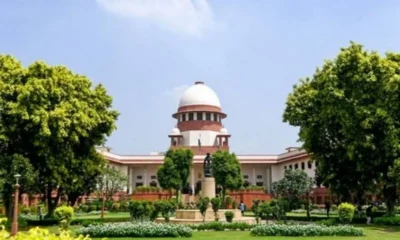
In a strident reprimand of khap panchayats (self-anointed family courts) who sanction assaults on couples who marry despite their objections, Chief Justice Dipak Misra, on Monday (February 5), said that no one has the right to interfere if two consenting adults decide to enter into matrimony.

The verbal rebuke by the Chief Justice of India came during proceedings in a writ petition filed by NGO Shakti Vahini, which has sought a ban on khap panchayats.

The khaps, as these self-appointed courts are often referred to, are a common phenomenon in parts of north India, particularly Haryana, and have often been in the dock for sanctioning violence against consenting adults – usually from the same ‘gotra’ – who decide to marry. Over the years, several murders of such couples have been reported by the media and the role of the khaps in sanctioning these killings has often come to light.

The Supreme Court Bench, also comprising Justices AM Khanwilkar and DY Chandrachud, made it amply clear that “Where two consenting adults agree to enter into matrimony, no individual rights, group rights or collective rights shall interfere therein or harass the couple”.

The Chief Justice pointedly told the counsels appearing for the khap panchayats: “if two adult persons are marrying with their consent, you are no one to create an obstacle”, while adding “whether it is parents, society or anyone, they are out of it.”

Curiously a counsel appearing for the khap panchayats argued that these “family courts” are “against honour killings” and “support inter-caste as well as inter-religious marriages”. However, the counsel added: “Because of the skewed sex ratio in Haryana, as many 2.5 million local boys have married in other states. What the Khap Panchayats are opposed to is intra-gotra marriage. Say, I am a ‘Hooda’; it is an age old tradition that a hooda shall not marry another hooda. They are deemed to descended from a common ancestor and hence, are siblings.”

The khaps submitted further that “as per Section 5(v) of the Hindu Marriage Act, marriages between sapindas – calculated as within 5 degrees of relations from the father’s side and 3 degrees on the mother’s side – are prohibited. Scientifically also it has been proven that such marriages have a disastrous impact on the genetics of the children.”

However, the Chief Justice said: “We are not concerned with the Khap Panchayats. Nobody, neither the society, the parents nor other relatives of either party to the marriage nor the Panchayats, may interfere”.

Chief Justice Dipak Misra took offence to the counsel of the khap panchayats submitting that his clients were acting as “conscience keepers” of the society and told him, “Don’t be conscience keepers. If two adults want to get married nobody should interfere.”

On the specific reference to the opposition of khap panchayats to intra-gotra marriages, the Chief Justice said: “We are not writing an essay here. We are not concerned with thesapinda or gotra. We are only interested in the decision of two adults to get married. If any issue arises in respect of the marital status or property, the court shall be entitled to decide the same. The children may be legitimate or illegitimate, that may be for determination in a partition suit. Similarly, even the marriage may be null and void. But you keep out of it. No third party shall interfere.”

It is pertinent to recall that on the last date of hearing, senior advocate Raju Ramachandran, who has been appointed amicus curiae in the case, had filed his report before the court detailing suggestions on the issue of khap panchayats and ‘honour killings’ (a term often used by votaries of these family courts to justify murders of couples who had married despite being sapindas or from the same gotra).

The Bench has granted time to Additional Solicitor General Pinky Anand, till February 16 – the next date of hearing in the case – to file the centre’s response to Ramachandran’s report stating that this is a “serious issue.”

India News

Priyanka Gandhi meets Nitin Gadkari over Kerala road projects, light moments mark discussion

Priyanka Gandhi met Nitin Gadkari in Parliament to discuss road projects in Kerala, with the meeting marked by humour, political remarks and an informal food tasting.

Published

on

Priyanka Gandhi meets Nitin Gadkari (1)

Congress MP Priyanka Gandhi Vadra on Thursday met Union Road Transport and Highways Minister Nitin Gadkari at his office in Parliament to raise issues related to road infrastructure projects passing through Kerala. The meeting combined formal discussions with lighter moments, including a humorous exchange and an unexpected food tasting session.

Kerala road projects discussed at Parliament meeting

Priyanka Gandhi, the Member of Parliament from Wayanad in Kerala, discussed six road projects that pass through the state. During the interaction, Nitin Gadkari clarified that some of these projects fall under the jurisdiction of the Kerala government and therefore cannot be directly handled by the Centre. However, he assured the Congress leader that the remaining proposals would be examined.

According to those present, the discussion remained cordial, with both sides acknowledging administrative limitations while exploring possible ways forward.

‘Bhai ka kaam ho gaya’ remark draws laughter

The meeting also saw a light-hearted moment when Gadkari referred to a recent interaction with Rahul Gandhi, the Leader of the Opposition in the Lok Sabha. He said Rahul Gandhi had met him earlier regarding road-related concerns in Rae Bareli.

In a humorous remark, Gadkari said that if work was done for the brother but not for the sister, it could lead to complaints. The comment prompted laughter from Priyanka Gandhi and others present in the room.

Congress confident of future action in Kerala

During the conversation, Priyanka Gandhi expressed confidence about the Congress party’s prospects in the upcoming Kerala Assembly elections. She indicated that proposals currently under the purview of the Left Front government in the state would be taken forward once Congress comes to power.

Her remarks reflected political confidence while keeping the focus on infrastructure needs in Kerala.

A homemade dish adds informal touch

Apart from policy discussions, the meeting included an informal culinary moment. Nitin Gadkari had prepared a rice-based dish after learning the recipe from online videos. Visitors to his office were offered rice balls served with chutney.

Gadkari encouraged Priyanka Gandhi to taste the dish, and she, along with Congress leader Deepender Singh Hooda, was seen sampling the food while continuing their conversation with the minister.

Continue Reading

India News

AAP dominates Punjab zila parishad polls, leads in most panchayat samiti zones

AAP has won 201 out of 317 declared zila parishad zones in Punjab so far and is leading in a majority of panchayat samiti seats, with counting still underway.

Published

on

Punjab Zila Parishad Polls

The ruling Aam Aadmi Party (AAP) has recorded a strong performance in the Punjab zila parishad elections and is leading in the majority of panchayat samiti zones, as per results declared so far on Thursday. The counting process is still underway and complete results are awaited, officials said.

Polling for the rural local bodies was held on December 14 to elect representatives across 347 zones of 22 zila parishads and 2,838 zones of 153 panchayat samitis in the state.

AAP secures clear edge in zila parishads

According to the available results, outcomes have been declared for 317 zila parishad zones so far. Of these, the AAP has won 201 zones, placing it well ahead of other parties.

The Congress emerged second with victories in 60 zones, followed by the Shiromani Akali Dal (SAD) with 39 zones. The BJP won four zones, the BSP secured three, while independents claimed 10 zones.

District-wise data shows that the AAP won 22 zones in Hoshiarpur, 19 each in Amritsar and Patiala, 17 each in Tarn Taran and Gurdaspur, and 15 zones in Sangrur. The Congress registered its best performances in Gurdaspur and Ludhiana with eight zones each, followed by Jalandhar with seven zones. The SAD performed strongly in Bathinda with 13 zones, while the BJP managed to win four zones in Pathankot.

AAP leads in panchayat samiti results

In the panchayat samiti elections, trends declared so far indicate that the AAP is leading in a majority of zones. However, officials clarified that counting is ongoing and the final picture will be clear only after all ballot papers are tallied.

Kejriwal, Mann reject opposition allegations

Reacting to the trends, AAP supremo Arvind Kejriwal said the party’s performance reflected strong rural support for the Bhagwant Mann government’s work. Addressing the media in Mohali along with Chief Minister Bhagwant Mann, Kejriwal dismissed allegations of irregularities raised by opposition parties.

He said the elections were conducted in a fair and free manner and claimed that the results so far showed a clear wave in favour of the AAP in rural Punjab. Kejriwal stated that nearly 70 per cent of the zila parishad and panchayat samiti seats had gone in favour of the party.

Congress, SAD question poll conduct

The Congress and the Shiromani Akali Dal, however, accused the ruling party of misusing official machinery. Punjab Congress chief Amrinder Singh Raja Warring alleged that the AAP had “stolen” the rural mandate and claimed that the results did not reflect genuine public support.

Opposition parties had earlier also accused the AAP government of high-handedness during the polling process, allegations that the ruling party has strongly denied.

Continue Reading

India News

Vijay signals political push with TVK rally as last film Jana Nayagan promotion aligns with 2026 polls

Vijay combined a major TVK rally with the promotion of his final film Jana Nayagan, signalling a carefully planned transition from cinema to politics ahead of the 2026 Tamil Nadu polls.

Published

on

Actor vijay

Tamil actor-turned-politician Vijay marked a significant moment in his political journey on December 18, combining a major public rally of his party Tamilaga Vettri Kazhagam (TVK) with a key promotional event for his final film Jana Nayagan. The twin developments underline his calibrated shift from cinema to full-time politics, with the 2026 Tamil Nadu Assembly elections clearly in focus.

Vijay addressed a large gathering near the Vijayamangalam toll plaza in Erode, marking his first major open rally after the Karur incident. Around 25,000 people were present at the venue, reflecting the sustained interest around his political entry and the mobilisation capacity of his fan base, now being encouraged to transition into party supporters.

Parallelly, the second single from Jana Nayagan was released online in the evening. The film, slated to hit theatres on January 9, has been announced as Vijay’s last cinematic outing before dedicating himself entirely to politics.

How Jana Nayagan fits into Vijay’s political strategy

Jana Nayagan, directed by H Vinoth, is positioned as more than just a farewell project to Vijay’s acting career. From its title, which translates to “People’s Leader”, to its narrative and music by Anirudh Ravichander, the film has been designed to mirror themes that Vijay has begun emphasising in his political speeches — governance, accountability and moral authority.

The actor has repeatedly projected himself in rallies as a leader who wants to serve the people of Tamil Nadu and raise issues affecting marginalised sections. The film’s tone appears to align with this image, aiming to present a restrained and serious persona without alienating his long-time fans.

By declaring Jana Nayagan as his final film, Vijay has attempted a gradual emotional transition for his supporters, with TVK hoping that this loyalty will convert into organisational strength and votes in the upcoming elections.

Analysts divided on electoral impact

Political analysts, however, remain cautious about the effectiveness of this approach. One analyst noted that while Vijay is clearly attempting to convert his massive fan following into party cadres, not every fan can realistically take on a political role. Another analyst pointed out that the film alone is unlikely to fetch votes, though messaging around issues such as corruption or dynastic politics could help Vijay gain some traction over time.

The analysts also flagged that Vijay is entering a crowded and competitive political space and that the impact of recent controversies has added to the challenges ahead. According to them, his current strategy appears to be aimed not only at 2026 but at building a longer-term political position.

Invoking legacy and symbolism

A recurring element in Vijay’s rallies has been his admiration for former Tamil Nadu Chief Minister and actor M G Ramachandran. The second single from Jana Nayagan, titled Oru Pere Varalaaru, reinforces this aspiration, with lyrics emphasising the idea of a name that makes history and the power of the people’s voice.

While invoking MGR remains a common political trope in Tamil Nadu, analysts underline that his journey remains unmatched. They stress that sustained electoral participation and organisational strength, rather than crowd sizes at rallies, will determine Vijay’s political future.

For now, Vijay’s rally in Erode and the simultaneous promotion of Jana Nayagan highlight a carefully timed blend of cinema and politics, as he prepares to test his popularity beyond the silver screen.

Continue Reading

Trending

© Copyright 2022 APNLIVE.com