English हिन्दी
Connect with us

India News

Kashmir back on boil after six killed by security forces

Published

on

Situation in sought Kashmir took a turn for the worse on Monday, March 5, as people came out on streets to protest the deaths in firing by security forces on Sunday.

Hundreds of people, including some gun-toting militants reportedly attended the funeral of a slain Lashkar-e-Taiba commander in south Kashmir despite prohibitory orders and a clamp down on internet services across the Kashmir Valley.

Media reports said there were dozens of clashes involving stone-pelting erupted in Shopian.

While the security forces claim that all those killed were militants or their over-ground workers, separatist leaders and locals alleged that four of them were civilians.

The deaths on Sunday evening occurred after a militant travelling in a car attacked an Indian Army’s mobile vehicle checkpost near Pahnoo village in Shopian district, some 60 km south of Srinagar. An Army spokesperson claimed the youths were overground militant workers, but local residents claimed they were civilians travelling in the car, according to media reports. Four persons were confirmed dead on Sunday night and two more bodies were recovered on Monday morning, said reports quoting the police.

While the police have not identified the three youths killed on Sunday, locals identified them as Suhail Ahmad Wagay , Nawaz Ahmad Wagay and Shahid Khan, said a report in The Hindustan Times (HT).

While the army called them “over-the-ground workers or accomplices” of the militants travelling in a Maruti Swift car, the locals said they were just civilians. A statement by police spokesman also referred to the three youths as “individuals”, the HT report said.

A relative of Suhail said the three were innocent and had nothing to do with militancy. “Suhail was a 22-year-old man doing fruit business of his family. His father and brother were in Delhi for business. Suhail had hired the services of the other two boys to help him transport fruit carts into the cold storage. He had called them overnight and was taking them home so that they could start work early next morning,” HT quoted Suhail’s relative, Fayaz Ahmad Mir, as saying.

Mir said that the three had bullet wounds in their backs. “No militant was accompanying them. He had called his family minutes before the shootout saying he was reaching home with the two boys.”

On the slain militant, the army’s identification differed from that of the police. While the army said he was Shahid Ahmad Dar, a resident of Jamnagri Shopian, the police spokesman identified him as Amir Ahmed Malik, a resident of Harmeen Shopian, belonging to banned LeT outfit and active since July 2017.

Later, police said they recovered the bullet-ridden body of Lashkar-e-Taiba militant Ashiq Hussain Bhat at Saidpora area in Shopian, about six km from the firing spot. He was missing since November 13, 2017.

“Preliminary investigation suggests that Bhat’s death was part of Sunday’s gunfight in Pahnoo village. Further investigation is on,” a police officer was quoted as saying.

The body of a civilian, Gowhar Ahmad Lone, 24, was also found on Monday morning, some 250 metres away from the gunfight site.

The killings have triggered outrage in the Valley.

Chief Minister Mehbooba Mufti said she was “deeply distressed by more deaths of civilians caught in the crossfire in Shopian” and expressed her “heartfelt condolences to the deceased’s families”.

Separatist leaders Syed Ali Geelani, Mirwaiz Umar Farooq and Yasin Malik called for a valley-wide protest shutdown against the killings.

Fearing street protests, the authorities imposed restrictions in parts of Srinagar city and south Kashmir region. Internet connectivity in south Kashmir was suspended while its speed was curbed at other places in the Valley.

The State Public Service Commission ordered the cancellation of Monday’s civil services exams in the state. All university and school board exams scheduled on Monday were postponed.

People thronged Kapran village of Shopian to participate in the funeral of Lashkar commander Ashiq Hussain Bhat. Half a dozen militants were also seen offering the congregational Nimaz-e-Janaza of the slain commander. The militants then fired in the air to honour their dead colleague.

Protests also broke out in neighbouring Anantnag and Pulwama districts, north Kashmir’s Bandipora district and Badgam in central Kashmir where youths clashed with the security forces.

Jammu and Kashmir Liberation Front chief Malik was arrested from here on Monday during a protest march against the killings. Police intercepted the Malik-led protest march and took the separatist leader and some of his supporters into custody.

India News

Amit Shah sets 2029 deadline to make India drug-free

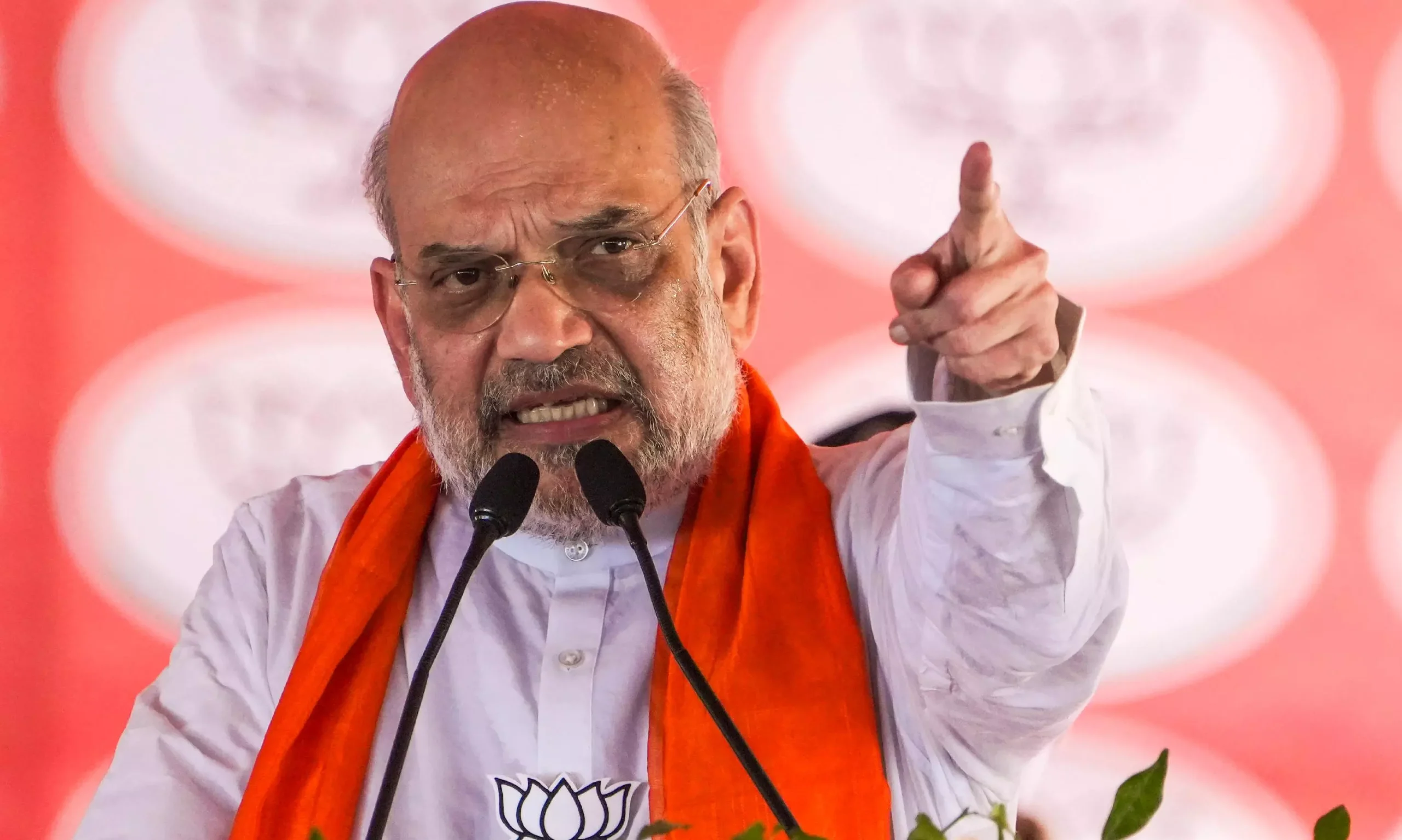
Union Home Minister Amit Shah has set December 31, 2029 as the deadline for India’s fight against drugs, urging states to focus on dismantling trafficking networks rather than only recording seizures.

Published

on

Union Home Minister Amit Shah has set December 31, 2029 as the deadline for India’s campaign against drugs, calling on states and Union Territories to move beyond recording seizures and focus on dismantling the networks behind narcotics trafficking.

Speaking at the third National Conference of Anti-Narcotics Task Force Heads in New Delhi on Tuesday, Mr Shah said India would not allow drugs to enter or leave the country.

“Neither will we allow a single gram of drugs to enter India, nor will we allow a single gram of drugs to go out,” he said.

The conference brought together police chiefs from 36 states and Union Territories as the government outlined its roadmap for tackling the country’s drug problem.

Amit Shah asks states to focus on drug networks

Mr Shah said drug seizures alone should not be treated as the measure of success. He called for a shift from meetings to missions, reports to results and seizures to dismantling the networks responsible for drug trafficking.

Districts have been identified as the frontline units in the strategy. They are to be assessed based on whether they are involved in drug production or entry, serve as transit corridors or primarily face drug consumption.

The response would then be tailored according to the nature of the threat in each district.

The Home Minister also stressed the need to follow the money generated by narcotics trafficking, including through investigations into bank accounts and shell transactions that help sustain drug networks.

Synthetic drugs, darknet and crypto payments in focus

The government is also preparing for emerging methods used by drug traffickers, with synthetic drugs, darknet marketplaces, cryptocurrency payments and dead-drop deliveries identified as areas requiring greater attention.

Mr Shah urged states to develop specialised teams capable of investigating these newer forms of narcotics trafficking.

The government also wants foreign nationals involved in drug supply chains to face deportation and blacklisting, while those operating supply networks into India from abroad are to be pursued for extradition.

2026-2029 drug control roadmap

The government’s Vision Document 2026-2029 is based on four pillars: enforcement and intelligence, control of precursor chemicals and synthetic drugs, demand and harm reduction, and capacity building.

According to the report, the document contains more than 100 individual targets.

The Nashamukt Mitra programme is another part of the campaign. Nearly 47,000 volunteers have registered so far, with a target of reaching one lakh volunteers. The programme plans to take awareness activities to around 10 lakh schools and colleges.

The government has also launched new television advertisements against drug use, redesigned the Narcotics Control Bureau website and laid the foundation stones for NCB zonal complexes in Lucknow and Dehradun.

Mr Shah linked the anti-drug campaign to Prime Minister Narendra Modi’s vision of a developed India by 2047, arguing that protecting the country’s young population from narcotics is essential to that goal.

Continue Reading

India News

J&K Assembly uproar over Maharaja Hari Singh, Sheikh Abdullah holidays

A holiday row over Maharaja Hari Singh and Sheikh Mohammad Abdullah triggered an uproar in the Jammu and Kashmir Assembly, with BJP and NC members raising competing slogans.
Published

on

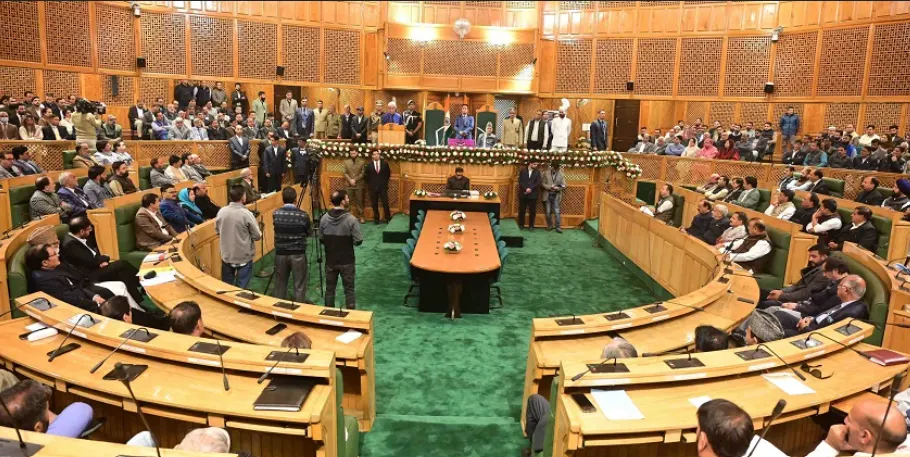
The Jammu and Kashmir Assembly witnessed a heated exchange on Tuesday over public holidays associated with Maharaja Hari Singh and Sheikh Mohammad Abdullah, with members of the ruling National Conference (NC) and BJP raising slogans in support of the respective leaders.

The issue was raised a day before the September 23 public holiday marking Maharaja Hari Singh’s birth anniversary.

NC legislator Abdul Majid Larmi demanded that the holiday for Maharaja Hari Singh’s birth anniversary be withdrawn if the public holiday for Sheikh Mohammad Abdullah’s birth anniversary was not restored.

The demand led to an uproar in the House, with BJP members raising slogans in support of Maharaja Hari Singh and accusing the NC of insulting his legacy. NC legislators responded with slogans supporting Sheikh Abdullah.

What happened over the holiday issue

The Centre withdrew the public holiday marking Sheikh Abdullah’s birth anniversary after the abrogation of Article 370 in 2019. His birth anniversary is observed on December 5.

The government also discontinued the public holiday on July 13, which was observed as Martyrs’ Day in the erstwhile state of Jammu and Kashmir.

In contrast, September 23, Maharaja Hari Singh’s birth anniversary, is now observed as a public holiday in Jammu and Kashmir.

PDP members also joined the discussion and demanded the restoration of the July 13 public holiday.

Speaker says he has no power over holidays

As slogan-shouting continued in the Assembly, Speaker Abdul Rahim Rather attempted to calm the members.

The Speaker said that the authority to declare or withdraw public holidays did not fall within his jurisdiction.

Why July 13 was observed as Martyrs’ Day

July 13 was traditionally observed as a public holiday in Jammu and Kashmir. Official functions were held at the Martyrs’ Graveyard to commemorate the 22 people killed during the 1931 uprising against the Dogra monarchy under British rule.

Following the abrogation of Article 370 and the bifurcation of the erstwhile state into two Union Territories in 2019, July 13 was removed from the list of public holidays. Official commemorations and ceremonial police tributes were also discontinued.

The 1931 killings and the unrest that followed led to the appointment of two commissions to examine grievances of the Muslim community in Kashmir and eventually contributed to limited political reforms.

The first Assembly elections in Jammu and Kashmir were held in 1934, although the Maharaja retained extensive powers over key matters at the time.

Continue Reading

India News

Odisha SIR: Over 20 lakh voters removed from electoral roll

Odisha’s final electoral roll has been published after the Special Intensive Revision, with 20.56 lakh electors removed following verification.
Published

on

SIR

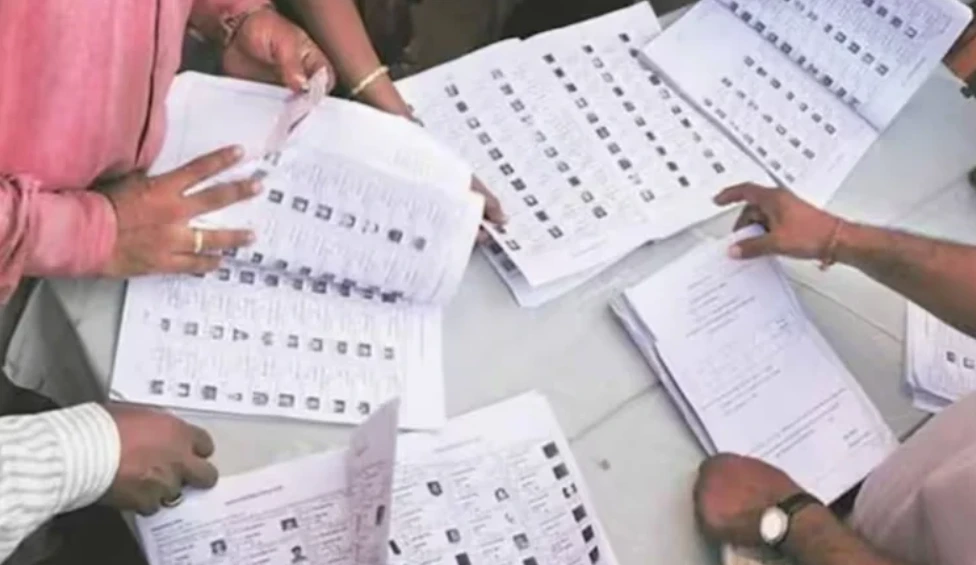
The Special Intensive Revision (SIR) of electoral rolls in Odisha has been completed, with the final electoral roll published after a verification process that resulted in the removal of 20.56 lakh electors.

According to Odisha Chief Electoral Officer S Gopalan, the SIR exercise began on May 30, 2026. At the beginning of the exercise, the electoral roll had 3,13,99,000 electors.

During the first phase, 20.12 lakh voters were removed for various reasons. This included 8.32 lakh electors who were found to be dead, 8.08 lakh who had permanently shifted, 2 lakh who were absent and 1.58 lakh who had duplicate entries.

Notices issued during verification

After the draft electoral roll was published on July 5, further verification was carried out for voters whose details could not be mapped or contained discrepancies.

Around 13 lakh electors whose details could not be mapped in the 2002 roll were issued notices. Another 45.37 lakh electors with logical errors in their entries also received notices.

In total, 58.36 lakh electors were issued notices during this process. Following hearings, 24,000 were found ineligible and removed from the roll.

Claims and objections processed

The electoral authorities also received claims and objections during the revision.

Around 57,000 Form 7 applications were received. Of these, 20,000 were found to be valid and the corresponding names were removed.

At the same time, eligible voters were added to the final roll. Around 2.74 lakh Form 6 applications and 16,000 Form 8 applications resulted in about 2.90 lakh additions.

After the verification, deletions and additions, Odisha’s final electoral roll stood at 3,16,32,754 electors.

The final roll includes about 1,61,30,000 male voters, 1,54,99,000 female voters and 2,774 third-gender electors.

Continuous updating resumes

With the completion of the SIR exercise, the regular process of updating the electoral roll has resumed.

According to the Odisha CEO, voters can now use Forms 6, 7 and 8 to apply for inclusion, deletion or corrections in the electoral roll. Applications can be submitted online or through Booth Level Officers.

Continue Reading

Trending

© Copyright 2022 APNLIVE.com