
Latest world news
US led coalition attacks Syria, hits research centre, arms stockpile


[vc_row][vc_column][vc_column_text]Syria say aggression will fail: SANA
They did it. In a biggest intervention by Western powers against Syrian President Bashar al-Assad, coordinated campaign U.S., British and French forces pounded Syria with air strikes early on Saturday in response to the alleged poison gas attack that killed dozens of people last week in Douma.
CNN quoting US defense officials reports that Air-launched criose missiles were among the munitions used in the strikes. The missiles are fires from aircraft in flight and can be done from outside the range of the Syrian airspace. Earlier reports said that US B-1 bombers were used in the strikes.
According to Reuters, U.S. President Donald Trump announced the military action from the White House late on Friday. As he spoke, explosions rocked Damascus. British Prime Minister Theresa May and French President Emmanuel Macron said the UK and France had joined in the attack.
Syrian standard time is seven hours ahead of Washington.

Trump said he was prepared to sustain the response until Assad’s government stopped its use of chemical weapons. Russia and Syria had denied use of chemical weapons and threatened for “consequences” if attacked.
The strikes are the biggest intervention by Western powers against Assad in the country’s seven-year-old crisis created by terrorist groups including Daesh (IS) and several anti-Assad groups. US forces are stationed in northern Syria, since 2015, without either UN mandate or Damascus invitation. Washington claim of fighting against terror groups in the country.
In an 8-minute televised address from white House Dnald Trump said, “A short time ago, I ordered the United States Armed Forces to launch precision strikes on targets associated with the chemical weapons capabilities of Syrian dictator Bashar al-Assad.”[/vc_column_text][vc_raw_html]JTNDYmxvY2txdW90ZSUyMGNsYXNzJTNEJTIydHdpdHRlci10d2VldCUyMiUyMGRhdGEtbGFuZyUzRCUyMmVuLWdiJTIyJTNFJTNDcCUyMGxhbmclM0QlMjJ1bmQlMjIlMjBkaXIlM0QlMjJsdHIlMjIlM0UlM0NhJTIwaHJlZiUzRCUyMmh0dHBzJTNBJTJGJTJGdC5jbyUyRjZWTFFZQWxjdG8lMjIlM0VodHRwcyUzQSUyRiUyRnQuY28lMkY2VkxRWUFsY3RvJTNDJTJGYSUzRSUzQyUyRnAlM0UlMjZtZGFzaCUzQiUyMERvbmFsZCUyMEouJTIwVHJ1bXAlMjAlMjglNDByZWFsRG9uYWxkVHJ1bXAlMjklMjAlM0NhJTIwaHJlZiUzRCUyMmh0dHBzJTNBJTJGJTJGdHdpdHRlci5jb20lMkZyZWFsRG9uYWxkVHJ1bXAlMkZzdGF0dXMlMkY5ODQ5Njc0NTczMTUxMzk1ODYlM0ZyZWZfc3JjJTNEdHdzcmMlMjU1RXRmdyUyMiUzRTE0JTIwQXByaWwlMjAyMDE4JTNDJTJGYSUzRSUzQyUyRmJsb2NrcXVvdGUlM0UlMEElM0NzY3JpcHQlMjBhc3luYyUyMHNyYyUzRCUyMmh0dHBzJTNBJTJGJTJGcGxhdGZvcm0udHdpdHRlci5jb20lMkZ3aWRnZXRzLmpzJTIyJTIwY2hhcnNldCUzRCUyMnV0Zi04JTIyJTNFJTNDJTJGc2NyaXB0JTNFJTBB[/vc_raw_html][vc_column_text]He further said, “The purpose of our actions tonight is to establish a strong deterrent against the production, spread and use of chemical weapons.To Iran and to Russia, I ask, what kind of a nation wants to be associated with the mass murder of innocent men, women and children?”
Trump made clear that he is wary of a deeper entanglement in Syria, where about 2,000 U.S. troops have been deployed to fight Islamic State. “America does not seek an indefinite presence in Syria,” he said.
British Prime Minister Theresa May said she had authorized British armed forces “to conduct coordinated and targeted strikes to degrade the Syrian regime’s chemical weapons capability.” She described it as a “limited and targeted strike” aimed at minimizing civilian casualties.
British Ministry of Defense, in a statement issued Saturday morning said it has joined in “a precision strike on Syrian installations involved in the regime’s use of chemical weapons against its own people.”
It further said “the international community has responded decisively with legal and proportionate military force. Let these united actions send a clear message to the regime.”
A U.S. official told Reuters the strikes were aimed at multiple targets and involved Tomahawk cruise missiles.
Meanwhile French President Emmanuel Macron, said in a statement, The red lines set by France in May 2017 has been crossed. So, I ordered the French armed forces to intervene tonight, as part of an international operation in coalition with the USA and the UK and directed against the clandestine chemical arsenal of the Syrian regime.
According to Reuters report quoting an eyewitness in Damascus said that at least six loud explosions were heard in Damascus in the early hours of Saturday and smoke was seen rising over the Syrian capital. Another eyewitness say that Barzah district of Damascus had been hit in the strikes. A major scientific research center is located in the area.
At a Pentagon briefing, the Chairman of the Joint Chiefs of Staff General Joseph Dunford said the targets included a Syrian research facility and a chemical weapons storage facility. Another official said that targets were being carefully selected with the aim of damaging Assad’s ability to conduct further gas attacks.
However, she said that the military action is not about intervening in Syria’s civil war or changing its government, she said.
U.S. Defense Secretary Jim Mattis and other military leaders had warned that the larger the attack, the greater the risk of a confrontation with Russia, two U.S. officials said.
Reacting to the strikes, Russian foreign ministry spokeswomen Maria Zakharavoa, in a statement on facebook, said the US struck when the country finally had a chance at peace. “One must be really exceptional to strike Syria’s capital when the country finally got a chance for a peaceful future.”

Syria has not reacted formally so far till 10.15 am (IST). However, Syrian official news agency SANA carried a Damascus overview picture with a caption “Damascus morning is stronger than their aggression and terrorism. In Another brief reaction, the website carried a brief text quoted sources saying “when terrorists failed the USA, France and Britain intervened and committed aggression against Syria.” It further says “The American, French and British aggression against Syria will fail.”[/vc_column_text][/vc_column][/vc_row]






Latest world news
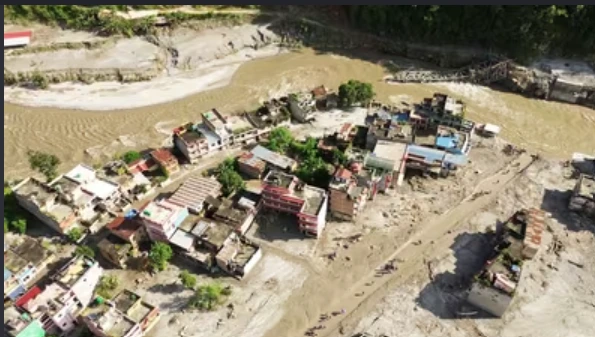
Nepal seeks climate compensation from India, China and US for deadly floods
Nepal has sought climate compensation from India, China and the US after a devastating flash flood killed more than 1,100 people and left nearly 4,500 missing.

Latest world news
Bank of America VP Erin Piacenti killed in New York stabbing
Bank of America vice-president Erin Piacenti, 32, was fatally stabbed in an apparently random attack in New York’s Times Square.

India News
US begins strikes on Iran, Trump warns of bigger attack
The US has begun strikes against IRGC targets in Iran after attempted attacks on commercial shipping and American service members.


Raghav Chadha marked as shifted in Punjab draft voter rolls, alleges AAP vendetta

SBI defends 7.8% GDP growth, explains controversy over revised data

Mayawati says Akash Anand needs more maturity, rules out major BSP role

Abhinandan Varthaman retires from IAF, joins FLY91 as commercial pilot

No discussion on Ajit Agarkar’s extension, BCCI clarifies after key meeting absence
No discussion on Ajit Agarkar’s extension, BCCI clarifies after key meeting absence
Mayawati says Akash Anand needs more maturity, rules out major BSP role
Abhinandan Varthaman retires from IAF, joins FLY91 as commercial pilot
Raghav Chadha marked as shifted in Punjab draft voter rolls, alleges AAP vendetta
SBI defends 7.8% GDP growth, explains controversy over revised data

Afghan Men Try To Hang With The Jet Engine Of The Aircraft in Kabul- Afghanistan News – Kabul News
Trending Top 10 News: 10000 Crore Fine on Flipkart, Apple to Launch Unique Feature, Hdfc Bank Job Ad

Trending Top 10 News: Nokia 6310, Apple sales, Bachpan ka Pyar Video Kid, Dainik Bhaskar IT Raid

Trending Top 10 News: Canada bans Indian flights, Rain in Delhi NCR, AIMIM Twitter hacked, Raj Kundra case

Trending Top 10 News: Shein India, Apple New Service, Pocket Oxygen, Oppo Launched New Phone
-
 India News22 hours ago
Raghav Chadha marked as shifted in Punjab draft voter rolls, alleges AAP vendetta
-
 India News22 hours ago
SBI defends 7.8% GDP growth, explains controversy over revised data
-
 India News11 hours ago
Mayawati says Akash Anand needs more maturity, rules out major BSP role
-
 India News12 hours ago
Abhinandan Varthaman retires from IAF, joins FLY91 as commercial pilot
-
 Cricket news10 hours ago
No discussion on Ajit Agarkar’s extension, BCCI clarifies after key meeting absence
