English हिन्दी
Connect with us

Latest world news

Syrian President Assad to visit North Korea

Published

on

Syrian President Assad to visit North Korea

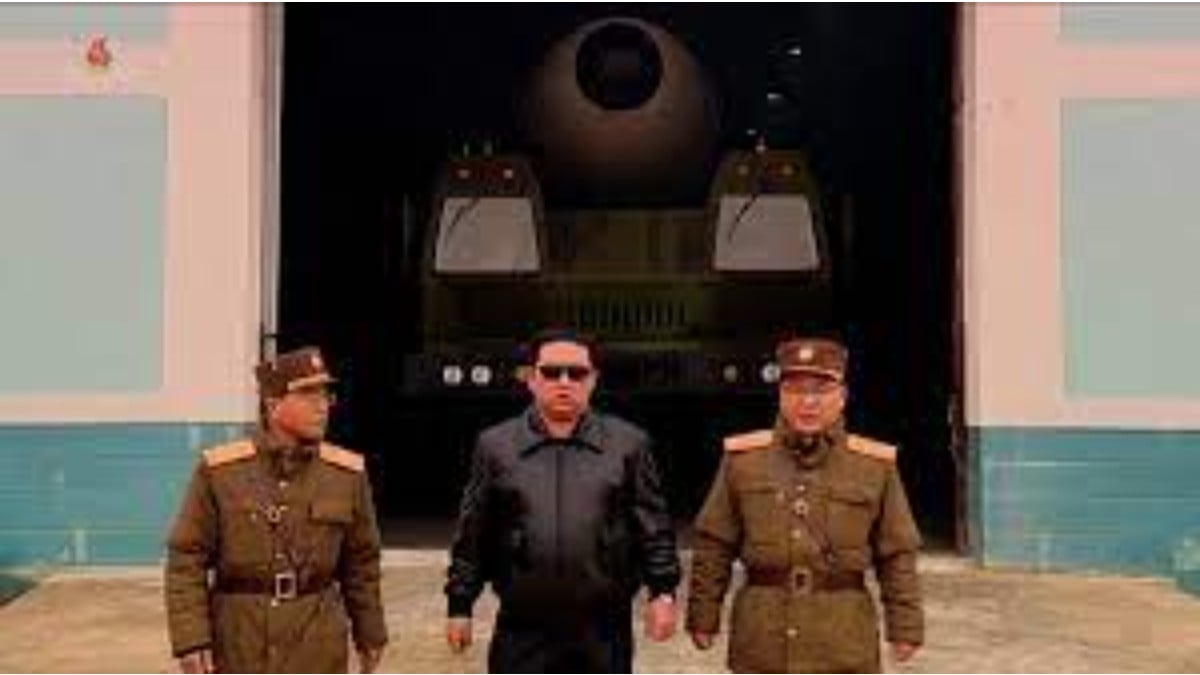
Syrian President Bashar Al-Assad is set to visit Pyongyang, the North Korean capital to meet Kim Jong Un, the official state run media said in Pyongyang on Sunday. Assad will be the first visiting head of state in that country under the present regime since 2011.

While accepting the credentials of the new North Korean ambassador Mun Jong-nam on May 30 in Damascus, Assad was quoted saying, “I am to visit the DPRK and meet HE Kim Jong-un.” Syrian President used the acronym for North Korea’s full name, the Democratic People’s Republic of Korea.

He further said, “I am sure that he will achieve the final victory and realize the reunification of Korea without fail.”

Syrian official media or President Assad’s office has not formally announced the details so far.

The news about Syrian President’s  proposed visit to North Korea has come at a time when Russian foreign minister Sergei Lavrov has recently visited Pyongyang.

Syrian President Assad to visit North KoreaUS President Donald Trump has also reaffirmed his June 12 summit meeting to be held in Singapore. However, Kim is continuing its outreach to American adversaries.

Read More: Syrian President Assad says Trump’s “animal” smear represent himself

Syria and North Korea, having close ties with Russia, China and all others who negate US hegemony, maintain good relations. United Nations monitors have accused North Korea of cooperating with Syria on chemical weapons, a charge Pyongyang denies. Both the countries also face international isolation.

Read More: Syria: US, Russia continue nursing interests amidst bloodshed

Close military cooperation between the two countries began when North Korea sent some 530 troops- including pilots, tank drivers and missile personnel- to Syria during the Arab-Israel war in October 1973.

Since the end of March, North Korean leader Kim Jong Un has twice met with Chinese President Xi Jinping and also held two meetings with his South Korean counterpart Mon Jae-In in the demilitarized zone between the two countries.
Latest world news

Finland PM Petteri Orpo to attend India AI Impact Summit, meet PM Modi

Finland Prime Minister Petteri Orpo will visit India from February 17 to 20 to attend the AI Impact Summit and hold bilateral talks with PM Narendra Modi.

Published

on

finland pm modi

Petteri Orpo will travel to India from February 17 to 20 to participate in the India AI Impact Summit and hold bilateral discussions with Narendra Modi.

Prime Minister Orpo is scheduled to meet PM Modi on February 18. He will also attend the India AI Impact Summit on February 19, which is being hosted in New Delhi.

The Finnish Prime Minister is accompanied by a business delegation comprising representatives of 22 Finnish companies. According to an official release, the visit aims to strengthen cooperation between the two countries, particularly in digitalisation and sustainability.

Focus on AI governance and innovation

The India AI Impact Summit, being held from February 16 to 20 at Bharat Mandapam, will bring together Heads of State and Government, international organisations, AI experts and leading companies from across the globe.

The summit is designed to promote a shared understanding of global AI governance principles and foster international cooperation. Prime Minister Orpo had also taken part in the AI Action Summit in Paris in 2025.

“At the summit, we will highlight Finland’s strengths in the fields of AI policy and innovation. Finland has world-class expertise in AI and the potential to lead the way in its use. At the same time, we will also promote the safe and responsible use of AI,” Orpo said, according to the release.

He noted that geopolitical and economic competition is intensifying, underlining the need for Finland to remain active in global technology discussions. He also emphasised cooperation with like-minded countries while seeking broader international consensus.

During the summit, Orpo will deliver Finland’s national address, visit country pavilions and participate in side events organised by the Finnish Innovation Fund Sitra and National Association of Software and Service Companies. The programme also includes a dinner hosted by PM Modi and other high-level engagements.

Strategic partnership and trade opportunities

The release highlighted India’s growing global role and described bilateral ties as strong and expanding. The inauguration of Finland’s new Consulate General in Mumbai in 2022 was cited as a significant step in strengthening engagement.

Orpo said Finland aims to deepen cooperation with India in the areas of digitalisation and sustainability, reinforcing the new strategic partnership between the two nations.

He also referred to the conclusion of negotiations on the EU-India Free Trade Agreement on January 27, 2026. Talks on the agreement had been underway since 2007, with some interruptions. The pact is expected to improve access for European companies to India’s expanding market and enhance the broader EU-India partnership.

Summit structure and agenda

The India AI Impact Summit will revolve around three pillars — People, Planet and Progress. Discussions will focus on employment and skilling, sustainable and energy-efficient AI, and economic as well as social development.

Seven thematic working groups, co-chaired by representatives from the Global North and Global South, will present deliverables such as proposals for AI Commons, trusted AI tools, shared compute infrastructure and sector-specific AI use case compendiums.

The event will also address AI safety, governance, ethical use, data protection and India’s approach to sovereign AI, including the development of indigenous foundation models for strategic sectors.

An AI Impact Expo will showcase practical AI applications in healthcare, agriculture, education, climate action, energy efficiency and accessibility. The summit will further spotlight national skilling initiatives, including “Yuva AI for All”, a free course aimed at building basic AI awareness among students and professionals.

Continue Reading

Latest Politics News

Tarique Rahman-led BNP set for landslide win in Bangladesh elections

BNP led by Tarique Rahman has crossed the majority mark in Bangladesh’s national elections, with projections suggesting a two-thirds majority. Jamaat has conceded defeat.

Published

on

Tariq Rehman

The Bangladesh Nationalist Party (BNP), led by Tarique Rahman, is heading towards a decisive victory in Bangladesh’s national elections, with projections indicating a clear parliamentary majority.

Early media projections at 8:00 am local time suggested that the BNP had comfortably crossed the 150-seat mark required to form the government in the 300-member parliament. One projection placed the party at 212 seats, putting it well on course for a two-thirds majority.

The BNP has already declared that it is prepared to form the next government after securing what it described as a majority mandate from voters.

Meanwhile, the Islamist-led alliance headed by Shafiqur Rahman of Jamaat-e-Islami was projected to win 70 seats. Although a significant improvement compared to its previous performance, the tally fell short of its expectations. Shafiqur Rahman conceded defeat and said his party would avoid confrontational opposition politics, adding that it would engage in “positive politics.”

Final results awaited, US extends congratulations

The Election Commission is yet to announce the final results for 299 constituencies where voting took place. An additional 50 seats reserved for women will be allocated based on party lists.

Even before the official declaration, the United States embassy in Dhaka congratulated Tarique Rahman and the BNP, describing the outcome as a “historic victory.”

Political transition under way

Bangladesh’s interim leader Muhammad Yunus is expected to step down once the new government assumes office. The Nobel Peace Prize winner has led the country since the ouster of Sheikh Hasina in August 2024 following a mass student-led uprising.

Yunus’s administration had barred the Awami League from contesting the elections by suspending its registration.

This election marked the first in decades without the participation of two dominant political figures — Sheikh Hasina and former prime minister Khaleda Zia, who passed away in December last year.

After nearly 17 years in exile, Tarique Rahman, 60, returned to Bangladesh following his mother Khaleda Zia’s death and quickly emerged as the frontrunner for the prime minister’s post.

Referendum on reforms held alongside polls

Voters also participated in a referendum on the July National Charter, a reform package negotiated by the Yunus-led interim administration and multiple political parties. The proposals include limiting prime ministers to two terms, forming an upper house of parliament, and restoring a caretaker government system to oversee elections for 90 days to ensure neutrality.

Sheikh Hasina criticised the election process, calling it “deceptive” and alleging low voter turnout. In a statement, she demanded cancellation of what she described as an “illegal and unconstitutional election” and sought Yunus’s resignation.

India watching developments closely

India is closely monitoring the situation due to its strategic and diplomatic interests in the region. Following recent political shifts in Dhaka and concerns over minority safety, New Delhi has emphasised that it will assess the mandate once results are officially declared.

When asked about the polls, MEA spokesperson Randhir Jaiswal said India would wait for the final outcome before commenting further.

With final results expected soon, Bangladesh appears set for a major political transition, with the BNP poised to return to power in a significant comeback.

Continue Reading

Latest world news

Jamaat, BNP supporters clash in Dhaka as Bangladesh votes in 13th parliamentary polls

Clashes erupted in Dhaka’s Mirpur as Bangladesh voted in its 13th parliamentary elections, marking the first polls after Sheikh Hasina’s ouster.

Published

on

bangladesh protest

Clashes broke out between supporters of Jamaat-e-Islami and the Bangladesh Nationalist Party (BNP) in Dhaka’s Mirpur-10 constituency as Bangladesh voted in its 13th parliamentary elections on Thursday.

Jamaat-e-Islami chief Shafiqur Rahman is contesting from the Mirpur-10 seat. Polling is being conducted for 299 seats in the Jatiya Sangsad, Bangladesh’s parliament.

Voting details and electoral process

Voting began at 7.30 am local time (7 am IST) under the first-past-the-post system. Results are expected to start coming in by evening.

Out of the 300 parliamentary constituencies, polling in Sherpur-3 has been cancelled following the death of a candidate. A total of 12.77 crore registered voters are eligible to cast their ballots. The majority mark in the 299-seat contest stands at 150.

In addition to these seats, 50 positions in the Jatiya Sangsad are reserved for women. These members are elected by Members of Parliament through proportional representation using the single transferable vote system.

First polls after Hasina’s ouster

This election marks the first parliamentary contest since former prime minister and Awami League chief Sheikh Hasina was removed from office following massive student protests in August 2024. Her long-time political rival, BNP leader Khaleda Zia, passed away in December the following year.

Hasina and Zia alternated in power from 1991 until Hasina returned to office in 2009. She remained prime minister for over 15 years and 200 days and had won the 2024 elections before being deposed months later.

For the first time in decades, voters are participating in national elections without either of the two dominant political figures shaping the contest.

Changing political landscape

With the Awami League excluded from participating due to its crackdown during the student protests, the political space has shifted significantly.

Tarique Rahman, son of Khaleda Zia, returned to Bangladesh in December after nearly 17 years in exile. The 60-year-old has emerged as a frontrunner for the prime minister’s post, drawing on the support base of the BNP and his late mother.

Jamaat-e-Islami, once allied with the BNP, is now leading its own coalition. It has secured backing from the National Citizen Party, a student and Gen-Z platform that emerged from the anti-Hasina protests.

Referendum on July National Charter

Alongside the general election, voters are also participating in a referendum on the July National Charter. The charter has been agreed upon by the Muhammad Yunus-led interim government and several political parties.

Key proposals in the charter include limiting prime ministers to two terms or 10 years, creating an upper House of parliament, and restoring the caretaker government system to oversee elections for 90 days to ensure free and fair polls.

Regional implications

The outcome of the election is expected to influence regional dynamics involving India, China and Pakistan.

Bangladesh had been seen as closer to India during Sheikh Hasina’s tenure. However, there has been a shift towards Beijing and Islamabad in recent times. Relations between India and Bangladesh have reportedly been tense under the Yunus-led interim arrangement.

Among the two principal contenders, the BNP is considered relatively more inclined towards New Delhi than Jamaat-e-Islami.

India is also monitoring the situation amid reports of attacks on minorities and killings of Hindus following Hasina’s ouster. Authorities have expressed concerns about potential violence on polling day.

Continue Reading

Trending

© Copyright 2022 APNLIVE.com