
Latest world news
Jordan: Protests may force King Abdullah II to remove PM Mulki


High prices and new IMF triggered tax bill cause nationwide protests
Amidst mounting public pressure against price rise and proposed tax bill, Jordan’s King Abdullah was expected to ask Prime Minister Hani al-Mulki to resign on Monday. Sunday was the fourth day of public protests which are billed to be largest in five years in the most peaceful country in the region.
According to Riyadh based Al-Arabiya network, protesters were demanding dismissal of Mulki during the protests against IMF-backed tax increases that have shaken the kingdom. The sources said King Abdullah had ordered Mulki for an audience in his palace later on Monday.
The protesters near Prime Minister’s office chanted on Sunday evening, “We are here until we bring the downfall of the tax bill. This government is shameful. Our demands are legitimate. No, no to corruption”. The protesters were carrying national flags and signs reading “we will not kneel”.
 Mulki was appointed in May 2016 and given the responsibility of reviving a sluggish economy and business sentiment hit by regional turmoil. He is considered to be a business-friendly politician.
Jordan and Egypt are the only two countries in the region having peace-treaty with Israel. Both are allied with US and Saudi Arabia. Jordan receives financial assistance from US, UAE and Saudi Arabia. It houses large number of Syrian, Palestinian and Iraqi refugees.
Read More: Mike Pompeo visits Saudi Arabia, Israel and Jordan
Several protesters told the foreign media covering the protests that Jordanian people were passing most difficult time.
“Women have started looking in rubbish bins to find food for their children, and every day we’re hit by price hikes and new taxes,” said one protester.
Another protester Mohammad Shalabiya, 28, said demonstrators wanted “to tell the government that the citizen’s income isn’t suitable for this kind of law and that we have a right to demonstrate”. Peoples’ pockets are empty in the most expensive country in the region with no resources, said the other protester.
Public anger over IMF-driven government policies has grown since a steep general sales tax hike earlier this year and the abolition of bread subsidies, a staple item for the poor. The protests were initiated by labor organizations.
Read More: Modi receives Jordan’s King Abdullah II at airport
Saturday evening was the fourth evening when people tried to reach to the government offices housing the cabinet and Prime Minister. Security personnel had tough time to manage the protesters.
Tens of thousands of Jordanians took to the street on Thursday evening being the weekend in most countries in the region. The protesters took to the streets across the kingdom – In the Irbid and Jarash provinces, the cities of Amman, Aqaba, Salt, Al-Karak and the Jordan Rift area – demanding to cancel the raising of taxes and staple food. They claim that the government measures will increase poverty and distress in the country.
 Thousands of protesters gathered in front of the Prime Minister’s Office and blamed for deepening poverty accusing leaders of trying to close the budget deficit with draconian decisions at the expense of the working class.
On Friday, King Abdullah II, who is considered to be the stabilizing force among various sections, ordered to delay the decisions to raise petrol prices. He is also reportedly communicating with the protest organizers and considering meeting more demands. There are possibilities that King Abdullah II will order the formation of a new government and elect a new parliament.
Jordan’s economy has deteriorated in the last few years for several reasons, among which are the conduct of recent governments and the intake of over a million Syrian refugees.
The Al-Arabia reports that Jordan’s stability is a supreme security concern from Israel’s standpoint. At this point, officials in Jerusalem are closely following the demonstrations in Jordan as well as the regime’s efforts to halt the protest.
Saudi media has remarkable started calling Jerusalem as Israel’s capital after President Donald Trump has recently shifted US embassy from Tel Aviv to Jerusalem. The phrasing of “officials in Jerusalem are closely following” indicates the change in Riyadh’s official working.
However, media in Iran and its allies: Iraq, Syria, Lebanon and Houthi run government in Yemen call Jerusalem as “Al-Quds” as the capital of Palestine, an occupied territory. They condemn US for recognizing Jerusalem as Israeli capital and moving their embassy to Jerusalem.







Latest world news
S Jaishankar says India is a natural option for Russia amid Europe tensions
External Affairs Minister S Jaishankar said India remained a natural option for Russia as Moscow increasingly turned towards Asia amid strained relations with Europe. He highlighted the continuity of India-Russia ties and their significance for the balance of power in Asia.


Latest world news
Putin praises PM Modi, says he has very good ideas on Ukraine war
Russian President Vladimir Putin has praised Prime Minister Narendra Modi for repeatedly raising the need to end the Ukraine war, describing his ideas for a settlement as “very good”.

Latest world news
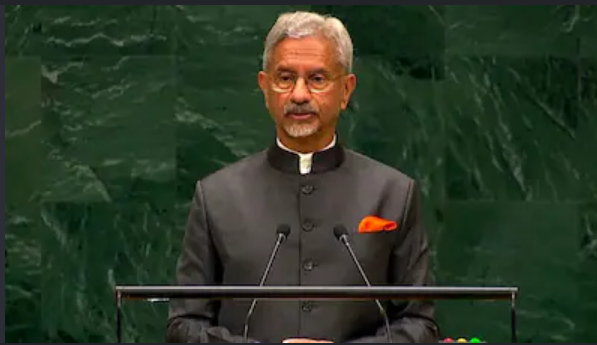
S Jaishankar calls Pakistan a “serial practitioner of terrorism” at UN
S Jaishankar criticised Pakistan at the UN General Assembly, referring to a “serial practitioner of terrorism” and warning against attempts to normalise terrorism.

Supreme Court stays defamation case against Rahul Gandhi over PM Modi remarks

Rahul Gandhi hosts high tea for INDIA bloc after Gyanesh Kumar protests

L Murugan quits Union ministry to strengthen BJP in Tamil Nadu

Amit Shah attacks Rahul Gandhi over Congress poll losses, questions SIR row

BJP focuses on religion as opposition pushes BDM strategy in UP

PM Modi speaks to Mark Carney as India and Canada push to strengthen ties

S Jaishankar says India is a natural option for Russia amid Europe tensions

CJP leaders Saurav Das, Ashutosh Ranka, Ajinkya Shinde sent to 5-day judicial custody
BJP focuses on religion as opposition pushes BDM strategy in UP
L Murugan quits Union ministry to strengthen BJP in Tamil Nadu

Afghan Men Try To Hang With The Jet Engine Of The Aircraft in Kabul- Afghanistan News – Kabul News
Trending Top 10 News: 10000 Crore Fine on Flipkart, Apple to Launch Unique Feature, Hdfc Bank Job Ad

Trending Top 10 News: Nokia 6310, Apple sales, Bachpan ka Pyar Video Kid, Dainik Bhaskar IT Raid

Trending Top 10 News: Canada bans Indian flights, Rain in Delhi NCR, AIMIM Twitter hacked, Raj Kundra case

Trending Top 10 News: Shein India, Apple New Service, Pocket Oxygen, Oppo Launched New Phone
-
 India News23 hours ago
Supreme Court stays defamation case against Rahul Gandhi over PM Modi remarks
-
 India News15 hours ago
Rahul Gandhi hosts high tea for INDIA bloc after Gyanesh Kumar protests
-
 India News14 hours ago
L Murugan quits Union ministry to strengthen BJP in Tamil Nadu
-
 India News15 hours ago
Amit Shah attacks Rahul Gandhi over Congress poll losses, questions SIR row
-
 India News13 hours ago
BJP focuses on religion as opposition pushes BDM strategy in UP
-
 India News3 hours ago
CJP leaders Saurav Das, Ashutosh Ranka, Ajinkya Shinde sent to 5-day judicial custody
-
 Latest world news2 hours ago
S Jaishankar says India is a natural option for Russia amid Europe tensions
-
 India News2 hours ago
PM Modi speaks to Mark Carney as India and Canada push to strengthen ties
