English हिन्दी
Connect with us

India News

BJP government in Delhi likely to be sworn in by Feb 20

“There is no race for the post of Delhi Chief Minister. In our party, the CM or the leader of the legislature party is elected in a meeting of the MLAs,” said Abhay Verma, second-time MLA from Laxmi Nagar and a Purvanchali leader, who is also seen as a potential candidate for the top post.

Published

on

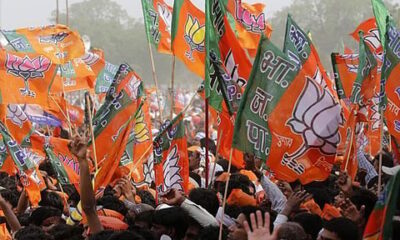
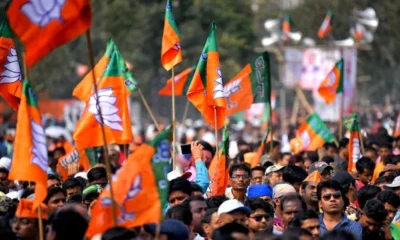
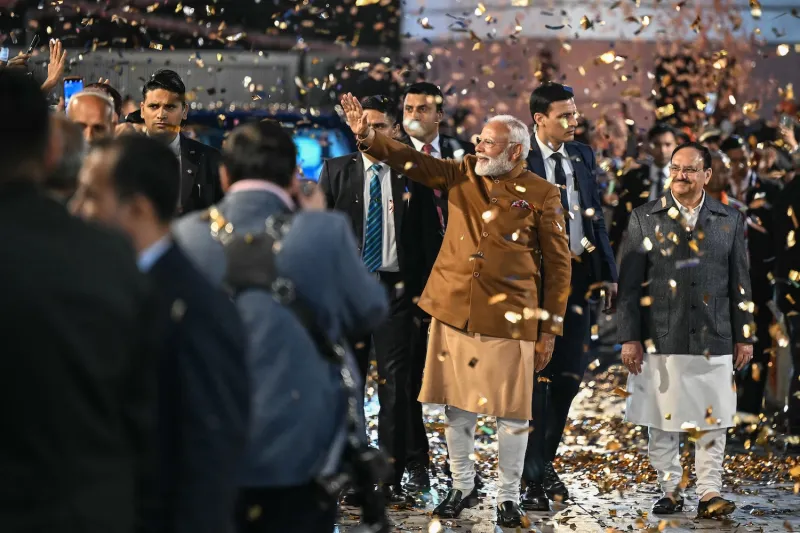
The swearing-in ceremony of the BJP government in Delhi is likely to take place on February 19 or 20, with the new administration prioritising clean drinking water, improved civic infrastructure, and pollution control, according to party leaders.

Prime Minister Narendra Modi, who is currently on a foreign visit, is expected to return soon, after which observers for the BJP Legislature Party meeting will be appointed. Manjinder Singh Sirsa, newly-elected BJP MLA and national secretary, told PTI that the new government will begin functioning around February 19-20.

“The new government will start working around February 19-20,” said Sirsa, the Rajouri Garden MLA, who is considered a contender for the Chief Minister’s post or a ministerial position. He added that the BJP legislature party meeting is likely to be held around February 18-19, followed by the swearing-in ceremony by February 20.

The newly elected BJP MLAs dismissed speculation about a race for the Chief Minister’s post, emphasizing that the party follows a democratic process to elect its leader. “There is no race for the post of Delhi Chief Minister. In our party, the CM or the leader of the legislature party is elected in a meeting of the MLAs,” said Abhay Verma, second-time MLA from Laxmi Nagar and a Purvanchali leader, who is also seen as a potential candidate for the top post.
Verma highlighted the government’s focus on addressing key issues such as development, clean water supply, air quality, and Yamuna pollution. “We have come to serve the people and are now thinking about addressing issues like development, clean water supply, and clean air for the people, as well as how to free the Yamuna from pollution,” he said.

The BJP MLAs also reiterated their commitment to implementing the Ayushman Bharat health scheme, which was previously obstructed by the Aam Aadmi Party (AAP) government. Prime Minister Modi has already announced that the health insurance scheme will be rolled out in Delhi through the first meeting of the new Cabinet.

Sirsa outlined the new government’s priorities for its first 100 days, including providing clean drinking water, ensuring sanitation, and tackling air and Yamuna pollution. “Providing clean drinking water, ensuring sanitation in the city, and starting work to deal with air and Yamuna pollution will be priorities of the new government within 100 days in power,” he said.

Mohan Singh Bisht, a sixth-time MLA from Mustafabad, emphasized that the new Chief Minister will be elected from among the 48 BJP legislators. Bisht also reiterated his proposal to rename the minority-dominated constituency to “Shiv Vihar” or “Shiv Puri,” citing public sentiment. “There are around 42% people of one community (minorities) and on the other hand are 58% people (Hindus)… So, the public sentiment must be respected,” he said.

Bisht added that the BJP government will address Yamuna pollution by setting up sewage treatment plants (STPs) to treat wastewater from 28 major drains flowing into the river.

As the BJP prepares to take charge of Delhi after a 27-year gap, the focus remains on delivering on its promises of development, improved infrastructure, and environmental sustainability.

India News

Tamil Nadu exit polls favour DMK, Vijay factor may influence margins

Exit polls suggest DMK may retain power in Tamil Nadu, but Vijay’s political debut could influence the final outcome.

Published

on

Actor vijay

Exit polls for the 2026 Tamil Nadu Assembly elections suggest that the ruling Dravida Munnetra Kazhagam (DMK), led by Chief Minister M K Stalin, is likely to return to power, though the final outcome will be confirmed on counting day.

According to multiple projections, the DMK-led alliance is expected to secure a majority in the 234-member Assembly, with estimates placing the party’s tally in the range of around 122 to 145 seats.

Most polling agencies indicate that the ruling alliance has maintained a clear edge over its rivals, particularly the AIADMK-led bloc, in what has been a closely watched contest.

Vijay factor adds new dimension

A significant highlight of this election has been the entry of actor-turned-politician Vijay and his party, Tamilaga Vettri Kazhagam (TVK). His debut has introduced a third force in a state traditionally dominated by the DMK and AIADMK.

Early assessments suggest that while TVK may not secure a large number of seats, it could influence vote shares and outcomes in several constituencies, especially by attracting younger voters and first-time participants.

This has made the electoral contest more complex, with analysts pointing to potential vote-splitting effects that could impact margins for both major alliances.

High turnout and key contest

Polling for all 234 seats was held on April 23, with the state witnessing a high voter turnout of over 84 percent, one of the highest in recent decades.

The election saw a multi-cornered fight involving the DMK alliance, AIADMK-led coalition, and newer players like TVK, alongside other regional parties.

What happens next

Exit polls provide only an early indication of voter trends and are not always accurate. The final results will be declared on May 4, when counting of votes takes place.

Until then, while projections favour a return of the DMK government, the actual impact of the “Vijay factor” and constituency-level dynamics will become clear only after the official results are announced.

Continue Reading

India News

Bengal exit polls 2026 show tight contest, some projections give BJP edge

Exit polls for West Bengal 2026 show a close race, with some projections giving BJP a narrow edge over TMC.

Published

on

Exit polls

Exit polls released after the final phase of voting in West Bengal suggest a closely contested election, with a “poll of polls” indicating that the Bharatiya Janata Party (BJP) may hold a slight edge over the ruling Trinamool Congress (TMC) in some projections.

The estimates, which combine multiple exit poll surveys, point to a tight race in the state, reflecting a competitive political contest between Chief Minister Mamata Banerjee’s TMC and the BJP. While some projections show the BJP ahead, others indicate that the TMC remains firmly in contention, highlighting the uncertainty surrounding the final outcome.

The poll of polls aggregates data from different agencies to present a broader picture of voter sentiment. However, variations across surveys underline that the margin between the two major parties is narrow, and no clear consensus has emerged.

West Bengal’s election, held in two phases, has been one of the most closely watched political battles, drawing national attention due to the high-stakes contest between the incumbent leadership and the BJP’s aggressive campaign.

It is important to note that exit polls are only indicative and not definitive. Their accuracy depends on sampling methods and voter responses, and past trends have shown that final results can differ significantly from these projections.

The official results of the West Bengal Assembly elections are scheduled to be announced on May 4, which will ultimately determine whether the TMC retains power or if the BJP manages to make a breakthrough in the state.

Continue Reading

India News

Bengal phase 2 voting crosses 60% turnout by afternoon amid tight security

West Bengal phase 2 voting records over 60% turnout by early afternoon as polling continues across 142 constituencies under tight security.

Published

on

Voting for the second phase of the West Bengal Assembly elections witnessed strong participation on Wednesday, with voter turnout crossing 60% by early afternoon.

Polling was underway across 142 constituencies spread over several districts, including key seats in Kolkata, with security tightened to ensure smooth conduct of elections. According to available data, voter turnout reached around 61% by 1 pm, reflecting steady participation since the morning hours.

The polling process began early in the day, with voters lining up outside booths in both urban and rural areas. Authorities deployed extensive security personnel across sensitive locations to maintain order and prevent disruptions.

This phase marks a crucial stage in the state elections, covering a large number of constituencies and involving a high-stakes contest among major political parties. The scale of polling and the number of seats make it a decisive segment in determining the overall outcome.

Administrative measures, including restrictions and monitoring, were put in place to ensure free and fair voting. Preparations had been completed in advance, with election officials focusing on logistics, security arrangements, and voter accessibility.

The Election Commission had earlier intensified deployment of forces and oversight mechanisms, aiming to avoid disturbances and ensure a peaceful voting environment across polling stations.

Polling is scheduled to continue until the evening, after which sealed electronic voting machines will be stored securely until counting day.

Continue Reading

Trending

© Copyright 2022 APNLIVE.com