English हिन्दी
Connect with us

India News

Chandigarh on high alert as sirens blare again after Pakistan attacks

After repeated missile and drone threats from Pakistan, Chandigarh enforces blackout and shuts schools. Nationwide alerts issued.

Published

on

Chandigarh once again came under high alert as air raid sirens echoed across the Union Territory on Friday morning, following warnings of a possible aerial threat. This comes just hours after similar sirens and a citywide blackout were enforced on Thursday evening, in the wake of missile and drone strikes by Pakistan across various Indian regions.

Officials reported that the sirens were activated for nearly an hour early this morning after a warning was relayed from the Air Force Station regarding a “possible attack.” The Chandigarh Administration swiftly issued a public advisory urging residents to remain indoors and avoid balconies.

Neighbouring Panchkula in Haryana followed suit, with its district administration also sounding alarms and issuing a similar indoor advisory. The heightened alert stems from escalating cross-border hostilities over the past 48 hours.

Schools shut, blackouts enforced in multiple cities

In response to the “emergent situation,” all private and government schools in Chandigarh will remain closed on Friday and Saturday, as confirmed by Deputy Commissioner Nishant Kumar Yadav. Authorities are taking preemptive safety measures across the region.

Several Indian cities including Rajasthan’s Jaisalmer, Punjab’s Amritsar, and Haryana’s Panchkula also observed enforced blackouts last night, reflecting the broad scale of precautionary action across the western front.

India repels attacks, retaliates against Pakistani positions

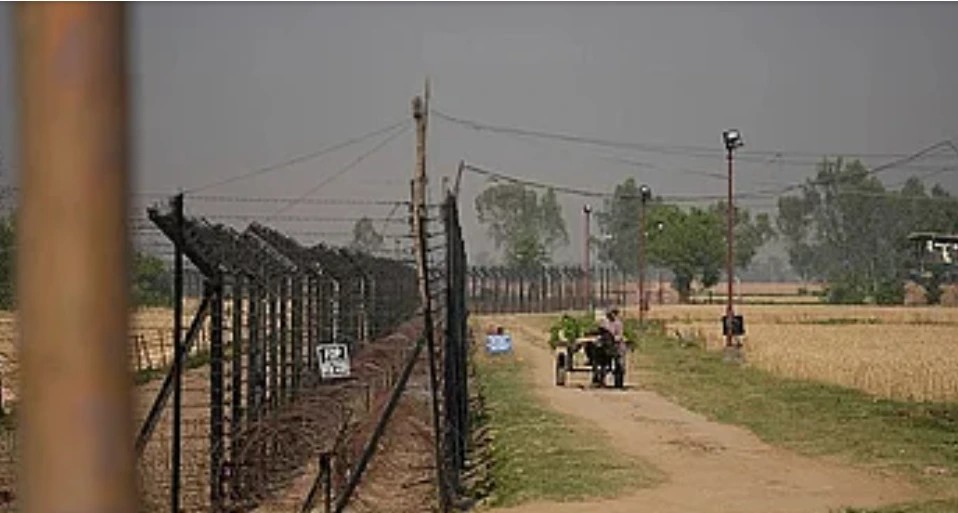
According to the Indian Army, Pakistani forces executed “multiple attacks” using drones and munitions across the Western Border during the intervening night of May 8 and 9. Pakistani troops also initiated ceasefire violations along the Line of Control in Jammu and Kashmir. The Indian Army confirmed that these drone incursions were successfully countered, with a “befitting reply” delivered in return.

A barrage of at least eight missiles was launched by Pakistan targeting RS Pura, Arnia, Samba, and Hiranagar in Jammu and Kashmir. Air defence systems intercepted incoming threats over Jammu, while ground-level shelling was reported in Punjab’s Pathankot.

Nationwide targets and India’s counter-strike

In a more aggressive show of force, Pakistan reportedly attempted to hit as many as 15 military targets in various Indian cities including Srinagar, Pathankot, Chandigarh, Bhuj, Amritsar, and Bathinda. The Ministry of Defence confirmed that India’s air defence neutralised the incoming missiles and drones, with teams now collecting debris as material evidence of the attack.

India has since launched a counter-operation, striking air defence radars and installations in Pakistan, including sites in Lahore, as part of its strategic retaliation.

Escalation follows deadly terror attack in Jammu and Kashmir

The sharp rise in hostilities follows a recent terror attack in Pahalgam, Jammu and Kashmir, which resulted in 26 fatalities. The incident has sharply heightened military tensions between the two nuclear-armed neighbours.

Earlier this week, Indian forces launched Operation Sindoor, successfully destroying several terror camps and infrastructure facilities in Pakistan and Pakistan-occupied Kashmir (PoK), showcasing India’s heightened readiness to neutralize external threats.

India News

Delhi to install 305 mist sprayers across 9 major pollution hotspots

Chief Minister Rekha Gupta announced that 305 mist sprayers will be installed across nine pollution hotspots in Delhi, alongside expert-led planning and coordinated measures to reduce dust and biomass-related pollution.

Published

on

Delhi-NCR air quality

The Delhi government has announced a large-scale deployment of mist sprayer technology to tackle rising air pollution, with Chief Minister Rekha Gupta confirming that 305 mist sprayers will be installed across nine pollution hotspots in the capital.

Mist sprayers to curb dust at critical locations

During an inspection at ITO, Gupta said the mist sprayers already operational at the site are performing effectively. She noted that 35 poles at ITO have been fitted with these machines, which are helping suppress dust—a major contributor to air pollution in Delhi.

According to the Chief Minister, trials conducted in certain NDMC areas have shown promising results, reinforcing confidence in the technology.

High-level committee to guide pollution-control measures

Gupta announced the formation of a high-level expert committee that will advise the government on effective measures to reduce pollution. The panel will include senior officials from various departments as well as environmental specialists, including experts from IITs. Officials stated that the committee will receive special powers to implement pollution-mitigation strategies.

Departments directed to repair roads, add greenery

The Chief Minister said departments including PWD, DSIIDC and DDA have been instructed to fix potholes, repair and carpet roads, plant foliage along dividers and islands, and take other measures to reduce pollution sources.

She urged residents to report potholes on the government portal for quicker action.

Appeal to RWAs to prevent biomass burning

To curb winter pollution, Gupta advised Resident Welfare Associations (RWAs) to distribute electric heaters to security guards to discourage biomass burning, which significantly contributes to seasonal pollution spikes.

Continue Reading

India News

PM Modi welcomes Vladimir Putin with warm hug as Russian President begins India visit

Russian President Vladimir Putin began a high-profile visit to India on Thursday, welcomed by PM Narendra Modi as both nations prepare to discuss defence, energy and trade cooperation.

Published

on

Vladimir Putin rides in Indian PM Narendra Modi's car on India visit

Russian President Vladimir Putin arrived in New Delhi on Thursday evening for a 27-hour visit focused on strengthening defence, energy and trade cooperation. The visit, marked by a warm embrace and a brief car ride shared with Prime Minister Narendra Modi, underscores the continuity of the India-Russia strategic partnership amid shifting global geopolitics.

Putin receives ceremonial welcome and packed schedule ahead

Putin landed in Delhi around 6:35 pm, where PM Modi personally received him at Palam airport. The two leaders shared a hug before leaving together, with the Prime Minister set to host a private dinner in honour of the visiting President — a reciprocal gesture to the hospitality extended during Modi’s Moscow visit last year.

On Friday, Putin will begin his official engagements with a ceremonial welcome at Rashtrapati Bhavan, followed by a visit to Rajghat to pay homage to Mahatma Gandhi. He is also scheduled to attend the India-Russia Annual Summit at Hyderabad House, where both sides will hold a working lunch.

The Russian President will later inaugurate a new India-based channel of Russia’s state broadcaster and attend a state banquet hosted by President Droupadi Murmu, before departing India on Friday night.

Defence, energy and trade to dominate agenda

Officials have indicated that discussions will centre on defence, energy and trade — the three pillars of the bilateral relationship. Agreements are expected across sectors including shipping, healthcare, fertilisers and connectivity.

Ahead of the summit, defence ministers from both countries held extensive talks, covering additional procurement of S-400 air defence systems and delayed military hardware shipments affected by the Ukraine war. The S-400 platform, procured under a USD 5 billion deal, played a major role during Operation Sindoor.

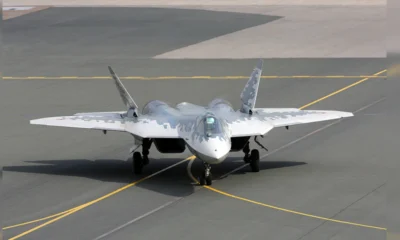
The Kremlin has also hinted that Russia may propose the Su-57 fifth-generation fighter jet, which would put Moscow in direct competition with Western aircraft makers.

Energy ties face renewed pressure

India remains among the largest buyers of discounted Russian crude. However, fresh US sanctions on key Russian oil producers have led to a dip in purchases.

Putin’s visit also comes at a time of strain in India-US ties, with Washington recently imposing steep tariffs on Indian goods — including measures linked directly to India’s continued oil trade with Russia.

Massive security deployment in Delhi

Delhi Police have stationed over 5,000 personnel across central and New Delhi districts, supported by SWAT teams, anti-terror units, snipers, quick-reaction teams, anti-drone systems, HD-CCTV networks and layered surveillance measures for the visit.

Continue Reading

India News

Rahul Gandhi attacks Centre ahead of Vladimir Putin’s India visit

Rahul Gandhi alleged that the government discourages visiting foreign dignitaries from meeting Opposition leaders, calling it a sign of “insecurity,” hours before Russian President Vladimir Putin arrives in Delhi.

Published

on

Rahul Gandhi

As Russian President Vladimir Putin arrives in Delhi today for the India-Russia Annual Summit, Leader of the Opposition Rahul Gandhi has renewed his charge that the Centre discourages visiting foreign leaders from meeting Opposition representatives. He called it a sign of “insecurity” within the government.

Rahul Gandhi alleges break in long-followed tradition

Speaking outside Parliament, Rahul Gandhi said that it has traditionally been the norm for visiting foreign leaders to meet the Leader of the Opposition, a practice he claims continued during the tenures of Atal Bihari Vajpayee and Manmohan Singh.

He alleged that the present government advises foreign dignitaries against such meetings. “When foreign leaders come, the government suggests they should not meet the Leader of the Opposition. This is their policy,” Gandhi said. He added that a meeting with the Opposition offers visiting leaders a broader perspective, as “we too represent India.”

Gandhi further stated that this approach reflects the government’s reluctance to allow engagement between the Opposition and foreign guests.

Former Foreign Secretary counters Gandhi’s remarks

Responding to Gandhi’s allegations, former Foreign Secretary and Rajya Sabha MP Harsh Vardhan Shringla said visiting leaders operate on very tight schedules and there is no protocol mandating a meeting with the Leader of the Opposition. He stressed that such interactions depend entirely on the guest’s time and preference, noting that the required meetings are those with the President and the Prime Minister.

Putin’s schedule packed with bilateral engagements

Russian President Vladimir Putin is set to land in Delhi this evening on Prime Minister Narendra Modi’s invitation. His itinerary includes:

  • A private dinner with PM Modi
  • Visit to Mahatma Gandhi’s memorial at Raj Ghat
  • Engagements at Bharat Mandapam and Hyderabad House
  • A banquet hosted by President Droupadi Murmu

The visit forms part of the 23rd India-Russia Annual Summit.

Continue Reading

Trending

© Copyright 2022 APNLIVE.com

Left Menu Icon