English हिन्दी
Connect with us

India News

Jyotiraditya Scindia hits back at Kharge over Digital India criticisms, cites telecom reforms

Jyotiraditya Scindia rebuts Mallikarjun Kharge’s criticisms on Digital India, pointing to BSNL’s financial turnaround, 5G rollout, and anti-fraud measures.

Published

on

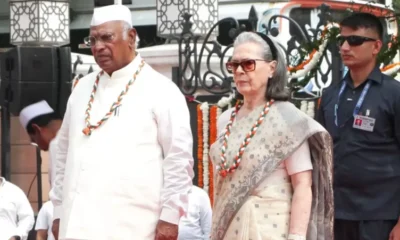
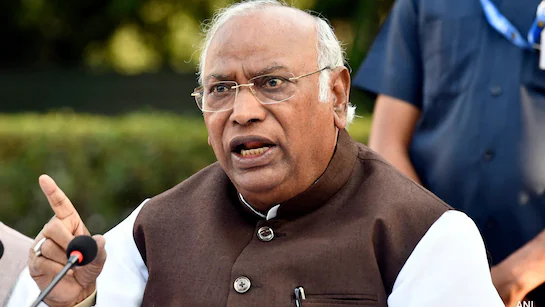
Union telecom minister Jyotiraditya Scindia has responded sharply to Congress President Mallikarjun Kharge’s recent criticism of the Digital India initiative, accusing the previous UPA government of telecom mismanagement and highlighting key achievements under the Modi-led NDA regime.

Taking to social media platform X, Scindia defended the Centre’s performance, asserting that India is now globally recognised for its strides in telecom, 5G rollout, and satellite connectivity. He attributed this progress to Prime Minister Narendra Modi’s reform-driven governance, in contrast to what he called the “scam-ridden” legacy of the UPA.

Scindia defends BSNL turnaround and 5G expansion

Scindia dismissed Kharge’s claims about the underperformance of state-run BSNL, noting that the telecom PSU had recorded net profits in consecutive quarters — ₹262 crore in Q3 and ₹280 crore in Q4 of FY 2024-25 — for the first time since 2007. He credited this turnaround to targeted reforms and homegrown 4G technology, with BSNL now deploying over 90,100 4G towers.

“The Modi government invested over ₹3.2 lakh crore, not as a bailout, but to revive a critical national asset your party nearly destroyed,” Scindia said. He also pointed out that India has achieved 5G coverage across 99% of districts and reached 82% of the population within just 22 months, describing it as the fastest rollout globally.

Telecom scams vs. reforms: A war of narratives

In a pointed jibe, Scindia advised Kharge to “try a basic web search” for telecom scams in India, which he said would reveal the misdeeds under the Congress-led UPA government. He accused the opposition of leaving behind a telecom sector plagued with cronyism and systemic failures.

“The Congress’ contribution to Digital India has been to ‘Scam India’, leaving behind a legacy steeped in kleptocracy,” he stated.

Congress raises concerns over BSNL debt and BharatNet delays

Kharge had earlier accused the NDA government of making false claims on the Digital India programme. He highlighted delays in the BharatNet project, stating that only 2.12 lakh of the targeted 6.55 lakh villages had been connected so far — about 65% still pending. He also pointed out that the project’s deadline had been revised eight times in the past 11 years.

Kharge noted that BSNL has still not met its goal of deploying 1 lakh 4G towers and continues to lag behind private telecom players, despite receiving three revival packages worth over ₹3 lakh crore. He further flagged a steep increase in the debt of BSNL and MTNL between 2014 and 2024.

Government cites cyber fraud crackdown

Scindia also highlighted digital safety initiatives like Sanchar Saathi and ASTR. Under these programs, the Department of Telecom has blocked over 4.22 crore fake SIM cards, disconnected 3.5 crore suspicious numbers, and helped trace or block more than 34 lakh lost devices.

He reiterated that the Modi government’s telecom strategy is built on transparency, technological self-reliance, and proactive reforms.

India News

P Chidambaram avoids commenting on Trump’s dead economy remark echoed by Rahul Gandhi

Chidambaram stays silent on Trump’s ‘dead economy’ remark echoed by Rahul Gandhi as Congress critiques Union Budget 2026.

Published

on

P Chidambaram

Finance Minister Nirmala Sitharaman on Sunday presented her ninth consecutive union budget, stopping just short of Morarji Desai’s record of ten.

Congress MP P Chidambaram, however, avoided commenting on the ‘India is a dead economy’ statement made by former US President Donald Trump last July, which was later echoed by Rahul Gandhi.

Speaking to reporters after reviewing the budget, Chidambaram said he could not respond as he lacked the full context of Trump’s original remarks.

The comment by Trump followed India’s continued purchase of Russian crude oil, which the US had criticized as indirectly funding military action in Ukraine. Trump imposed a 25 per cent penalty tariff on Indian imports and added: “I don’t care what India does with Russia. They can take their dead economies down together, for all I care.”

Rahul Gandhi later supported the statement, saying, “He is right, everybody knows this except the Prime Minister and Finance Minister. I am glad President Trump stated a fact…”

The remark sparked a political debate, with BJP leaders criticizing Gandhi, while some Congress members, including Rajya Sabha MP Rajiv Shukla, called the statement “completely wrong.”

Ahead of the budget, Gandhi had highlighted the impact of US tariffs on small textile businesses, noting on X: “50 per cent US tariffs are badly hurting textile exporters. Job losses, shutdowns… are reality of our ‘dead economy’.”

The debate gained traction following the budget announcement, which did not offer immediate relief to middle-class taxpayers and saw markets react sharply, with the Sensex closing 1,500 points lower on Sunday.

Chidambaram, as usual, led Congress’ critique of the budget, pointing to a decrease in capital expenditure as a percentage of GDP from 3.2 per cent in FY25 to 3.1 per cent, despite the proposal of Rs 12.2 lakh crore for capex. He added, “Revenue receipts short by Rs 78,086 crore… total expenditure short by Rs 1,00,503 crore… revenue expenditure short by Rs 75,168 crore… capex was cut by Rs 1,44,376 crore… not a word was said to explain this…”

Rahul Gandhi echoed the criticism, highlighting issues such as unemployment, farmers’ distress, declining household savings, and low investment. “A budget that refuses course correction and is blind to India’s real crises,” he said on X.

Responding to the criticism, Finance Minister Sitharaman said, “With due respects, I don’t know what course correction he is referring to. The economy and its fundamentals are strong.”

Continue Reading

India News

Earthquake of 4.6 magnitude hits Andaman and Nicobar Islands

A 4.6 magnitude earthquake struck the Nicobar Islands at 10 km depth, highlighting the region’s seismic activity and potential risks from shallow tremors.

Published

on

earthquake-tremors

An earthquake measuring 4.6 on the Richter scale struck the Andaman and Nicobar Islands early Monday at around 3:30 am, the National Center of Seismology (NCS) reported.

According to the NCS, the tremor occurred at a shallow depth of 10 km. The earthquake’s epicenter was located at a latitude of 9.03° North and a longitude of 92.78° East, placing it in the Nicobar Islands region.

In a post on X, the NCS confirmed the details: “EQ of M: 4.6, On: 02/02/2026 03:31:12 IST, Lat: 9.03 N, Long: 92.78 E, Depth: 10 Km, Location: Nicobar Islands.”

The Andaman and Nicobar Islands fall under Seismic Zone V, according to India’s seismic zoning map (1893-1984), making them one of the most earthquake-prone regions in the world. Historically, the islands have experienced several major earthquakes, including the devastating tremor on December 26, 2004, which caused significant land displacement and triggered tsunami waves, resulting in heavy loss of life and property.

Experts note that shallow earthquakes, like the one recorded on Monday, can be more hazardous than deeper ones. Seismic waves from shallow quakes travel a shorter distance to the surface, causing stronger ground shaking and posing higher risks to structures and human safety.

Continue Reading

India News

Parliament Budget Session 2026 set to begin with Lok Sabha debate on President’s address

The Parliament Budget Session 2026 is set to begin with the Lok Sabha scheduled to debate President Droupadi Murmu’s address for 18 hours.

Published

on

Parliament

The Parliament Budget Session 2026 is set to begin on Monday, with the Lok Sabha scheduled to take up discussions on President Droupadi Murmu’s address, a day after Finance Minister Nirmala Sitharaman presented the Union Budget 2026-27 in the House.

The Lok Sabha is scheduled to meet at 11:00 am for a busy day of proceedings. A total of 18 hours has been allocated for the debate on the President’s address, which lays out the government’s policy priorities and broad agenda.

Prime Minister Narendra Modi is slated to reply to the discussion on February 4, while Finance Minister Nirmala Sitharaman is expected to respond on February 11.

As per the session calendar, the Budget Session will comprise 30 sittings spread over 65 days and is scheduled to conclude on April 2. Both the Lok Sabha and the Rajya Sabha will adjourn for a recess on February 13 and reconvene on March 9. During the recess period, Standing Committees are expected to examine the Demands for Grants of various ministries and departments.

In addition to legislative business, Budget documents tabled in Parliament are set to provide a detailed break-up of government revenues and expenditure, outlining how funds are raised and allocated.

The opening of the Budget Session also comes amid discussions on the government’s economic approach, including measures announced in the Union Budget aimed at supporting key sectors and addressing global trade challenges.

Continue Reading

Trending

© Copyright 2022 APNLIVE.com