English हिन्दी
Connect with us

Latest world news

Peter Navarro labels Russia-Ukraine conflict as Modi’s war and criticizes India’s oil purchases

Published

on

Peter-Navarro

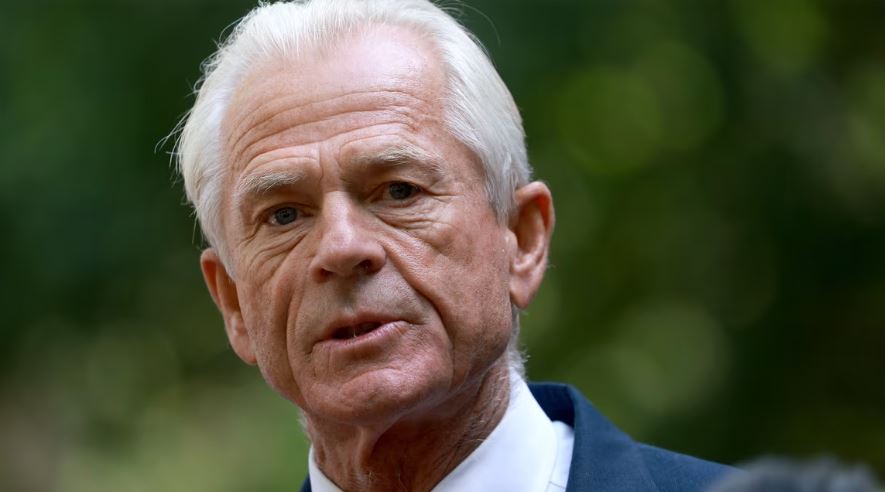
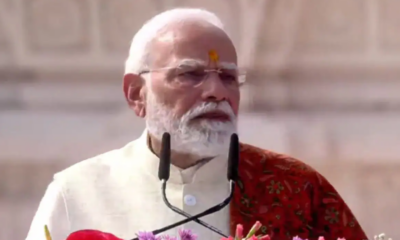
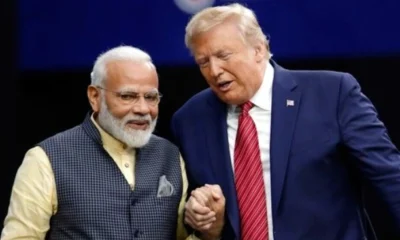
The Trump administration has intensified its criticism of India for maintaining oil imports from Russia, with former White House trade advisor Peter Navarro provocatively labeling the Russia-Ukraine conflict as Modi’s war. His remarks come just hours after Washington imposed a steep 50 percent tariff on most imports from India, effective from midnight on Tuesday.

Navarro told Bloomberg TV that India could have the 25 percent tariff removed if it stopped purchasing Russian crude, but argued that India was displaying arrogance by defending its sovereign right to buy oil from Russia. He maintained that as the world’s largest democracy, India should demonstrate its commitment to democratic values by siding with fellow democracies rather than aligning with authoritarian regimes. His remarks were delivered in a manner that appeared directly targeted at Indian policymakers.

He further cautioned that India was drawing too close to both China and Russia, pointing to its decades-long border disputes with China and the occupation of Aksai Chin as evidence of strained ties. He argued that neither China nor Russia could be considered reliable partners for India. His warning came alongside reports of India’s expected participation in the upcoming Shanghai Cooperation Organization (SCO) meeting in Tianjin, China, an event that has already caused unease in Washington.

Although Navarro praised Prime Minister Narendra Modi as a capable leader and described India as a mature democracy led by intelligent policymakers, he maintained that the country’s continued oil imports from Russia were indirectly financing the war in Ukraine. Even after the Bloomberg anchor described the conflict as Putin’s war, Navarro continued to maintain that it should be seen as Modi’s war.

Navarro’s stance, however, has been widely dismissed in US policy circles and the media, with critics questioning why India has been singled out while Europe and China continue large-scale energy trade with Russia. Observers also pointed out that the US itself buys Russian nuclear fuel and precious metals. Analysts argue that Washington’s harsh tariff measures risk pushing India even closer to Russia and China, despite the SCO summit being planned well before the recent trade dispute.

On social media, Indian commentators rejected Navarro’s arguments, contending that it was the US and its allies that escalated the crisis by attempting to draw Ukraine into NATO and arming Kyiv. They also dismissed his claim that American taxpayers were footing the bill for Ukraine’s defense, highlighting that US arms are being sold to Ukraine through Europe rather than provided as aid.

Latest world news

Russian foreign minister Sergei Lavrov to visit India in May for BRICS meeting

Sergei Lavrov will visit India in May to attend the BRICS Foreign Ministers’ Meeting and discuss bilateral ties with S Jaishankar.

Published

on

Russian Foreign Minister Sergei Lavrov is set to visit India in May to participate in a key meeting of foreign ministers from BRICS nations, according to an official announcement.

The visit is scheduled for May 14 and 15, during which Lavrov will attend the BRICS Foreign Ministers’ Meeting in New Delhi. The meeting is being held under India’s presidency and is expected to focus on major global issues, including strengthening international governance and enhancing cooperation among member nations.

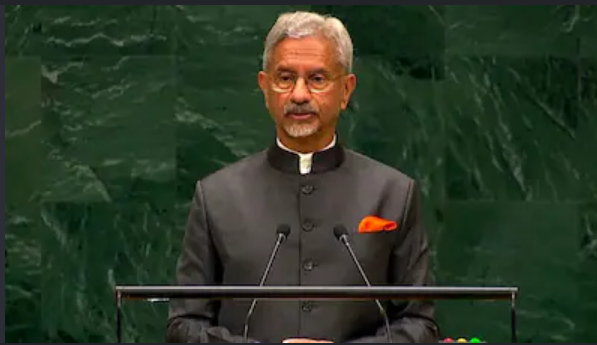
On the sidelines of the multilateral engagement, Lavrov is also expected to hold bilateral discussions with India’s External Affairs Minister S Jaishankar. The talks are likely to cover a wide range of issues, including bilateral relations, future diplomatic engagements, and preparations for upcoming intergovernmental commission meetings.

The BRICS meeting will serve as a platform for detailed discussions on pressing international matters and the evolving global order. It is also expected to play a role in shaping the agenda for the upcoming BRICS summit scheduled later this year in New Delhi.

Officials have indicated that the gathering will emphasize strengthening strategic partnerships and increasing the role of emerging economies in global decision-making processes. Participation from partner countries is also expected in select sessions.

Lavrov’s visit comes shortly after a recent telephonic conversation between him and Jaishankar, where both sides discussed regional developments and ways to expand cooperation between India and Russia.

Continue Reading

Latest world news

Iran offers to reopen Strait of Hormuz with conditions, Trump administration sceptical

Iran has предложed reopening the Strait of Hormuz under three conditions, but the US remains unconvinced due to concerns over nuclear negotiations.

Published

on

Iran has proposed reopening the strategically vital Strait of Hormuz under a three-condition plan, but the offer has been met with scepticism from the administration of Donald Trump, raising doubts over any immediate breakthrough in the ongoing conflict.

The proposal comes amid heightened tensions between the United States and Iran, with global energy markets closely watching developments around the key maritime route.

Iran’s three conditions for reopening Hormuz

According to reports, Iran has indicated it is willing to reopen the Strait of Hormuz if the United States agrees to:

  • Lift its naval blockade on Iran and its ports
  • End the ongoing conflict in the Middle East
  • Postpone discussions on Iran’s nuclear programme to a later stage

The offer is seen as an attempt to ease tensions and restart diplomatic engagement, especially after weeks of disruption to global oil supplies due to restricted movement through the strait.

Why the US is not convinced

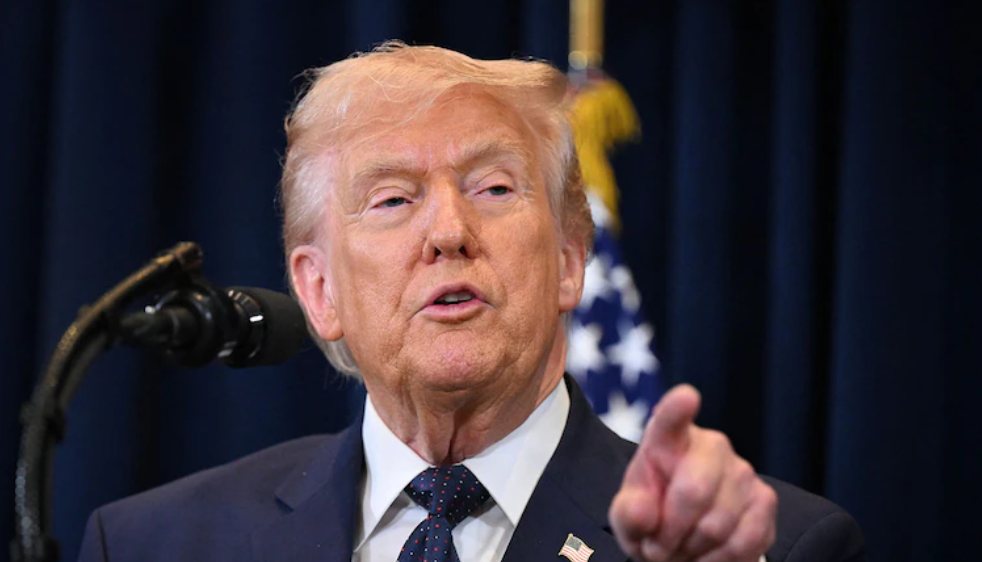
Despite the proposal, US officials have expressed reservations. President Donald Trump and his national security team are reportedly unconvinced, particularly because the plan delays talks on Iran’s nuclear programme.

Washington has consistently maintained that any agreement must directly address concerns about Iran developing nuclear weapons. US Secretary of State Marco Rubio has also indicated that a deal excluding nuclear commitments would not be acceptable.

Key sticking point remains nuclear issue

The central disagreement lies in sequencing. Iran wants to first ease military and economic pressure, while the US insists nuclear restrictions must be part of the initial agreement.

This gap has made progress difficult, with no clear roadmap emerging for a ceasefire or long-term resolution.

Global impact of Hormuz tensions

The Strait of Hormuz is one of the world’s most critical oil transit chokepoints, carrying a significant share of global energy supplies. Any disruption or delay in reopening the route has immediate implications for oil prices and global trade stability.

With both sides holding firm on core demands, the path to a negotiated settlement remains uncertain.

Continue Reading

Latest world news

Iran proposes 3-stage plan to US to end war, reopen Hormuz and delay nuclear talks

Iran has предложed a three-stage plan to the US focusing on ending the war, discussing Hormuz management, and delaying nuclear negotiations.

Published

on

Iran has proposed a three-stage framework for talks with the United States, outlining a phased approach that begins with ending the war and moves towards addressing the nuclear issue at a later stage.

According to media reports, the proposal sets out a sequence aimed at reducing tensions while avoiding early deadlock on more complex issues.

Three-stage framework outlined

In the first stage, Iran has called for a complete end to the war, along with guarantees to ensure that hostilities do not resume. This step is positioned as a necessary starting point before any further discussions can take place.

The second stage focuses on discussions related to the Strait of Hormuz, particularly its management and administration. The waterway remains a critical global oil transit route and has been central to regional tensions.

In the third stage, Iran has proposed that talks on its nuclear programme be taken up only after progress is made in the earlier phases. This sequencing reflects a shift from previous negotiation patterns where nuclear issues dominated discussions from the outset.

Diplomatic channel and context

The proposal was reportedly conveyed through intermediaries, indicating ongoing backchannel diplomatic efforts. It comes after earlier attempts at engagement, including talks involving regional players, did not lead to a breakthrough.

Tensions between Iran and the United States have remained high over issues including the war, regional security concerns, and disagreements related to Iran’s nuclear programme.

Focus on phased engagement

By placing the nuclear issue in the final stage, the proposal appears to prioritise initial agreements on conflict resolution and regional stability. The approach suggests an effort to build momentum through sequential steps rather than tackling all contentious issues simultaneously.

While it remains unclear how the United States will respond, the proposal marks a fresh diplomatic move amid ongoing geopolitical tensions.

Continue Reading

Trending

© Copyright 2022 APNLIVE.com