English हिन्दी
Connect with us

India News

India’s first digital census to begin April 1 across eight states and UTs

India will roll out its first digital Census from April 1, starting with the housing survey phase across eight states and Union Territories.

Published

on

India census

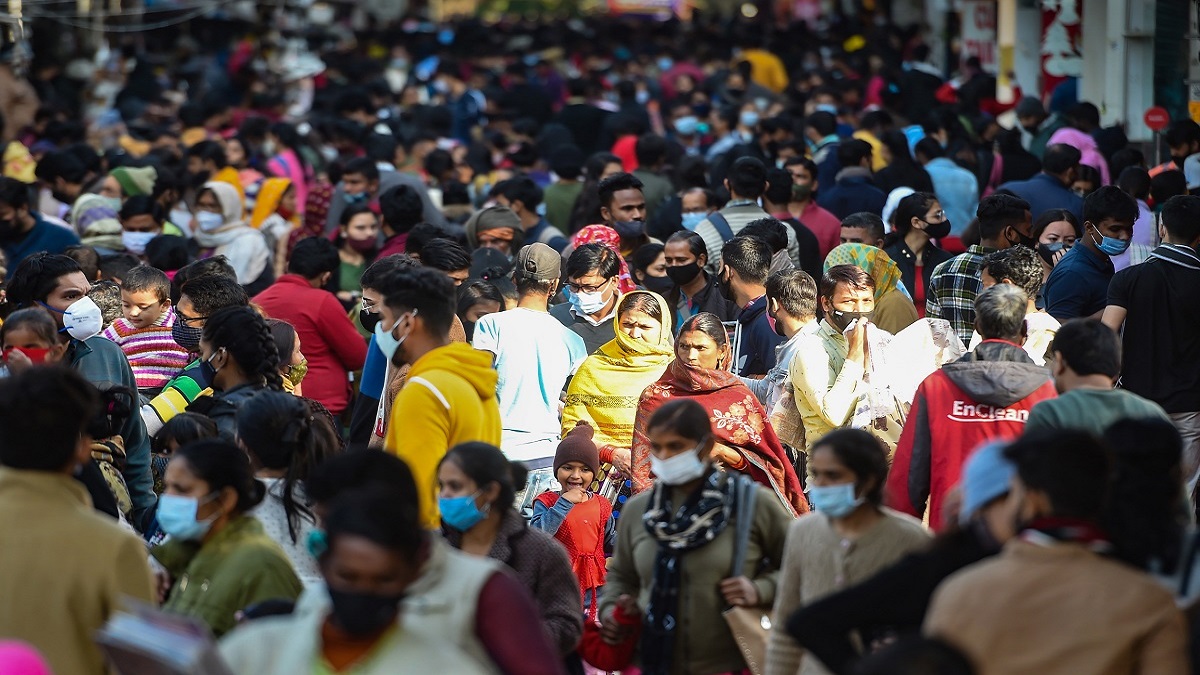
India will begin its first fully digital Census from April 1, marking a major transition in the way demographic and household data is collected in the country. The first phase, known as the House Listing and Housing Census, will be conducted across eight states and Union Territories and will focus on housing and household-related information.

Registrar General and Census Commissioner Mrityunjay Kumar Narayan said the Census will be carried out in two phases. The first phase will collect housing-related data, while the second phase, Population Enumeration, will gather individual-level details, including caste data, which will be recorded digitally for the first time.

Around 30 lakh enumerators will conduct the exercise using mobile applications available on Android and iOS platforms. The application will support 16 languages and will also work in offline mode, allowing data collection in rural and remote areas without internet connectivity.

Citizens will also be able to self-enumerate through the official Census portal by submitting their details online. After submitting the form, a unique Self-Enumeration ID will be generated, which can be shared with census officials during their verification visit.

The Phase 1 questionnaire will include 33 questions covering building identification, construction materials such as floor, wall and roof, ownership status, number of residents, water and sanitation facilities, cooking fuel, married couples, and access to digital and transport assets such as smartphones, internet, vehicles and household appliances.

According to the FAQs on the Census portal, live-in couples will be counted as married couples if they consider their relationship a stable union.

The self-enumeration facility will be available 15 days before the enumerator’s visit, allowing households to submit their information in advance. Officials have clarified that no documents will be required for participation and that all data will remain confidential.

The reference date for the Census has been fixed as midnight of March 1, 2027. The housing phase will run from April to September 2026, with timelines varying across different states and Union Territories.

The government has allocated a budget of Rs 11,718.24 crore for the Census exercise, which will cover more than 6.39 lakh administrative units across the country. Officials have described the Census as a crucial national exercise that will play a key role in future policy planning and development programmes.

Continue Reading

India News

If passport does not establish citizenship, then what does: Shashi Tharoor asks amid row

Shashi Tharoor has questioned the Centre’s stance that passports are not proof of citizenship and urged legislative changes to recognise passports and Aadhaar as conclusive citizenship documents.

Published

on

Congress MP Shashi Tharoor on Friday questioned the existing legal framework governing proof of Indian citizenship, asking what document citizens should rely on if a passport itself is not considered conclusive evidence of citizenship.

The remarks came a day after the Centre clarified that an Indian passport is primarily a travel document and has never been treated as definitive proof of citizenship under existing laws. The government maintained that this position is not new and has remained unchanged for years.

Reacting to the clarification, Tharoor described the situation as an “absurd legal paradox” and argued that ordinary citizens have long regarded passports as the highest form of official identity because they are issued only after extensive verification procedures. He said it is difficult for people to understand how a document obtained after rigorous scrutiny does not conclusively establish citizenship.

In a detailed statement, the Thiruvananthapuram MP urged the government to undertake what he termed a “common-sense legislative overhaul” to end the controversy. He proposed amending the legal framework so that both passports and Aadhaar cards are recognised as valid and conclusive proof of Indian citizenship unless specifically cancelled or withdrawn by the government.

Tharoor, however, acknowledged a key challenge with Aadhaar. Since Aadhaar is currently issued on the basis of residence and is available to both citizens and certain non-citizen residents, he suggested that the Unique Identification Authority of India issue a visually distinct Aadhaar card for non-citizens. According to him, such a distinction would allow the government to designate standard Aadhaar cards and valid Indian passports as sufficient proof of citizenship.

The debate intensified after the Ministry of External Affairs stated during a recent briefing that an Indian passport should not be treated as conclusive proof of citizenship. The Centre subsequently reiterated that the Passports Act, 1967 permits passports to be issued to non-citizens in certain circumstances in the public interest, and therefore possession of a passport alone cannot legally establish citizenship.

Continue Reading

India News

Ayodhya Ram Mandir donation row: 8 arrested, Champat Rai resigns as Yogi Adityanath vows strict action

The Ayodhya Ram Mandir donation controversy intensified after all eight accused were arrested and trust official Champat Rai resigned on moral grounds.

Published

on

Ram Mandir

The alleged embezzlement of donations received at the Ram Mandir in Ayodhya has triggered major developments, with all eight accused named in the FIR now under arrest and senior temple trust officials resigning from their positions. Authorities have said the investigation will continue and anyone found guilty will face strict action.

The First Information Report was registered following recommendations made by a Special Investigation Team (SIT) constituted by the Uttar Pradesh government to probe allegations of irregularities in the handling of donations received at the temple. The complaint was lodged by a member of the Shri Ram Janmabhoomi Teerth Kshetra Trust.

According to officials, the eight accused were associated with the process of counting cash and valuables offered by devotees at the temple. Senior officials confirmed that all those named in the FIR have been arrested and are currently being questioned as part of the ongoing investigation.

Champat Rai and Anil Mishra step down

Amid the growing controversy, Shri Ram Janmabhoomi Teerth Kshetra Trust General Secretary Champat Rai resigned from his post on moral grounds. Trust member Anil Mishra also submitted his resignation, officials confirmed. Their resignations come as scrutiny over the alleged misappropriation of temple donations intensifies.

Yogi Adityanath says guilty will not be spared

Addressing a public meeting in Deoria, Uttar Pradesh Chief Minister Yogi Adityanath said action began immediately after the SIT submitted its report. He asserted that no individual involved in wrongdoing would be exempted from legal action.

The chief minister described Ayodhya as a symbol of faith and said that public sentiments attached to Lord Ram and Sanatan Dharma cannot be compromised. He assured that the government would ensure a fair probe and separate truth from falsehood.

The issue has also sparked political reactions, with opposition leaders questioning the investigation and demanding accountability, while BJP leaders have maintained that strict action will be taken against all those responsible.

Continue Reading

Education

CBSE Class 10 second board result 2026 expected soon; here’s how to check scorecards

CBSE is likely to announce the Class 10 second board examination results soon. Students can check scorecards online using their login credentials.

Published

on

Students awaiting the Central Board of Secondary Education (CBSE) Class 10 second board examination results may not have to wait much longer, as the board is expected to announce the scorecards soon. However, CBSE has not yet confirmed the exact date and time for the declaration of results.

More than 6.8 lakh students reportedly appeared for the optional second board examinations conducted from May 15 to May 21, 2026, under the newly introduced two-exam system for Class 10 students. The results are expected to be published on the official portals, including cbseresults.nic.in and cbse.gov.in.

How to check CBSE Class 10 second board result 2026

Once announced, students can access their scorecards by following these steps:

  1. Visit the official CBSE result website, cbseresults.nic.in.
  2. Click on the ‘Secondary School Examination Results 2026 – Phase II’ link.
  3. Enter the required credentials, including roll number, school number and admit card ID.
  4. Submit the details to view the result.
  5. Download and save the scorecard for future reference.

Apart from the official websites, students will also be able to access their marksheets through DigiLocker and the UMANG application. Some reports also suggest that results may be available through SMS services.

Better score to be considered in final marksheet

CBSE has adopted a “best-of-two” policy under the new examination framework. This means that for students who appeared in both phases, the higher score obtained across the two examinations will be considered for the final marksheet and certificate.

The second board examination was optional and primarily intended to offer students an opportunity to improve their performance without waiting for a separate improvement examination cycle.

Students are advised to regularly check official CBSE websites for authenticated updates regarding the result announcement.

Continue Reading

Trending

© Copyright 2022 APNLIVE.com