English हिन्दी
Connect with us

Latest business news

Economic slowdown: Moody’s cuts India’s growth forecast to 5.8 per cent

Moody’s slashed its growth forecast for India to 5.8% due to economic slowdown caused by long-lasting factors like rural fiscal stress and unemployment

Published

on

moody

[vc_row][vc_column][vc_column_text]Moody’s Investor Services today – Thursday, Oct 10 – slashed its 2019-20 growth forecast for India to 5.8% from 6.2% earlier, saying the economy was experiencing a pronounced slowdown which is partly related to long-lasting factors, fiscal stress among rural households and muted job creation.

What began as an investment-led slowdown has broadened into consumption, driven by financial stress among rural households and weak job creation, said the rating agency.[/vc_column_text][/vc_column][/vc_row][vc_row][vc_column][vc_column_text css=”.vc_custom_1570707574002{border-top-width: 10px !important;border-right-width: 10px !important;border-bottom-width: 10px !important;border-left-width: 10px !important;padding-top: 10px !important;padding-right: 10px !important;padding-bottom: 10px !important;padding-left: 10px !important;background-color: #cecece !important;border-radius: 10px !important;}”]Moody’s projection is the most pessimistic so far, according to a media report, lower than Reserve Bank of India’s last week’s forecast of 6.1%, and comes ahead of International Monetary Fund’s (IMF) growth projections due next week.

Last month, Asian Development Bank (ADB) and the Organisation of Economic Co-operation and Development (OECD) lowered FY20 growth forecast for India by 50 basis points and 1.3 percentage points to 6.5% and 5.9%, respectively.

Last week, the Reserve Bank of India (RBI) also slashed its growth projection for the economy by 80 basis points, from 6.9% to 6.1%, for 2019-20.

Rating agency Standard & Poor’s (S&P) has also cut down its India growth forecast to 6.3% from 7.1% earlier.

In June, Fitch cut India’s growth forecast for the current fiscal for a second time in a row to 6.6 per cent. It had earlier in March lowered the growth estimate for 2019-20 to 6.8 per cent, from 7 per cent projected earlier, on weak momentum of the economy.[/vc_column_text][/vc_column][/vc_row][vc_row][vc_column][vc_column_text]Moody’s said in its report: “The drivers of the deceleration are multiple, mainly domestic and in part long-lasting.”

Moody’s said a prolonged phase of softer growth in India would dampen prospects for the government’s fiscal consolidation plans and hamper its ability to prevent a rise in the debt burden, thus constraining the country’s sovereign credit profile.

“While we expect a moderate pick-up in real GDP growth and inflation over the next two years supported by monetary and fiscal stimulus, we have revised down our projections for both. We forecast real GDP growth to decline to 5.8% in the fiscal year ending in March 2020 (fiscal 2019) from 6.8% in fiscal 2018, and to pick up to 6.6% in fiscal 2020 and around 7.0% over the medium term. Compared with only two years ago, the probability of sustained real GDP growth at or above 8% has significantly diminished,” it added.

The Indian economy is battling a severe demand slowdown and liquidity crunch which resulted in economic growth rate falling to a six-year low of 5% in the June quarter, while growth in private consumption expenditure slumped to an 18-quarter low of 3.1%.

The rating agency said what began as an investment-led slowdown has broadened into consumption, driven by financial stress among rural households and weak job creation. “A credit crunch among non-bank financial institutions (NBFIs), major providers of retail loans in recent years, has compounded the problem,” it added.

Moody’s said prospects for fiscal consolidation look limited, though rapid deterioration is also unlikely. “With the recently announced corporate tax cuts and lower nominal GDP growth, we now expect a central government deficit of 3.7% of GDP in fiscal 2019, marking a 0.4 percentage point slippage from its target. A prolonged period of slower nominal GDP growth not only constrains scope for fiscal consolidation, but also keeps the government debt burden higher for longer compared with our previous expectations,” it added.

India’s real GDP growth has declined in each of the past five quarters, falling to 5 per cent year-on-year in April-June 2019 from 8.1 per cent in January-March 2018.

“By international standards, 5 per cent real GDP growth remains relatively high, but it marks a low rate for India. Combined with a marked decrease in inflation in recent years, this has resulted in a material decline in nominal GDP growth from typical annual rates of 11 per cent or higher over the past decade, to around 8 per cent in the second quarter of 2019,” it said.

While private investment has been relatively weak since 2012, consumption — which makes up about 55 per cent of GDP — had remained robust. “However, private consumption growth has now also fallen quite sharply, to 3.1 per cent in the second quarter from 7.3 per cent in the first. This was the lowest rate of quarterly consumption growth since October-December 2014, and high-frequency consumption demand indicators (such as automobile, truck, two-wheeler and tractor sales) point to continued weakness,” it said.

The government has estimated that the corporate tax cut will reduce revenue by around Rs 1.45 lakh crore or about 0.7 per cent of GDP in 2019-20. “After factoring in exclusions for tax exemptions and the recent 0.3 per cent of GDP transfer of capital from the RBI, we expect a central government fiscal deficit of about 3.7 per cent of GDP in 2019-20, resulting in a slippage of 0.4 percentage points of GDP from the government’s target of 3.3 per cent,” Moody’s said.

As a result, the general government deficit, which at about 6.4 per cent in fiscal 2018 is already much larger than those of Baa-rated peers (median of 2.5 per cent), is likely to remain wider than Moody’s previously expected, it added.[/vc_column_text][/vc_column][/vc_row]

Latest business news

Xbox announces 3,200 layoffs as Asha Sharma outlines major restructuring plan

Xbox has announced plans to lay off 3,200 employees over the next year while introducing a major restructuring programme that includes management changes, studio restructuring and cost-cutting measures.


Published

on

XBOX layoff

Xbox has announced plans to reduce its workforce by 3,200 employees, representing around 20 per cent of its total staff, over the coming year as part of a broader restructuring programme linked to Microsoft’s increased investment in artificial intelligence.

According to an email shared with employees by Asha Sharma, the company will begin the process immediately, with 1,600 employees leaving on Monday, while the remaining job reductions will take place during FY27. The company also plans to divest four gaming studios and is preparing to separate from another.

Business reset planned amid financial challenges

In her message to employees, Sharma said the company’s current financial position required significant changes, stating that Xbox’s business was operating at substantially lower margins than comparable platform and publishing companies.

She said the layoffs were not a reflection of employees’ commitment or abilities but were part of a wider effort to strengthen the company’s long-term business.

The workforce reduction comes as Microsoft continues implementing AI-focused cost-cutting measures across its operations. Overall, the technology company is reportedly cutting 4,800 jobs, with Xbox accounting for the largest share.

Sharma also described the gaming sector as experiencing one of its most challenging hardware periods and said the company needed to “reset Xbox” to improve its future performance.

Company to streamline operations and reduce management layers

As part of the restructuring strategy, Xbox plans to simplify its organisational structure, revise its content portfolio and improve platform operations.

According to Sharma, the company currently loses 64 cents for every dollar invested annually, making operational efficiency a key priority.

She said Xbox would increasingly support independent game creators by offering open development tools and broader audience access.

The restructuring will also see Mojang and King report directly to Sharma. She said both studios have evolved into major gaming platforms with large monthly active player bases and will play a central role in Xbox’s future strategy.

To improve decision-making, the company plans to significantly reduce its management hierarchy. Sharma said some departments currently have as many as 14 management layers, which slow down operations. Xbox aims to reduce this to no more than five layers, and in some cases, only three.

The company will also reduce vendor spending by 50 per cent as part of its cost-saving measures.

Helen Chiang promoted to Chief Operating Officer

Alongside the restructuring announcement, Sharma confirmed the promotion of Helen Chiang to the newly created position of Chief Operating Officer.

Chiang will oversee profit and loss responsibilities across Xbox’s content, hardware, platform and services divisions while reporting directly to Sharma.

According to Sharma, the new operating structure is intended to improve investment decisions, strengthen accountability and better integrate the company’s various business units.

Despite the ongoing restructuring and job cuts, Sharma said Xbox remains committed to long-term growth and plans to continue investing heavily in the business, while placing greater emphasis on disciplined spending and strategic priorities.

Continue Reading

India News

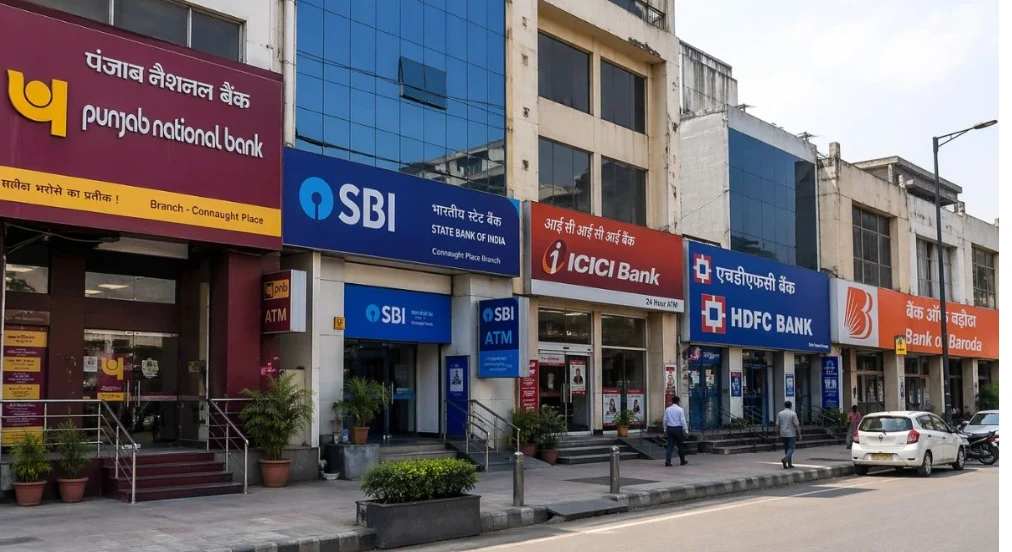
Bank holiday today: Are banks open or closed on June 29? Here’s what RBI calendar says

Banks in Himachal Pradesh and Mizoram will remain closed on June 29, 2026, due to regional holidays, while banking operations will continue normally in most other states.
Published

on

Bank Holidays

As June comes to an end, many customers are wondering whether banks across the country are open on June 29, 2026. According to the Reserve Bank of India’s (RBI) holiday calendar, bank operations will not be affected nationwide, but branches in some states will remain closed due to local holidays.

Banks closed in these states on June 29

Banks will remain shut in Himachal Pradesh on Monday, June 29, on account of Sant Guru Kabir Jayanti. In addition, bank branches in Mizoram will remain closed to observe Remna Ni, a regional public holiday.

However, bank branches in most other states and Union Territories are expected to function normally as June 29 is not a nationwide banking holiday.

Will online banking services remain available?

Even when physical branches remain closed, customers can continue using digital banking facilities. Services such as internet banking, mobile banking, UPI transactions, ATM withdrawals and cash deposits at ATMs will remain operational.

Customers planning to visit a bank branch are advised to check with their local branch beforehand, as holiday schedules may vary depending on the state and local observances.

Continue Reading

India News

Union Budget 2026 highlights: Nirmala Sitharaman Raises Capex to Rs 12.2 Lakh Cr, West Bengal Gets Major Allocation

Finance Minister Nirmala Sitharaman is presenting the Union Budget 2026 in Parliament today. Follow this space for live updates, key announcements, and policy insights.

Published

on

Finance Minister Nirmala Sitharaman arrives to present Union Budget 2026

Finance Minister Nirmala Sitharaman will shortly present the Union Budget 2026 in the Lok Sabha, marking her ninth consecutive Budget. The annual financial statement is expected to outline the government’s policy priorities, reform agenda and spending plans for the coming year. Stay tuned for live updates, key announcements and immediate reactions as the Budget speech unfolds.

Finance Minister Nirmala Sitharaman tabled her ninth Union Budget today, beginning her speech at 11 am.

Nirmala Sitharaman is set to present her ninth Union Budget today, with the finance minister scheduled to begin her speech at 11 am.

Budget 2026 live updates: Presenting the Union Budget for 2026–27, Finance Minister Nirmala Sitharaman said the occasion coincided with Magh Purnima and the birth anniversary of Guru Ravidas. She noted that over the past 12 years, India’s economic journey has been defined by stability, fiscal discipline, sustained growth and moderate inflation.

The budgeted fiscal deficit for fiscal 2026 is estimated at 4.4 per cent of gross domestic product (GDP)

Planned capital expenditure this fiscal year Rs 11.2 lakh crore

Rare earth corrdiors in Odisha and Kerala

Hi-tech tool rooms to be set up by PSUs

Construction equipment scheme to be launched

Container manufacturing scheme for Rs 10,000 crore over 5 years

Rs 10,000 crore SME Growth Fund

Semi-conductor mission to get Rs 40,000 crore

Rs 12.2 lakh crores for infrastructure development

Dedicated RITES to repurpose land of Central PSUs

20 new waterways over next 5 years to be connected

7 high-speed corridors on rail

High-level committee on banking for next phase of Viksit Bharat

Capital expenditure hike of to ₹12.2 lakh crore in Budget 2026, with West Bengal receiving a significant share of allocations.

Mahatma Gandhi Gram Swaraj Initiative aimed at boosting the khadi, handloom, and handicrafts sectors.

High-speed rail corridors: Mumbai-Pune, Pune-Bengaluru, Hyderabad-Bengaluru, Chennai-Bengaluru, Delhi-Varanasi, Varanasi-Siliguri, Pune-Hyderabad

Five university campuses to be established near industrial corridors

Lakpati Didi program expanded in Budget 2026 to reach more beneficiaries across India.

Fiscal deficit for FY26 revised to 4.4%; Budget Estimate for FY27 set at 4.3%.

TCS on overseas tour packages cut to 2% to ease travel costs

Tax holiday to foreign companies that provide cloud services by setting up data centres in India till 2047

17 cancer drugs exempted from import duties

Continue Reading

Trending

© Copyright 2022 APNLIVE.com