English हिन्दी
Connect with us

India News

AAP targets Rekha Gupta as Delhi chokes on toxic air, BJP points to citizens and farm fires

AAP and BJP trade blame as Delhi’s air quality drops to ‘very poor’ levels after Diwali, with both sides accusing each other over failure to curb pollution.

Published

on

Delhi air quality

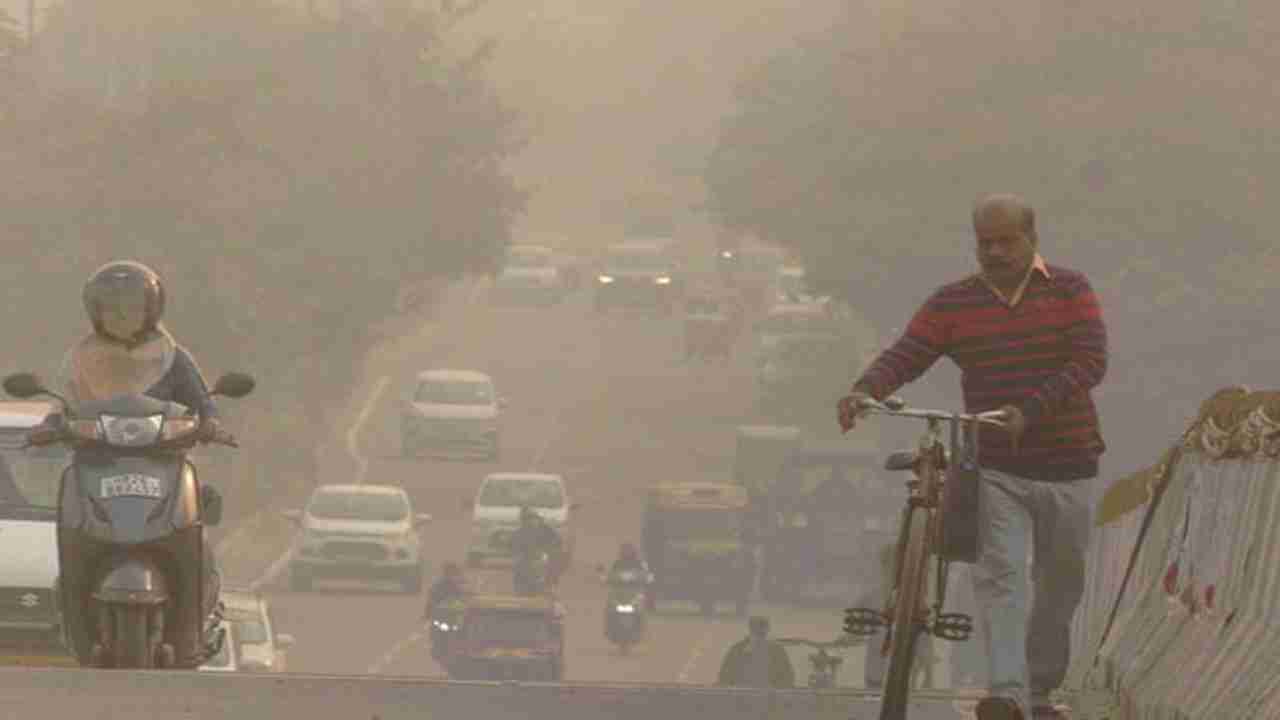
As Delhi woke up to a heavy blanket of smog and toxic air the morning after Diwali, political sparring intensified between the Aam Aadmi Party (AAP) and the ruling BJP over the city’s worsening pollution crisis.

AAP leaders accused Chief Minister Rekha Gupta’s BJP-led government of failing to prevent pollution despite curbs in place, while the BJP countered by blaming residents for bursting firecrackers and stubble burning in nearby states for the poor air quality.

AAP accuses BJP of “making excuses”

AAP MLA Gopal Rai said the Delhi government was “making excuses” instead of taking concrete steps to combat pollution. “The pollution level has risen drastically, yet the Delhi government is doing nothing. They are blaming other states while BJP rules in Uttar Pradesh, Haryana, and Rajasthan. Why didn’t they coordinate before Diwali?” he said.

AAP’s state chief Saurabh Bharadwaj mocked Chief Minister Rekha Gupta, claiming she “doesn’t even know how to pronounce AQI.” “She calls it IQ or QQ. The government has no understanding of the pollution issue and has failed miserably to control it,” he said, also accusing the BJP of lying about conducting artificial rain to tackle smog.

Congress joins criticism

Congress spokesperson Shama Mohamed also hit out at the BJP-led Delhi government, saying it “failed to implement court orders” and allowed cracker bursting late into the night. “AQI has crossed 400 in most parts of Delhi. This toxic air is endangering children and the elderly. The BJP government has completely failed Delhi and its people,” she said in a post on X.

BJP blames stubble burning and citizens

Responding to the criticism, Delhi Environment Minister Manjinder Singh Sirsa said pollution from stubble burning in neighbouring states was largely responsible for the smog. BJP IT Cell head Amit Malviya claimed, “Delhi will continue to choke unless Punjab stops burning stubble. Stop blaming Deepawali for AAP’s smoke.”

Another BJP minister, Ashish Sood, attributed part of the blame to citizens for violating the Supreme Court’s time limit on cracker bursting. “People should follow the guidelines to avoid this situation next year,” he said, adding that “AAP did no work in the last 10 years to address stubble burning in Punjab.”

Delhi’s air quality plummets

According to the Central Pollution Control Board, Delhi’s Air Quality Index (AQI) stood at 359 at 11 am — in the ‘very poor’ category. Of 38 monitoring stations, 35 recorded ‘very poor’ to ‘severe’ air quality levels. Neighbouring Haryana also recorded similar conditions, with AQI at 358, while Amritsar, Jalandhar, and Ludhiana in Punjab recorded moderate to poor air quality.

The Supreme Court had earlier allowed the use of green crackers for only two hours on Diwali night, but many residents ignored the restrictions, leading to a sharp spike in pollutants.

India News

Union budget 2026 to be presented on Sunday with special trading session

The Union Budget 2026 will be presented on a Sunday for the first time in over two decades, with NSE and BSE announcing special trading sessions for the day.

Published

on

Nirmala Sitharaman

For the first time in more than two decades, the Union Budget will be presented on a Sunday. Finance Minister Nirmala Sitharaman is scheduled to table the Union Budget for 2026 in the Lok Sabha on February 1 at 11 am, even as the day is usually observed as a holiday for government offices and financial markets.

February 1 falls on a Sunday this year, raising questions about market operations and investor response. To ensure uninterrupted trading and immediate market reaction to budget announcements, stock exchanges have announced special arrangements for the day.

Markets to remain open on budget day

Both the National Stock Exchange and the Bombay Stock Exchange have confirmed that markets will remain open on February 1. The NSE has announced a special trading session, with the pre-open market scheduled from 9 am to 9:08 am, followed by normal trading hours from 9:15 am to 3:30 pm.

The BSE has also declared the day a special trading day, with regular market hours applicable. Trading is expected to continue across equity, derivatives, and futures and options segments.

What the Sunday budget means for investors

A weekend budget presentation is seen as offering certain advantages for market participants. With trading active on the same day, investors will be able to respond to policy announcements immediately rather than waiting for the next working day.

The Sunday timing also gives investors, analysts, and financial institutions additional time to go through detailed proposals, including tax changes, fiscal deficit targets, and sector-wise allocations. The extended window for analysis may help reduce sharp, headline-driven reactions and encourage more informed decision-making.

With fewer competing developments on a non-working day, budget announcements are also expected to receive more focused attention from markets and stakeholders.

Parliamentary schedule and key milestones

The Economic Survey is expected to be tabled on January 29, ahead of the budget presentation. The Budget Session of Parliament began on January 28 with the President’s address to a joint sitting of the Lok Sabha and Rajya Sabha.

The upcoming budget will mark Nirmala Sitharaman’s ninth consecutive Union Budget. It will also be India’s 80th budget since Independence. Since 2017, Union Budgets have been presented at 11 am on February 1, following a timing change introduced during the tenure of former finance minister Arun Jaitley.

Continue Reading

India News

Union Budget 2026: Why Budget announcements matter for stock market direction

With markets open on Budget day, Union Budget 2026 is set to influence stock movements as investors track growth measures, taxation changes and the fiscal deficit.

Published

on

Stock market

The Union Budget remains one of the most closely watched events in India’s financial calendar, with stock markets often reacting sharply to policy signals. This year, trading will continue on Budget day — February 1 — despite it falling on a Sunday, allowing investors to respond immediately to announcements.

Finance Minister Nirmala Sitharaman will present her ninth consecutive Union Budget, an event that is expected to set the tone for market sentiment in the near term.

Growth-focused policies and investor sentiment

Equity markets generally respond positively when the Budget outlines steps aimed at supporting economic growth. Measures such as infrastructure spending, business-friendly reforms or incentives for key industries tend to improve investor confidence.

When such policies signal long-term expansion, markets often factor in stronger earnings prospects, leading to upward movement in stock prices.

Consumer spending and sectoral gains

Budget proposals that increase disposable income can also influence market behaviour. Tax relief measures, direct support schemes or efforts to manage inflation may leave households with more spending power.

Higher consumer spending typically benefits sectors such as retail, automobiles and fast-moving consumer goods, with increased demand often reflected in company valuations.

Tax changes and market participation

Tax-related announcements play a crucial role in shaping investment decisions. Lower taxes for individuals or businesses can support consumption and profitability, encouraging further investment activity.

At the same time, changes to capital gains or dividend taxation directly affect investor behaviour. Favourable tax treatment can lead to higher participation in equity markets, while tighter taxation may weigh on sentiment.

Fiscal deficit remains a key indicator

Markets also keep a close watch on the fiscal deficit — the difference between government spending and revenue. A higher deficit can raise concerns around increased borrowing, inflationary pressure and interest rates, all of which may affect corporate performance.

Conversely, a controlled deficit is often seen as a sign of fiscal discipline, helping strengthen confidence among investors.

Continue Reading

India News

Why India’s Union Budget is now presented on February 1

India shifted the Union Budget date from late February to February 1 in 2017 to give ministries and taxpayers more time before the new financial year begins.

Published

on

Nirmala Sitharaman

The Union Budget is among the most closely followed annual exercises in India, setting out the government’s revenue plans and spending priorities for the coming financial year. While it is now presented every year on February 1, this was not always the norm.

For decades, India followed a British-era tradition of presenting the Union Budget on the last working day of February. This meant that once Parliament approved the proposals, ministries, businesses and taxpayers had very little time to prepare before the new financial year began on April 1.

In many cases, by the time the Budget proposals were implemented, the financial year had already started. This resulted in delays in rolling out government schemes, policy changes and tax measures.

Why the date was advanced

The practice changed in 2017, when then finance minister Arun Jaitley presented the Union Budget on February 1 for the first time. The idea was to provide adequate time for ministries and departments to finalise spending plans and ensure smoother execution from the beginning of the financial year.

Since then, the February 1 presentation has continued, allowing stakeholders across sectors more time to adjust to new tax rules and policy decisions before April.

Budget timing also saw a shift

The Union Budget has seen changes not only in date but also in timing. Until 1999, the Budget was traditionally presented at 5 pm, another colonial-era legacy.

That year, then finance minister Yashwant Sinha moved the presentation to 11 am. The shift was aimed at improving media coverage and enabling wider public engagement with Budget announcements on the same day.

Legal challenge and Supreme Court view

The decision to advance the Budget date also faced legal scrutiny. A petition was filed in the Supreme Court arguing that an earlier Budget presentation could give the Centre an opportunity to announce voter-friendly measures ahead of state elections.

The Supreme Court dismissed the plea, observing that the Union Budget concerns the entire country and is not linked to individual state elections. The bench held that the frequency of state polls could not obstruct the functioning of the central government.

Continue Reading

Trending

© Copyright 2022 APNLIVE.com