English हिन्दी
Connect with us

India News

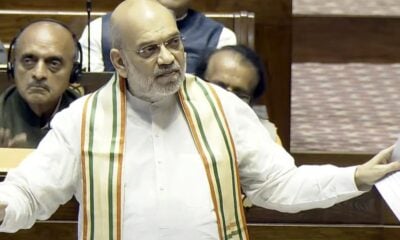
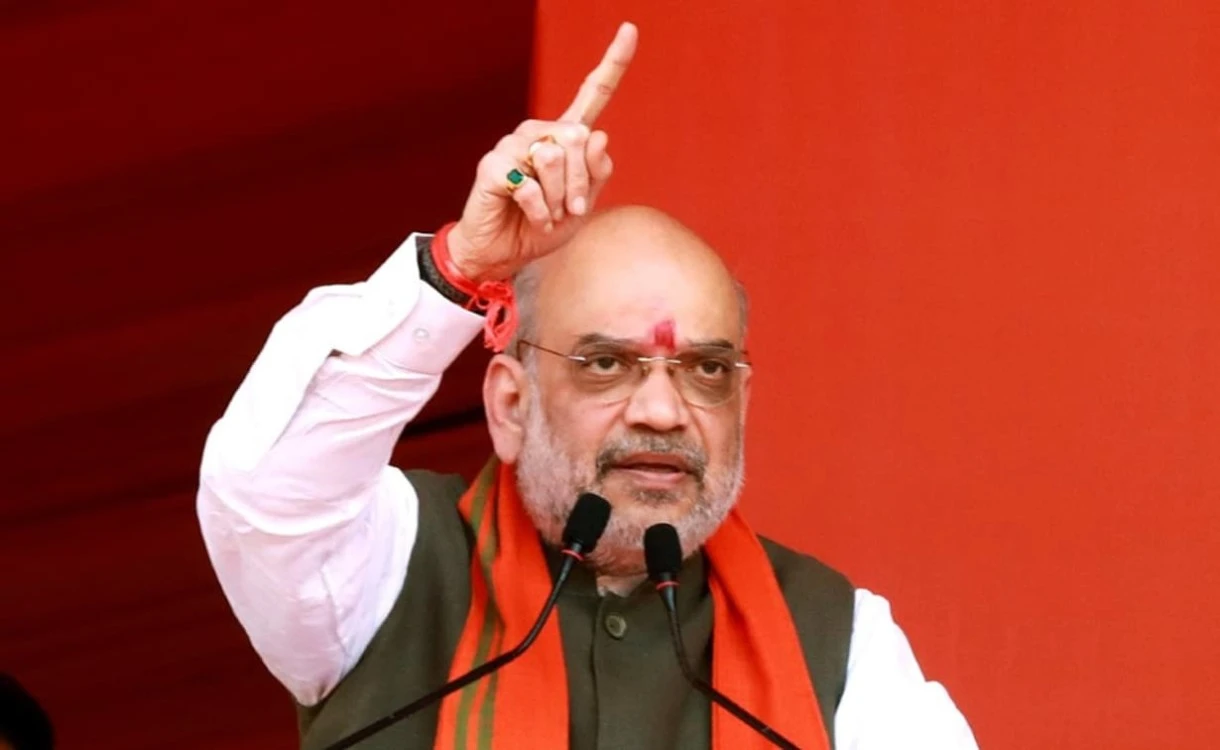
Amit Shah defends JBC as Waqf Amendment Bill debate kicks off in Lok Sabha

Opposition MPs raised objections over the committee’s authority to amend the Waqf Bill, but Home Minister Amit Shah said the changes were consultative, not unilateral.

Published

on

Amit Shah

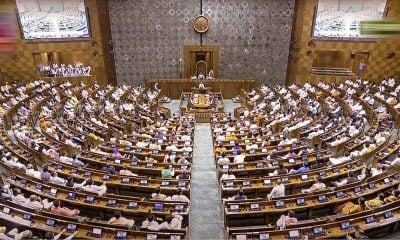
The Lok Sabha witnessed a heated start to the eight-hour-long debate on the Waqf Amendment Bill, with opposition MPs raising strong objections to the parliamentary committee’s role in amending the draft legislation.

NK Ramachandran of the Revolutionary Socialist Party opened proceedings by questioning whether the joint committee that reviewed the bill had the authority to make amendments. This came shortly after Congress MP KC Venugopal voiced concerns about the opposition being denied adequate time to review the altered draft and articulate their stance.

Ramachandran argued that, under parliamentary norms, the committee was not explicitly empowered by the House to modify the bill. He pointed to 14 amendments—all proposed by BJP or its allies—that had been included in the final draft.

Union Home Minister Amit Shah, in response, asserted that the committee had only made suggestions, which were then adopted by the Union government. He dismissed allegations of overreach, stating, “Our committees are consultative, not rubber stamps like those formed during the Congress rule.”

The committee, led by BJP MP Jagadambika Pal, submitted its report in February after months of deliberations. The process, however, was marred by disorder and even one instance of physical altercation involving Trinamool MP Kalyan Banerjee.

Out of the 66 changes proposed to the bill, all 44 by opposition members were rejected, while 23 from BJP and allies were taken up, with 14 eventually being approved.

Another point of contention was the exclusion of opposition dissent notes from the final report. Though the government claimed that the Chair had discretion over this matter, it later agreed to reinstate the dissenting views following internal discussions.

The Waqf Amendment Bill was first tabled in August last year and immediately drew criticism from the opposition, who labeled it “draconian.” Key provisions of the bill include the inclusion of non-Muslims and at least two women in every Waqf board, along with the appointment of a Union Minister, three MPs, and reputed individuals. It also proposes donation eligibility conditions based on religious observance.

Union Minority Affairs Minister Kiren Rijiju tabled the revised bill following Lok Sabha Speaker Om Birla’s ruling in favor of the government amid disruptions from both benches.

India News

Centre asks Blinkit, Zepto and Swiggy to stop 10-minute delivery claims

The Centre has urged Blinkit, Zepto and Swiggy to remove 10-minute delivery claims, citing safety concerns for delivery partners, government sources said.

Published

on

10 minutes delivery

The Centre has asked quick commerce platforms such as Blinkit, Zepto and Swiggy to remove claims related to 10-minute deliveries, citing concerns over the safety of delivery partners, according to government sources.

The issue was discussed during a meeting between Union Labour Minister Mansukh Mandaviya and representatives of major food and grocery delivery aggregators. Executives from platforms including Zomato, Swiggy, Blinkit and Zepto were present at the meeting, sources said.

Safety of delivery partners discussed in meeting

Government sources indicated that the minister raised concerns about strict delivery timelines and their potential impact on the safety and well-being of delivery partners. Platforms were advised to prioritise safe working conditions instead of promoting ultra-fast delivery promises.

The discussion focused on delivery expectations, rider pressure and the broader responsibility of aggregators towards their workforce, sources added.

Blinkit revises tagline after government intervention

Following the meeting, Blinkit has revised its marketing tagline. The platform earlier promoted “10,000 plus products delivered in 10 minutes” but has now changed it to “30,000 plus products delivered at your doorstep,” according to sources.

The revision reflects a shift away from highlighting delivery speed as a key promise, in line with the concerns raised during the discussions.

The government is expected to continue engaging with aggregators on labour welfare and safety-related issues, sources said.

Continue Reading

India News

AI errors in voter list digitisation causing hardship during SIR, Mamata writes to EC chief

Mamata Banerjee has written to the chief election commissioner alleging that AI-driven digitisation errors in electoral rolls are causing hardship, harassment and distress to genuine voters during the SIR process in West Bengal.

Published

on

mamta banerjee

West Bengal Chief Minister Mamata Banerjee has once again written to Chief Election Commissioner Gyanesh Kumar, alleging that errors arising from AI-driven digitisation of the 2002 electoral rolls are causing widespread hardship to genuine voters during the ongoing Special Intensive Revision (SIR) exercise in the state.

In her fifth letter since the SIR process began, Banerjee claimed that the use of artificial intelligence tools to digitise older voter lists led to serious inaccuracies in electors’ personal details. According to her, these errors have resulted in large-scale data mismatches, with many genuine voters being wrongly flagged as having “logical discrepancies”.

The chief minister accused the Election Commission of disregarding statutory processes that had been followed over the past two decades. She said voters were now being forced to re-establish their identity despite corrections having been made earlier through quasi-judicial hearings.

Calling the approach arbitrary and illogical, Banerjee alleged that it went against the constitutional spirit by effectively disowning the commission’s own past actions and mechanisms. She further claimed that voters submitting documents during the SIR exercise were not being given proper acknowledgements, terming the procedure “fundamentally flawed”.

Raising concerns over the nature of hearings, Banerjee said the SIR process had become largely mechanical and overly dependent on technical data, lacking sensitivity, human judgment and compassion. She argued that such an approach undermines democratic values and the constitutional framework.

Highlighting the human impact of the exercise, the chief minister claimed that the revision process had already seen 77 deaths, four suicide attempts and 17 cases of hospitalisation. She attributed these incidents to fear, intimidation and excessive workload caused by what she described as an unplanned exercise by the Election Commission.

Banerjee also criticised the treatment of several eminent citizens, alleging that they were subjected to harassment during the process. She further expressed concern over the handling of cases involving women voters, particularly those who had changed their surnames after marriage or shifted to their matrimonial homes.

According to her, women electors were being questioned and summoned to prove their identity, reflecting a lack of social sensitivity and amounting to an insult to women and genuine voters. She questioned whether a constitutional authority should treat half of the electorate in such a manner.

Urging immediate corrective steps, Banerjee called on the Election Commission to address the issues arising from the SIR exercise to end what she described as harassment and agony for both citizens and officials, and to safeguard democratic rights.

Continue Reading

India News

Communist Party of China delegation visits BJP headquarters in Delhi

A delegation from the Communist Party of China, led by Vice Minister Sun Haiyan, visited the BJP headquarters in Delhi and held discussions on inter-party communication.

Published

on

China delegation visits BJP office

A delegation from the Communist Party of China (CPC), led by Sun Haiyan, Vice Minister of the International Department of the CPC Central Committee (IDCPC), visited the Bharatiya Janata Party (BJP) headquarters in Delhi on Monday.

During the visit, the Chinese delegation held discussions with a BJP team headed by party general secretary Arun Singh. The talks focused on ways to advance inter-party communication and engagement between the BJP and the CPC.

Sharing details of the meeting, BJP foreign affairs department in-charge Vijay Chauthaiwale said the interaction involved an in-depth exchange on strengthening party-to-party dialogue. He confirmed the visit in a post on social media, stating that the CPC delegation was received at the BJP head office as part of ongoing inter-party interactions.

The Chinese Ambassador to India, Xu Feihong, was also present during the meeting, accompanying the CPC delegation.

According to Chauthaiwale, the visit was led by Sun Haiyan in her capacity as Vice Minister of the IDCPC, underscoring the importance attached to party-level exchanges between the two sides.

Continue Reading

Trending

© Copyright 2022 APNLIVE.com