
India News
Can Corporate Media Allied With Executive Oust Popularly Elected CMs?


By Saeed Naqvi
Every time AAP walks into a carefully laid trap by the establishment and the media bays for its blood, I suspect the effect on viewers is not what the channels expect. A relentless anti AAP tirade has begun to give shape to an underdog syndrome. Aggressive anchors obviously find it profitable otherwise why would they place every AAP related figure in a Roman Arena. Mauling AAP to boost TRPs is dependent largely on Sambit Patra’s lung power:
“Dekhein buland kaun hai, aur pusst kaun hai,
Sambit Patra se zabardast kaun hai?”
(Who will win and who will flop,
Sambit Patra is always on top.)
In attacking AAP with such frequency, channels go well outside their established TRP boosting formula: stick to the four Cs – cinema, crime, cricket and communalism. The reason for this detour is simple: corporates who control the channels would like to restrict the national game to the BJP and the Congress, parties they have nurtured.
Opinion polls by media houses in Congress-BJP states will never survey electoral prospects in Delhi where AAP is the principal contender. That is why it required Anandabazar Patrika, headquartered in Kolkata, to sponsor a survey of electoral preferences in the Delhi Capital Region.
According to the ABP-Nielsen survey published last week, AAP will, despite the exertions of the channels, win 48 out of 70 seats. Polls indicate it will get 47 percent of the vote share. The sample is limited – 5,101 voters spread over 28 assembly seats. Of these 35% said AAP performance has been good; 15% said it has been “very good”.
If the AAP has come down in its popularity from 67 seats in a house of 70, to 48 seats, in which direction are the remaining seats shifting? In the direction of the BJP. If elections were held in Delhi today, the BJP tally would increase from three to 22 seats. The Congress remains where it is: a cipher.
The poll was conducted by ABP, one of the country’s most powerful media houses but which happens to be headquartered in Kolkata where it has been in conversation with the Trinamool Congress supremo, Mamata Banerjee.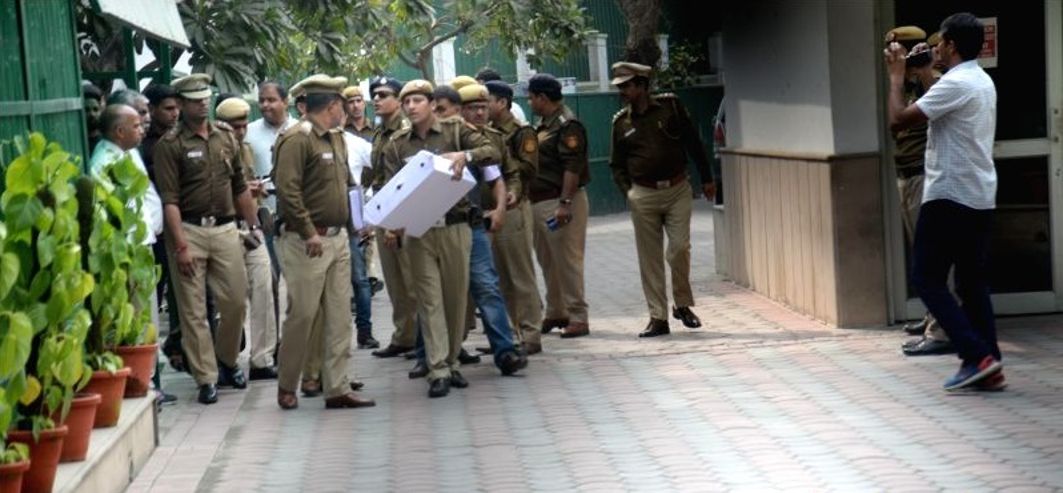
Obviously the ABP has seen the writing on the wall. Time was when editor-in-chief Aveek Sarkar was advising CPM’s Secretary General Sitaram Yechury and the Congress to gang up against Mamata in the assembly elections. It was an absurd line because in simultaneous elections in Kerala, the Left and the Congress were at each other’s throat. Not only was the Yechury line trounced in West Bengal, but his party colleague, Prakash Karat, subsequently prevailed on the party to reject any arrangement with the Congress anywhere.
A common strand running through AAP and Trinamool is their equidistance from the BJP and the Congress. The core grouping Kejriwal and Mamata are in search of for the 2019 General Elections will be equally distant from the Congress and the BJP. It was clearly with this in mind that Kejriwal undertook an exploratory journey to Madurai to participate in the inauguration of actor Kamal Haasan’s new political party, Makkal Needhi Maiam. Telugu Desam leader, Chandrababu Naidu has also indicated enthusiasm for the new Tamil outfit at a time when he is changing his options.
It is all very early days but a great deal of bluster is already accompanying furtive, drawing room parleys. In almost every private gathering there is that inevitable wag in the corner, flailing the air with his hands: “this lot will not give up power easily”. What, pray, will the Modi-Amit Shah duet do towards this end, that of not giving up power? A great deal of waffling follows – electronic voting machines will be fixed, mega communal riots will be orchestrated, the temple issue will be set ablaze and, ofcourse, there is that frightful speculation about action across the Pakistan border which will make surgical strikes look like pinpricks.
Sensible folk in the BJP are already beginning to contemplate life after Narendra Modi. It is elementary that in UP, Rajasthan, Haryana, Madhya Pradesh etcetera where the BJP scored exceptionally well to obtain an absolute majority with 31 percent of the vote, it will be substantially diminished, requiring a coalition builder which Modi is not.
What is limiting the BJP’s electoral tactics is Rahul Gandhi’s relentless temple hopping, ofcourse, but also keeping Muslim at a distance. This denies the BJP the use of an instrument which has enabled it to come to power. It has become that much more difficult to affect communal polarization. If polarization is not the name of the game, what purpose does an exceptionally hard line on Pakistan serve? What electoral game plan does the BJP have upto 2019 particularly when development is not visible to the voter.
In this ever expanding scenario, stretching upto 2019, why is everybody ganging up on AAP which is confined to Delhi? Well, it is not confined to Delhi. In its very first outing in the Punjab it is already the principal opposition. As major parties face an uncertain future, the AAP has dug its feet in Delhi by doing exceptional work for the poor in education, health, electricity and water supply. In fact water pipelines in bustees are being laid on an emergency basis.
Only if solid work at grassroot can be defeated by propaganda and executive fiat should there be any danger to Kejriwal. Equally in the line of fire is Chief Minister Manik Sarkar in distant Tripura. He is as much an affront to the corporate driven establishment in the North East as Kejriwal is in Delhi.






India News
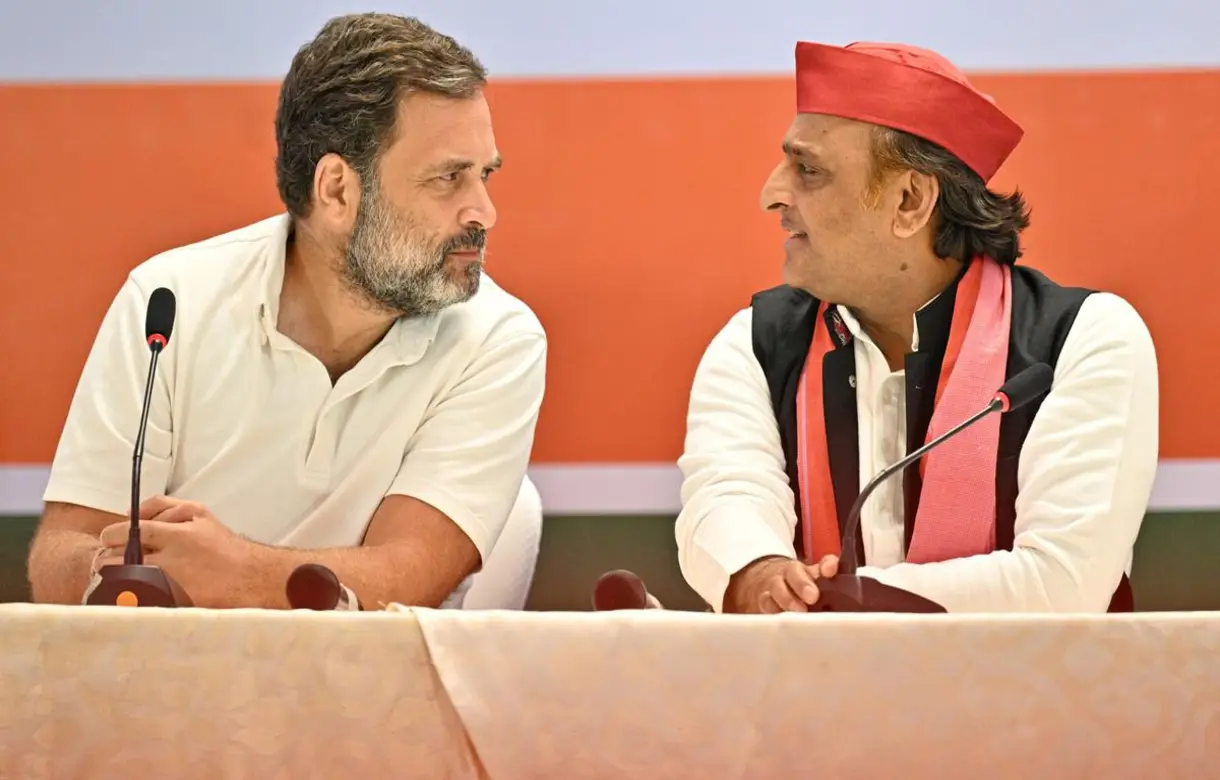
Congress seeks 175-200 seats in UP, Samajwadi Party stresses on winnability
Congress has initiated seat-sharing talks with the Samajwadi Party for the 2027 UP Assembly elections, seeking to contest 175–200 seats. The SP has emphasised winnability as the key criterion for allocating constituencies.

India News
Thousands bang utensils, beat drums in Manipur protest over continued killings
Thousands of people staged a sound protest across Manipur’s five valley districts on Friday, October 23, banging utensils, beating drums and honking vehicle horns to protest continued killings and the prolonged ethnic conflict.

India News
MEA responds after ITBP chief flags ongoing face-offs with China in Arunachal
India said deviations by Chinese forces from established patrolling patterns periodically disturb the situation along the Line of Actual Control, as the government addressed remarks by the ITBP chief about ongoing face-offs in Arunachal Pradesh.

Om Prakash Mathur sworn in as Keralam Governor

PM Modi to inaugurate Rs 169-crore RBI data centre in Odisha on October 25

MEA responds after ITBP chief flags ongoing face-offs with China in Arunachal

Delhi High Court rejects Neha Bora’s plea against peace bond notice

Thousands bang utensils, beat drums in Manipur protest over continued killings

Congress seeks 175-200 seats in UP, Samajwadi Party stresses on winnability
Thousands bang utensils, beat drums in Manipur protest over continued killings
MEA responds after ITBP chief flags ongoing face-offs with China in Arunachal
Delhi High Court rejects Neha Bora’s plea against peace bond notice
PM Modi to inaugurate Rs 169-crore RBI data centre in Odisha on October 25

Afghan Men Try To Hang With The Jet Engine Of The Aircraft in Kabul- Afghanistan News – Kabul News
Trending Top 10 News: 10000 Crore Fine on Flipkart, Apple to Launch Unique Feature, Hdfc Bank Job Ad

Trending Top 10 News: Nokia 6310, Apple sales, Bachpan ka Pyar Video Kid, Dainik Bhaskar IT Raid

Trending Top 10 News: Canada bans Indian flights, Rain in Delhi NCR, AIMIM Twitter hacked, Raj Kundra case

Trending Top 10 News: Shein India, Apple New Service, Pocket Oxygen, Oppo Launched New Phone
-
 India News18 hours ago
Om Prakash Mathur sworn in as Keralam Governor
-
 India News18 hours ago
PM Modi to inaugurate Rs 169-crore RBI data centre in Odisha on October 25
-
 India News16 hours ago
MEA responds after ITBP chief flags ongoing face-offs with China in Arunachal
-
 India News17 hours ago
Delhi High Court rejects Neha Bora’s plea against peace bond notice
-
 India News4 hours ago
Thousands bang utensils, beat drums in Manipur protest over continued killings
-
 India News3 hours ago
Congress seeks 175-200 seats in UP, Samajwadi Party stresses on winnability
