English हिन्दी
Connect with us

India News

Draft of National Agriculture Marketing Policy by NDA govt worse than three repealed farm laws, say farmer unions

The SKM warns that if the new draft policy is enacted, it will undermine the federal authority of state governments and harm the interests of farmers, agricultural workers, small producers, and traders, as it lacks any provisions for guaranteed minimum support prices for crops or minimum wages for agricultural laborers.

Published

on

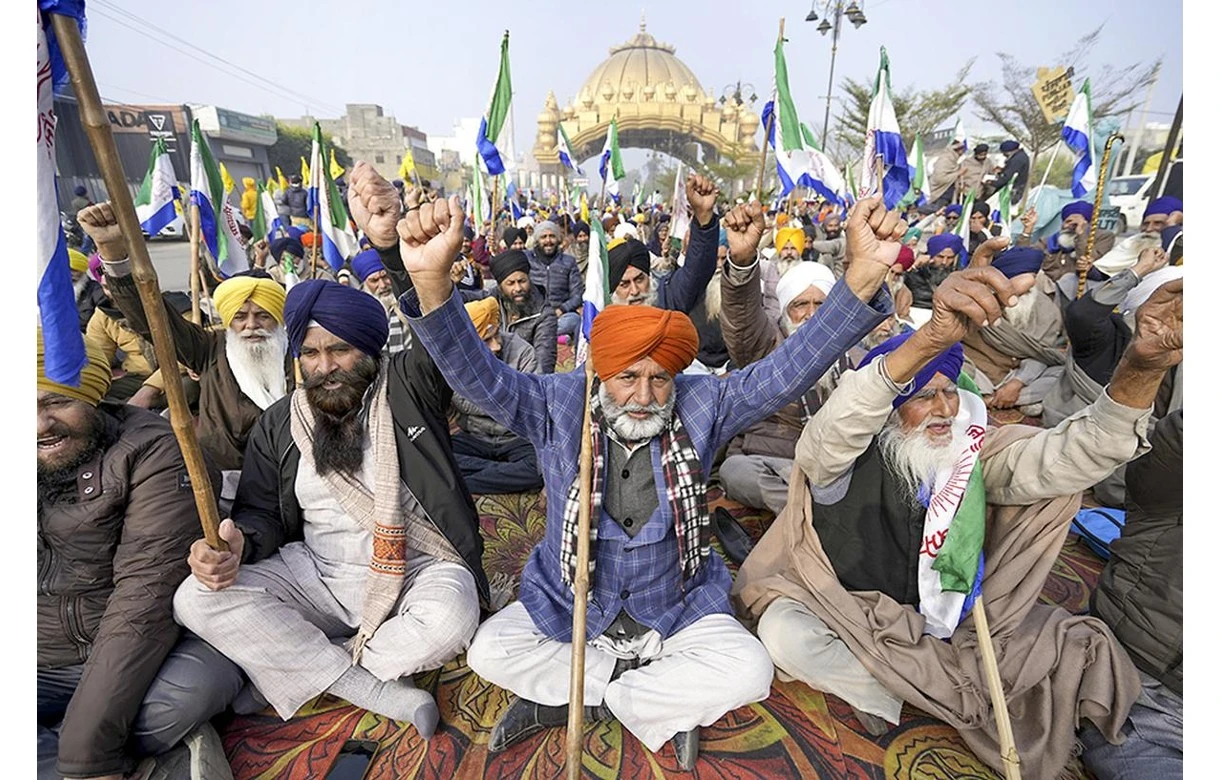
The recent release of the draft National Policy Framework on Agricultural Marketing (NPFAM) by the Union Agriculture Ministry for public feedback has been labeled as more perilous than the three farm laws that were repealed in 2021, according to the Samyukt Kisan Morcha (SKM), a coalition of approximately 500 farmers’ organizations.

In response, the SKM has called for Kisan Mahapanchayats to take place in Tohana, Haryana, and Moga, Punjab, on Saturday, with plans to initiate a new protest on January 9, demanding the repeal of the NPFAM. These gatherings are expected to pass resolutions opposing the policy framework.

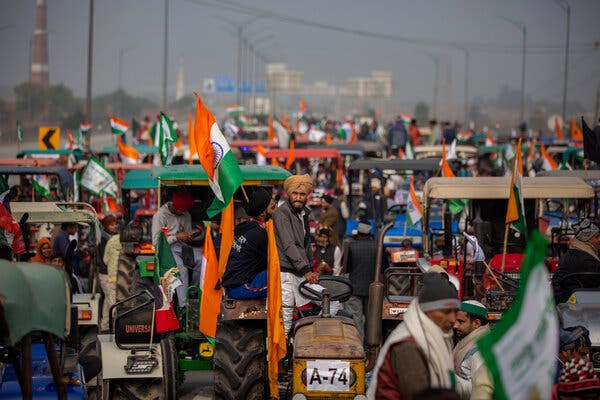
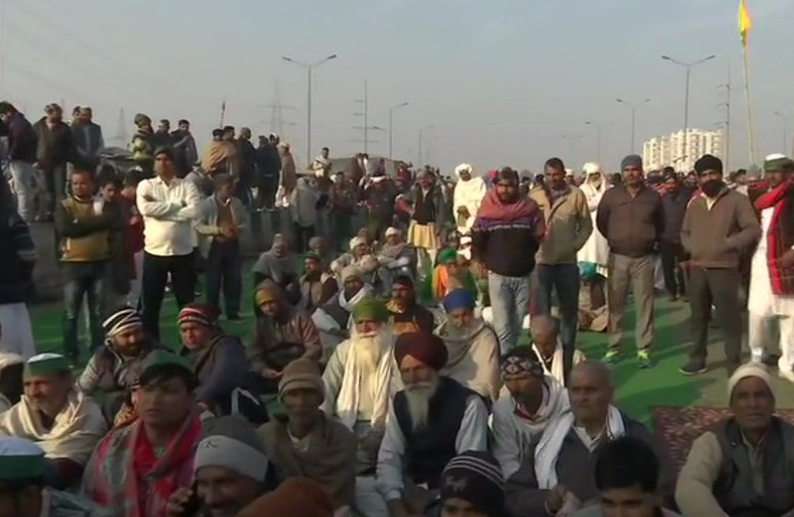
Established in 2020, the SKM led a year-long movement against three controversial laws that deregulated agricultural trade, which were enacted during the pandemic. Thousands of farmers protested at Delhi’s borders until the government agreed to repeal those laws.

The SKM warns that if the new draft policy is enacted, it will undermine the federal authority of state governments and harm the interests of farmers, agricultural workers, small producers, and traders, as it lacks any provisions for guaranteed minimum support prices for crops or minimum wages for agricultural laborers.
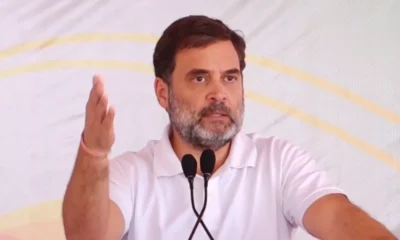
The SKM applauded Punjab Chief Minister Bhagwant Mann for rejecting the NPFAM and urged other state governments and chief ministers to follow suit. The organization called for a democratic dialogue involving all stakeholders, including farmers, workers, small traders, industrialists, and exporters, to create an alternative policy framework that protects the interests of the populace and the nation.

The SKM argues that the NPFAM aims to merge agricultural production and marketing in a way that prioritizes corporate interests over the welfare of small producers and farmers. They fear that the draft policy represents a fundamental overhaul of the current agricultural marketing system, proposing the creation of a unified national market linked to a value chain-oriented infrastructure.

According to the SKM, the goal is to facilitate the entry of corporate agribusiness by merging 7,057 registered markets and 22,931 rural haats across India into a Digital Public Infrastructure. This proposal aligns closely with the viewpoints of the World Bank and the International Finance Corporation (IFC), which define the value chain as encompassing all activities needed to bring a product or service through various production phases, including sourcing raw materials and inputs.

The SKM also expressed concern regarding the integration of both private and public sectors through advanced technologies like digital public infrastructure, blockchain, machine learning, and artificial intelligence. They contend that these reforms would lead to deregulation, enabling corporate agribusinesses to dominate production, processing, and marketing.

They noted that Farmer Producer Organizations (FPOs) are positioned to play a crucial role in this system, aimed at eliminating middlemen and facilitating direct supply of raw materials to corporate industries, trade, and export channels. This could concentrate control within large corporations, potentially marginalizing smaller producers and diminishing their bargaining power in the marketplace. Furthermore, the SKM emphasized the absence of any guarantees for a remunerative minimum support price (MSP) for farmers, a key recommendation from the National Commission on Farmers (NCF) under the late M.S. Swaminathan, and a significant topic in current national political debates.

India News

DU VC Prof Yogesh Singh entrusted with additional charge of AICTE Chairman

Published

on

By

Prof. Yogesh Singh, Vice Chancellor of the University of Delhi, has been entrusted with the additional charge of the post of Chairman, AICTE till the appointment of a Chairman of AICTE or until further orders, whichever is earlier.

It is noteworthy that AICTE Chairman Prof. TG Sitharam was relieved of his duties after his term ended on December 20, 2025. According to a letter issued by the Ministry of Education, Government of India, on Monday, Prof. Yogesh Singh’s appointment is until the appointment of a regular AICTE Chairman or until further orders whichever is earlier.

Prof. Yogesh Singh is a renowned academician with excellent administrative capabilities, who has been the Vice-Chancellor of University of Delhi since October 2021. He has also served as the Chairperson of the National Council for Teacher Education. In August 2023, he was also given the additional charge of Director of the School of Planning and Architecture (SPA).

Prof. Yogesh Singh served as the Vice-Chancellor of Delhi Technological University from 2015 to 2021; Director of Netaji Subhas Institute of Technology, Delhi from 2014 to 2017, and before that, he was the Vice-Chancellor of Maharaja Sayajirao University, Baroda (Gujarat) from 2011 to 2014. He holds a Ph.D. in Computer Engineering from the National Institute of Technology, Kurukshetra. He has a distinguished track record in quality teaching, innovation, and research in the field of software engineering.

Continue Reading

India News

Goa nightclub fire case: Court extends police custody of Luthra brothers by five days

A Goa court has extended the police custody of Saurabh and Gaurav Luthra, owners of the nightclub where a deadly fire killed 25 people, by five more days.

Published

on

Luthra brothers

A court in Goa on Monday extended the police custody of Saurabh Luthra and Gaurav Luthra, the owners of the Birch by Romeo Lane nightclub, by five more days in connection with the deadly fire incident that claimed 25 lives on December 6.

The order was passed as investigators sought additional time to question the two accused in the case linked to the blaze at the Anjuna-based nightclub.

Owners were deported after fleeing abroad

According to details placed before the court, the Luthra brothers had left the country following the incident and travelled to Thailand. They were subsequently deported and brought back to India on December 17, after which they were taken into police custody.

Advocate Vishnu Joshi, representing the families of the victims, confirmed that the court granted a five-day extension of police custody for both Saurabh and Gaurav Luthra.

Another co-owner sent to judicial custody

The court also remanded Ajay Gupta, another owner of the nightclub, to judicial custody. Police did not seek an extension of his custody, following which the court passed the order, the victims’ counsel said.

The Anjuna police have registered a case against the Luthra brothers for culpable homicide not amounting to murder along with other relevant offences related to the fire incident.

Continue Reading

India News

Delhi High Court issues notice to Sonia Gandhi, Rahul Gandhi in National Herald case

Delhi High Court has sought responses from Sonia Gandhi and Rahul Gandhi on the ED’s plea challenging a trial court order in the National Herald case.

Published

on

The Delhi High Court has sought responses from Congress leaders Sonia Gandhi and Rahul Gandhi on a petition filed by the Enforcement Directorate (ED) in connection with the National Herald case. The petition challenges a trial court order that refused to take cognisance of the agency’s prosecution complaint.

Justice Ravinder Dudeja issued notices to the Gandhis and other accused on the main petition, as well as on the ED’s application seeking a stay on the trial court’s December 16 order. The high court has listed the matter for further hearing on March 12, 2026.

The trial court had ruled that taking cognisance of the ED’s complaint was “impermissible in law” because the investigation was not based on a registered First Information Report (FIR). It observed that the prosecution complaint under the Prevention of Money Laundering Act (PMLA) was not maintainable in the absence of an FIR for a scheduled offence.

According to the order, the ED’s probe originated from a private complaint rather than an FIR. The court further noted that since cognisance was declined on a legal question, it was not necessary to examine the merits of the allegations at that stage.

The trial court also referred to the complaint filed by BJP leader Subramanian Swamy and the summoning order issued in 2014, stating that despite these developments, the Central Bureau of Investigation (CBI) did not register an FIR in relation to the alleged scheduled offence.

The ED has accused Sonia Gandhi, Rahul Gandhi, late Congress leaders Motilal Vora and Oscar Fernandes, Suman Dubey, Sam Pitroda, and a private company, Young Indian, of conspiracy and money laundering. The agency has alleged that properties worth around Rs 2,000 crore belonging to Associated Journals Limited (AJL), which publishes the National Herald newspaper, were acquired through Young Indian.

The agency further claimed that Sonia and Rahul Gandhi held a majority 76 per cent shareholding in Young Indian, which allegedly took over AJL’s assets in exchange for a Rs 90 crore loan.

Continue Reading

Trending

© Copyright 2022 APNLIVE.com

Left Menu Icon