English हिन्दी
Connect with us

India News

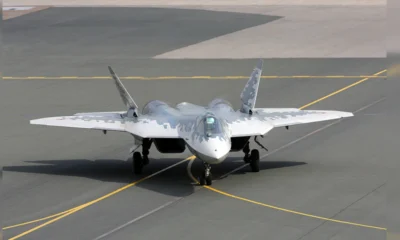
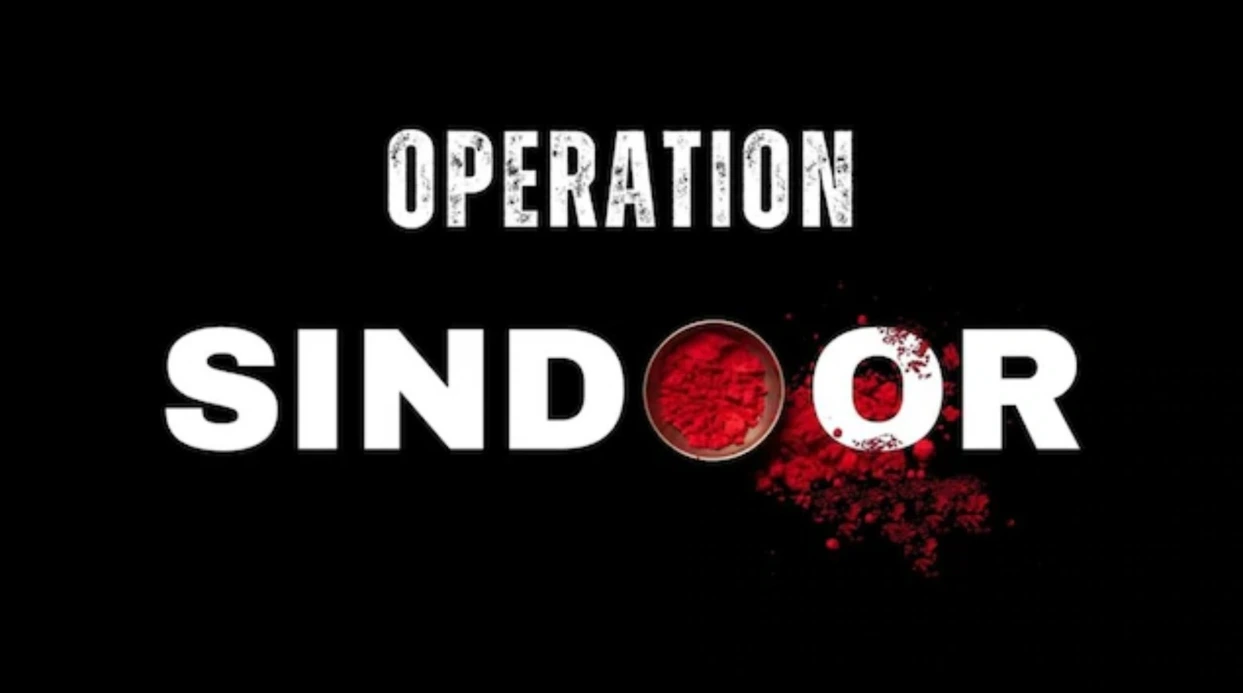
HAMMER bombs and SCALP missiles lead India’s precision strikes on terror camps in Pakistan, PoK under Operation Sindoor

In a strong retaliatory move, India launched Operation Sindoor targeting terror infrastructure in Pakistan and PoK using SCALP missiles, HAMMER bombs and loitering munitions.

Published

on

Operation Sindoor

In a powerful response to the April 22 terror attack in Pahalgam, which claimed the lives of 26 civilians including an Indian Navy officer and a Nepali national, India executed Operation Sindoor, a large-scale precision strike across Pakistan and Pakistan-occupied Kashmir (PoK). The mission represents the most extensive military action of its kind since the Balakot airstrikes of 2019.

Launched in the early hours of Wednesday, the tri-services operation was carried out by the Indian Army, Navy, and Air Force, targeting critical infrastructure linked to Pakistan-based terrorist groups. The operation was reportedly in response to actionable intelligence that pinpointed the operational hubs of banned outfits such as Lashkar-e-Taiba (LeT), Jaish-e-Mohammed (JeM), and Hizbul Mujahideen (HM).

High-precision weapons: SCALP, HAMMER and loitering munitions

India deployed advanced, long-range weapon systems in the mission. These included the SCALP (Storm Shadow) cruise missile, HAMMER precision bombs, and loitering munitions, also known as kamikaze drones.

  • SCALP (Storm Shadow): A deep-strike, air-launched cruise missile with a range over 250 km, capable of targeting fortified enemy positions with high accuracy.
  • HAMMER (Highly Agile Modular Munition Extended Range): Precision-guided munitions ideal for striking reinforced targets such as bunkers and multi-storey training camps. These bombs can hit targets from 50–70 km away, depending on deployment altitude.
  • Loitering Munitions: Drones used for both surveillance and precision strikes, capable of autonomously identifying and destroying hostile elements in real-time.

Specific targets destroyed in Pakistan and PoK

Operation Sindoor targeted nine key terror-linked sites—four in mainland Pakistan and five in PoK. These locations were carefully chosen based on verified intelligence and were confirmed to be used by terror networks for planning, training, and logistics.

Notable targets included:

  • Markaz Subhan Allah, Bahawalpur (JeM): Known as the ideological base of JeM, used for senior cadre training.
  • Markaz Taiba, Muridke (LeT): A 200-acre fortified compound functioning as a hub for indoctrination and terror planning.
  • Markaz Abbas, Kotli (JeM): A suicide bomber training centre and weapons stockpile.
  • Syedna Bilal and Shawai Nalla camps, Muzaffarabad: Dual-function training and infiltration facilities for JeM and LeT operatives.
  • Markaz Ahle Hadith, Barnala (LeT): Used for regional logistical support.
  • Sarjal, Tehra Kalan (JeM): Pre-infiltration staging ground for newly inducted terrorists.
  • Mehmoona Joya, Sialkot (HM): An active yet low-profile Hizbul Mujahideen training facility.

Importantly, the Ministry of Defence confirmed that no Pakistani military installations were attacked, maintaining the mission’s strict focus on non-state actors responsible for cross-border terrorism.

India News

Centre reassures farmers as India-US trade deal nears completion

The Centre has assured farmers that the upcoming India-US trade deal will not harm agriculture or dairy, while creating new export opportunities for India.

Published

on

farmer

As India and the United States move closer to finalising a major bilateral trade agreement, the Centre has sought to reassure farmers that their interests remain fully protected. Senior ministers on Wednesday said the proposed pact does not compromise sensitive sectors such as agriculture and dairy, while opening new avenues for Indian exports.

Union Minister for Agriculture and Farmers’ Welfare Shivraj Singh Chouhan dismissed opposition allegations that the deal could adversely affect domestic farmers. Speaking to the media in New Delhi, he said the agreement poses no risk to staple food grains, millets, fruits or dairy products.

“Farmers’ interests are paramount and non-negotiable,” Chouhan said, asserting that the government has ensured no provision allows sudden or disruptive entry of foreign agricultural products into Indian markets. He added that safeguards for both small and large farmers remain firmly in place.

Chouhan underlined that key agricultural commodities continue to be protected and that existing measures shielding Indian farmers from unfair competition will remain unchanged. According to him, the agreement has been shaped under the leadership of Prime Minister Narendra Modi, with a clear focus on development and national interest.

Addressing concerns sparked by a recent social media post from a US official regarding greater access for American farm products, the Agriculture Minister said the matter had already been clarified in Parliament by Commerce Minister Piyush Goyal. He reiterated that India has not opened its markets in a way that would put pressure on domestic producers.

At the same time, the government highlighted potential gains for Indian exports. Reduced tariffs under the agreement are expected to benefit sectors such as rice, spices and textiles. Chouhan pointed out that India already exports rice to multiple countries, including the US, with shipments valued at around Rs 63,000 crore. Increased textile exports, he added, would directly support cotton-growing farmers and allied industries.

External Affairs Minister S Jaishankar also indicated that the trade agreement is now in its final stages. In a post on X following his visit to the United States, he described the negotiations as productive and said the deal would mark a new phase in bilateral relations. He noted progress in areas such as critical minerals, while signalling deeper engagement in defence, energy and strategic cooperation.

Officials view the agreement as part of a broader effort to strengthen India-US economic and strategic ties amid global uncertainty. While detailed provisions are yet to be made public, the Centre has reiterated that farmer welfare remains at the heart of the negotiations.

In an emotional appeal, Chouhan referred to farmers as the nation’s “Annadata” and said serving them was equivalent to worship. He assured that the government would continue to stand firmly with farmers as India charts a new course in its trade relationship with the United States.

Continue Reading

India News

Punjab AAP leader Lucky Oberoi shot dead in daylight attack in Jalandhar

AAP leader Lucky Oberoi was killed in a daylight shooting in Punjab’s Jalandhar after attackers fired multiple bullets at him while he was inside his car.

Published

on

AAP LEADER Lucky oberoi

AAP leader Lucky Oberoi was shot dead in a broad daylight attack in Punjab’s Jalandhar on Friday after unidentified assailants opened fire at him near a gurdwara in the city.

According to initial information, Oberoi was inside his car near the Gurdwara Sahib in the Model Town area when attackers arrived on a two-wheeler and fired multiple rounds at him. Five bullets reportedly hit him during the attack.

He was rushed to a private hospital immediately after the shooting, but doctors declared him dead due to the severity of his injuries.

Attack near gurdwara, police launch investigation

As per preliminary details, Oberoi was parking his vehicle outside the gurdwara when the attackers struck. The shooting triggered panic in the area, prompting an immediate response from the local police.

A police team reached the spot soon after receiving information and has launched an investigation into the incident. Efforts are underway to identify the attackers and determine the motive behind the killing.

Political reactions after killing

Following the incident, Leader of Opposition in the Punjab Legislative Assembly, Partap Singh Bajwa, strongly criticised the state government, alleging a collapse of law and order in Punjab.

In a post on X, Bajwa said the daylight killing of an AAP leader outside a gurdwara reflected the deteriorating security situation in the state. He questioned the government’s ability to protect citizens, claiming that fear and gang violence were gripping Punjab under the current administration.

Background

Lucky Oberoi was associated with the Aam Aadmi Party in Punjab. His wife had earlier contested municipal elections as an AAP candidate but did not win.

Continue Reading

India News

Pariksha Pe Charcha 2026: PM Modi to interact with students at 10 am today

PM Modi will address students across India at 10 am today as part of Pariksha Pe Charcha 2026, focusing on stress-free examinations and learning.

Published

on

Pariksha pe charcha

Prime Minister Narendra Modi will interact with students from across the country on Friday at 10 am as part of the annual Pariksha Pe Charcha (PPC) programme. The 2026 edition continues the initiative’s focus on reducing exam-related stress and encouraging students to prioritise learning over pressure.

In a message shared on X, the Prime Minister invited students, parents and teachers to watch Pariksha Pe Charcha 2026, noting that this year’s discussions will cover topics related to examinations, the importance of staying stress-free and maintaining focus on learning. He described the programme as a platform he enjoys, as it allows him to engage directly with young minds from different parts of the country.

Aligned with NEP 2020 vision

The Pariksha Pe Charcha initiative aligns with the National Education Policy 2020, which emphasises holistic development, mental well-being and a supportive learning environment. The programme seeks to transform how examinations are perceived by fostering confidence, positivity and celebrating the exam season as a learning festival rather than a source of anxiety.

According to an official release from the Ministry of Education, the Prime Minister has also shared his views on examinations and student well-being in his book Exam Warriors. Available in multiple languages as well as Braille, the book highlights the importance of self-belief and open conversations around stress so that children can enjoy a balanced and fulfilling childhood.

Student participation in pre-event activities

Conceptualised by the Prime Minister, Pariksha Pe Charcha introduces new and engaging elements every year. In the lead-up to the 2026 edition, several student-focused activities were organised across schools nationwide. These included the Swadeshi Sankalp Daud, a student-led run or walk promoting the spirit of self-reliance, along with quiz and writing competitions conducted at selected Kendriya Vidyalayas on Parakram Diwas.

The Ministry of Education stated that approximately 4.81 crore students participated in these pre-event activities, reflecting the scale and reach of the initiative.

Continue Reading

Trending

© Copyright 2022 APNLIVE.com