English हिन्दी
Connect with us

India News

East Asia Summit: PM Modi says conflicts negatively impacting Global South, solution cannot come from battlefield

Mentioning that peace and stability should be restored as soon as possible, PM Narendra Modi said that conflicts going on in different parts of the world are having the most negative impact on countries of the Global South.

Published

on

East Asia Summit: PM Modi says conflicts negatively impacting Global South, solution cannot come from battlefield

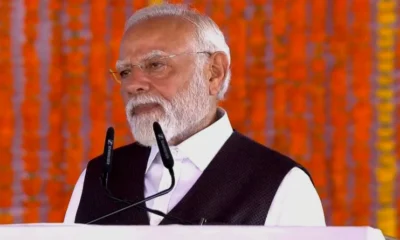
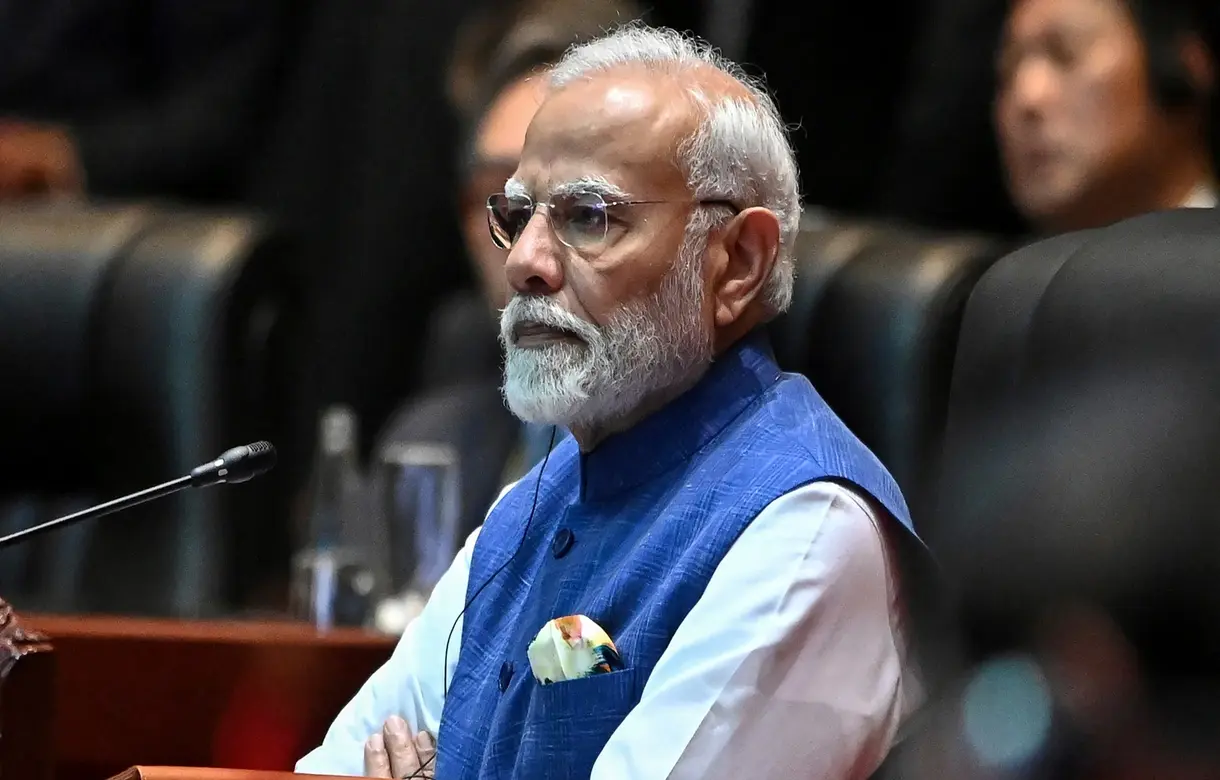
Prime Minister Narendra Modi in his address at the East Asia Summit stressed the importance of dialogue over conflict, warning that solutions to global problems cannot emerge from the battlefield.

The Prime Minister’s remarks come as the world witnesses rising tensions in the Middle East and eastern Europe due to Israel’s escalations with Iran and its proxies in Gaza and Lebanon, and the ongoing Russia-Ukraine war.

Mentioning that peace and stability should be restored as soon as possible, PM Narendra Modi said that conflicts going on in different parts of the world are having the most negative impact on countries of the Global South.

Prime Minister Narendra Modi is attending the ASEAN-India and East Asia summits in Laos to boost ties with ASEAN countries, and echoed his stance that diplomacy and peaceful resolutions are the only path forward. He stated that he comes from the land of Buddha, and has repeatedly said this is not an era of war. He added that solutions to problems cannot come from the battlefield.

PM Narendra Modi advocated for a humanitarian approach to conflicts and reiterated India’s commitment to peace and diplomacy. He mentioned that keeping a humanitarian approach, dialogue and diplomacy will have to be given priority. Fulfilling the responsibility of Vishwa Bandhu (global citizen), India will continue to contribute in every possible way in this direction, he continued.

He also pointed to the growing threat of terrorism, urging for global cooperation to tackle the issue. He added that terrorism is also a serious challenge to global peace and security, and to face it, forces believing in humanity will have to work together. He mentioned that mutual cooperation in the areas of cyber, maritime, and space will also have to be strengthened.

PM Narendra Modi also called for a free, open, inclusive, prosperous, and rule-based Indo-Pacific, signalling India’s ongoing concerns regarding China’s aggressive moves in the region. He underlined that the peace, security, and stability of the South China Sea are vital to the progress of the Indo-Pacific. He emphasized that the approach should be one of developmentalism and not expansionism.

India News

Security tightened across Delhi metro stations after bomb threat emails

Delhi is on high alert after bomb threat emails targeted metro stations, the Red Fort and the Assembly. Authorities confirmed the threats were hoaxes but tightened security as a precaution.

Published

on

Delhi Metro

Security has been intensified across all metro stations and major installations in the national capital after a series of bomb threat emails were received on Monday. Authorities later confirmed that the threats were hoaxes following detailed inspections by security agencies.

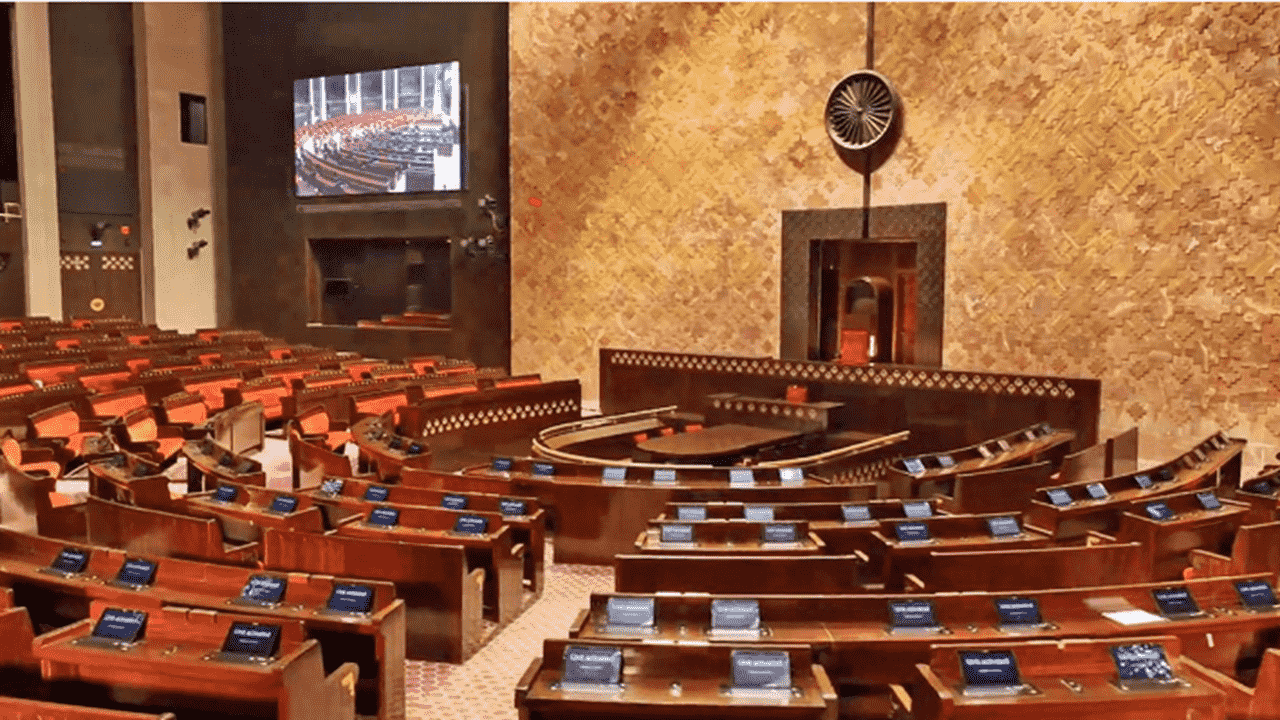
According to officials, several key institutions — including the Delhi Secretariat, Delhi Assembly, the Red Fort and two schools — received threatening emails earlier in the day. Extensive searches were carried out at all the locations mentioned in the messages, but nothing suspicious was found.

A senior police officer said cyber teams are working to trace the origin of the emails. Preliminary findings suggest that the senders may have used Virtual Private Networks (VPNs) in an attempt to conceal their identities and mislead investigators. Officials expressed confidence that those responsible would be identified.

Metro stations under heightened surveillance

Following specific references to metro services in the emails, security arrangements were strengthened across the entire network of the Delhi Metro Rail Corporation. Additional personnel have been deployed at stations, and anti-sabotage checks are being conducted.

Police said random frisking of passengers and intensified CCTV surveillance are being carried out as part of precautionary measures. Bomb disposal squads and dog squads were stationed at sensitive sites, including the Red Fort, Delhi Secretariat and the Assembly complex.

The threatening emails reportedly included the slogan “Delhi banega Khalistan” and warned of explosions at an Army school, the Assembly and the Red Fort at specific times during the day. Officials stated that all mentioned locations were thoroughly checked and declared safe.

Authorities also coordinated with counterparts in neighbouring states to enhance security at metro stations falling under their jurisdictions.

While no explosives were found, officials said the tightened security arrangements will remain in place as a precaution. Cyber teams continue efforts to trace the IP addresses and identify those behind the threat emails.

Continue Reading

India News

JNU protest turns violent as Left and Right student groups trade charges

A late-night protest at JNU turned violent as Left and ABVP student groups accused each other of stone-throwing and attacks near the East Gate.

Published

on

JNU Protest

Tension gripped the campus of Jawaharlal Nehru University in the early hours of Monday after a protest march allegedly spiralled into violence, with rival student groups accusing each other of triggering the unrest.

Students claimed that the incident occurred around 1.30 am when a confrontation broke out during a march called by the Jawaharlal Nehru University Students’ Union. The protest, named “Samta Juloos”, was headed towards the East Gate and was organised to demand the resignation of Vice-Chancellor Santishree Dhulipudi Pandit and the withdrawal of a rustication order.

According to protesters, several students were injured after alleged stone-throwing during the clash. They alleged that the university administration did not intervene during the march and instead permitted members of the Akhil Bharatiya Vidyarthi Parishad to confront demonstrators.

However, the ABVP denied the allegations and countered that Left-affiliated organisations instigated the confrontation and were spreading misinformation about the events.

Left-backed groups, including the All India Students’ Association, claimed that ABVP activists targeted the JNUSU encampment and hurled stones at “unarmed students”, leading to multiple injuries.

Videos shared by students on social media reportedly showed chaotic scenes near the protest site, with members of rival groups engaged in heated exchanges and physical scuffles.

University authorities did not immediately respond to queries regarding the incident. Students said the situation on campus remained tense following the overnight clashes.

Continue Reading

India News

World praised India’s AI potential at AI Impact Summit, says PM Modi

PM Modi said the world praised India’s AI potential at the AI Impact Summit 2026, where 89 countries endorsed the New Delhi Declaration on artificial intelligence.

Published

on

pm modi speech

Prime Minister Narendra Modi on Monday said that the world wholeheartedly praised India’s potential during the recently concluded AI Impact Summit 2026 in New Delhi, highlighting the growing global confidence in the country’s young technology talent.

In a post on X, the Prime Minister said the summit demonstrated how the mindset of India’s youth in the field of technology would serve humanity at large. He described the event as historic and underlined the positive global response to India’s AI capabilities.

The AI Impact Summit 2026, organised in New Delhi last week, concluded with the adoption of the New Delhi Declaration on AI Impact. The declaration has been endorsed by 89 countries and international organisations, signalling broad global agreement on promoting artificial intelligence for economic growth and social welfare.

Broad global participation

The summit saw the participation of several prominent world leaders and top technology executives. Among those present were UN Secretary-General Antonio Guterres, French President Emmanuel Macron, Brazilian President Luiz Inacio Lula da Silva, and Swiss President Guy Parmelin.

Other leaders attending the summit included Sri Lanka President Anura Kumara Dissanayake, Bhutan Prime Minister Tshering Tobgay, Mauritius Prime Minister Navinchandra Ramgoolam, Croatia Prime Minister Andrej Plenkovic, Serbia President Aleksandar Vucic, Seychelles Vice President Sebastien Pillay, Estonia President Alar Karis, and Finland Prime Minister Petteri Orpo.

Chief executives and senior leaders from major global technology firms were also part of the gathering.

Focus on inclusive AI growth

Held under the theme ‘Sarvajan Hitay, Sarvajan Sukhay’ (welfare for all, happiness of all), the summit aimed to position India as a global leader in artificial intelligence while ensuring that AI development remains inclusive and sustainable.

The event brought together more than 500 international AI leaders. This included around 100 CEOs and founders, 150 academicians and researchers, and 400 CTOs, vice presidents and philanthropists. Additionally, over 100 government representatives and nearly 60 ministers and vice ministers participated in discussions.

The New Delhi Declaration seeks to strengthen international cooperation and ensure that AI technologies contribute to economic progress, social good and environmental protection.

Continue Reading

Trending

© Copyright 2022 APNLIVE.com