English हिन्दी
Connect with us

India News

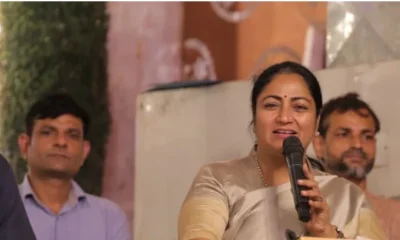
AAP raises Phulera parallel against Delhi CM Rekha Gupta, BJP counters with Sunita Kejriwal example

AAP has accused Delhi CM Rekha Gupta of violating constitutional norms by involving her husband in official work. BJP countered by citing past precedents involving Sunita Kejriwal and Sheila Dikshit’s family.

Published

on

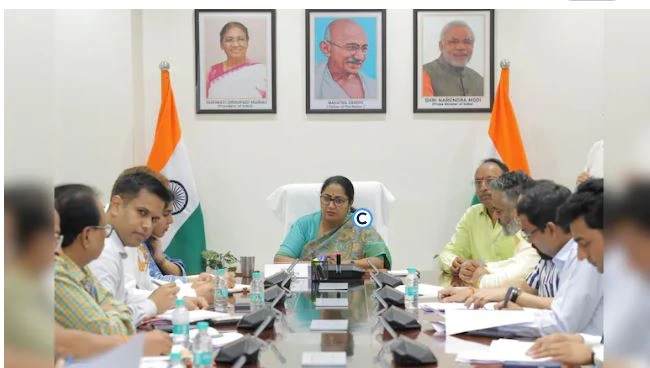
The political tussle in Delhi has intensified after the Aam Aadmi Party (AAP) questioned Chief Minister Rekha Gupta over her husband’s presence at official meetings. The Bharatiya Janata Party (BJP) has defended the CM, accusing the opposition of unfairly targeting her.

AAP questions CM over husband’s role

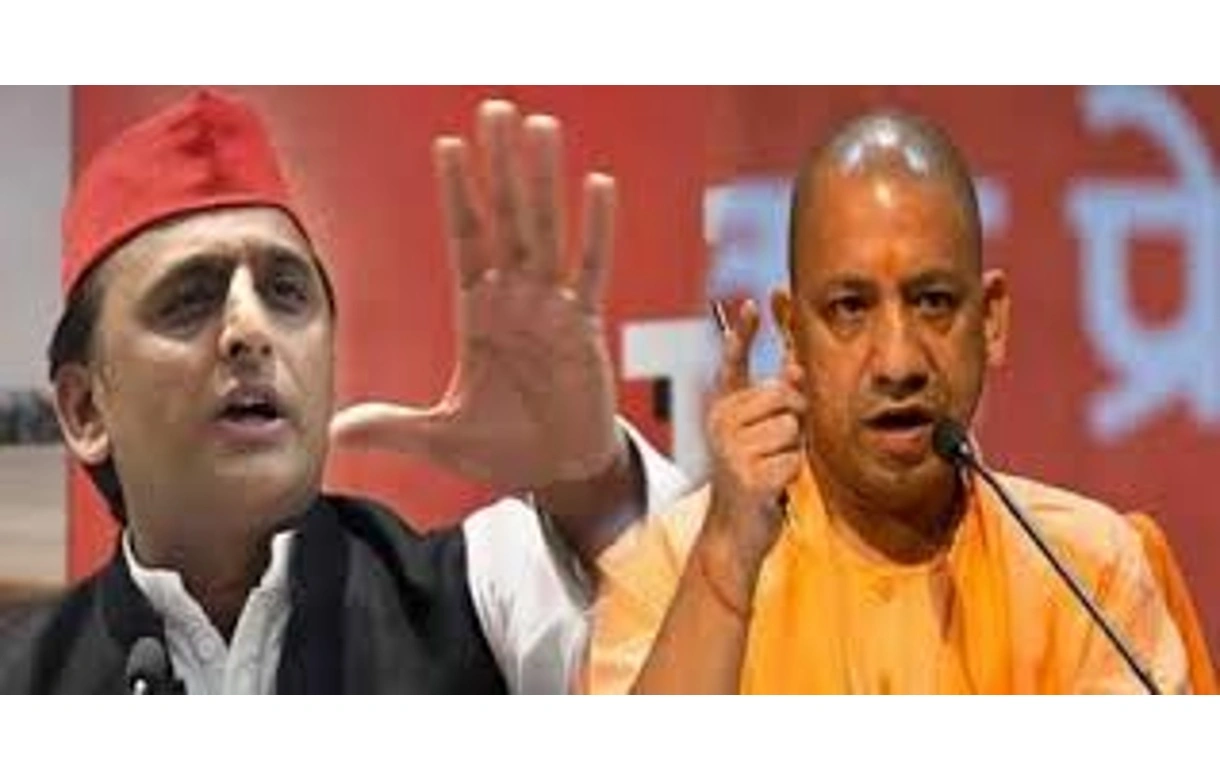
AAP’s Delhi chief Saurabh Bharadwaj alleged that Manish Gupta, the Chief Minister’s husband, was not only accompanying her but also taking part in inspections and issuing instructions to officers. Drawing a comparison with the fictional village “Phulera” from the popular web series Panchayat, he said:
“This is unconstitutional. Rekha Gupta took an oath to the Constitution and secrecy. No law permits her husband to attend or conduct government meetings. Videos clearly show him directing officials. He is a businessman, not a political leader, so how can he be allowed to run government affairs?”

BJP defends Rekha Gupta, hits back at AAP

In response, BJP leader Amit Malviya countered that such criticism was politically motivated. He argued that Rekha Gupta was merely conducting review meetings of her constituency, which her husband helps manage. He drew parallels with past examples, saying:
“Sheila Dikshit’s constituency was managed by her sister Rama Dhawan, and Sunita Kejriwal looked after Arvind Kejriwal’s constituency. Unlike Sunita Kejriwal, however, Manish Gupta has never sat on the CM’s chair or issued unlawful orders.”

Malviya further alleged that AAP’s attack was gender-biased: “Stop targeting Rekha Gupta just because she is a woman doing her job effectively. She is making Arvind Kejriwal look ordinary with each passing day.”

AAP shares video as proof

To strengthen its case, AAP leaders released a video showing Manish Gupta conducting an inspection with government officers and giving them directions in the absence of the Chief Minister. Bharadwaj questioned:
“Can a government officer take instructions from the CM’s husband? Under which law is this allowed? This is a clear violation.”

The controversy has now turned into a sharp political exchange, with both parties invoking past precedents and questioning each other’s ethics.

India News

Rahul Gandhi urges INDIA bloc allies to avoid infighting, calls for united opposition front

Rahul Gandhi called on INDIA bloc partners to avoid internal conflicts and work together more effectively, saying opposition unity is essential to challenge the BJP and address key national issues.

Published

on

Rahul-Gandhi

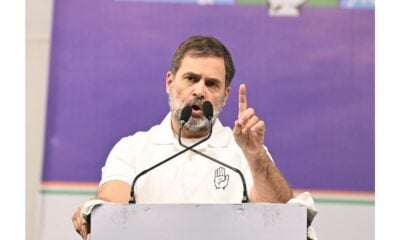
Leader of Opposition Rahul Gandhi appealed to INDIA bloc partners to avoid internal conflicts and work together more closely during a key meeting of opposition leaders in New Delhi on Monday.

According to reports, Gandhi used his address at the meeting to stress that opposition parties would be stronger if they remained united rather than criticising one another. He reportedly cautioned allies against “pulling each other down” and urged them to focus on collectively challenging the BJP.

The meeting marked the first formal gathering of the opposition alliance since the recent round of state elections and came amid signs of strain among some alliance partners. Several senior leaders, including Mamata Banerjee and Akhilesh Yadav, attended the discussions.

During his remarks, Gandhi is understood to have expressed disappointment over what he viewed as insufficient support from some allies on issues raised by the Congress, including concerns related to voter list revisions and alleged electoral irregularities. He also reportedly took aim at alliance partners that frequently criticise the Congress despite being part of the opposition grouping.

Opposition plans joint action on voter list concerns

The alliance agreed to jointly raise concerns regarding the Special Intensive Revision (SIR) process and alleged voter list manipulation. Leaders decided to formally approach the Chief Justice of India with a representation on the matter.

Congress president Mallikarjun Kharge also highlighted the need for opposition parties to build on recent instances of cooperation in Parliament. He argued that a united opposition would be better positioned to address political, economic and governance-related issues facing the country.

Alliance to meet regularly

The INDIA bloc leadership decided that alliance meetings would now be held every two months as part of efforts to improve coordination among member parties. The next meeting is expected to take place in Hyderabad in August.

The gathering came against the backdrop of recent electoral developments and ongoing discussions about the future direction of the opposition alliance, which has been facing questions over internal cohesion and strategy.

Continue Reading

India News

YSRCP questions TDP’s commitment to women reservation over Rajya Sabha nominations

YSRCP has criticised TDP’s Rajya Sabha nominations, claiming the ruling party failed to demonstrate its commitment to women’s representation despite advocating 33 per cent reservation for women in politics.

Published

on

The opposition YSR Congress Party (YSRCP) has criticised the ruling Telugu Desam Party (TDP) over its latest Rajya Sabha nominations, alleging that the party’s commitment to women’s political representation is not reflected in its candidate selections. The remarks have triggered a fresh political confrontation in Andhra Pradesh over the issue of women’s reservation.

TDP president and Andhra Pradesh Chief Minister N. Chandrababu Naidu recently finalised the party’s nominees for the upcoming Rajya Sabha vacancies. The selected candidates include sitting MP Sana Satish Babu, education entrepreneur Bhashyam Ramakrishna and party leader Chintakayala Vijay.

YSRCP raises questions on women’s representation

Reacting to the nominations, the YSRCP argued that the selections did not align with repeated promises made by the TDP leadership regarding women’s participation in politics. The opposition party pointed to the absence of women among the announced Rajya Sabha candidates and questioned the sincerity of the ruling party’s commitment to reserving 33 per cent of seats for women.

The criticism comes shortly after TDP national general secretary Nara Lokesh announced that the party would reserve 33 per cent of Assembly and Parliament seats for women in the 2029 elections. The proposal had also received public backing from Chandrababu Naidu.

Opposition calls Rajya Sabha nominations a missed opportunity

According to the YSRCP, the Rajya Sabha nominations provided an immediate opportunity for the TDP to demonstrate its commitment to women’s empowerment through candidate selection. The party maintained that political commitments should be reflected through representation and decision-making roles rather than only through public declarations.

The issue has now emerged as another point of contention between the ruling NDA alliance in Andhra Pradesh and the opposition YSRCP, with both sides likely to continue debating women’s representation in elected bodies in the run-up to future elections.

Continue Reading

India News

Sukhendu Sekhar Roy quits Trinamool Congress amid deepening crisis for Mamata Banerjee

Veteran Rajya Sabha MP Sukhendu Sekhar Roy has resigned from the Trinamool Congress, marking a significant setback for Mamata Banerjee as the party confronts growing internal unrest and defections.

Published

on

Mamata Banerjee

In a major setback for Trinamool Congress chief Mamata Banerjee, veteran Rajya Sabha MP Sukhendu Sekhar Roy has resigned from the party, further highlighting the turbulence within the organisation.

Roy’s departure comes at a time when the Trinamool Congress is facing one of the most challenging phases in its recent political history. The party has been dealing with growing internal dissent and criticism from several leaders following its electoral setbacks and organisational turmoil.

The Rajya Sabha member had recently voiced strong concerns about the party’s future and leadership. In public remarks made in recent weeks, he questioned the direction of the organisation and expressed doubts about its long-term prospects.

Roy, a senior parliamentarian who has represented West Bengal in the Rajya Sabha since 2011, had long been considered one of the prominent voices of the Trinamool Congress in Parliament. His resignation is likely to add pressure on the party leadership as it seeks to contain growing unrest among sections of its leaders and legislators.

Resignation adds to concerns over party unity

The development comes amid continuing speculation over divisions within the Trinamool Congress’s parliamentary ranks. Party leaders have been engaged in efforts to maintain unity and prevent further exits as concerns over defections continue to dominate political discussions.

In recent days, several leaders associated with the party have publicly expressed dissatisfaction or stepped away from organisational responsibilities, fuelling debate about the party’s internal situation.

Political implications

Roy’s resignation is significant because of his long association with the Trinamool Congress and his role in Parliament. Political observers believe the move could encourage further debate within the party and intensify scrutiny of the leadership’s strategy in the aftermath of recent political developments in West Bengal.

The Trinamool Congress leadership is expected to focus on limiting the impact of the resignation while attempting to reassure party workers and supporters about the organisation’s future direction.

Continue Reading

Trending

© Copyright 2022 APNLIVE.com