English हिन्दी
Connect with us

Latest Politics News

Govt approves Bill to overturn SC order, restore original provisions of SC/ST Act

Published

on

Govt approves Bill to overturn SC order, restore original provisions of SC/ST Act

Following protests by Dalit groups and BJP ministers against ‘dilution’ of the The Scheduled Castes and the Scheduled Tribes (Prevention of Atrocities) Act by the Supreme Court to prevent its abuse, the Modi government, at the Cabinet meeting on Wednesday, August 1, cleared an amendment to the law to overturn the apex court’s order.

A two-judge bench of the Supreme Court comprising Justices AK Goel and UU Lalit had said on March 20 that there were “instances of abuse” of the Act by “vested interests” for political or personal reasons. In their ruling, they laid down guidelines for arrests under the Act “to avoid false implications”.

The court said a preliminary enquiry, not exceeding seven days, may be conducted by a DSP to ensure allegations are not “frivolous or motivated” before a case is registered. It added that a public servant, if accused, can be only be arrested with the permission of the appointing authority. Others can be arrested only after permission is granted from the Senior Superintendent of Police of the district. The SSP will have to record in writing the reason for granting permission and hand it to the accused and the concerned court.

In order to nullify the Supreme Court verdict in the SC/ST Act case, the Central government has proposed a new provision in the statute. The amendment Bill seeks to insert Section 18A in the SC/ST (Prevention of Atrocities) Act, reported News18.

Section 18A tends to override the apex court judgment in March. According to this new Section, there will not be any requirement to conduct a preliminary inquiry before an FIR is to be registered. According to the Bill, any provision for conducting preliminary inquiry will delay the investigation and thus filing of the chargesheet.

The new law would also to do away with the requirement of obtaining permission before arresting a person, including public officials. It says that “arrest, if necessary, of a person shall not require any approval,” reported News18.

The proposed Section also moves to invalidate another directive by the top court by which a provision for pre-arrest bail was sought to be introduced in the statute. “The provision of Section 438 of the CrPC (anticipatory bail) shall not apply to a case under this Act, notwithstanding any judgment or any order of any court,” the proposed law says.

The proposed Bill has already received the approval of the Cabinet and it is likely to be introduced in the ongoing session of the Parliament.

In bringing this amendment, Modi government’s hand was forced by nationwide protests and threat of agitation from various Dalit groups which claimed that the dilution of the Act by the judgment will lead to more discrimination and crime against the backward community.

In protests by Dalit groups, at least seven people were killed and over 100 injured in various parts of the country.

Within the NDA, Dalit MPs, including Udit Raj,  urged the party leadership and the government to take immediate steps to protect the rights of the community while non-Dalit MPs agreed that provisions in the Act were being misused.

Union Cabinet Minister Ram Vilas Paswan and his son and Lok Sabha member Chirag Paswan also threatened a stir on August 9 on the SC/ST Act issue.

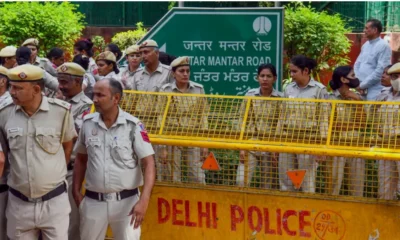
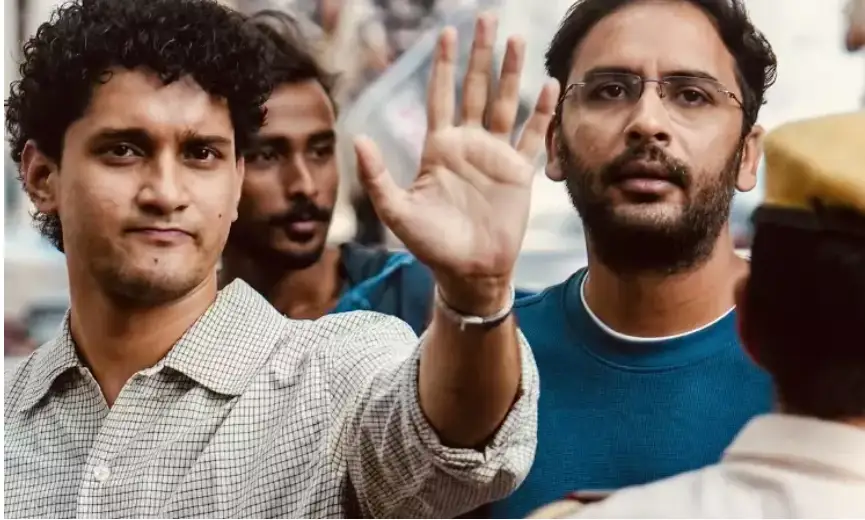
Members of the Bheem Army, too, have decided to hold a protest at Jantar Mantar in New Delhi on August 19 demanding changes to the SC/ST Act. “People belonging to scheduled castes, other backward classes and Muslims have been asked to reach Delhi in large numbers,” said Bheem Army national spokesperson Mandeep Singh Nautiyal.

Faced with protests, the Centre had filed a review petition in the top court on April 2. However, said media reports, the Supreme Court refused to stay its ruling and asked all parties to submit detailed replies, leading to the demand from Dalit groups that the government introduce an ordinance or an Amendment Bill to restore the earlier provisions.

Protests intensified when the government appointed Justice AK Goel, who authored the 20 March verdict, as the Chairman of the National Green Tribunal on the day of his retirement from the Court. Dalit MPs in the NDA “expressed concern” over the “wrong message” being sent and wrote to Union Home Minister Rajnath Singh to reconsider Goel’s appointment.

The issue was raised in Parliament, where MPs urged the Centre to promulgate an Ordinance to restore the Act.

During the budget session of Parliament, the government informed the Lok Sabha that there were 47,338 cases of crime against members of the SC/ST in 2016.

In the ongoing monsoon of Parliament, Union Home Minister Rajnath Singh said the Union Cabinet will bring the SC/ST bill in the current session.

The SC/ST Act was originally passed in 1955 by the Parliament as the Untouchability (Offences) Act, recalled a report on news portal Firstpost. It was renamed as the Protection of Civil Rights (PCR) Act in 1976 but the law was considered ineffective in 1980s and replaced with the Scheduled Caste and Scheduled Tribes (Prevention of Atrocities) Act in 1989. In 2015, more offences were brought under its ambit by including acts like tonsuring of head, moustache of backward caste people by upper-castes as a criminal activity.

India News

People will come and go, says Sanjay Raut amid revolt by six Sena UBT MPs

Sanjay Raut said Shiv Sena (UBT) is not dependent on MPs and will continue to move forward despite a rebellion by six Lok Sabha members.

Published

on

Shiv Sena (UBT) MP Sanjay Raut

Senior Shiv Sena (UBT) leader Sanjay Raut has sought to downplay the impact of a rebellion by six Lok Sabha MPs from the party, asserting that the organisation will continue to move forward despite the latest political setback.

Speaking as Shiv Sena marked its 60th foundation year, Raut said the party’s future does not depend on elected representatives and that it has overcome several challenges during its long history. He remarked that people may come and go, but the party continues its journey forward.

The comments come amid growing turmoil within the Uddhav Thackeray-led faction after six MPs signalled their intention to break away. According to reports, the rebel lawmakers are dissatisfied with the leadership style of Uddhav Thackeray and have also expressed concerns over the party’s closeness to the Congress.

Among those seeking to leave the party are MPs Omraje Nimbalkar, Sanjay Dina Patil, Sanjay Jadhav, Sanjay Deshmukh, Nagesh Patil Ashtikar and Bhausaheb Vakchaure. Reports indicate that the lawmakers recently met Lok Sabha Speaker Om Birla and cited concerns about the party’s political direction.

Party can rebuild after setbacks, says Raut

Referring to the latest round of defections, Raut maintained that Shiv Sena (UBT) has faced betrayals and internal challenges before and has always managed to recover. He stressed that the party remains cadre-based and is not dependent on MPs or MLAs for its existence.

The Rajya Sabha MP also accused the ruling BJP of attempting to weaken regional political parties across the country. According to Raut, efforts have been made over the past decade to diminish the role of regional forces, and a healthy democracy requires a strong opposition.

The rebellion has intensified speculation about another split within the Thackeray camp, which has already faced major political upheaval in recent years. However, the party leadership has indicated that it intends to continue its organisational work and focus on rebuilding support despite the current crisis.

Continue Reading

India News

Cross-voting helps BJP-backed Parimal Nathwani win Rajya Sabha seat from Jharkhand

Cross-voting reportedly played a crucial role in BJP-backed independent candidate Parimal Nathwani’s victory in the Jharkhand Rajya Sabha election, while JMM’s Baidyanath Ram won the other seat.

Published

on

BJP-backed independent candidate Parimal Nathwani secured a Rajya Sabha seat from Jharkhand on Thursday, with reports indicating that cross-voting played a key role in the closely watched election. The second seat was won by Jharkhand Mukti Morcha (JMM) candidate Baidyanath Ram.

The election witnessed a three-cornered contest for two Rajya Sabha seats. Alongside Nathwani and Baidyanath Ram, Congress candidate Pranav Jha was also in the fray. Political observers had been closely tracking the possibility of cross-voting in the state, given the numerical strength of various parties in the Jharkhand Assembly.

Cross-voting speculation dominated the contest

Ahead of voting, both the ruling INDIA bloc and the NDA had taken measures to keep their legislators together amid concerns over possible defections and cross-voting. Political discussions in the state largely revolved around whether legislators would vote along party lines or support candidates outside their alliances.

Nathwani’s victory is being linked to support from legislators beyond the NDA’s expected vote base. Reports after the counting suggested that cross-voting may have influenced the final outcome, helping the BJP-backed candidate secure the required support.

The result comes as another example of cross-voting influencing Rajya Sabha elections, a trend that has been discussed in several states during recent Upper House contests.

Congress candidate misses out

While JMM’s Baidyanath Ram and BJP-backed Parimal Nathwani emerged victorious, Congress nominee Pranav Jha failed to secure one of the two available seats. The outcome is likely to trigger political debate over voting patterns within the state assembly and the extent of cross-voting during the election.

Continue Reading

India News

Uddhav Sena MPs unreachable as Delhi meetings fuel fresh split speculation

Fresh uncertainty surrounds Shiv Sena (UBT) after several MPs reportedly became unreachable, with attention now focused on crucial meetings in Delhi.

Published

on

Fresh political uncertainty has gripped the Shiv Sena (UBT) after several of its Lok Sabha MPs reportedly became unreachable, prompting senior leaders to make personal efforts to contact them amid growing speculation of a possible rebellion within the party.

Party chief Uddhav Thackeray and other senior leaders are understood to be reaching out to MPs as concerns grow over potential defections. The developments come ahead of a parliamentary committee meeting in Delhi, where several MPs from the Uddhav Thackeray camp are expected to gather.

Reports suggest that some MPs from the Shiv Sena (UBT) faction could hold discussions in the national capital alongside leaders from the rival Shiv Sena led by Eknath Shinde. Sources have indicated that a group of MPs may explore forming a separate faction in Parliament before potentially aligning with the Shinde-led camp, although no official announcement has been made.

Names being discussed in political circles include MPs such as Sanjay Dina Patil, Sanjay Deshmukh, Nagesh Patil Ashtikar, Omraje Nimbalkar, Bhausaheb Wakchaure and Sanjay Jadhav. However, at least one MP, Sanjay Dina Patil, has publicly rejected reports linking him to any rebel group.

Meanwhile, senior Uddhav camp leaders including Arvind Sawant and Anil Desai are expected to remain actively engaged in efforts to maintain party unity. Rajya Sabha MP Sanjay Raut has also been in Delhi amid the unfolding developments.

The latest episode has revived memories of previous political upheavals in Maharashtra and intensified speculation over whether the Shiv Sena (UBT) could face another significant organisational challenge in the coming days. As meetings continue in Delhi, political observers will be closely watching for any formal announcements from either camp.

Continue Reading

Trending

© Copyright 2022 APNLIVE.com