English हिन्दी
Connect with us

Latest Politics News

Kerala CM Pinarayi Vijayan meets PM Modi in Delhi to seek approval from Centre for Silverline Project

It is reported that during the meeting at the Prime Minister’s Office in the Parliament, Kerala CM Pinarayi Vijayan briefed PM about the project, its current status and the clearance that is required.

Published

on

Kerala CM Pinarayi Vijayan

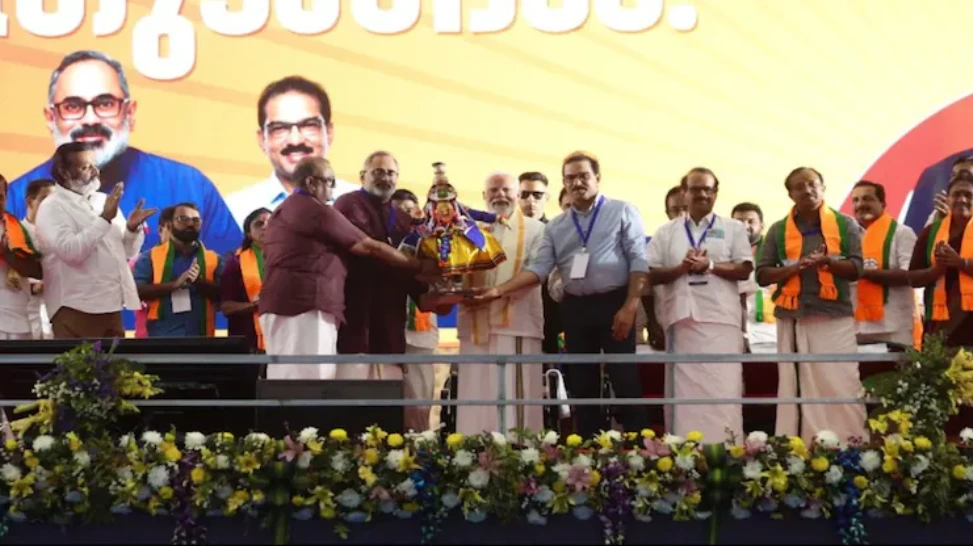
Kerala Chief Minister Pinarayi Vijayan met Prime Minister Narendra Modi on Thursday to seek the clearance of Rs 63,000 crore project for the Silverline semi-high speed rail project.

It is reported that during the meeting at the Prime Minister’s Office in the Parliament, Kerala CM Pinarayi Vijayan briefed PM about the project, its current status and the clearance that is required. The reports suggest that PM did listen to what he had to say but did not give any commitment to him for the clearance. Chief Minister Vijayan will do a press conference at 4 pm today.

Meanwhile, the state has been witnessing widespread protest against the project, a prominent social activist Medha Patkar also led the agitations in front of the Secretariat on Thursday.

Read Also: Birbhum violence: Mamata Banerjee meets victim’s families, promises compensation of Rs 2 lakh, jobs, speedy justice

This project is also being opposed by the opposition Congress-led UDF, which is alleging that the project is unscientific and impractical and this put a huge financial burden on the state.

It is reported that in the Silverline Railway project there will be a 529 km long stretch and it will link Thiruvananthapuram that is in the South to Kasaragod in north Kerala. This project will cover 11 districts through 11 stations. The journey between the two stations is expected to take four hours and currently, it takes around 12hours to reach from one point to the other.

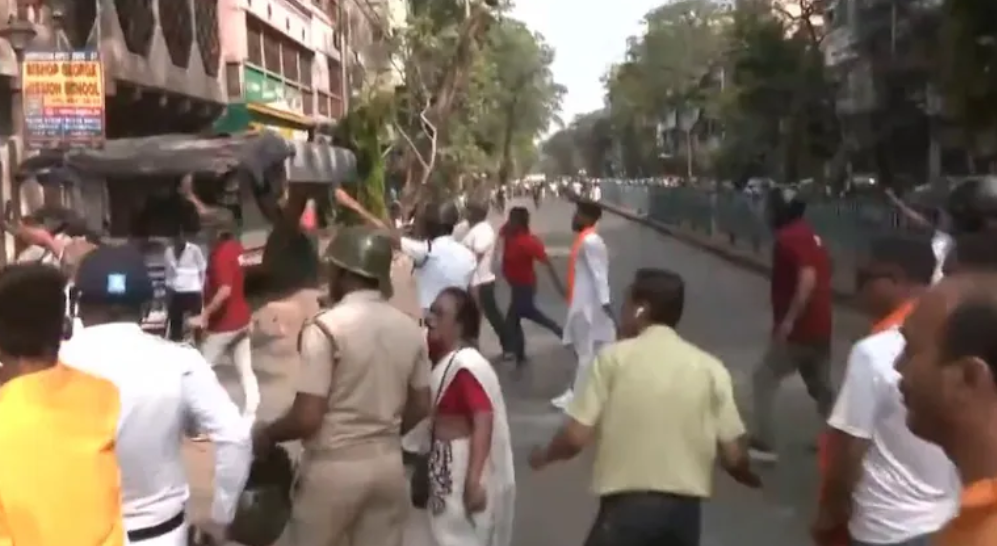
In other news, West Bengal Chief Minister Mamata Banerjee on Thursday met the families affected by Birbhum violence in which 8 people were burnt alive by a mob on Tuesday, an incident that has triggered a massive political backlash. On her maiden visit to the violence-hit village, the West Bengal CM promised Rs 2 lakh compensation for rebuilding the scorched homes, jobs to families affected by the violence and speedy justice.

Umar Khalid denied bail in Delhi riots case

India News

President’s Rule revoked in Manipur as NDA set to form new government

President’s Rule has been withdrawn in Manipur nearly a year after its imposition, paving the way for a new NDA-led government under Yumnam Khemchand Singh.

Published

on

President rule invoked in Manipur

President’s Rule has been revoked in Manipur nearly a year after it was imposed, clearing the way for the formation of a new government led by the BJP-led National Democratic Alliance (NDA). The decision came hours before the scheduled oath ceremony of the new council of ministers.

Chief minister-designate Yumnam Khemchand Singh is set to take oath later this evening, along with other NDA legislators who will formally join the new government. The revocation brings an end to central rule that had been in place since February 2025, following the resignation of then chief minister N Biren Singh.

Assembly status during central rule

During the period of President’s Rule, the Manipur Legislative Assembly remained in suspended animation, meaning it was neither functioning nor dissolved. With the restoration of the elected government, legislative activity is expected to resume.

Khemchand Singh, 61, belongs to the Meitei community. Two deputy chief ministers have been named to reflect Manipur’s ethnic diversity. Nemcha Kipgen, from the Kuki community, and Losii Dikho, from the Naga community, are set to take charge as deputy chief ministers.

According to people with direct knowledge of the matter, Nemcha Kipgen is likely to take oath from a Manipur government guesthouse in Delhi.

Key portfolios and leadership choices

Seven-time MLA from Bishnupur district, Govindas Konthoujam, said he has been entrusted with the Home portfolio. Emphasising stability and law and order, he said he remains committed to serving the state with discipline and restraint.

Sources said Khemchand Singh is viewed within the party as a non-polarising leader who is acceptable across internal factions at a time of political transition. While he is yet to be tested in governance, he is seen as a steady administrative choice capable of providing organisational discipline and continuity amid uncertainty.

Uneasy peace continues in Manipur

The formation of the new government comes against the backdrop of continued tension in Manipur, nearly three years after violence erupted between the Meitei community in the valley areas and the Kuki tribes in several hill districts.

A section of Kuki groups has been demanding a separate administrative arrangement, with negotiations involving multiple insurgent groups operating under two umbrella organisations that are signatories to the suspension of operations agreement.

In recent weeks, some Kuki civil society organisations have stated they would not participate in the Manipur government and have distanced themselves from Kuki MLAs expected to join the new administration.

A day before the announcement of the new government, Kuki leader Paolienlal Haokip posted on X that representatives of the Kuki Zo people could not take part in leadership selection without justice and a written commitment for political settlement.

Diverging demands from communities

Meitei civil society groups have maintained that all internally displaced persons should be allowed to return home safely, even as dialogue continues. However, Kuki leaders have insisted that a political solution in the form of a separate administration must come first, before discussions on rehabilitation and return from relief camps.

Meitei leaders have countered this position, arguing that the demand reflects an ethnocentric territorial claim and that humanitarian issues should be addressed alongside negotiations, as no area is exclusively inhabited by a single community.

Continue Reading

India News

Mamata Banerjee alleges mass voter deletions in Bengal, targets Election Commission

Mamata Banerjee has accused the Election Commission of deleting thousands of voter names without due process, raising questions over the timing of the exercise ahead of elections.

Published

on

Mamata Banerjee

West Bengal Chief Minister Mamata Banerjee on Monday intensified her attack on the Election Commission over voter roll revisions, alleging that a large number of names have been deleted without due process as the state heads towards elections.

Addressing party workers, Banerjee claimed that 40,000 voters’ names were removed from her constituency alone, alleging that the deletions were carried out unilaterally and without giving voters a chance to be heard.

“In my constituency they have deleted 40,000 voters’ names unilaterally… Even a murderer gets a chance to defend himself,” she said.

Allegations against election officials

The chief minister directly accused an election official, alleging political bias and irregular conduct in the revision process. She claimed that voter names were being removed while officials sat in Election Commission offices, calling the process illegal.

“They cannot do it, it is illegal. 58 lakh names have been unilaterally deleted,” she said, echoing claims earlier made by Trinamool Congress leader Abhishek Banerjee.

Banerjee also alleged that individuals described as “micro-observers” had been appointed illegally, claiming they had no role under the Representation of the People Act and were linked to the BJP.

‘Alive but marked dead’

In a dramatic moment during her address, the chief minister asked those present who had been marked as deceased in the voter lists to raise their hands.

“See, they are alive but as per the Election Commission they are dead,” she said.

She further alleged that names were being deleted under the category of “logical discrepancy,” adding that even noted economist and Nobel laureate Amartya Sen had earlier been questioned regarding the age of his mother.

Questions over timing of voter roll exercise

While stating that she did not oppose the Special Intensive Revision process in principle, Banerjee questioned the timing of the exercise.

“I have no problem with SIR, but why do it on the eve of elections? Why not after elections?” she asked.

Reiterating confidence in her party’s organisational strength, the chief minister said she was prepared to fight the issue politically and democratically.

Continue Reading

India News

Rahul Gandhi, Rajnath Singh clash in Lok Sabha over ex-Army chief’s unpublished book on Ladakh

Lok Sabha proceedings were disrupted after Rahul Gandhi cited an unpublished book by former Army chief General MM Naravane on the Ladakh stand-off, drawing objections from Rajnath Singh and other BJP leaders.

Published

on

Rahul Gandhi

A sharp confrontation unfolded in the Lok Sabha on Monday after Leader of Opposition Rahul Gandhi referred to an unpublished book by former Army chief General MM Naravane while speaking on the 2020 India-China Ladakh stand-off, prompting strong objections from treasury benches.

Rahul Gandhi began his address by holding a printout of a magazine article that carried an essay on General Naravane’s yet-to-be-published memoir, Four Stars of Destiny. The reference immediately drew an intervention from Defence Minister Rajnath Singh, who objected to the citation, saying quoting an unpublished book violated parliamentary rules.

Objections from treasury benches

Rajnath Singh demanded that the Leader of Opposition place the book before the House, arguing that since the memoir had not been formally published, its contents could not be cited during proceedings. The objection was echoed by Home Minister Amit Shah, who questioned how references could be made to material that was not publicly available.

Parliamentary Affairs Minister Kiren Rijiju went a step further, suggesting that the House should deliberate on action against members who do not comply with the Speaker’s rulings.

As Rahul Gandhi persisted, repeatedly referring to “Chinese tanks” while discussing the eastern Ladakh situation, the opposition from BJP members intensified, leading to sustained disruptions.

Opposition support and continued disruptions

Samajwadi Party chief Akhilesh Yadav backed Rahul Gandhi, stating that issues concerning China were sensitive and that the Leader of Opposition should be allowed to present his views in the House.

Responding to the objections, Rahul Gandhi questioned the resistance to his remarks, asking what in the book was causing such concern. He maintained that both the article and the contents he was quoting were “100 per cent authentic.”

The Congress leader also said he had not intended to raise the issue but felt compelled to do so after BJP MP Tejasvi Surya questioned the patriotism of the Congress and its leadership.

Government, Congress trade charges

Government sources accused Rahul Gandhi of setting a dangerous precedent by citing material from an unpublished book, alleging that such references could be misused to make unverified claims on the floor of Parliament.

Congress MP Priyanka Gandhi defended her brother, saying he was not attempting to defame the Army and was merely reading an excerpt attributed to the former Army chief. She accused the ruling party of resisting discussion whenever uncomfortable issues surfaced.

House adjourned amid chaos

The repeated interruptions forced Lok Sabha Speaker Om Birla to adjourn the House till 3 pm. When proceedings resumed, similar scenes played out as Rahul Gandhi again attempted to speak on the subject, leading to further disruptions and another adjournment.

Continue Reading

Trending

© Copyright 2022 APNLIVE.com