English हिन्दी
Connect with us

India News

Renaming MGNREGA removes core spirit of rural employment law, says Shashi Tharoor

Published

on

Shashi Tharoor

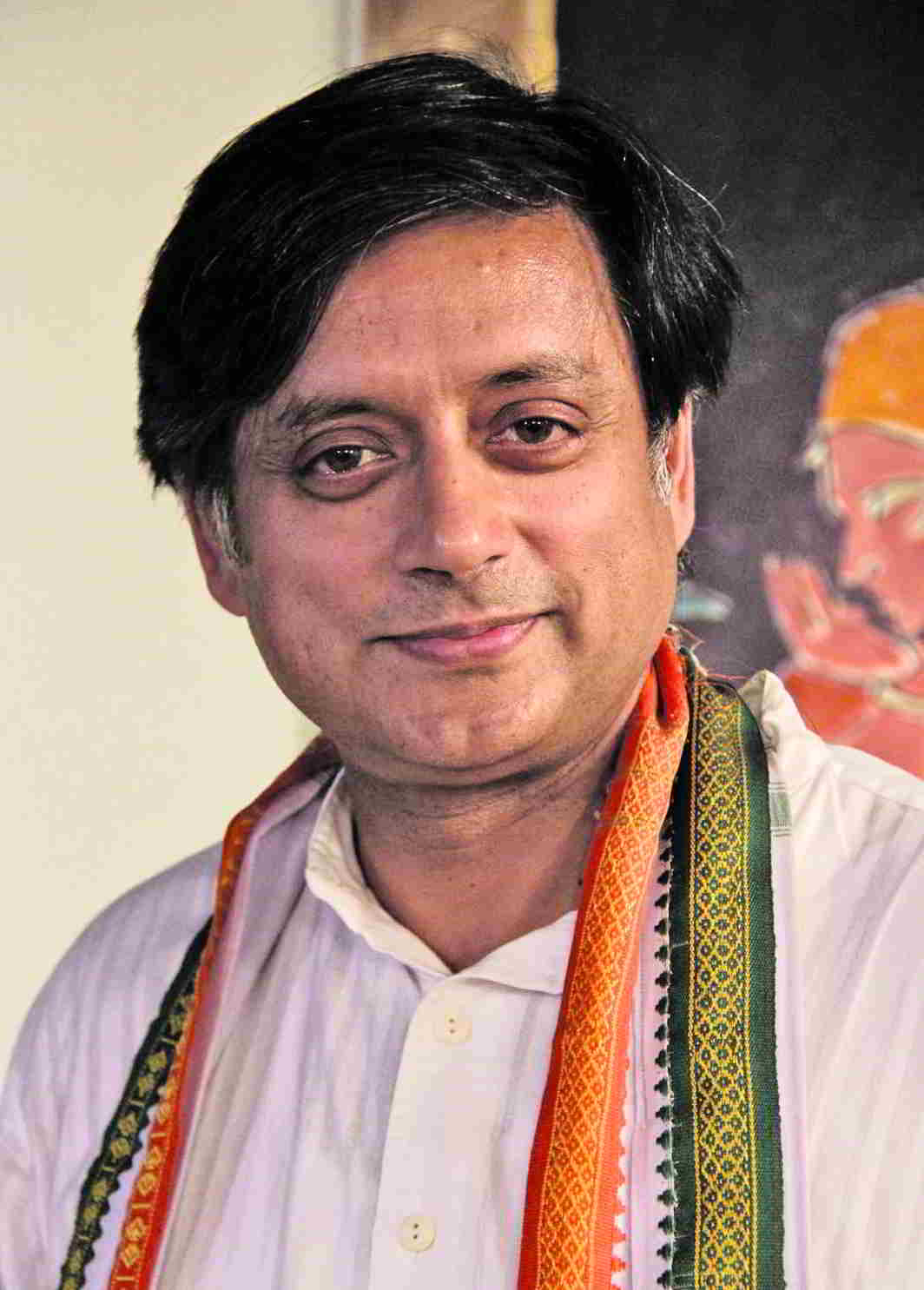
Congress MP Shashi Tharoor has strongly criticised the renaming of the Mahatma Gandhi National Rural Employment Guarantee Act (MGNREGA), saying the move strips the rural employment programme of its core essence. His remarks came after Parliament cleared the Viksit Bharat Guarantee for Rozgar and Ajeevika Mission (Gramin) Bill, also referred to as the VB-G RAM G Bill.

Speaking to media, Tharoor said the decision to remove Mahatma Gandhi’s name from the scheme “takes out the heart” of the rural employment programme that has been in place for years. He noted that the identity and philosophy associated with Mahatma Gandhi were central to the original law.

Tharoor also objected to the way the new name was framed, arguing that it unnecessarily combined multiple languages. He pointed out that the Constitution envisages the use of one language in legislation, while the Bill’s title mixes English and Hindi terms such as “Guarantee”, “Rozgar” and “Ajeevika”, along with the conjunction “and”.

‘Disrespect to both names’

The Congress leader said that inserting the word “Ram” while dropping Mahatma Gandhi’s name amounted to disrespecting both. Referring to Mahatma Gandhi’s ideas, Tharoor said that for Gandhi, the concepts of Gram Swaraj and Ram Rajya were inseparable, and removing his name from a rural employment law went against that vision.

He added that the name of Lord Ram could be used in many contexts, but questioned the rationale behind excluding Mahatma Gandhi from a programme closely linked to his philosophy of village self-rule.

Protests over passage of the Bill

The VB-G RAM G Bill was passed by the Lok Sabha on December 18 and cleared by the Rajya Sabha in the early hours of December 19 amid protests from Opposition members. Several MPs opposed the manner in which the legislation was pushed through, with scenes of sloganeering and tearing of papers in the House.

Outside Parliament, members of the Trinamool Congress staged a sit-in protest near Samvidhan Sadan against the passage of the Bill. Congress also announced nationwide protests earlier this week, accusing the government of weakening rights-based welfare schemes.

Despite opposition criticism, the government has maintained that the new law will strengthen rural employment and livelihood security. The Bill raises the guaranteed employment from 100 days to 125 days per rural household and outlines a 60:40 cost-sharing formula between the Centre and states, with a higher central share for northeastern, Himalayan states and certain Union Territories.

India News

Shashi Tharoor says criticism of Nehru must be balanced, calls BJP narrative selective

Shashi Tharoor says Nehru’s mistakes should be acknowledged but warns against blaming India’s first prime minister for every problem, calling the BJP’s narrative selective.

Published

on

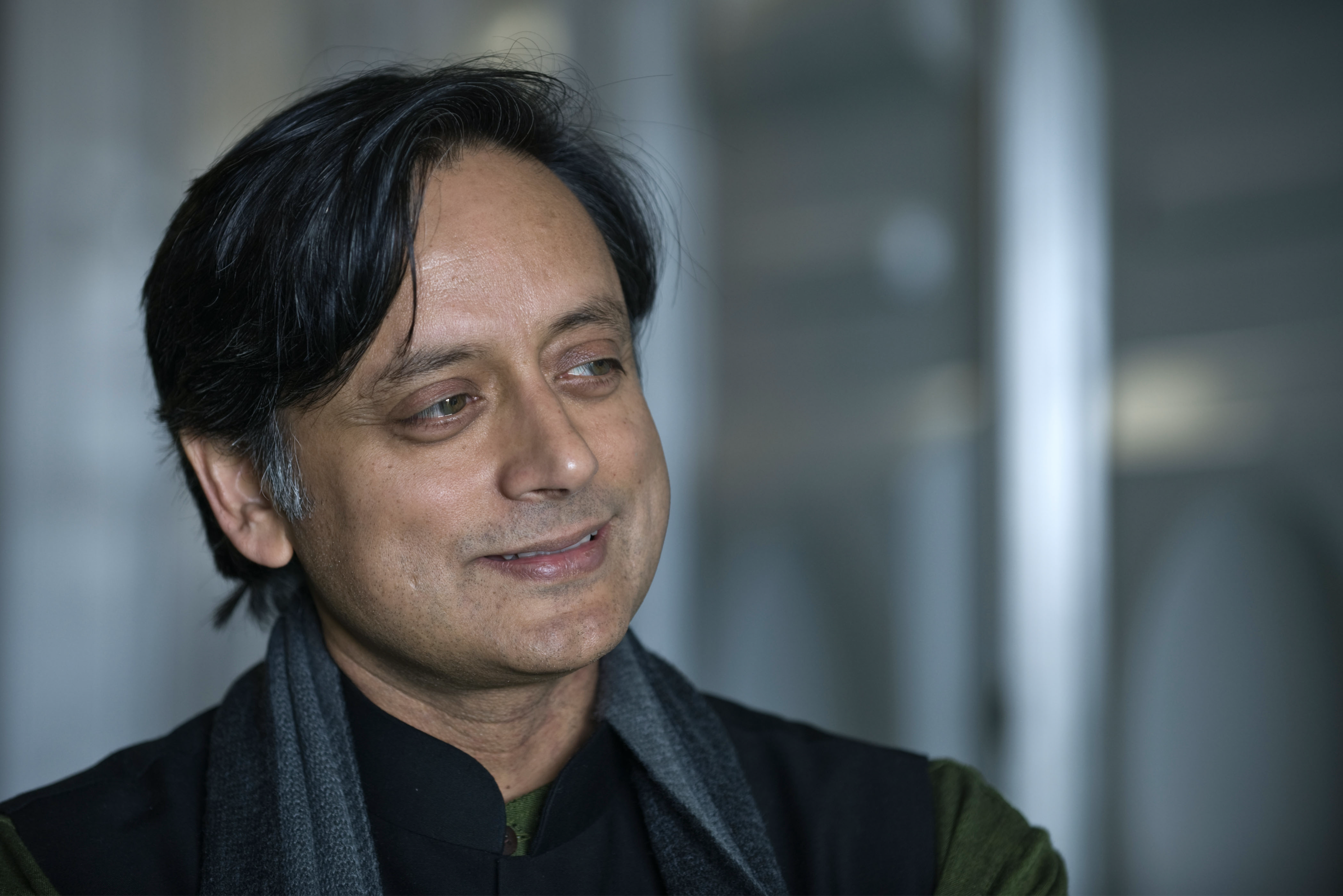
Congress MP Shashi Tharoor on Thursday said that while India’s first Prime Minister Jawaharlal Nehru should not be viewed without criticism, blaming him alone for the country’s challenges amounts to a selective reading of history.

Speaking at the fourth edition of the Kerala Legislative Assembly International Book Festival, Tharoor said he regards Nehru as the founder of Indian democracy but does not support all his ideas or policies uncritically. He stressed that acknowledging historical mistakes is necessary, but holding Nehru responsible for every national issue is unjustified.

“I am a fan of Jawaharlal Nehru, but not an uncritical fan,” Tharoor said, adding that Nehru’s intellect and worldview deserved admiration even if some decisions warranted debate. He underlined that Nehru played a decisive role in firmly establishing democracy in post-Independence India.

Taking a swipe at the BJP, Tharoor said the current government is not anti-democratic but is “certainly anti-Nehru”, accusing it of turning the former prime minister into a convenient scapegoat. According to him, criticism of Nehru is sometimes valid, but it often goes far beyond fair assessment.

Referring to the 1962 India-China war, Tharoor acknowledged that some of the criticism has a basis, noting that certain decisions taken during Nehru’s tenure contributed to the defeat. However, he said this does not justify blaming Nehru for unrelated problems decades later.

During the session, Tharoor also spoke about his personal journey as a writer. He said his habit of reading developed during childhood due to asthma, at a time when books were his primary companions. He recalled that his first novel was written at a very young age but was later lost due to an ink spill.

Tharoor noted that Kerala continues to lead in reading culture even as reading habits decline in many parts of the world. He said his book The Great Indian Novel, written in 1989, emerged as a satirical work at a time when the genre was largely missing in India.

Addressing younger readers, Tharoor observed that shorter books could be more effective for those struggling to find time to read today. He also reminisced about his days at St. Stephen’s College, Delhi, recalling a stage production in which he played Antony while filmmaker Mira Nair portrayed Cleopatra.

The session concluded with Tharoor reciting lines from his earlier poem How to Sleep at Night.

Continue Reading

India News

BJP driven by power, not Hindutva, says Uddhav Thackeray amid BMC poll pitch

Uddhav Thackeray has accused the BJP of being driven by power rather than Hindutva, criticised its alliances, and asserted that Mumbai’s mayor will be Marathi as BMC elections approach.

Published

on

Uddhav Thackeray

Shiv Sena (UBT) chief and former Maharashtra chief minister Uddhav Thackeray has launched a sharp political offensive against the Bharatiya Janata Party (BJP), accusing it of being motivated purely by power rather than ideology, as campaigning intensifies ahead of the crucial Brihanmumbai Municipal Corporation (BMC) elections.

In an interview to a regional media channel on Thursday, Thackeray rejected the BJP’s repeated assertion of being a pro-Hindutva party, claiming that its actions were driven by opportunism and an obsession with remaining in power.

“BJP is not a Hindutva party; it is a party obsessed with power,” Thackeray said, alleging that the party was willing to align with anyone to secure political control. He claimed that the BJP’s ideological positioning was merely a façade and accused it of abandoning principles whenever it suited its interests.

Drawing a historical comparison, Thackeray referred to the role of the Jan Sangh during the United Maharashtra movement, alleging that it joined late and exited first after its objectives were met. He likened the BJP’s political expansion to a “single-celled amoeba” that seeks to absorb everything around it.

Attack on alliances and governance

Thackeray took a dig at the BJP’s political alliances, referring to its tie-up with AIMIM in the Akot Municipal Council as “BJP’s Love Jihad”. He also alleged that BJP leaders preached Hindutva publicly while privately acting otherwise, adding that civic elections should focus on governance rather than communal narratives.

“The issue in the Municipal Corporation is not Hindu versus Muslim. It is about administration and governance,” he said.

Expressing concern over the prevailing political environment, Thackeray described the upcoming BMC elections as being fought under “strange circumstances”, alleging a decline in Maharashtra’s political culture.

“There was a time when wrongdoing carried shame. Today, people openly flaunt it,” he remarked, claiming that the state’s tradition of civil political conduct had been severely damaged.

Marathi identity and Mumbai’s future

Reiterating his party’s stand on Mumbai’s identity, Thackeray asserted that the city’s mayor would be a Marathi person. He questioned attempts to impose Hindi and other languages on Mumbai, reacting strongly to recent remarks about linguistic dominance in certain suburbs.

“Who decides what language Ghatkopar speaks?” he asked, criticising BJP leaders for making such claims.

He also accused the current Maharashtra administration of burdening Mumbai with a debt of ₹3 lakh crore and alleged large-scale misuse of the city’s resources.

Highlighting concerns of the local population, Thackeray claimed that Marathi people were increasingly facing discrimination in their own city, including denial of housing and criticism of food habits.

“The Marathi person integrates wherever he goes. But today, others are coming into our home and trying to dominate us,” he said, alleging that political arrogance had grown due to power being concentrated in Delhi.

Continue Reading

India News

Amit Shah chairs security review meeting on Jammu and Kashmir, stresses mission-mode counter-terror drive

Amit Shah chaired a high-level security review meeting on Jammu and Kashmir, directing agencies to continue mission-mode counter-terror operations and maintain vigilance to sustain security gains.

Published

on

Amit Shah

Union Home Minister Amit Shah on Thursday chaired a high-level security review meeting on Jammu and Kashmir and directed security agencies to continue counter-terror operations in a “mission mode” to eliminate terrorism from the Union Territory at the earliest.

During the meeting, Shah said operations targeting terrorist infrastructure and terror financing must remain focused and sustained. He assured that all necessary resources would be made available to achieve the goal of a terror-free Jammu and Kashmir.

Focus on coordination and vigilance

Chairing the review, the home minister asked all security agencies to remain alert and work in close coordination to ensure that the security gains achieved after the abrogation of Article 370 are maintained. He emphasised that synergy among agencies is essential to prevent any resurgence of terror activities.

The meeting was attended by Jammu and Kashmir Lieutenant Governor Manoj Sinha, Union Home Secretary Govind Mohan, Intelligence Bureau Director Tapan Kumar Deka, and the Union Territory’s chief secretary and director general of police. Senior officers, including the heads of Central Armed Police Forces, were also present.

Government reiterates zero tolerance against terrorism

Appreciating the efforts of security forces, Shah said consistent and coordinated action had significantly weakened the terror ecosystem in the region. He reiterated the government’s zero tolerance policy against terrorism and underlined its commitment, under the leadership of Prime Minister Narendra Modi, to ensuring lasting peace in Jammu and Kashmir.

According to an official statement, the home minister noted that sustained efforts by security agencies have helped improve the overall security scenario in the Union Territory and stressed the need to continue on the same path.

Continue Reading

Trending

© Copyright 2022 APNLIVE.com