English हिन्दी
Connect with us

Top Stories

Delhi High Court gives permission to 33 weeks pregnant woman to undergo abortion

The court accepted the plea in light of the uncertainty concerning the quality of life and a mother’s choice as to whether or not to give birth to a child suffering from an abnormality.

Published

on

Delhi High Court

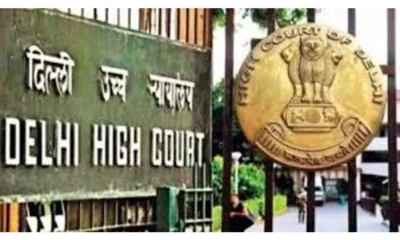
The Delhi High Court on Tuesday allowed a 33 weeks pregnant woman to go for medical termination of pregnancy. The woman approached the High Court for abortion due to the foetus suffering from a cerebral deformity.

The court accepted the plea in light of the uncertainty concerning the quality of life and a mother’s choice as to whether or not to give birth to a child suffering from an abnormality.

Justice Prathiba M. Singh granted the petition in light of the medical board’s assessment, which was unable to indicate the potential severity of the child’s condition.

The court said cases like these highlight the severe dilemma that a woman has to undergo. With the emergence of modern technology, the issues around abortion and termination are bound to become more difficult. The court further said that it is easy to detect a number of abnormalities in full-term pregnancy (like this case).

Read Also: Jharkhand: Man decapitated over property dispute, killer’s friends take selfie with severed head, 6 arrested

During the interaction with the petitioner, Justice Singh said she was able to determine that she was aware of the risks and psychological trauma that come with childbirth or child abortion.

Last week, the 26-year-old woman approached the high court after the GTB Hospital rejected her plea for pregnancy termination. According to the amended Medical Termination of Pregnancy Act, which took effect on September 24, 2021, the petitioner’s current gestational age exceeded the legal threshold of 24 weeks.

The medical board that Lok Nayak Jai Prakash Narayan (LNJP) Hospital appointed to investigate the case stated in its report that while the foetus, once born, would be compatible with life, the degree of any disability due to the abnormality cannot be predicted. In the end, the board decided against medically terminating the pregnancy in the given situation.

The doctors who were virtually present in court stated that the quality of life of the foetus cannot be judged and that surgery can be performed on the newborn.

The petitioner had stated on Friday that no abnormalities had been discovered in the foetus up until the 16th week of gestation, but the petitioner said an abnormality was noticed on November 12.

Himachal Pradesh exit polls: BJP may retain power, Congress a close second, AAP flops

India News

Petrol crosses Rs 100 mark in Delhi after fresh Rs 2 hike amid global tensions

Petrol and diesel prices have been hiked by Rs 2 per litre in Delhi, pushing petrol past the Rs 100 mark. The revision marks the fourth increase within two weeks, driven by the ongoing Iran-US conflict.

Published

on

fuel price hike

In a significant blow to daily commuters, domestic fuel prices have been raised once again. Petrol and diesel rates were increased by Rs 2 per litre on Monday, marking the fourth such upward revision in the last two weeks. With this latest hike, the price of petrol has officially breached the psychological threshold of Rs 100 per litre in the national capital.

The consecutive revisions come on the back of severe disruptions in global oil supplies triggered by the ongoing military escalation between Iran and the United States. As international crude markets navigate the fallout of the West Asia crisis, domestic oil marketing companies have steadily passed the financial burden onto consumers to cope with surging production costs. Prior to this update, fuel rates had already experienced multiple sharp spikes over the last fortnight, compounding the financial strain on households.

Media reports indicate that while the central government had previously managed to hold steady on retail prices during the early phases of the geopolitical disruption, the sustained pressure on global energy supply routes has left local distributors with little choice but to adjust domestic rates accordingly.

Continue Reading

Latest world news

US announces new America First visa schedule to boost business ties with India

During his official state visit to New Delhi, US Secretary of State Marco Rubio announced a new America First visa schedule designed to prioritise business professionals and boost bilateral trade efficiency.

Published

on

In a significant development aimed at strengthening bilateral cooperation, the United States has introduced a new “America First” visa schedule. The policy update was announced by US Secretary of State Marco Rubio during his official four-day visit to India. The new schedule is specifically designed to prioritise business professionals who play a key role in fortifying trade and strategic connections between the two nations.

Speaking about the initiative in the national capital, the top US diplomat clarified that the updated framework will not only assist visa applicants but will also significantly enhance operational productivity for the diplomatic mission. “We’re introducing a new America First visa schedule that prioritises business professionals that strengthen these ties,” Rubio stated. He added that the arrangement will enable the system to process applications with greater accuracy, speed, and efficiency.

Focus on Indo-Pacific and regional security

The announcement coincided with high-level discussions between the visiting diplomat and Prime Minister Narendra Modi. The meeting, which lasted for over an hour, covered critical areas of bilateral interest, including trade, energy security, strategic technologies, defence cooperation, and the ongoing West Asia crisis. During the interaction, Rubio extended an official invitation from US President Donald Trump for PM Modi to visit the White House in the near future.

The US Secretary of State described the partnership between New Delhi and Washington as a foundational cornerstone of America’s overarching strategy for the Indo-Pacific region. Highlighting India’s central role, Rubio noted that his very first official engagement upon taking office was a meeting of the Quadrilateral Security Dialogue (Quad), emphasizing that hosting the upcoming foreign ministers’ meeting in India acts as a tangible sign of the deep commitment to this framework.

Clarification on immigration rules

Addressing separate concerns regarding recent shifts in American immigration policies, the top diplomat provided a crucial clarification regarding the new guidelines for permanent residency. Media reports had previously highlighted anxieties surrounding a newly instituted rule that requires many legal immigrants to exit the US and apply for green cards from their home countries.

Rubio explicitly stated to the media that these measures are universal regulatory updates rather than policy shifts targeted at any specific nation. He reassured that the rule is applicable globally to all international applicants and is not directed exclusively at Indian citizens.

The visit marks Rubio’s first official trip to India since assuming office. His comprehensive itinerary began in Kolkata and includes a scheduled bilateral dialogue with External Affairs Minister S Jaishankar, alongside participation in the Quad Foreign Ministers’ meeting alongside international counterparts.

Continue Reading

India News

Petrol and diesel prices increased for the third time in ten days amid global energy strain

Retail fuel prices across Indian metros jumped on Saturday as petrol rose by 87 paise and diesel by 91 paise in Delhi, accumulating a total increase of nearly five rupees per litre since May 15.

Published

on

Fuel Rate

Consumers across the country will face higher transport costs as domestic fuel prices were increased again on Saturday, marking the third revision within a ten-day window. State-owned oil companies have implemented a calibrated upward revision to pass on the rising costs of global energy, which have remained elevated due to the ongoing conflict in the Middle East.

With the latest adjustment, petrol prices went up by 87 paise per litre, while diesel rates rose by 91 paise per litre in the national capital. This series of revisions began on May 15, accumulatively raising the retail fuel prices by nearly Rs 5 per litre over the last ten days.

Revised fuel rates across major metropolitan cities

Following Saturday’s market adjustment, the retail selling prices for fuel have shifted across major consumer hubs. In Delhi, petrol now retails at Rs 99.51 per litre, while diesel stands at Rs 92.49 per litre.

Other major metropolitan cities saw parallel increases based on local taxation and transport variables:

  • Kolkata: Petrol jumped by 94 paise to retail at Rs 110.64 per litre, while diesel increased by 95 paise to hit Rs 97.02 per litre.
  • Mumbai: Retail petrol increased by 90 paise to reach Rs 108.49 per litre, and diesel climbed by 94 paise to sell at Rs 95.02 per litre.
  • Chennai: Petrol prices rose by 82 paise to Rs 105.31 per litre, whereas diesel increased by 87 paise to cost Rs 96.98 per litre.

Additionally, the price of Compressed Natural Gas (CNG) was increased by Rs 1 per kilogram in Delhi, taking its retail cost to Rs 81.09 per kilogram in the National Capital Region.

Gradual pass-through of global market pressures

The continuous upward adjustment follows a multi-week period of escalating crude prices. Before the latest weekend adjustment, fuel rates had already been raised by Rs 3 per litre on May 15, which was quickly followed by a 90 paise per litre hike on May 19.

Media sources close to government channels stated that the domestic oil market had previously received significant cushioning during high crude price cycles. During the height of the Hormuz supply crisis, the central administration indirectly absorbed price differences reaching up to Rs 24 per litre on petrol and Rs 30 per litre on diesel to shield consumers.

Financial data indicates that public sector oil marketing companies faced severe economic pressure during past stabilizing measures. Between 2021 and 2024, oil firms recorded collective losses of approximately Rs 24,500 crore. Furthermore, an economic burden of nearly Rs 40,000 crore was absorbed during the 2024-25 fiscal year specifically to keep liquefied petroleum gas (LPG) rates steady for retail consumers. The current staggered price hikes reflect a balancing act between protecting public fiscal healthcare and managing macro-level inflationary pressures.

Continue Reading

Trending

© Copyright 2022 APNLIVE.com