English हिन्दी
Connect with us

Trending

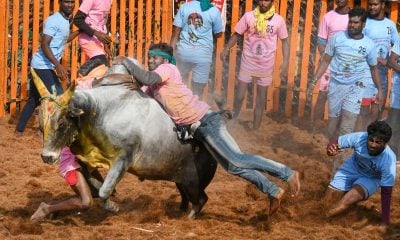
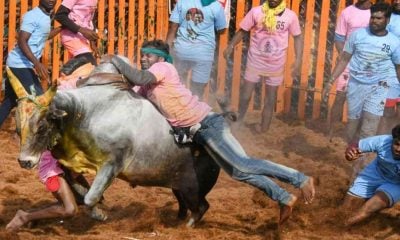
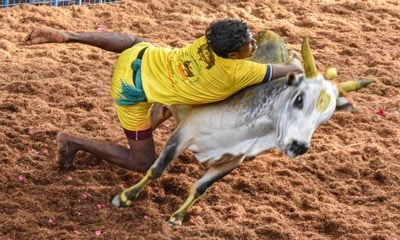
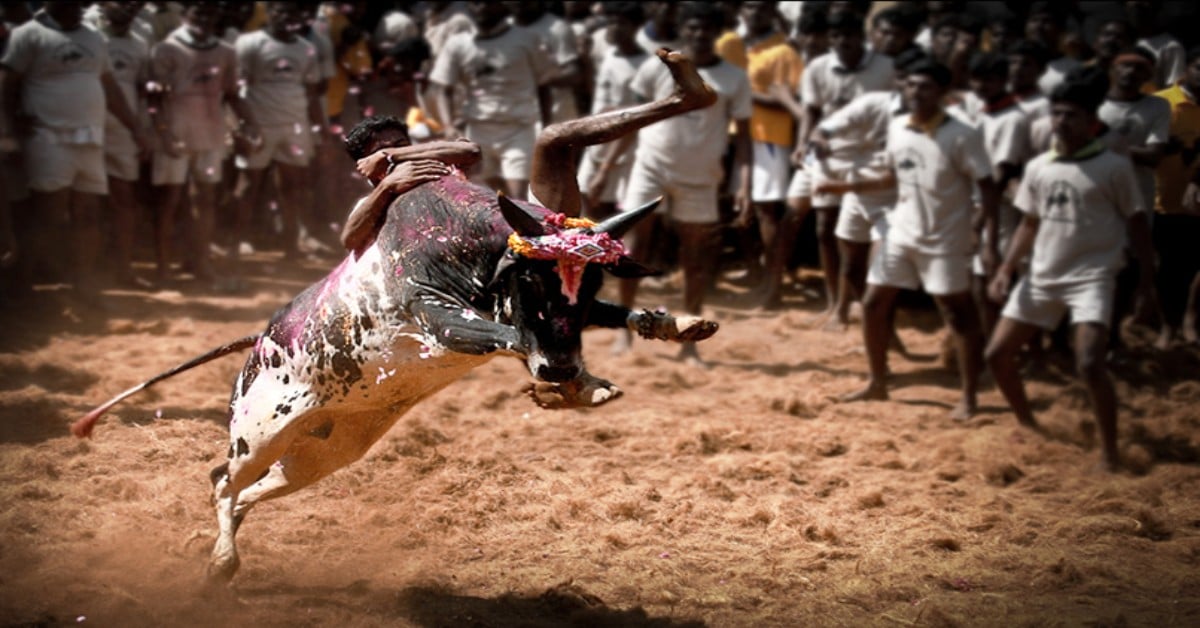
Jallikattu: 22 bull tamers injured on day-1 of this bullfighting festival

Due to a lack of adherence to the rules set forth by the administration, the district collector Kavitha Ramu postponed the event that was initially scheduled for January 6

Published

on

Jallikattu: 22 bull tamers injured on day-1 of this bullfighting festival

The first Jallikattu celebration of the year, also known as the festival of taming the bull, was celebrated today in the Pudukottai region of Tamil Nadu, and at least 22 people were hurt.

Concerns about animal cruelty before of the harvest festival of Pongal led to the organisation of the event at Thatchankurichi hamlet in the area, where some 350 bulls and 250 bull tamers will take part.

Due to a lack of adherence to the rules set forth by the administration, the district collector Kavitha Ramu postponed the event that was initially scheduled for this month’s sixth.

The government of Tamil Nadu has implemented safety precautions to safeguard the safety of the bulls and spectators, including double barricading, veterinarian screening of the bulls, and surveillance by candidates for the animal welfare board.

Bull tamers must also present vaccination records in order to participate in the event, per the administration’s requirements.

However, the larger ceremony will take place on January 17 in the renowned Alanganallur in the Madurai district.

Only 150 bull tamers will be allowed to participate in the event, and 50 per cent of the seats in the galleries must be filled, among other limitations put in place by the district administration to prevent the virus from spreading. Also required are proof of vaccination and negative test results for spectators.

Avaniapuram in Madurai shall host Jallikattu on January 15 and Palamedu on January 16.

Many people have been killed or permanently injured by bulls during the years of this rustic pastime. Bulls have also been exposed to other sorts of brutality and torture, such as intoxication, pouring lemon into the animal’s eyes to make them hostile, pulling the animal by its tail, and spearing it, in addition to numerous tamers clinging to the beast’s hump.

Earlier, the sport had been outlawed by the Supreme Court. However, the law was changed as a result of protracted demonstrations in the state in 2017 that claimed the occasion was a religious and cultural custom. The supreme court is still debating the matter.

During the event, a significant sum of money is wasted, and winners receive everything from gold coins to motorcycles to cars. Untamed bulls likewise increase in value tremendously. According to Tamil history, the celebration was celebrated in ancient times to conserve the native cattle breeds, which were so favoured that women of the time cherished unions with bull tamers.

Cricket news

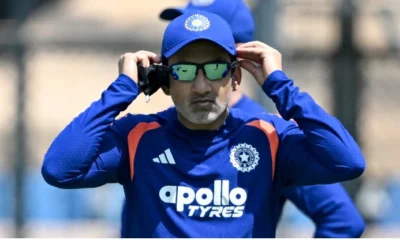
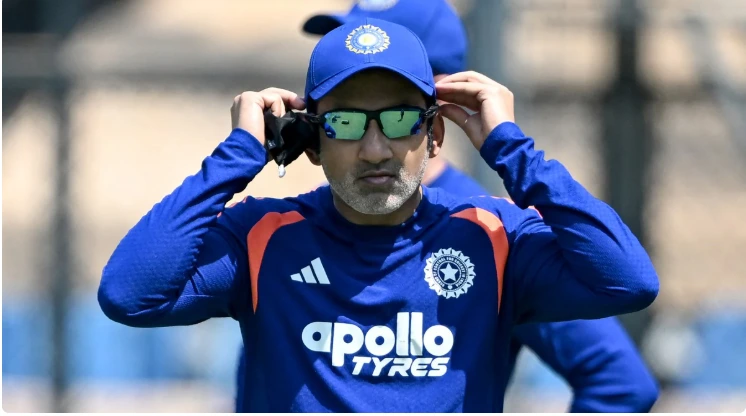
Gautam Gambhir’s tactical calls help India edge past England to reach T20 World Cup final

India defeated England by seven runs in the T20 World Cup 2026 semifinal in Mumbai as tactical decisions and a flexible batting order helped secure a place in the final.

Published

on

India’s flexible approach and tactical decisions under head coach Gautam Gambhir played a key role in the team’s dramatic seven-run win over England in the T20 World Cup 2026 semifinal at Mumbai’s Wankhede Stadium. The victory sealed India’s place in the final, where they will face New Zealand.

A few months earlier, Gambhir had sparked debate by saying batting orders in white-ball cricket are “overrated”. India’s approach in the semifinal reflected that philosophy, with the team using a fluid batting order and specific match-ups to counter England’s bowling plans.

England captain Harry Brook won the toss and chose to bowl first, while India captain Suryakumar Yadav admitted later he would have preferred to bat. India made the most of the opportunity, putting up a huge total that kept pressure on England throughout the chase.

Tactical batting moves disrupt England’s plans

India’s tactical thinking became evident during the innings when Ishan Kishan was dismissed by leg-spinner Adil Rashid in the 10th over. Instead of sending in Suryakumar Yadav, India promoted left-hander Shivam Dube to No. 4.

The move worked effectively against Rashid. While Sanju Samson played cautiously against the leg-spinner, Dube attacked him and scored 22 runs from just eight deliveries, including three sixes. The aggressive approach shifted momentum back in India’s favour.

After Samson’s dismissal, India continued to maintain a left-right combination by sending Hardik Pandya to partner Dube. The strategy ensured England’s bowlers constantly had to adjust their lines and field placements.

The pressure created by the quick scoring forced Brook to reintroduce Jofra Archer earlier than planned. India continued to rotate their batting options based on match situations, even holding Tilak Varma back for the death overs where his ability against pace could be more effective.

Bowling strategy keeps England in check

India’s tactical planning was also visible in the bowling department. Anticipating that the Wankhede pitch would remain favourable for batting under lights, the team focused on picking up early wickets to slow England’s momentum.

Hardik Pandya provided the early breakthrough, dismissing Phil Salt with his first delivery. Later, Jasprit Bumrah was used strategically during the innings and delivered crucial overs in the latter stages.

Despite a brilliant century from Jacob Bethell, England fell just short of the target as India managed to defend their total and secure a place in the final.

Continue Reading

Cricket news

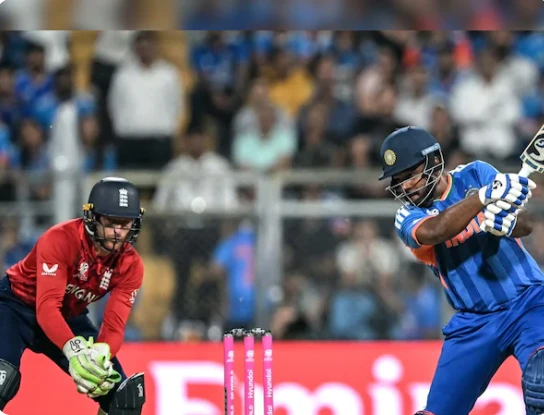
India post 253/7 vs England in T20 World Cup semi-final as Sanju Samson smashes 89

Sanju Samson’s explosive 89 helped India reach 253/7 against England in the T20 World Cup 2026 semi-final in Mumbai, setting a massive 254-run target.
Published

on

India produced a dominant batting display to post 253/7 in 20 overs against England in the semi-final of the ICC Men’s T20 World Cup 2026 at the Wankhede Stadium in Mumbai on Thursday.

A blistering knock from Sanju Samson set the platform for India’s huge total, leaving England needing 254 runs to reach the final, where New Zealand national cricket team await the winner.

Samson leads India’s aggressive batting display

Samson narrowly missed out on a century but played a key role with 89 runs off 42 balls, anchoring India’s innings while maintaining a rapid scoring rate.

The wicketkeeper-batter was given an early reprieve when England captain Harry Brook dropped a straightforward catch. Samson made the most of the opportunity, attacking the bowlers and keeping the scoreboard moving throughout the innings.

He reached his half-century in just 26 balls, hitting several boundaries and sixes before eventually being dismissed in the 14th over.

Strong contributions from middle order

India received valuable support from several batters who maintained the momentum after the opening partnership.

Ishan Kishan played an aggressive cameo, scoring 39 off 18 balls, helping India cross the 100-run mark in under nine overs.

Later in the innings, quick contributions from the middle order further boosted the total.

  • Shivam Dube scored 43 off 25 balls before being run out.
  • Hardik Pandya added 27 off 12 balls in the closing overs.
  • Tilak Varma struck 21 runs off just 7 balls, including three sixes in one over.

India crossed 200 runs in the 17th over and finished strongly despite a late run-out.

England bowlers struggle to contain runs

England’s bowling attack found it difficult to control India’s aggressive batting at the high-scoring venue.

Pacer Jofra Archer endured a tough outing, while spinner Adil Rashid picked up a key wicket but was unable to slow the run flow significantly.

Earlier, England had won the toss and elected to field first.

Big chase awaits England

With India posting their second-highest total in T20 World Cup history, England now face a daunting target of 254 runs to secure a place in the final.

Interestingly, this is the third consecutive T20 World Cup in which India and England have met in the semi-final, and the winner of their previous two encounters went on to lift the trophy.

Continue Reading

Cricket news

ICC Men’s T20 World Cup: Who advances if India vs England semifinal is washed out

India take on England in the T20 World Cup 2026 semifinal in Mumbai. With rain concerns looming, here is a detailed look at reserve day rules and who qualifies if the match is abandoned.
Published

on

indian cricket team

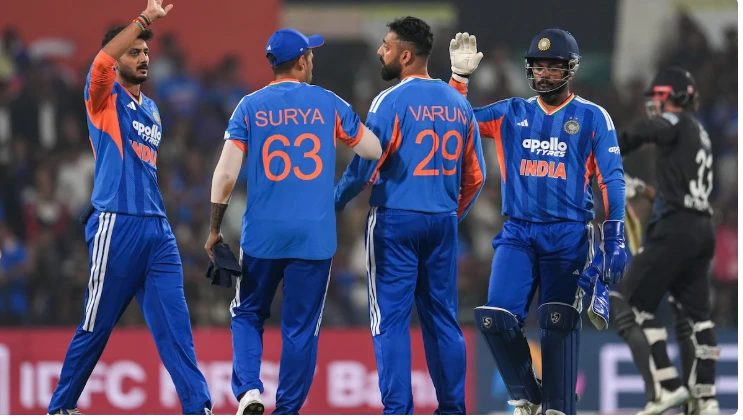
India are set to face England in the semifinal of the ICC Men’s T20 World Cup 2026 at the Wankhede Stadium on Thursday, but weather concerns have raised questions about what happens if the high-stakes clash is washed out.

Here is a clear breakdown of all possible scenarios.

Reserve day in place for semifinal

The International Cricket Council (ICC) has allocated a reserve day for the semifinal. If rain interrupts play on Thursday, officials have an additional 90 minutes on the scheduled day and 120 extra minutes on Friday to try and complete the fixture.

A minimum five-over contest per side is required for a result.

What if the match is abandoned

If the semifinal cannot be completed even after the reserve day, the outcome will be determined by standings in the Super 8 stage.

In that case, England would progress to the final as they finished higher in their Super 8 group. England topped their group with three wins, while India secured second place with two victories.

What happens if both semifinals are washed out

In the other semifinal, South Africa are scheduled to take on New Zealand at the Eden Gardens.

If both semifinal matches are abandoned, South Africa and England would advance to the final based on their superior Super 8 group standings.

Recent India vs England semifinal history

The upcoming contest continues a notable pattern between the two sides.

In the 2022 edition, England ended India’s campaign in the semifinal before defeating Pakistan in the final to lift the trophy.

However, in 2024, India reversed that result. Under Rohit Sharma’s leadership, India defeated England in the semifinal and went on to beat South Africa in Barbados to secure the title.

Interestingly, in both recent editions, the winner of the India-England semifinal eventually emerged as world champion, adding further intrigue to Thursday’s clash in Mumbai.

Continue Reading

Trending

© Copyright 2022 APNLIVE.com