English हिन्दी
Connect with us

Latest world news

China deploys more soldiers in Doklam with helipads and improved infrastructure

Published

on

China deploys more soldiers in Doklam with helipads and improved infrastructure
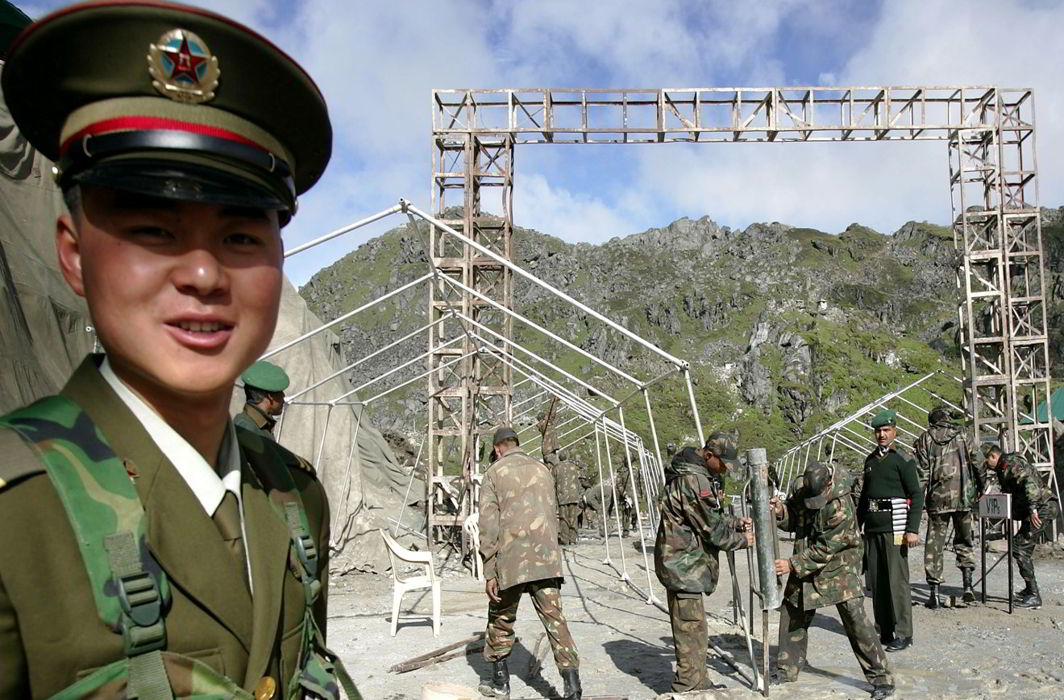
Keeps troops presence round the year

A debate is in offing about who was benefited by standoff at Doklam in mid-summer this year. But one thing is certain that Chinese have not only improved their strategic position but have also established more army presence in the disputed territory round the year.

There are reports that about 1,600-1,800 Chinese soldiers have now virtually established a permanent presence in the Doklam area, near the Sikkim-Bhutan-Tibet tri-junction. They have constructed two helipads, upgraded roads, fixed scores of pre-fabricated huts, shelters and stores to face the freezing winter.

The sources in Indian security establishment admit that while India “achieved its strategic objective” of not letting China extend its existing road in Doklam towards Jampheri ridge but the fallout has been “the almost permanent stationing of People’s Liberation Army (PLA) troops in the region”.

The source said, “Earlier, PLA patrols would come to Doklam, which is disputed between China and Bhutan, between April-May and October-November every year to mark their presence and lay claim to the area before going back.”

But the source adds, “Now, after the 73-day eyeball-to-eyeball troop confrontation at Doklam between India and China ended on August 28, the PLA troops have stayed put in what we consider to be Bhutanese territory for the first time this winter. But the status quo prevails at the earlier face-off site.”

The Doklam stand-off between India and China began on June 16 when Chinese troops with construction vehicles and road building equipment began extending road southward. On June 18, around 270 Indian troops with weapons and two bulldozers entered the territory claimed by China and Bhutan, to stop the road construction. The 74-day stand-off was resolved through diplomatic manoeuvres on August 28 when both countries announced withdrawal of their troops from the face-off site.

The Chinese move to deploy their troops in larger number on Doklam  fits in the warning given by Army chief, General Bipin Rawat  in September that China would continue with its efforts to nibble away disputed territories through “salami slicing”, muscle-flexing and other measures.

Earlier, India did not object to Chinese military patrols in Doklam. But New Delhi was forced to intervene when Chinese troops attempted to disrupt the status quo by constructing a road which would have had serious security implications for the country.

The proposed road Chinese were constructing towards Jampheri ridge overlooks India’s militarily vulnerable Siliguri corridor, or the so-called “Chicken’s Neck” area. This is strategically very important for India to connect north-eastern states with rest of the country.

Latest world news

US ends oil sanctions waiver for Iran and Russia, impact likely on India’s energy imports

The US decision to end the Iran and Russia oil waiver may impact India’s oil imports, fuel prices and global energy markets.

Published

on

US oil tanker

The United States has decided not to extend a temporary sanctions waiver that allowed limited trade in Iranian and Russian oil, marking a shift towards stricter enforcement of economic restrictions.

The waiver, introduced in March 2026, had permitted the sale of oil already loaded on ships to stabilise global supply during heightened geopolitical tensions. However, it is now set to expire around mid-April without renewal.

US officials have indicated that the move is part of a broader strategy to increase pressure on both Iran and Russia amid ongoing conflicts and geopolitical tensions.

What the waiver did and why it mattered

The short-term waiver allowed millions of barrels of oil—estimated at around 140 million barrels—to enter global markets, helping ease supply shortages and prevent sharp price spikes.

It also enabled countries like India to purchase discounted crude oil from Russia and resume limited imports from Iran after years of restrictions.

Impact on India

India, one of the world’s largest oil importers, is expected to feel the impact of the decision in several ways:

  • Reduced access to discounted oil
    India had been buying cheaper Russian crude and recently resumed Iranian imports under the waiver. Its end may limit these options.
  • Potential rise in fuel costs
    With fewer discounted supplies available, India may need to rely more on costlier sources, which could increase domestic fuel prices.
  • Supply diversification pressure
    India may need to explore alternative suppliers in the Middle East, Africa, or the US to maintain energy security.
  • Geopolitical balancing challenge
    The move adds pressure on India to align with US sanctions while managing its own economic interests.

Global energy market concerns

The end of the waiver comes at a time when global oil markets are already under stress due to conflict in West Asia and disruptions in key routes like the Strait of Hormuz.

Analysts warn that tightening sanctions could:

  • Reduce global oil supply
  • Increase price volatility
  • Intensify competition among major buyers like India and China

Bigger picture

The US decision reflects a broader shift from temporary relief measures to stricter enforcement of sanctions, even if it risks tightening global energy markets.

For India, the development highlights a recurring challenge—balancing affordable energy access with geopolitical realities.

Continue Reading

Latest world news

Sanctioned tanker fails to breach US blockade, turns back near Strait of Hormuz

A US-sanctioned tanker failed to cross the Hormuz blockade and turned back, underscoring rising tensions and disruption in global shipping routes.

Published

on

A US-sanctioned oil tanker failed to break through a newly imposed American naval blockade and was forced to turn back near the Strait of Hormuz, highlighting growing tensions in the region.

The vessel, identified as the Rich Starry, reversed its course after attempting to exit the Gulf, according to shipping data. The development comes just days after the United States enforced restrictions on ships linked to Iranian ports.

The blockade was announced by Donald Trump following the collapse of recent diplomatic talks with Iran. The move aims to restrict maritime traffic associated with Iranian trade.

Officials said that during the first 24 hours of enforcement, no vessel successfully crossed the blockade. Several ships, including the sanctioned tanker, complied with instructions from US forces and turned back toward regional waters.

The tanker is reported to be linked to a Chinese company previously sanctioned for dealing with Iran. It was carrying a cargo of methanol loaded from the United Arab Emirates at the time of the incident.

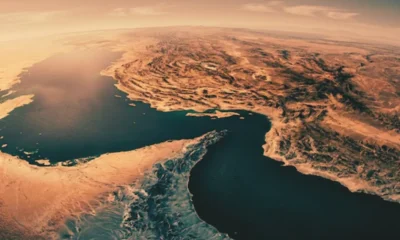
The situation underscores the rising risks in one of the world’s most critical oil transit routes. The Strait of Hormuz typically handles a significant share of global energy shipments, but traffic has sharply declined due to ongoing geopolitical tensions.

The blockade, which applies specifically to vessels travelling to or from Iranian ports, has added further uncertainty for shipping companies, insurers and global energy markets.

Continue Reading

Latest world news

Jaishanakar discusses Middle East crisis with Kuwait and Singapore counterparts, focus on Indian community

Jaishankar holds talks with Kuwait and Singapore counterparts on West Asia tensions, highlights Indian community safety.

Published

on

India’s External Affairs Minister S. Jaishankar held discussions with his counterparts from Kuwait and Singapore amid the ongoing crisis in West Asia, focusing on regional developments and the safety of Indian nationals.

In separate telephonic conversations, Jaishankar exchanged views with Kuwait’s Foreign Minister Sheikh Jarrah Jaber Al-Ahmad Al-Sabah and Singapore’s Foreign Minister Vivian Balakrishnan. The discussions come at a time of heightened tensions in the Middle East region.

According to details shared by the minister, his conversation with the Kuwaiti counterpart primarily revolved around the evolving regional situation and the well-being of the Indian community residing in Kuwait.

He described the interaction as a constructive exchange, highlighting India’s continued attention to the safety and interests of its citizens abroad during the crisis.

In a separate interaction with Singapore’s foreign minister, Jaishankar said the two sides discussed the ongoing conflict in West Asia and its broader implications.

The talks reflect India’s ongoing diplomatic engagement with key global partners as tensions in the Middle East continue to escalate, impacting regional stability and international concerns.

The latest outreach is part of a series of high-level communications by India aimed at closely monitoring developments in the region while safeguarding its strategic and humanitarian interests.

Continue Reading

Trending

© Copyright 2022 APNLIVE.com