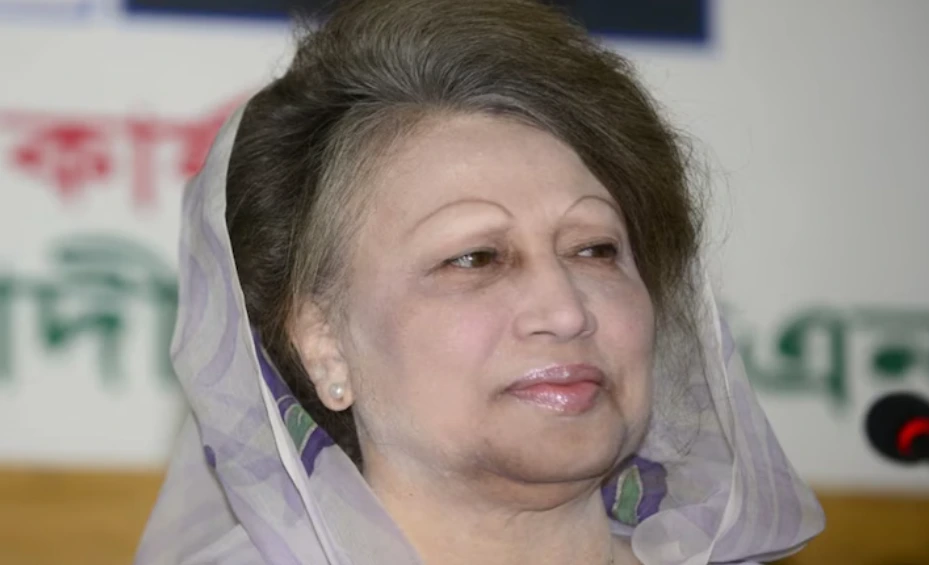
Bangladesh’s former Prime Minister and Bangladesh Nationalist Party (BNP) chairperson Begum Khaleda Zia passed away on Tuesday morning at the age of 80 after a prolonged illness. She died at around 6 am while undergoing treatment at a private hospital in Dhaka, the BNP said in an official statement.
Khaleda Zia had been hospitalised for over a month after being admitted with serious infections affecting her heart and lungs. She was also suffering from pneumonia and multiple long-term health complications, including liver cirrhosis, diabetes, arthritis, and chronic ailments related to her kidneys, heart, lungs, and eyesight. A team of specialists from several countries was overseeing her treatment, according to media reports.
The BNP, confirming her death, said prayers were being offered for the forgiveness of her soul and urged supporters and citizens to remember her in their prayers.
Prime Minister Modi expresses grief
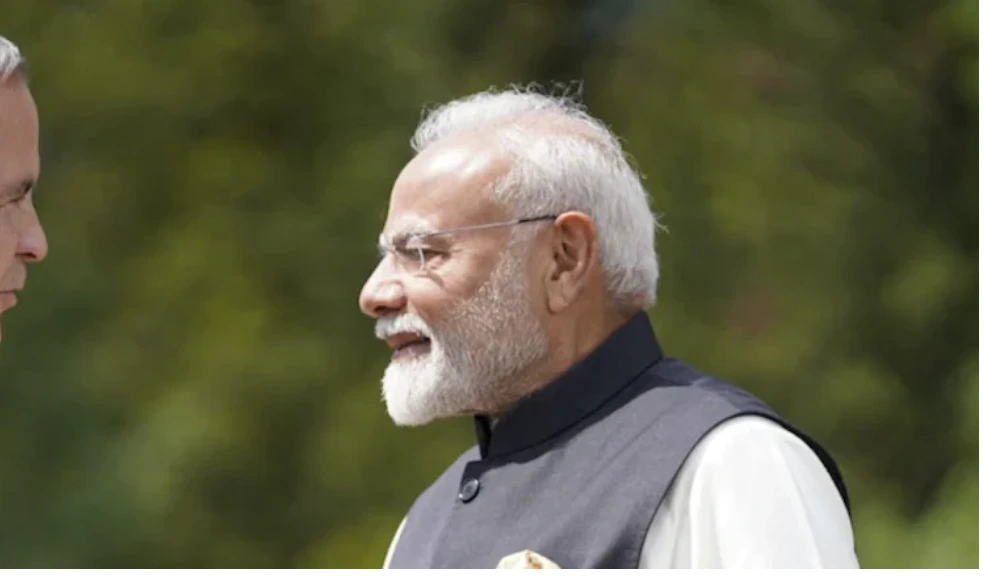
Prime Minister Narendra Modi condoled Khaleda Zia’s demise, describing her as a towering political figure and Bangladesh’s first woman prime minister. In a post on X, Modi extended condolences to her family and the people of Bangladesh, noting that her contributions to the country’s development and India-Bangladesh relations would be remembered.
He also recalled a meeting with Khaleda Zia in Dhaka in 2015 and said her vision and legacy would continue to guide bilateral ties between the two nations.
A political journey shaped by upheaval
Khaleda Zia formally entered politics after the assassination of her husband, former President Ziaur Rahman, in 1981. Ziaur Rahman had founded the BNP, and following his death, Khaleda Zia joined the party to hold it together during a period of uncertainty. She went on to become BNP vice-president in 1984 and its chairperson later that year.
Her rise coincided with a broader pro-democracy movement in Bangladesh. Along with Sheikh Hasina of the Awami League, Khaleda Zia played a key role in the popular uprising that ended military rule under Hossain Mohammad Ershad in 1990. Their cooperation later turned into a bitter rivalry that dominated Bangladesh’s political landscape for decades.
Three-time prime minister and key reforms
Khaleda Zia became Bangladesh’s first female prime minister after the BNP emerged victorious in the 1991 parliamentary elections. During her tenure, she introduced the parliamentary system of government, replacing the presidential model, and ensured that executive power rested with the prime minister.
She also played a role in introducing the caretaker government system to oversee free and fair elections, lifted restrictions on foreign investment, and made primary education compulsory and free.
After a brief and contested second term in 1996, Khaleda Zia returned to power in 2001 with a decisive mandate, beginning her third term as prime minister. However, this phase was marked by allegations of corruption, rising militancy, and political violence, including a deadly grenade attack at an opposition rally in 2004.
Legal battles and declining health
Following political instability, an army-backed interim government took charge in 2006, and Khaleda Zia was later jailed on corruption charges. Although she was released ahead of the 2008 elections, she never returned to power.
In subsequent years, she faced multiple convictions, which she and her party described as politically motivated. Due to worsening health, she was shifted to house arrest on humanitarian grounds in 2020 and later freed in 2024 following a change in political circumstances. Earlier this year, Bangladesh’s Supreme Court acquitted her and her son Tarique Rahman in key corruption cases.
Early life and family
Born in 1945 in Jalpaiguri, then part of British India, Khaleda Zia moved to East Bengal with her family after Partition. She completed her schooling in Dinajpur and married Ziaur Rahman in 1960. She is survived by her elder son Tarique Rahman, his wife Zubaida Rahman, and their daughter. Her younger son, Arafat Rahman Koko, passed away earlier.
With her death, Bangladesh has lost one of its most influential and polarising political leaders, whose legacy shaped the country’s politics for over three decades.