
Latest world news
More than 100 killed in conflict with Daesh (IS) in Syria, Iraq


Terror groups remain active despite end of military operations
Despite the end of military operations against Daesh (IS) in Syria and Iraq, there are reports of 104 deaths in both the countries during last 24 hours. At least 77 civilians were killed in Eastern Ghouta near Damascus in heavy bombardment by Syrian government forces while 27 deaths were reported from Hawija near Kirkuk, Iraq, where IS claimed of attacking pro-government militia.
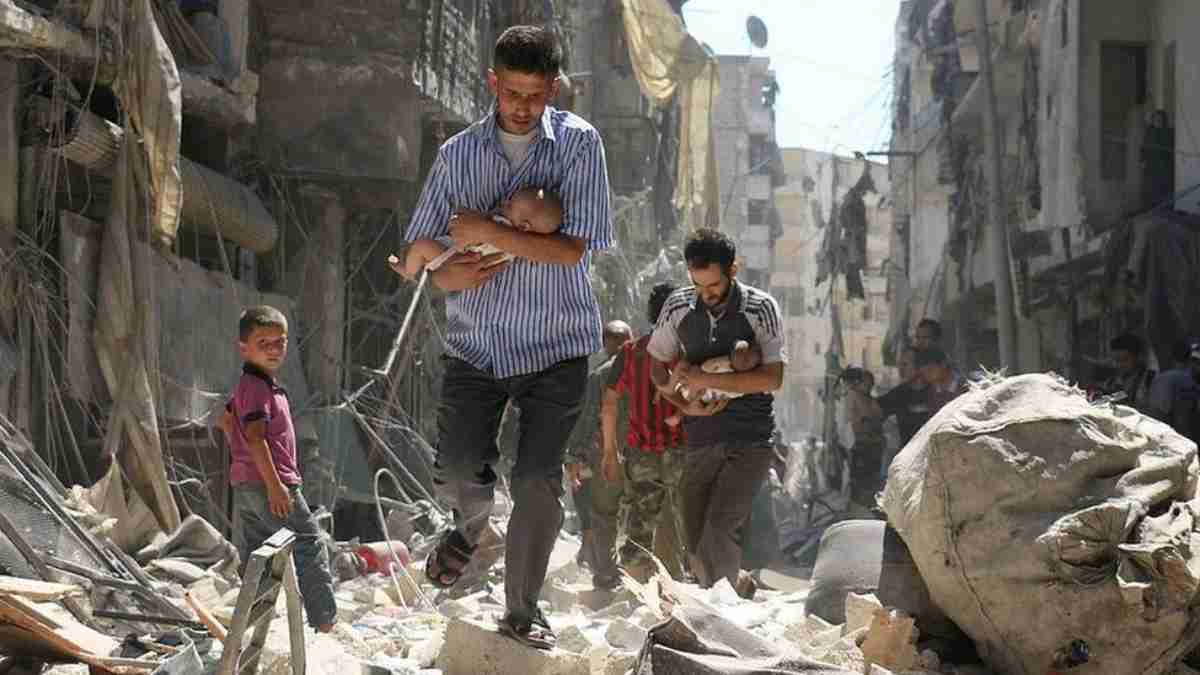
Aljazeera quoted London based Syrian Observatory for Human Rights (SOHR) saying that 77 civilians, including 20 children, were killed in heavy bombardment by the Syrian government forces. Some 300 people were wounded during the operation.
Rami Abdel Rahman, the head of SOHR said, “The heavy shelling targeted mainly all residential areas in Eastern Ghouta.”
He also said that government forces are preparing to launch a major ground assault on Eastern Ghouta following the heavy bombardment.
Mazen al-Shami, an activist, said, “Each minute between 20-30 shells are falling on the residential areas, especially in Hammouriyeh and Sabka” areas.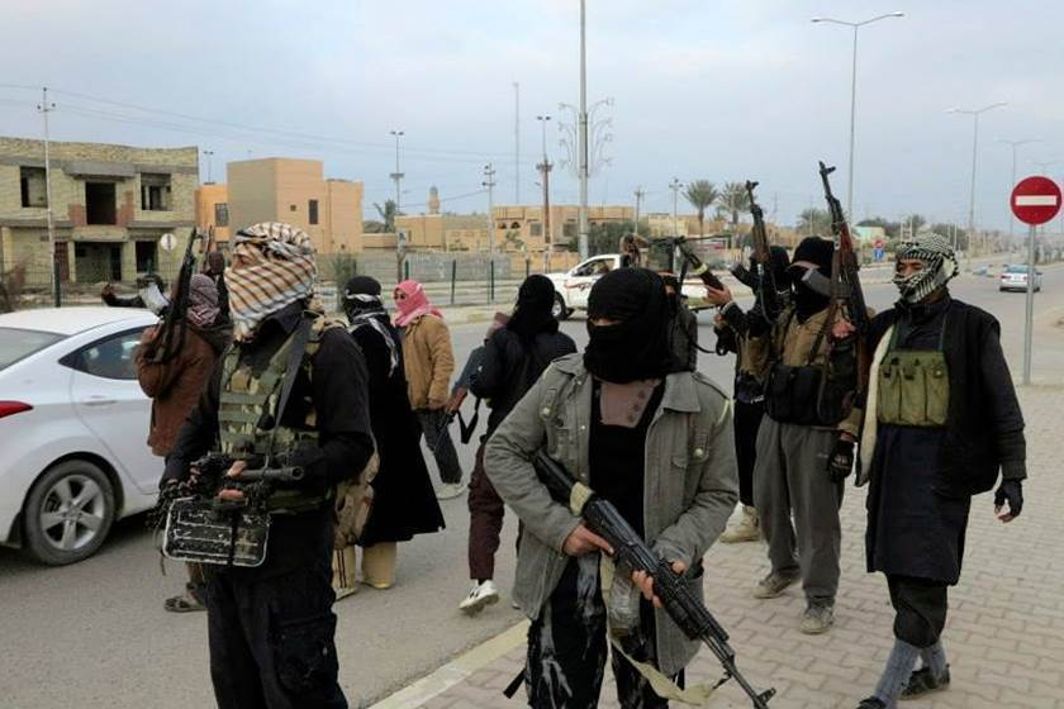
Meanwhile, National Coalition based in Turkey has denounced the “international silence” on “war of extermination” in Eastern Ghouta. It accused Russia, Syria’s ally seeking to “bury the political process” for a solution to the conflict.
Eastern Ghouta, the last remaining Daesh held area near Damascus, has been under siege by government forces since 2013. Some four lakh people live in the area.
A report from Iraq speak of Daesh (IS) claim of killing 27 members of Popular Mobilization Force (PMF), a pro-government militia in Hawija, a town in Iraq’s oil rich Kirkuk. This was considered to be the deadliest attack against the pro-government militia since October when they re-captured Hawija for Daesh control.
Quoting local media, Aljazeera said that Daesh (IS) claimed responsibility for the attack and said 3- people had been killed in the ambush. The killings has raised question about the presence of the IS fighters after Baghdad declared victory against the dreaded group in December.
Sources in the pro-Iraq government militia group said that the attackers had been wearing army fatigues and were manning a fake checkpoint. Popular Mobilization Force (PMF) soldiers were conducting security operations around Hawija at the time of the attack.
Syria’s army had declared victory over Daesh (IS) in November last year, saying its capture of the last town Abu-Kamal near Iraq border marked the collapse of the three year reign of the terror groups.
Several cities in Syria and Iraq have witnessed mass murders and destruction at the hands of Daesh terrorists and those belonging to other anti-government groups. The unparallel destruction forces town planners to opt for constructing new cities instead of reconstruction of the previous buildings.





Latest world news
Magnitude 7 earthquake strikes Russia’s Kamchatka Peninsula
A magnitude 7 earthquake struck Russia’s Kamchatka Peninsula region on Friday. The initial report placed the earthquake at a depth of 140 kilometres.


Latest world news
S Jaishankar says India is a natural option for Russia amid Europe tensions
External Affairs Minister S Jaishankar said India remained a natural option for Russia as Moscow increasingly turned towards Asia amid strained relations with Europe. He highlighted the continuity of India-Russia ties and their significance for the balance of power in Asia.

Latest world news
Putin praises PM Modi, says he has very good ideas on Ukraine war
Russian President Vladimir Putin has praised Prime Minister Narendra Modi for repeatedly raising the need to end the Ukraine war, describing his ideas for a settlement as “very good”.


India-US trade deal first phase finalised, drafting underway

Election Commission orders voter roll revision in 17 states, UTs

Actor Imran Khan asked to leave India after CJP protest

Delhi Police offers 11-person limit for CJP’s Connaught Place protest

Mallikarjun Kharge’s ‘Your Friends’ jab at Rahul Gandhi over congress exits

Magnitude 7 earthquake strikes Russia’s Kamchatka Peninsula

Delhi deploys 25,000 personnel, installs CCTV cameras ahead of CJP march
Mallikarjun Kharge’s ‘Your Friends’ jab at Rahul Gandhi over congress exits
Delhi Police offers 11-person limit for CJP’s Connaught Place protest
Actor Imran Khan asked to leave India after CJP protest

Afghan Men Try To Hang With The Jet Engine Of The Aircraft in Kabul- Afghanistan News – Kabul News
Trending Top 10 News: 10000 Crore Fine on Flipkart, Apple to Launch Unique Feature, Hdfc Bank Job Ad

Trending Top 10 News: Nokia 6310, Apple sales, Bachpan ka Pyar Video Kid, Dainik Bhaskar IT Raid

Trending Top 10 News: Canada bans Indian flights, Rain in Delhi NCR, AIMIM Twitter hacked, Raj Kundra case

Trending Top 10 News: Shein India, Apple New Service, Pocket Oxygen, Oppo Launched New Phone
-
 India News23 hours ago
India-US trade deal first phase finalised, drafting underway
-
 India News21 hours ago
Election Commission orders voter roll revision in 17 states, UTs
-
 India News21 hours ago
Actor Imran Khan asked to leave India after CJP protest
-
 India News20 hours ago
Delhi Police offers 11-person limit for CJP’s Connaught Place protest
-
 India News8 hours ago
Mallikarjun Kharge’s ‘Your Friends’ jab at Rahul Gandhi over congress exits
-
 India News8 hours ago
Delhi deploys 25,000 personnel, installs CCTV cameras ahead of CJP march
-
 Latest world news8 hours ago
Magnitude 7 earthquake strikes Russia’s Kamchatka Peninsula
