Latest world news
Myanmar army chief downplays exodus, says Rohingya Muslims not native

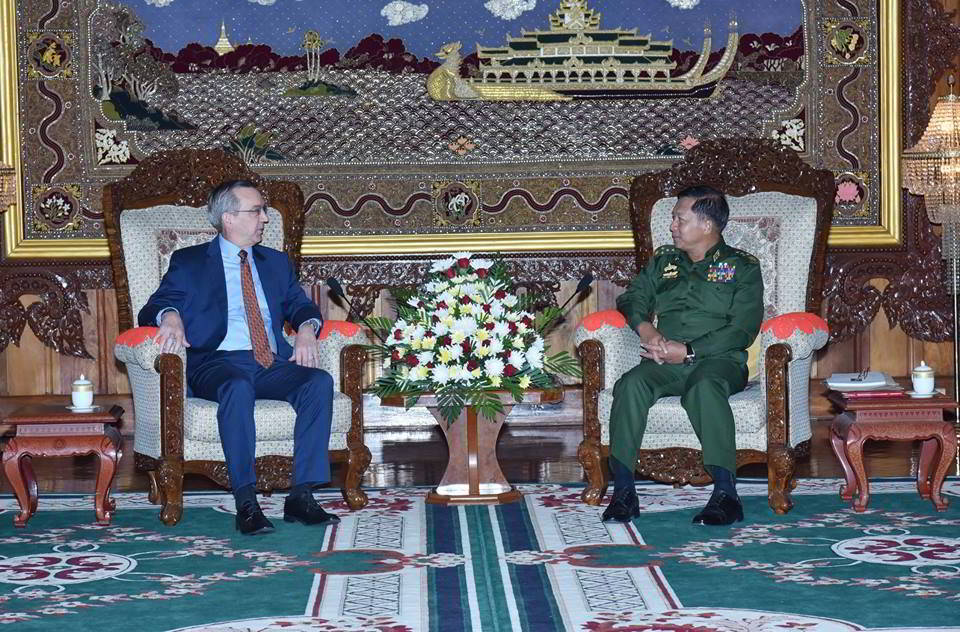
The army chief, the most powerful person in the Buddhist-majority country, stated his uncompromising stance towards the Rohingya Muslims.
Downplaying the ongoing Rohingya crisis and one of recent days’ worst exoduses, the Myanmar army chief on Wednesday claimed that the minority Muslims, seeking shelter to escape ethnic unrest in the country, are not native to Myanmar. A report posted on the Facebook page of Senior General Min Aung Hlaing mentioned that the Army Chief addressed American Ambassador Scot Marciel on the continuing crisis in the country.
“As regards the history of Rakhine State, the Senior General said when the region fell under British colonialism in 1824 Bengalis from Bengal entered the region as farm labourers. The Bengalis were not taken into the country by Myanmar, but by the colonialists. They are not the natives, and the records prove that they were not even called Rohingya, but just Bengalis during the colonial period,” mentioned the report.
Depicting an insensitive approach towards the issue, the army chief, the most powerful person in the Buddhist-majority country, stated his uncompromising stance towards the Rohingya Muslims. Further speaking at the meeting with Scot Marciel, the senior General referred to the Rohingyas as Bengalis and blamed them for the ongoing ethnic unrest in Myanmar’s Rakhine state. He stated that the “Bengali terrorists” are responsible for the attacks being carried out at 30 police outposts and an army unit headquarters in the country on August 25.
The report posted on Facebook added, “According to information, about 4,000 Bengalis took part in the terrorist attacks. Bengali villagers followed the leadership of terrorists. Up to 8 October, the security forces now have exposed a list of 1,785 terrorists together with their names and villagers. The security forces have also information about the terrorist courses conducted before the occurrence of the attacks.”
Earlier on Wednesday, UN human rights office hit out at the Myanmar army stating that the armed security forces have driven out at least 500,000 Rohingyas and had also set ablaze their homes, farms and villages to stop their return to the country.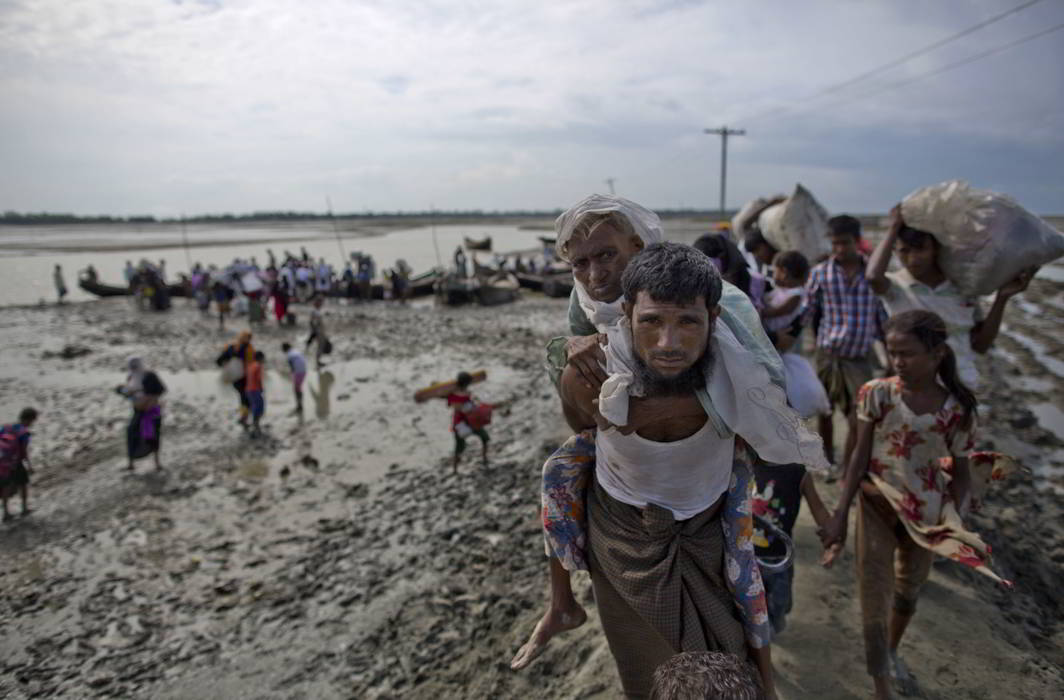 Further urging powerful Myanmar leader Aung San Suu Kyi to “stop the violence”, Jyoti Sanghera, head of the Asia and Pacific region of the UN human rights office, told in a news briefing, “If villages have been completely destroyed and livelihood possibilities have been destroyed, what we fear is that they may be incarcerated or detained in camps.”
Denouncing the role of the army, UN high commissioner for human rights Zeid Ra’ad al-Hussein, who had earlier described Myanmar’s action as “a textbook example of ethnic cleansing”, said in a report, “Credible information indicates that the Myanmar security forces purposely destroyed the property of the Rohingyas, scorched their dwellings and entire villages in northern Rakhine State, not only to drive the population out in droves but also to prevent the fleeing Rohingya victims from returning to their homes.”








Latest world news
Putin praises PM Modi, says he has very good ideas on Ukraine war
Russian President Vladimir Putin has praised Prime Minister Narendra Modi for repeatedly raising the need to end the Ukraine war, describing his ideas for a settlement as “very good”.


Latest world news
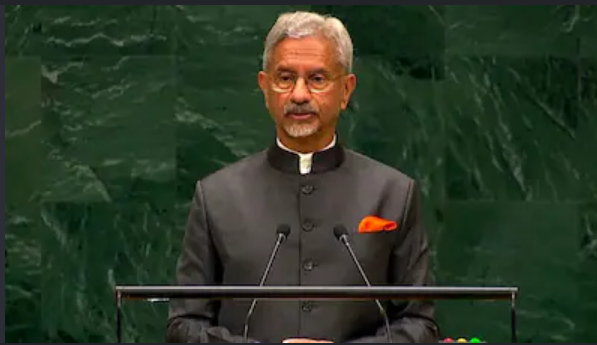
S Jaishankar calls Pakistan a “serial practitioner of terrorism” at UN
S Jaishankar criticised Pakistan at the UN General Assembly, referring to a “serial practitioner of terrorism” and warning against attempts to normalise terrorism.
Latest world news
Trump rejects Iran’s 7-day peace plan, says deal can come after US polls
US President Donald Trump rejected Iran’s seven-day proposal to end hostilities and indicated that a deal could come after the US midterm elections in November.


INDIA Bloc protest intensifies, Opposition MPs plan Rajghat march

Delhi Building Collapse: Many trapped as 5-storey structure comes down

Bhagwant Mann hits back at BJP over CBI search in Sangrur

India’s 3-part peace plan to end Russia-Ukraine war explained
PM Modi recalls Bhuj earthquake, Covid lessons from 25-year journey

Afghan Men Try To Hang With The Jet Engine Of The Aircraft in Kabul- Afghanistan News – Kabul News
Trending Top 10 News: 10000 Crore Fine on Flipkart, Apple to Launch Unique Feature, Hdfc Bank Job Ad

Trending Top 10 News: Nokia 6310, Apple sales, Bachpan ka Pyar Video Kid, Dainik Bhaskar IT Raid

Trending Top 10 News: Canada bans Indian flights, Rain in Delhi NCR, AIMIM Twitter hacked, Raj Kundra case