English हिन्दी
Connect with us

Latest world news

Now Israel want Saudi Crown Prince MBS to visit Tel Aviv

Published

on

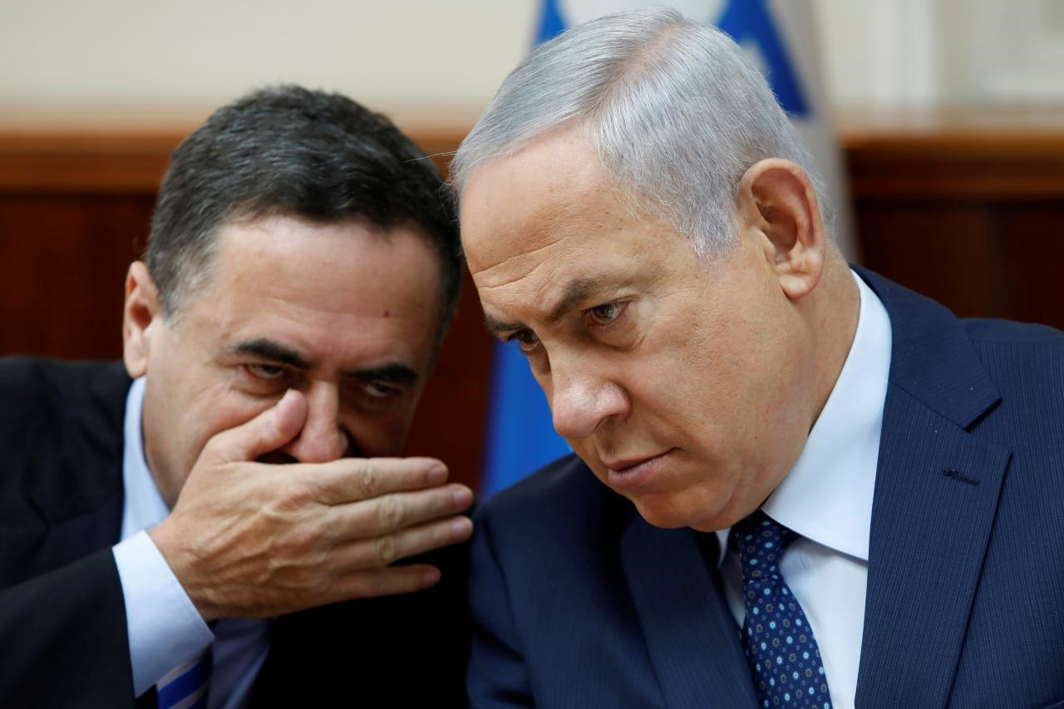
Israel-PM-with-minister

[vc_row][vc_column][vc_column_text]Arab monarchs apprehensive of public ire

In another step forward in Saudi Arabia-Israel relations, the Israel’s Intelligence Minister Yisrael Katz want Saudi Crown Prince Mohammed bin Salman, also known as MBS, to visit Tel Aviv and extend invitation to Prime Minister Benjamin Netanyahu for the Kingdom.

This was disclosed by his spokesman Arye Shailcar, who called the proposed visit as a historic trip involving two nations with no official diplomatic ties.

According to AFP report from Jerusalem, the minister’s spokesman Arye Shalicar disclosed that Katz issued the call during an interview with Elaph, a news website run by a Saudi businessman on Wednesday.

However, the website did not carry the invitation call in its online publication. Shalicar could not comment on why, but says Katz had indeed made the comments.

“He said that he asks the king to invite (Prime Minister Benjamin) Netanyahu officially to Riyadh, and he asks MBS, Mohammed bin Salman, the son, to come and visit Israel,” Shalicar says of Katz, who is also transportation minister.

Katz made the call because “he wants regional peace — that’s part of his three-layered program,” his spokesman said, referring to security and economic cooperation leading to eventual peace.

During the Wednesday interview the Israeli Intelligence minister referred to Saudi Arabia as a leader of the Arab world and issued a warning to Lebanon and Hezbollah.  

The Lebanese resistance group has played important role in defeating Daesh (IS) terrorists in Syria and Iraq. Israel and Hezbollah fought a war in 2006, while the group had forced Israel to withdraw its forces from south Lebanon in 2000.

Katz said if Hezbollah initiates a war against Israel, “this time all of Lebanon will be a target.” He further threatened, “What happened in 2006 would be a picnic compared to what could happen… I say Lebanon will return to the stone age.”

Israeli PM Benjamin Netanyahu has spoken several times with pride about growing contacts with “moderate Arab states”.

In June, Israel’s defence minister Avigdor Liberman had called for a deal with Arab countries including Saudi Arabia as a pre-requisite for agreement to resolve the Palestinian conflict. Two months back Liberman underlined the need for “a full regional agreement with all moderate Sunni states, including Kuwait and Saudi Arabia.”

Earlier in October, an Israeli official, speaking on condition of anonymity, had confirmed to AFP that a Saudi prince who was widely reported to have visited Israel in September was Crown Prince Mohammed bin Salman.

In Novermber, the Elaph news website also interviewed Israeli military chief of staff Gadi Eisenkot when he announced his country’s readiness to cooperate with Saudi Arabia to face Iran’s plans “to control the Middle East.”

It has been difficult for Saudi monarchs to manage people’s outrage on the Israeli suppressive moves against Palestinians. But at the same time they are told that “Iranian threat” may be countered with Israeli help in the region. There have been reports of Israeli arms and jets being used in bombing campaign against Yemen.

During the ongoing worldwide protests against US President Donald Trump’s recognition of Jerusalem as Israeli capital, there have been no reports of protests in Saudi Arabia and other GCC countries. The Imams of two grand mosques in Mekkah and Madinah also remained silent on the issue.

On Wednesday, during OIC Extraordinary Summit in Istanbul, especially held to discuss the US President Donald Trump’s Jerusalem move, Saudi Arabia was represented by the minister of religious affairs while 22 heads of states and governments and more than thirty foreign ministers participated in the 57-nation body meet.

The Egyptian government headed by President Abdel Fattah al-Sisi has also been maintaining ties with Israel. Cairo and Amman have peace agreement with Israel.

According to New Arab news website report published on Wednesday, the Egyptian President was embarrassed on Al-Azhar’s Grand Imam Ahmed al-Tayeb’s “unilateral” condemnation of Trump’s Jerusalem move. Tayeb and his Christian counterpart had also cancelled their proposed meeting with US Vice President Mike Pence.

Few years back some Arabic language daily published from a European capital carried a survey saying that most Arab people were supportive of Hezbollah leader Hassan Nasrullah and Iranian leadership for their anti-Israel and anti-US stance. This has made Arab monarchs more apprehensive about people’s response if they openly hug Israeli leadership.[/vc_column_text][/vc_column][/vc_row]

Latest world news

Khamenei warns US against deceitful actions as Trump announces 25% tariff threat

Ayatollah Ali Khamenei has warned the United States against “deceitful actions” after Donald Trump announced a 25% tariff threat, as protests continue to challenge Iran’s leadership.

Published

on

khamenei

Iran’s Supreme Leader Ayatollah Ali Khamenei has warned the United States to stop what he described as “deceitful actions” and reliance on “traitorous hirelings,” responding to escalating pressure from US President Donald Trump, including a proposed 25 per cent tariff on countries trading with Iran.

In a post on X, Khamenei said the Iranian nation had demonstrated its resolve in the face of external pressure and issued a warning to American politicians. He asserted that Iran remained strong, aware of its adversaries, and firmly present on the political stage.

Protests pose major challenge to Iran’s leadership

Khamenei’s remarks come amid more than two weeks of nationwide demonstrations that began over economic grievances and have since grown into one of the most serious challenges to Iran’s theocratic system since the 1979 Islamic revolution.

Rights groups have claimed that at least 646 people have been killed during the protests, which have spread across several cities. The unrest has intensified international scrutiny of Tehran’s response and further strained relations with Washington.

Trump signals economic and military options

President Trump has repeatedly warned Iran over its handling of the protests, stating that the United States was prepared to act if demonstrators were killed. He has said possible US responses range from low-risk to high-risk options, depending on the ultimate objective.

While Trump has previously criticised “regime change” as a foreign policy goal, citing past US involvement in Iraq, he has continued to apply economic pressure on Tehran. On Monday, he announced a 25 per cent tariff on countries that trade with Iran, marking a significant escalation in sanctions-linked measures.

Trump has also spoken about efforts to restore internet access in Iran after authorities imposed shutdowns during the protests.

Limited communication revealed

Despite the sharp public rhetoric, both governments have acknowledged that some level of communication has taken place. These contacts were reportedly coordinated through Trump’s envoy Steve Witkoff.

Iran and the United States have remained adversaries since the 1979 revolution that overthrew the pro-Western shah. Any major shift in Iran’s political system would have far-reaching consequences for the Middle East, making the current standoff closely watched across the region.

Continue Reading

Latest world news

Trump may visit India next year as US envoy calls New Delhi Washington’s most essential partner

The US has described India as its most essential global partner, with ambassador-designate Sergio Gor indicating a possible visit by President Donald Trump next year.

Published

on

trump modi

The United States has said that no country is more essential to its global interests than India, with US ambassador-designate Sergio Gor indicating that President Donald Trump may visit India within the next year or two.

Speaking at the US Embassy in New Delhi, Gor highlighted the close personal rapport between Trump and Prime Minister Narendra Modi, describing their relationship as genuine and resilient even in times of disagreement.

India-US ties anchored at the highest level

Gor said the partnership between India and the United States is rooted not only in shared strategic interests but also in strong leadership-level engagement.

He noted that while differences may arise between the two countries, they are resolved through dialogue, reflecting the maturity of the relationship. According to him, India’s scale and global standing make bilateral cooperation both complex and crucial.

Trade talks to resume from January 12

The ambassador-designate confirmed that the next round of India-US trade negotiations will begin on Tuesday, January 12. Acknowledging the challenges involved, Gor said both sides remain committed to reaching an agreement.

Trade, he said, is a vital pillar of bilateral ties, alongside cooperation in areas such as security, counter-terrorism, energy, technology, education and health.

Trump-Modi friendship described as ‘real’

Gor reiterated that he has personally witnessed the bond between Trump and Modi during international engagements, stressing that the friendship goes beyond diplomacy.

Recalling conversations with the US President, he said Trump often speaks positively about his previous India visit and his relationship with the Indian Prime Minister.

Possible Trump visit to India

Indicating a potential presidential visit, Gor said Trump could travel to India in the next one or two years. He described his own appointment as an effort to elevate the bilateral partnership to a new level, calling the India-US relationship a meeting point of the world’s oldest and largest democracies.

India to join Pax Silica alliance

Gor also announced that India will be invited to join the US-led Pax Silica alliance as a full member next month.

The initiative aims to develop a secure, resilient and innovation-driven global silicon supply chain, reinforcing India’s role in strategic technology partnerships.

Continue Reading

Latest world news

Trump says Iran wants talks amid protests, warns US may act before meeting

Donald Trump claims Iran’s leadership wants negotiations amid mass protests, but says the US may take action before any talks are held.

Published

on

US President Donald Trump has claimed that Iran’s leadership has reached out to his administration seeking negotiations, even as large-scale anti-government protests continue across the country and Washington signals possible military action.

Speaking to reporters aboard Air Force One, Trump said Iranian leaders had contacted him after his recent warnings. “The leaders of Iran called yesterday,” he said, adding that a meeting was being planned. However, he cautioned that the United States “may have to act before a meeting.”

The remarks come amid reports of deaths during protests in several Iranian cities. Trump accused Iran’s rulers of maintaining control through force, saying there were indications that people had been killed who “aren’t supposed to be killed.”

He said the US military was closely monitoring developments and that senior officials were reviewing what he described as “very strong options.” Trump said he was receiving hourly briefings on the situation and that a decision would be made after assessing all factors.

When asked if Iran had crossed a red line, Trump declined to provide operational details, saying he would not disclose how or where the US might act. “We’re gonna make a determination,” he said.

Addressing reports of fatalities among protesters, Trump suggested that some deaths occurred due to crowd stampedes, while others involved gunfire. He did not provide specific figures or details.

Trump also issued a strong warning against any retaliation by Iran or its allied groups. He said any such response would be met with unprecedented force, stating that the US would strike “at levels that they’ve never been hit before.”

The US President said Iran should already be aware of Washington’s resolve, referring to previous American actions against high-profile militant leaders and what he described as the elimination of Iran’s nuclear threat.

Trump did not clarify whether the US had coordinated with allies on a potential response or outline a timeline for further action.

Iran has witnessed repeated waves of unrest in recent weeks, with thousands of people participating in protests against the current regime in cities across the country.

Continue Reading

Trending

© Copyright 2022 APNLIVE.com