
Latest world news
Pakistan military curtails freedom of press through illegal means: CPJ


The Committee to Protect Journalist (CPJ), a New York based rights organization has alleged that the freedom of the press is under threat in Pakistan where its powerful military has used fear, intimidation, and even violence to push journalists into self-censorship.
The non-profit organization having its reporters worldwide said on Wednesday that the Pakistani army has “quietly but effectively set restrictions on reporting” by establishing “lines of control” to gag the media.
The report said that the strategy includes “barring access to regions … to encouraging self-censorship through direct and indirect methods of intimidation, including … allegedly instigating violence against reporters”.
It said, “Privately, senior editors and journalists say the conditions for the free press are as bad as when the country was under military dictatorship, and journalists were flogged and newspapers forced to close.”
Reuters reports that while the army has not responded to the report, Pakistan’s Information Minister Fawad Chaudhry said the government has not received any complaints of intimidation from journalists.
 CPJ has reportedly spoken to journalists and media organizations, including Geo News, country’s most popular news channel, and the English-language newspaper Dawn.
Referring to the recent government acts of intimidation during elections, the report said cable distributors had stopped distributing Geo’s programs to about 80 percent of households ahead of general elections.
Aljazeera said that Reuters news agency reported at least two sources at Geo News said in April that the army asked them to refrain from reporting on alleged military involvement in the incarceration of former PM Nawaz Sharif. He was ousted from office in July by Pakistan’s Supreme Court.
Similarly, the editor of Dawn said the circulation of the newspaper was blocked in several places at the behest of the military. “They’re clearly not happy with Dawn’s policies. They want Dawn to stay away from certain subjects,” its editor Zaffar Abbas said.
The US based journalists’ rights group said a journalist was beaten in a brazen attack in Islamabad, while another was assaulted by members of the security forces in Karachi.
A director at a news broadcaster said, “The mindset [of the military] now is to control the total narrative and reduce the diversity of opinion, so anything that is going against their narrative, they see as a threat.”
The CPJ report has alleged that the army, intelligence service, or groups with ties with military were linked to half of the 22 journalists’ killings in the past decade in the country. However, currently the military has been applying indirect ways of intimidation.
Stevan Butler, the Asia coordinator, the author of the report, while citing unexplained abductions and assaults, said, “People in the military and sometimes in government have discovered that there are indirect ways of putting influence on the press.”
The CPJ report came at a time when newly elected Prime Minister Imran Khan has been appreciating army and received 8-hour long long briefing by Inter Services Intelligence on Wednesday. The general elections have triggered widespread allegations of the Pakistani army fixing the vote.







Latest world news
S Jaishankar says India is a natural option for Russia amid Europe tensions
External Affairs Minister S Jaishankar said India remained a natural option for Russia as Moscow increasingly turned towards Asia amid strained relations with Europe. He highlighted the continuity of India-Russia ties and their significance for the balance of power in Asia.


Latest world news
Putin praises PM Modi, says he has very good ideas on Ukraine war
Russian President Vladimir Putin has praised Prime Minister Narendra Modi for repeatedly raising the need to end the Ukraine war, describing his ideas for a settlement as “very good”.

Latest world news
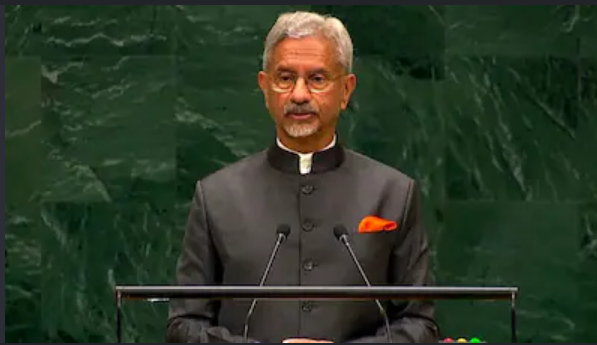
S Jaishankar calls Pakistan a “serial practitioner of terrorism” at UN
S Jaishankar criticised Pakistan at the UN General Assembly, referring to a “serial practitioner of terrorism” and warning against attempts to normalise terrorism.

Rahul Gandhi hosts high tea for INDIA bloc after Gyanesh Kumar protests

L Murugan quits Union ministry to strengthen BJP in Tamil Nadu

Amit Shah attacks Rahul Gandhi over Congress poll losses, questions SIR row

BJP focuses on religion as opposition pushes BDM strategy in UP

CJP leaders Saurav Das, Ashutosh Ranka, Ajinkya Shinde sent to 5-day judicial custody

PM Modi speaks to Mark Carney as India and Canada push to strengthen ties

S Jaishankar says India is a natural option for Russia amid Europe tensions
CJP leaders Saurav Das, Ashutosh Ranka, Ajinkya Shinde sent to 5-day judicial custody
BJP focuses on religion as opposition pushes BDM strategy in UP
L Murugan quits Union ministry to strengthen BJP in Tamil Nadu

Afghan Men Try To Hang With The Jet Engine Of The Aircraft in Kabul- Afghanistan News – Kabul News
Trending Top 10 News: 10000 Crore Fine on Flipkart, Apple to Launch Unique Feature, Hdfc Bank Job Ad

Trending Top 10 News: Nokia 6310, Apple sales, Bachpan ka Pyar Video Kid, Dainik Bhaskar IT Raid

Trending Top 10 News: Canada bans Indian flights, Rain in Delhi NCR, AIMIM Twitter hacked, Raj Kundra case

Trending Top 10 News: Shein India, Apple New Service, Pocket Oxygen, Oppo Launched New Phone
-
 India News16 hours ago
Rahul Gandhi hosts high tea for INDIA bloc after Gyanesh Kumar protests
-
 India News16 hours ago
L Murugan quits Union ministry to strengthen BJP in Tamil Nadu
-
 India News16 hours ago
Amit Shah attacks Rahul Gandhi over Congress poll losses, questions SIR row
-
 India News15 hours ago
BJP focuses on religion as opposition pushes BDM strategy in UP
-
 India News4 hours ago
CJP leaders Saurav Das, Ashutosh Ranka, Ajinkya Shinde sent to 5-day judicial custody
-
 Latest world news4 hours ago
S Jaishankar says India is a natural option for Russia amid Europe tensions
-
 India News3 hours ago
PM Modi speaks to Mark Carney as India and Canada push to strengthen ties
