
Latest world news
Pakistan SC disqualifies Nawaz Sharif as PM over Panama Papers case

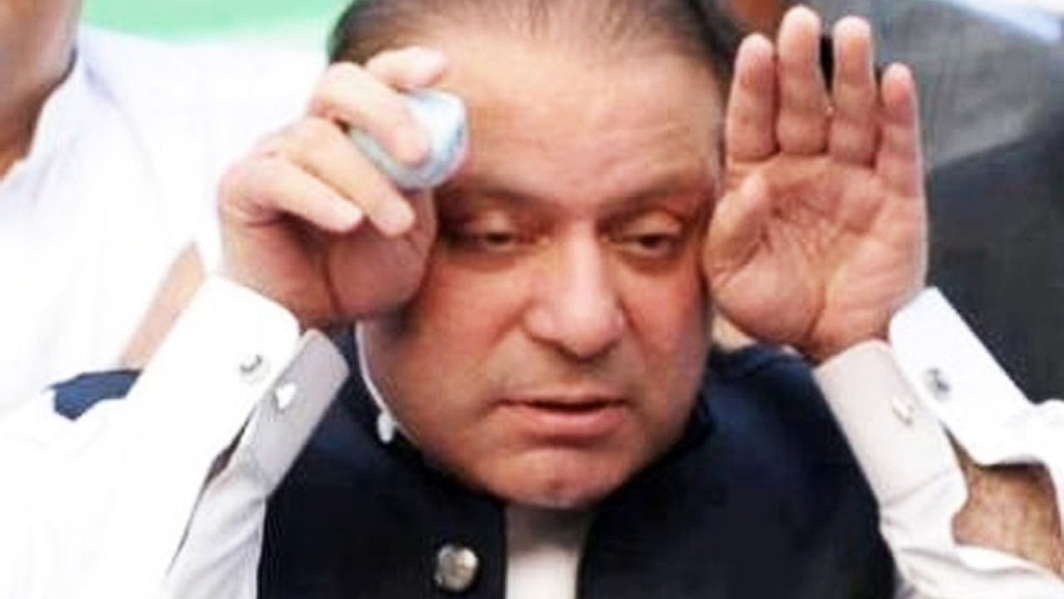
[vc_row][vc_column][vc_column_text]In a unanimous verdict, 5-judge Bench says case of Sharif family’s dubious financial dealings will be referred to an accountability court within six weeks; Sharif’s finance minister Ishaq Dar also dismissed
In a landmark decision that will no doubt have far reaching consequences in Pakistan’s political and social churning over the next few days, a five-judge Bench of the Supreme Court of Pakistan, on Friday, disqualified Prime Minister Nawaz Sharif from holding public office in a case related to last year’s Panama Papers exposé which had revealed how the country’s first family amassed wealth through dubious means and invested it through shady deals.
The unanimous verdict, passed by a Bench headed by Justice Asif Saeed Khan and comprising justices Ejaz Afzal Khan, Gulzar Ahmed, Sheikh Azmat Saeed and Ijazul Ahsan, recommended that all material collected by the joint investigation team (JIT) tasked with probing the Sharif family’s financial dealings would be sent to an accountability court within six weeks.
The JIT had been constituted in April after the Supreme Court Bench failed to reach a unanimous verdict on Sharif’s disqualification and it submitted its finding to the top court earlier this month, stating that the charges of financial impropriety were found to be true.
Further, the court also said that proceedings on the references made to the National Accountability Board (NAB) of Pakistan on the allegations of dubious financial dealings of Sharif and his family members, including his sons Hussain and Hassan Nawaz and daughter Maryam, should be wrapped up within six months. Besides the Sharif family, the cases will also be opened against Finance Minister Ishaq Dar and Captain Muhammad Safdar , a member of the National Assembly of Pakistan. Both Dar and Captain Safdar have also been dismissed from their posts.
In a packed courtroom – filled largely with supporters of Sharif and an army of lawyers and journalists – Justice Ejaz Afzal Khan read out the verdict shortly after 12 noon, saying: “He (Nawaz Sharif) is disqualified as a member of the Parliament so he has ceased to be holding the office of Prime Minister.”
Pakistani media reports immediately began speculating that Sharif could also face arrest over the next few days considering the grave charges that have been made out against him – which, besides allegations of financial misconduct, also include misleading the nation and being dishonest to the Parliament and the court.
The court also asked the Election Commission of Pakistan (ECP) to de-notify the prime minister from his National Assembly seat – effectively meaning that Sharif election now stands void and he can’t contest again till the court allows him to do so – to fulfill the technicalities of implementing the order. The Supreme Court said the ECP should “de-seat the PM for not disclosing his role in the Dubai-based Capital FZE company in his nomination papers” and in doing so he was “not honest and truthful”.
Soon after the verdict was pronounced, the Pakistan establishment signalled that it would make a last ditch effort to help Sharif stay on as Prime Minister despite the top court’s reference to the ECP for de-notifying his election. Although the Supreme Court specifically urged Pakistan President Mamnoon Hussain “to ensure a smooth transition for the democratic process”, Attorney General of Pakistan, Ashtar Ausaf Ali, told mediapersons in Lahore that “the Prime Minister still holds the office and will continue to do so until the President asks him otherwise”.
The Pak Attorney General quoted Article 190 of the Pakistan Constitution which says that it is the prerogative of the President to decide on whether a sitting prime minister should be asked to step down or not.
However, there is a legal precedent in Pakistan of the Supreme Court dismissing a Prime Minister from holding office. In 2012, then Premier Yousaf Raza Gilani was disqualified over contempt of court charges for refusing to re-open a corruption case against then President Asif Ali Zardari.[/vc_column_text][vc_row_inner css=”.vc_custom_1501236988306{margin-bottom: 20px !important;border-bottom-width: 20px !important;padding-top: 20px !important;background-color: #a2b1bf !important;}”][vc_column_inner][vc_column_text]Khawaja Asif to be made interim PM till Shahbaz can take over?
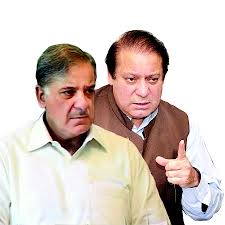 This is for the third time that Sharif would be unable to complete his term as Prime Minister of Pakistan. Although Sharif’s dismissal from office was largely seen as a foregone conclusion, there is no clarity yet on who will take over as Prime Minister now. Local media reports from Pakistan suggest that Defence Minister Khawaja Asif could be elevated as the interim PM. In the run up to Friday’s court hearing, banners urging Sharif’s younger brother and current chief minister of Pakistan’s Punjab province, Shahbaz Sharif, to take over as the PM had sprung up all across Lahore and sources say that though Asif could for now be made the interim PM, Shahbaz would eventually be appointed to the office and serve out the remained of the term till the 2018 general elections in Pakistan.[/vc_column_text][/vc_column_inner][/vc_row_inner][/vc_column][/vc_row][vc_row css=”.vc_custom_1501237125162{margin-bottom: 20px !important;border-bottom-width: 20px !important;padding-top: 20px !important;background-color: #a2b1bf !important;}”][vc_column][vc_column_text]Panama papers case against Nawaz Sharif and family
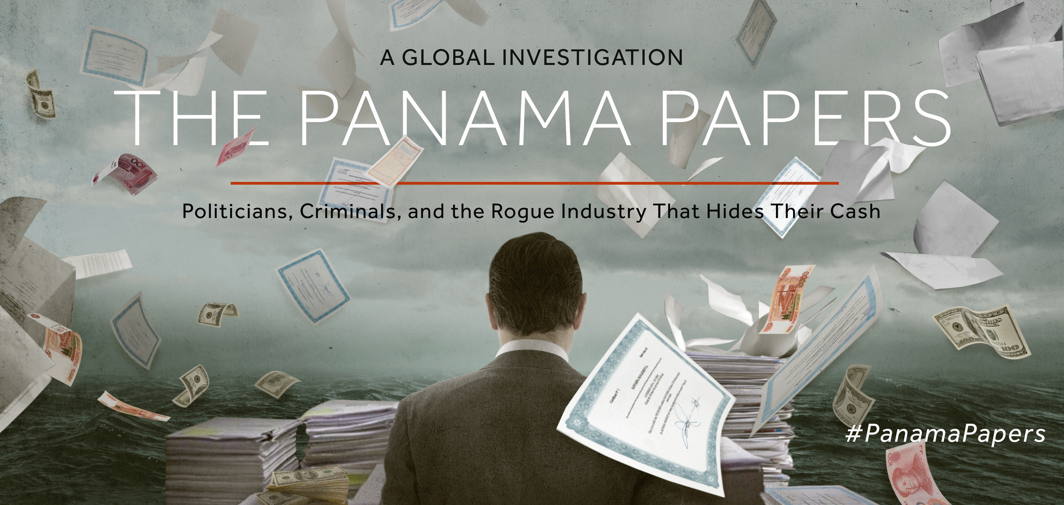 Hussain and Hasan Nawaz Sharif, and Mariam Safdar, the sons and daughter of the Pakistan Prime Minister allegedly set up at least four offshore companies in British Virgin Islands (BVI). These companies are said to own at least six upmarket properties overlooking London’s Hyde Park. The Sharif family reportedly mortgaged four of these properties to the Deutsche Bank (Suisse) SA for a loan of GBP 7 million and the Bank of Scotland part financed the purchase of two other apartments. Nawaz Sharif has denied ownership of all these properties and dismissed the allegations against him and his family.
Nescol Limited and Nielson Holdings Limited were incorporated in BVI in 1993 and 1994, respectively, and were held by one bearer share each. In February 2006, Mariam Safdar signed a resolution of Nescol Limited as the “sole (bearer) shareholder”. Mossack Fonseca was appointed as the registered agent through Minerva Trust which described Mariam Safdar as the beneficial owner of both companies, the Indian Express-International Consortium of Investigative Journalists (ICIJ) joint investigation into the Panama papers had revealed.
The Panama Papers investigation saw multiple news organizations from across the world, including The Indian Express from India, join their efforts in 2016 on the issue of unearthing unaccounted wealth of some of the world’s most rich and famous politicians and businessmen, after the ICIJ shared files from the database of the world’s fourth biggest offshore law firm, Mossack Fonseca. The records had been obtained from an anonymous source by German newspaper Süddeutsche Zeitung.[/vc_column_text][/vc_column][/vc_row][vc_row css=”.vc_custom_1501237200570{padding-top: 20px !important;background-color: #a2b1bf !important;}”][vc_column][vc_column_text]The Joint Investigation Team
On April 20, 2017, a five-judge bench of the Supreme Court of Pakistan had pronounced its verdict in the Panama Papers case against Sharif. However, the verdict was split as three of the five judges ruled in favour of forming a Joint Investigation Team (JIT) to find out whether the allegations against the Pakistan Prime Minister and his family were true or not. Only two judges – Justices Asif Saeed Khosa and Gulzar Ahmed – ruled for Sharif’s disqualification from office. The top court had then set up a six-member JIT to investigate the charges against Sharif and his family and had asked the first family of Pakistan to appear before the JIT as and when summoned.
The JIT members, during a seven-week period, interrogated eight members of the Sharif family – PM Nawaz Sharif, his younger brother Shahbaz Sharif, sons Hassan and Hussain Nawaz, daughter Maryam Nawaz, son-in-law Captain Safdar, cousin Tariq Shafi and Finance Minister Ishaq Dar, among others.
The six-member JIT included Federal Investigation Agency (FIA) Additional Director General Wajid Zia, Military Intelligence’s Brigadier Kamran Khurshid, National Accountability Bureau (NAB) Director Irfan Naeem Mangi, State Bank of Pakistan’s Amer Aziz, Securities and Exchange Commission of Pakistan (SECP) Executive Director Bilal Rasool and Inter-Services Intelligence’s Brigadier Muhammad Nauman Saeed.
In its report submitted to the apex court on July 10, the JIT said that the Sharif family led a lifestyle that was beyond its known and declared sources of income and charged them with concealment of facts and being beneficial owners of multiple offshore companies. The JIT also recommended initiation of reference against the PM and members of his family in the NAB while highlighting their failure in providing a money trail for their London apartments. Sharif, however, maintained that the JIT report was a “bundle of baseless allegations.”[/vc_column_text][/vc_column][/vc_row]









Latest world news
S Jaishankar says India is a natural option for Russia amid Europe tensions
External Affairs Minister S Jaishankar said India remained a natural option for Russia as Moscow increasingly turned towards Asia amid strained relations with Europe. He highlighted the continuity of India-Russia ties and their significance for the balance of power in Asia.


Latest world news
Putin praises PM Modi, says he has very good ideas on Ukraine war
Russian President Vladimir Putin has praised Prime Minister Narendra Modi for repeatedly raising the need to end the Ukraine war, describing his ideas for a settlement as “very good”.

Latest world news
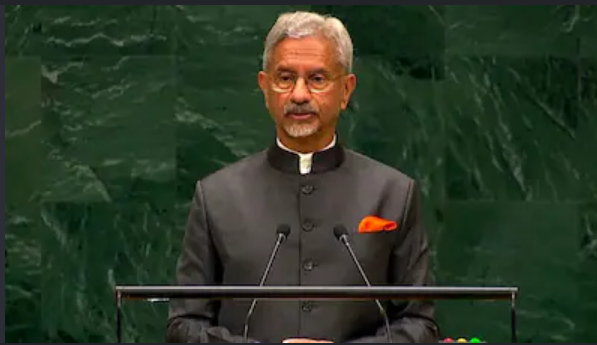
S Jaishankar calls Pakistan a “serial practitioner of terrorism” at UN
S Jaishankar criticised Pakistan at the UN General Assembly, referring to a “serial practitioner of terrorism” and warning against attempts to normalise terrorism.

Supreme Court stays defamation case against Rahul Gandhi over PM Modi remarks

Rahul Gandhi hosts high tea for INDIA bloc after Gyanesh Kumar protests

L Murugan quits Union ministry to strengthen BJP in Tamil Nadu

Amit Shah attacks Rahul Gandhi over Congress poll losses, questions SIR row

BJP focuses on religion as opposition pushes BDM strategy in UP

PM Modi speaks to Mark Carney as India and Canada push to strengthen ties

S Jaishankar says India is a natural option for Russia amid Europe tensions

CJP leaders Saurav Das, Ashutosh Ranka, Ajinkya Shinde sent to 5-day judicial custody
BJP focuses on religion as opposition pushes BDM strategy in UP
L Murugan quits Union ministry to strengthen BJP in Tamil Nadu

Afghan Men Try To Hang With The Jet Engine Of The Aircraft in Kabul- Afghanistan News – Kabul News
Trending Top 10 News: 10000 Crore Fine on Flipkart, Apple to Launch Unique Feature, Hdfc Bank Job Ad

Trending Top 10 News: Nokia 6310, Apple sales, Bachpan ka Pyar Video Kid, Dainik Bhaskar IT Raid

Trending Top 10 News: Canada bans Indian flights, Rain in Delhi NCR, AIMIM Twitter hacked, Raj Kundra case

Trending Top 10 News: Shein India, Apple New Service, Pocket Oxygen, Oppo Launched New Phone
-
 India News23 hours ago
Supreme Court stays defamation case against Rahul Gandhi over PM Modi remarks
-
 India News15 hours ago
Rahul Gandhi hosts high tea for INDIA bloc after Gyanesh Kumar protests
-
 India News14 hours ago
L Murugan quits Union ministry to strengthen BJP in Tamil Nadu
-
 India News14 hours ago
Amit Shah attacks Rahul Gandhi over Congress poll losses, questions SIR row
-
 India News13 hours ago
BJP focuses on religion as opposition pushes BDM strategy in UP
-
 India News2 hours ago
CJP leaders Saurav Das, Ashutosh Ranka, Ajinkya Shinde sent to 5-day judicial custody
-
 Latest world news2 hours ago
S Jaishankar says India is a natural option for Russia amid Europe tensions
-
 India News1 hour ago
PM Modi speaks to Mark Carney as India and Canada push to strengthen ties
