English हिन्दी
Connect with us

Latest world news

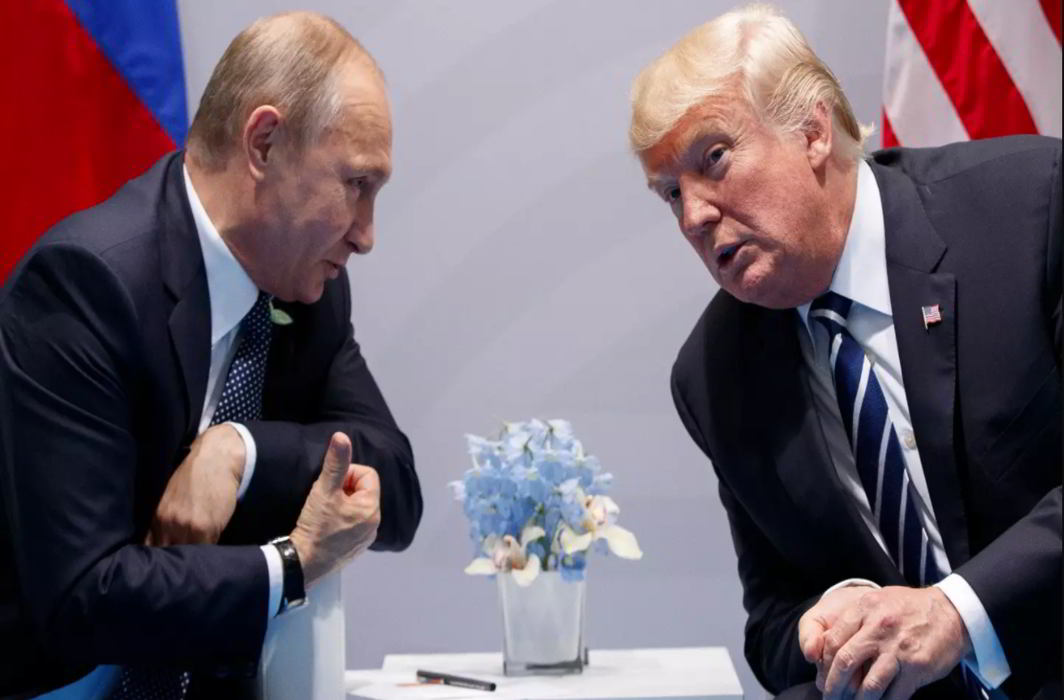
Vladimir Putin thanks Trump for intelligence sharing on Terrorists

Published

on

Vladimir Putin and Donald Trump

Terrorists arrested before bombing in St. Petersburg

In a rare development while east met the west, Russian President Vladimir Putin has thanked his US counterpart, Donald Trump, for thwarting the planned terrorist attacks by sharing CIA information. The information helped Russian secret agency FSB in arresting a group of terrorists plotting bomb attacks in St. Petersburg’s Kazan Cathedral and in other crowded places in the second largest Russian city.

TASS news agency, quoting the Kremlin press service, said that Putin initiated the telephonic conversation with Trump on Sunday.  This was second time when the two leaders exchanged praise within a week.

“The Russian president thanked his US counterpart for information shared by the US Central Intelligence Agency (CIA) that helped trace, expose and detain a group of terrorists who had plotted explosions in St. Petersburg’s Kazan Cathedral and in other crowded places in that city,” the press service said.

According to Putin, the CIA information was enough to expose and detain the criminals. He asked Trump to convey thanks to the concerned intelligence officers who had obtained the information.

The Russian president reassured the US president that “Russian security services, should they have information about possible terrorist threats to the United States and its citizens, will swiftly and unconditionally share it with the US colleagues via partner channels,” the press service stressed.

It statement issued by Kremlin press service stressed that the cooperation “serves as an example of the positive things that can occur when our countries work together.”

The press office of Russia’s Federal Security Service (FSB) reported earlier that seven members of a terrorist cell had been detained on Friday for plotting terror attacks. They planned to commit a series of murders and improvised bomb attacks in crowded places in St. Petersburg on December 16. One of those detained confessed to court he had planned a bomb attack in the city’s landmark Kazan Cathedral.

The Russian agencies have claimed of confiscating large number of explosives used in making bombs, automatic rifles, munitions and extremist literature.

Earlier on Tuesday, FSB chief Alexander Bortnikov said that Russia was on alert for possible return of jihadists from Syria before the World Cup and the presidential election in 2018.

In April this year, 14 people were killed in a bombing on the Saint Petersburg metro.

Russian forces played important role in crushing Daesh (IS) and other rebel groups in Syria. Some 40,000 fighters travelled from all over the world, including Russia, to join Daesh (IS) in Syria after the declaration of self-styled “caliphate” straddling Syria and Iraq in 2014.

Earlier on Thursday, Donald Trump and Vladimir Putin discussed the North Korean crisis over its nuclear programme. At that time Trump took the unusual step of thanking his Russian counterpart for hailing the US economy.

Latest world news

India studying implications after US Supreme Court strikes down Trump’s global tariffs

India said it is studying the implications of a US Supreme Court ruling that struck down Donald Trump’s sweeping tariffs, even as a new 10% global duty has been announced under an alternate law.

Published

on

Donald Trump

India on Saturday said it is closely examining the implications of a recent ruling by the US Supreme Court that struck down former US President Donald Trump’s sweeping global tariffs.

In its initial response, the Commerce Ministry said it has taken note of both the court’s judgement and subsequent announcements made by the US administration.

“We have noted the US Supreme Court judgement on tariffs yesterday (Friday). US President Donald Trump has also addressed a press conference in this regard,” the ministry said.

“Some steps have been announced by the US administration. We are studying all these developments for their implications,” it added.

What did the US Supreme Court rule?

On Friday, the conservative-majority court ruled 6–3 that a 1977 law relied upon by Trump to impose sudden tariffs on individual countries does not authorise the President to impose such sweeping duties.

The judgement marked a significant setback to Trump’s tariff policy, which had reshaped trade relations with several countries.

Responding to the ruling, Trump criticised members of the court, saying he was “ashamed” of certain justices and describing the verdict as disappointing.

Fresh tariffs under Section 122

Following the court’s decision, Trump announced new tariffs using Section 122 of the Trade Act of 1974. The provision allows the US President to impose temporary tariffs of up to 15 per cent for a maximum period of 150 days to address large and serious balance-of-payments deficits.

Under this route, a new 10 per cent global tariff has been imposed on imports into the United States. Trump said the revised order would be effective almost immediately.

US Treasury Secretary Scott Bessent, speaking at the Economic Club of Dallas, said the alternative mechanism would result in virtually unchanged tariff revenue in 2026.

Impact on India

Under the revised order, India faces a tariff rate of 10 per cent, reduced from the earlier 18 per cent under Trump’s broader tariff framework.

The new duty is scheduled to take effect from February 24 for a period of 150 days. Exemptions will continue for sectors subject to separate investigations, including pharmaceuticals, as well as goods entering the US under the US-Mexico-Canada Agreement framework.

India has not announced any retaliatory measures and has indicated that it is currently assessing the trade and economic implications of the US decisions.

Continue Reading

Latest world news

PM Modi meets Sri Lankan President Dissanayake at AI summit, reviews connectivity agenda

PM Modi and Sri Lankan President Anura Kumara Dissanayake reviewed connectivity, AI cooperation and regional stability during talks at the AI Impact Summit in New Delhi.

Published

on

PM Modi meet sri lanka president

Prime Minister Narendra Modi on Friday held talks with Sri Lankan President Anura Kumara Dissanayake on the sidelines of the AI Impact Summit in New Delhi, reviewing the progress of bilateral initiatives and reaffirming their commitment to deepening connectivity and development cooperation.

President Dissanayake was in India to attend the India-hosted AI Impact Summit. The visit marked his second trip to India since assuming office, following his State Visit in December 2024.

Focus on connectivity and development

According to the Ministry of External Affairs, the two leaders assessed developments stemming from recent high-level engagements, including Prime Minister Modi’s State Visit to Sri Lanka in April 2025. They emphasised fast-tracking cooperation across three key pillars — physical, digital and energy connectivity — which remain central to India-Sri Lanka relations.

Both sides reiterated that improved connectivity would not only enhance economic integration but also contribute to long-term stability and prosperity in the region.

AI collaboration and inclusive growth

Technology-driven development also featured prominently in the discussions. The leaders exchanged views on leveraging artificial intelligence for developmental purposes and improving service delivery.

They agreed that responsible deployment of AI can help advance inclusive growth, particularly in developing countries, and support public service systems.

India’s support during crisis

President Dissanayake expressed appreciation for India’s assistance following Cyclone Ditwah, which caused significant damage in Sri Lanka. India, acting as a First Responder, provided emergency relief supplies and supported search and rescue operations under ‘Operation Sagar Bandhu’.

The leaders also reviewed progress under India’s USD 450 million assistance package aimed at reconstruction and infrastructure restoration in Sri Lanka. The support is intended to aid long-term recovery and strengthen economic resilience.

Cultural ties and regional cooperation

Beyond economic and strategic matters, the meeting underscored the civilisational and cultural bonds between the two countries. The successful conclusion of the Exposition of the Holy Devnimori relics in Sri Lanka was welcomed as a step that further strengthened people-to-people connections.

Both leaders agreed to continue working closely to advance sustainable development, while contributing to peace and stability in the wider Indian Ocean Region.

The meeting highlighted India’s role as both a technology partner and a regional collaborator, as New Delhi and Colombo seek to build a resilient and forward-looking bilateral partnership.

Continue Reading

Latest world news

Trump signs 10% global tariffs after US Supreme Court setback

Donald Trump has signed a new 10% global tariff order after the US Supreme Court struck down much of his earlier sweeping import duties

Published

on

donald-trump

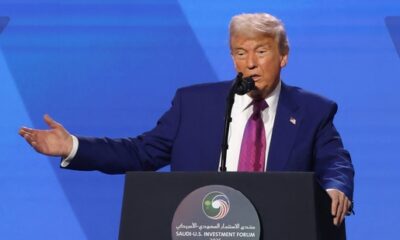
US President Donald Trump has signed a fresh executive order imposing a 10 per cent tariff on imports from countries around the world, just hours after the Supreme Court of the United States struck down much of his earlier sweeping import duties.

The new tariffs, which Trump said will take effect “almost immediately”, are being introduced under a law that limits such measures to 150 days. Describing the move as the beginning of an “adjustment process”, the President signalled that his administration would explore alternative routes to maintain revenue from import duties.

Trump criticises top court ruling

The Supreme Court’s 6-3 decision dealt a significant blow to a key part of Trump’s economic strategy. The ruling invalidated large portions of the administration’s previous tariff framework, prompting a sharp response from the President.

In posts on Truth Social, Trump said certain members of the court “should be ashamed of themselves” and termed the judgment “deeply disappointing”. He argued that the tariff mechanism used by his administration had been “acceptable and proper” and insisted that the new order was legally sound.

Trump also claimed that his use of tariffs over the past year had contributed to economic gains, citing milestones in the stock market. He said the Dow had crossed 50,000 and the S&P had reached 7,000, levels he argued were achieved sooner than expected following his election victory.

Tariffs central to Trump’s policy push

Tariffs have remained a central pillar of Trump’s economic and trade agenda. In April, he had announced “reciprocal” taxes of up to 50 per cent on imports from countries with which the United States runs trade deficits, along with a 10 per cent baseline tariff on most other nations.

He invoked a 1977 law to declare the trade deficit a national emergency, justifying broad import taxes. However, after global backlash, the administration paused the higher reciprocal tariffs for 90 days to allow for negotiations.

According to Trump, several countries agreed to revised trade terms during that period, while others faced steeper duties. He also reiterated claims that tariffs strengthened national security and helped curb fentanyl inflows by 30 per cent when used as penalties against certain countries.

“All of those tariffs remain,” Trump said, adding that other measures would now replace those struck down by the court.

The latest order underscores escalating tensions between the White House and the judiciary, as the administration seeks to preserve a cornerstone of its trade policy while navigating legal constraints.

Continue Reading

Trending

© Copyright 2022 APNLIVE.com