
Latest world news
Saudi Aircraft picks Shahbaz Sharif for important meetings

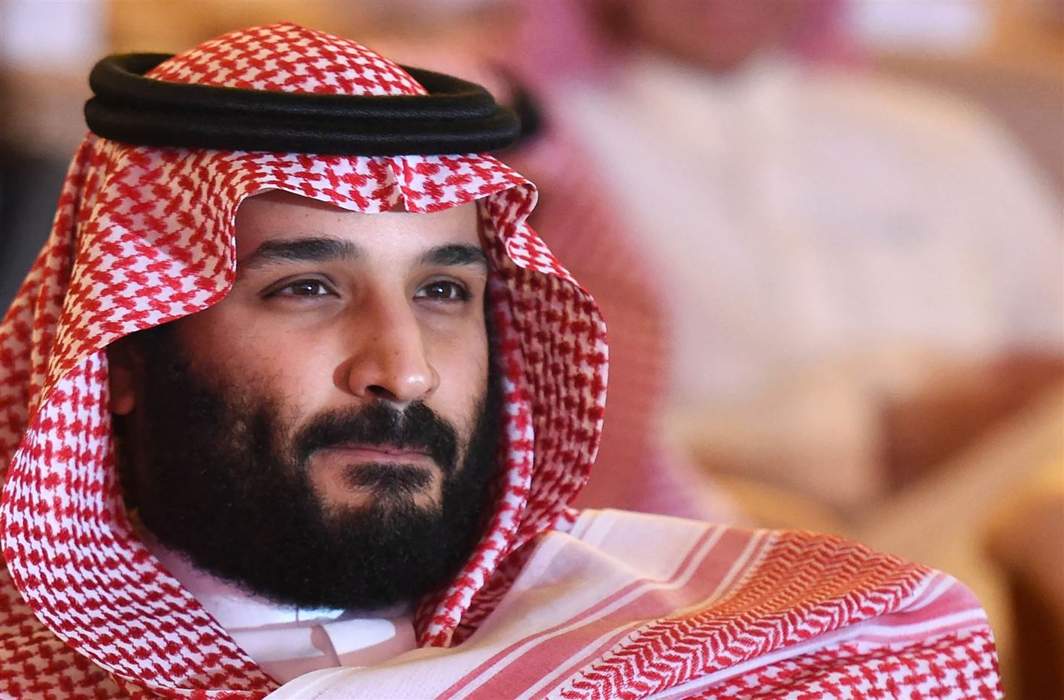
US proxy Saudi Arabia plays important role, admits PML-N leader
In another big brotherly act, Saudi Arabia suddenly sent a special aircraft to Lahore to pick Punjab Chief Minister Shahbaz Sharif on Wednesday evening for “important meetings” and perform Umrah, a mini pilgrimage at Mecca, the holiest site for world Muslims.
An unanimous Pakistan Muslim League (Nawaz) PML-N leader told Dawn that for many years US used to play its role in Pakistani politics through Saudi Arabia and the chief minister’s visit should be seen in that perspective.
Saudi Ambassador to Pakistan Admiral Nawaf Ahmad Al Maliki, along with envoys of around two dozen countries, had called on Shahbaz Sharif two days ago.
Shahbaz Sharif’s sudden visit to Saudi Arabia came at a time when he was recently nominated as PML-N candidate for the Prime Minister office.
Shahbaz Sharif is the most important political figure of Pakistan Muslim League (N) after resignation of Nawaz Sharif from then highest political office after being disqualified by Supreme Court in Panama papers scam. The ruling came in July after a probe into his family’s wealth following the 2016 Panama Papers dump linking his children to offshore companies.
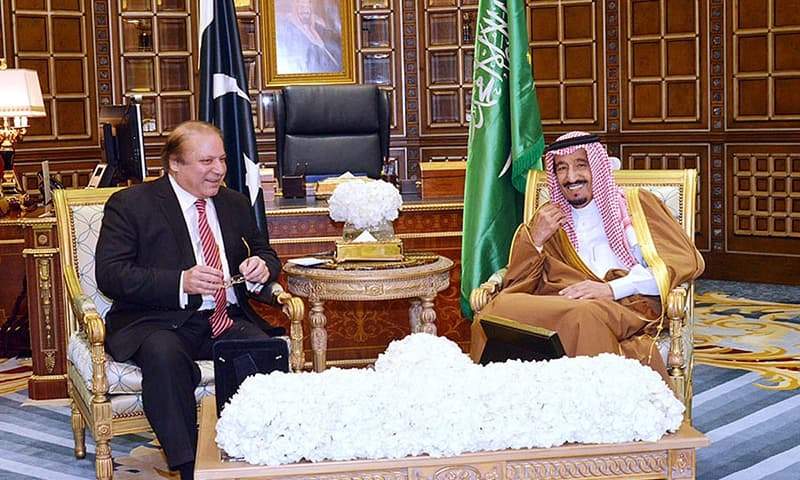
In May 2007, Saudi Arabia had hosted more than fifty heads of the governments and states of Muslim countries for arranging audience for US President Donald Trump in November this year.
This resembles to what Riyadh did with Lebanese Prime Minister Sa’ad Hariri in early November. He was suddenly called to visit Riyadh on November 3. He was not received by any dignitary; instead his cell phone was confiscated. He was given a pre-written resignation to read in front of TV cameras.
New York Times, on December 25, has confirmed that Saad Hariri announced his short-lived resignation under heavy duress from Riyadh government. The report was based on the accounts of Lebanese, Western and regional officials and others figures close to Hariri.
Similarly, Mehmoud Abbas, President of Palestinian Authority was called to direct to consent for the proposed American peace plan with Israel. However, situation is completely changed with Trump’s Jerusalem move.
Dawn, quoting an official press release reports that during his visit Shahbaz Sharif will hold meetings with important Saudi officials and perform Umrah. The Saudi ambassador had a meeting with Shahbaz three days ago, after which he left for the visit, sources say.
However, Federal Minister Mushahidullah Khan has said that various issues of international and international importance would be discussed during CM’s meetings with Saudi officials. He called his visit a “good news” but did not elaborate.
Rana Sanaullah, a minister in the provincial government and a close aide to the chief minister has said: “Mian Shahbaz Sharif will definitely discuss issues of national importance — not just of Punjab — with his Saudi hosts. Saudi Arabia has been our trusted brotherly country for decades and we are relying on it in many economic and other matters of international importance.”
Meanwhile, Pakistan Tehreek-i-Insaf’s (PTI) spokesman Fawad Chaudhry said they’re concerned at the visit undertaken without any prior notice to any authority or institution. He said people should be taken into confidence about the purpose and objectives of the visit.
Sharif family has been enjoying good relations with the Saudis for several decades. Riyadh rescued them from military ruler Gen Pervez Musharraf in 2000. The whole family spent its seven-year exile in Jeddah. But the relations were negatively affected after Islamabad refused to send its forces to participate in Saudi- led war against Yemen.






Latest world news
Magnitude 7 earthquake strikes Russia’s Kamchatka Peninsula
A magnitude 7 earthquake struck Russia’s Kamchatka Peninsula region on Friday. The initial report placed the earthquake at a depth of 140 kilometres.


Latest world news
S Jaishankar says India is a natural option for Russia amid Europe tensions
External Affairs Minister S Jaishankar said India remained a natural option for Russia as Moscow increasingly turned towards Asia amid strained relations with Europe. He highlighted the continuity of India-Russia ties and their significance for the balance of power in Asia.

Latest world news
Putin praises PM Modi, says he has very good ideas on Ukraine war
Russian President Vladimir Putin has praised Prime Minister Narendra Modi for repeatedly raising the need to end the Ukraine war, describing his ideas for a settlement as “very good”.


India-US trade deal first phase finalised, drafting underway

Election Commission orders voter roll revision in 17 states, UTs

Actor Imran Khan asked to leave India after CJP protest

Delhi Police offers 11-person limit for CJP’s Connaught Place protest

Mallikarjun Kharge’s ‘Your Friends’ jab at Rahul Gandhi over congress exits

Magnitude 7 earthquake strikes Russia’s Kamchatka Peninsula

Delhi deploys 25,000 personnel, installs CCTV cameras ahead of CJP march
Mallikarjun Kharge’s ‘Your Friends’ jab at Rahul Gandhi over congress exits
Delhi Police offers 11-person limit for CJP’s Connaught Place protest
Actor Imran Khan asked to leave India after CJP protest

Afghan Men Try To Hang With The Jet Engine Of The Aircraft in Kabul- Afghanistan News – Kabul News
Trending Top 10 News: 10000 Crore Fine on Flipkart, Apple to Launch Unique Feature, Hdfc Bank Job Ad

Trending Top 10 News: Nokia 6310, Apple sales, Bachpan ka Pyar Video Kid, Dainik Bhaskar IT Raid

Trending Top 10 News: Canada bans Indian flights, Rain in Delhi NCR, AIMIM Twitter hacked, Raj Kundra case

Trending Top 10 News: Shein India, Apple New Service, Pocket Oxygen, Oppo Launched New Phone
-
 India News22 hours ago
India-US trade deal first phase finalised, drafting underway
-
 India News19 hours ago
Election Commission orders voter roll revision in 17 states, UTs
-
 India News19 hours ago
Actor Imran Khan asked to leave India after CJP protest
-
 India News18 hours ago
Delhi Police offers 11-person limit for CJP’s Connaught Place protest
-
 India News6 hours ago
Mallikarjun Kharge’s ‘Your Friends’ jab at Rahul Gandhi over congress exits
-
 India News6 hours ago
Delhi deploys 25,000 personnel, installs CCTV cameras ahead of CJP march
-
 Latest world news6 hours ago
Magnitude 7 earthquake strikes Russia’s Kamchatka Peninsula
