
Latest world news
Saudi Crown Prince MBS meets Netanyahu in Amman


Israeli writer reveals the secret meeting held in Royal Palace
Coming further close to Israel, Saudi Arabia’s most powerful Crown Prince, Mohammed bin Salman has met with Israeli Prime Minister Benjamin Netanyahu at the Royal Jordanian Palace in Amman on Monday.
Yemen Press Agency (YPA) and Tehran based Pars Today have quoted Israeli daily Maariv’s report written by Jacky Hugi, a political analyst saying that Mohammed Bin Salman was waiting for Netanyahu at the Royal Jordanian Palace during his last visit to Amman on Monday.
Read More: Saudi Crown Prince recognise Israelis right to their own land
The high profile secret meeting between the two leaders came on the sidelines of US President Donlad Trump’s advisor and son-in-law Jared Kushner’s Amman visit on Friday. Kushner was accompanied by Jason Greenblatt, President Trump’s Middle East Envoy.
Jacky Hugi added that” a close friend told me about the incident, claiming that there were direct contacts between the two parties, both Saudi and Israeli, under the auspices of King Abdullah II of Jordan.”

Read More: US, Saudi Arabia ask Palestinians to talk to Israel
Earlier, Saudi Crown Prince Mohammed bin Salman reportedly met on Wednesday with Jared Kushner in Riyadh to discuss Trump’s “ready” plan over Palestinian-Israeli peace deal, or what it calls the “deal of the century.
The meeting between Saudi Crown Prince Mohammed Bin Salman and Israeli Prime Minister Banjamin Netanyahu has come at a time when Israeli forces have been involved in killing and injuring large number of Palestinian protesters in Gaza, who have been participating “Right to Return” march every Friday since March this year.
There were world-wide protests against Israel on the last Friday of Ramadan. Iran’s revolutionary leader Ayatollah Khomeini had, after succeeding in throwing out pro-US King from Tehran in 1979, appealed world Muslims to protest and commemorate it on this day every year as “International Qods Day”.
Read More: Saudi Crown Prince MBS met Israeli officials during “disappearance”
Israel and Saudi Arabia have no diplomatic ties so far. However, ties between the two were seen very close virtually. Mohammad Bin Salman has been supporting US sponsored “deal of the century” to settle Israel-Palestine crisis. The details of the deal were not made public so far. It is widely understood that Palestinians would be stripped of the promised State of Palestine, as earlier discussed, to exist side by side with Israel.
Saudi Arabia has in recent months allowed Air India to take its commercial flights through its airspace to reach Tel Aviv for avoiding detour through red sea, decreasing about three hours of flight time. So far Saudi Arabian aircraft do not fly directly to Israel.
Read More: Saudi Arabia and Egypt gave prior consent for Trump’s Jerusalem move
Bahrain, a close ally of Saudi Arabia and part of Gulf Cooperation Council (GCC) has been exchanging delegation level visits with Israel. UAE has already opened an Israeli diplomatic-level mission to the International Renewable Energy Agency in Abu Dhabi.
There have been reports of major Saudi investment in Israel for last several years.







Latest world news
Magnitude 7 earthquake strikes Tibet after floods
A magnitude 7 earthquake struck northern Tibet on Thursday, October 22. The tremor came weeks after deadly flash floods and landslides hit the mountainous region near the Nepal-China border. Initial reports did not confirm casualties or damage from the earthquake.


Latest world news
Macron rejects Trump’s immigration claims over France riots
French President Emmanuel Macron criticised Donald Trump and other foreign leaders over their comments on France’s recent unrest. Macron rejected claims that the country was being overrun by migrants and Islamists, calling such assertions false.

Latest world news
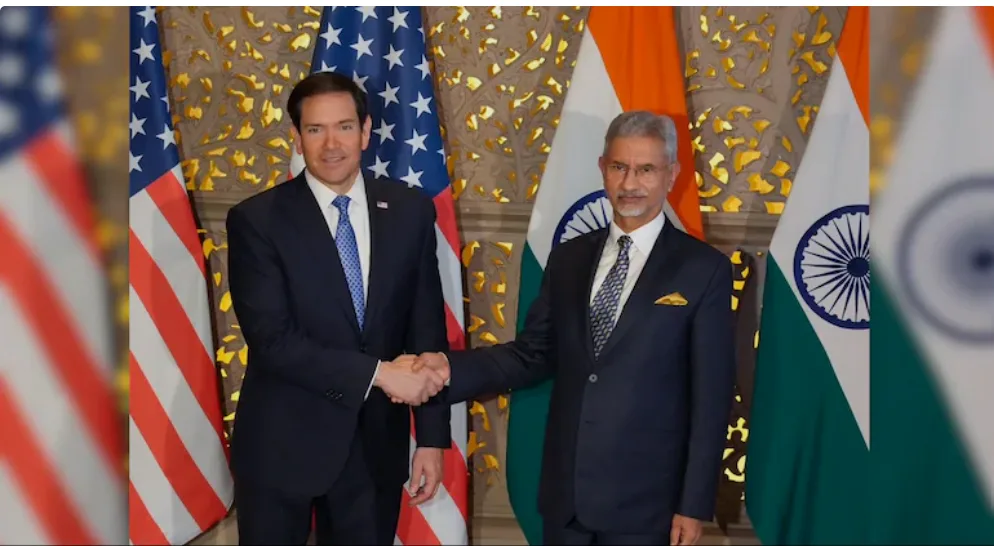
Marco Rubio says India and US share extraordinary alignment on key issues
US Secretary of State Marco Rubio said India and the United States share an extraordinary alignment on core issues, even though disagreements between the two countries may arise.

Punjab strike hits public services as 3 lakh employees and roadways workers protest

Two election commissioners complained against senior poll officer, RTI reveals

Om Prakash Mathur sworn in as Keralam Governor

PM Modi to inaugurate Rs 169-crore RBI data centre in Odisha on October 25

Delhi High Court rejects Neha Bora’s plea against peace bond notice

MEA responds after ITBP chief flags ongoing face-offs with China in Arunachal
Delhi High Court rejects Neha Bora’s plea against peace bond notice
PM Modi to inaugurate Rs 169-crore RBI data centre in Odisha on October 25
Om Prakash Mathur sworn in as Keralam Governor
Two election commissioners complained against senior poll officer, RTI reveals

Afghan Men Try To Hang With The Jet Engine Of The Aircraft in Kabul- Afghanistan News – Kabul News
Trending Top 10 News: 10000 Crore Fine on Flipkart, Apple to Launch Unique Feature, Hdfc Bank Job Ad

Trending Top 10 News: Nokia 6310, Apple sales, Bachpan ka Pyar Video Kid, Dainik Bhaskar IT Raid

Trending Top 10 News: Canada bans Indian flights, Rain in Delhi NCR, AIMIM Twitter hacked, Raj Kundra case

Trending Top 10 News: Shein India, Apple New Service, Pocket Oxygen, Oppo Launched New Phone
-
 India News17 hours ago
Punjab strike hits public services as 3 lakh employees and roadways workers protest
-
 India News17 hours ago
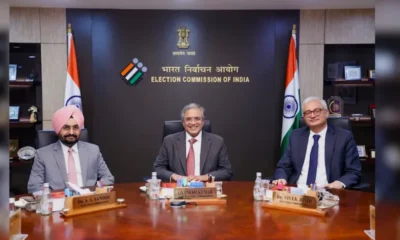
Two election commissioners complained against senior poll officer, RTI reveals
-
 India News6 hours ago
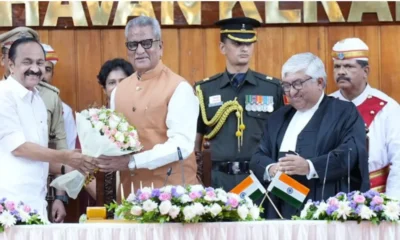
Om Prakash Mathur sworn in as Keralam Governor
-
 India News5 hours ago
PM Modi to inaugurate Rs 169-crore RBI data centre in Odisha on October 25
-
 India News4 hours ago
Delhi High Court rejects Neha Bora’s plea against peace bond notice
-
 India News4 hours ago
MEA responds after ITBP chief flags ongoing face-offs with China in Arunachal
