English हिन्दी
Connect with us

Latest world news

Tech layoffs leave Indian H-1B workers battling strict 60-day US visa deadline

Fresh layoffs at major tech companies like Meta and Amazon have sparked an immigration crisis for Indian H-1B visa holders, who now face a strict 60-day deadline to find new sponsorship or leave the US.


Published

on

Fresh rounds of job cuts across global technology firms, including Meta, Amazon, and Oracle, have triggered a severe crisis for thousands of Indian IT professionals residing in the United States. Operating under the strict frameworks of the US immigration system, these laid-off foreign nationals are bound by a rigid 60-day grace period to secure a new employer willing to sponsor their visa, successfully change their legal immigration status, or exit the country entirely.

The scale of the downturn has been stark. Data from global tracking platforms indicates that over 110,000 employees have been laid off across 144 tech companies in 2026 alone. Because Indian citizens consistently secure the vast majority of H-1B visas—accounting for 283,772 of the 406,348 approved petitions in the fiscal year 2025—they are bearing the heaviest burden of this sudden industry instability.

Alternate visa routes face stricter scrutiny

To purchase additional time to look for employment, an increasing number of redundant professionals are filing applications to transition temporarily to B-2 visitor visas, which can theoretically allow them to remain in the US for up to six months. However, legal and immigration experts warn that this pathway is becoming considerably more challenging.

According to reports from media sources, US immigration authorities are exercising intense scrutiny on these status modifications. Legal professionals handling these cases have noted a sharp rise in Requests for Evidence (RFEs) and Notices of Intent to Deny from authorities. While the transition method remains fully legal, securing an approval requires substantial paperwork and has become far more difficult to clear under the current administrative environment.

Personal and emotional toll of the AI shift

The ongoing job cuts are tied heavily to corporate restructuring as technology corporations pivot aggressively toward artificial intelligence. Meta, for instance, is projected to deploy over $100 billion in AI-related infrastructure and investments this year, redirecting thousands of roles into specialized AI divisions and heavily affecting traditional engineering and product teams.

For the affected Indian tech workers, the consequences extend far beyond a loss of monthly salary. Many have lived in the United States for close to a decade, managing ongoing home mortgages and raising American-born children while waiting out historically backlogged Green Card lines. Due to the mounting systemic barriers and the persistent anxiety of sudden displacement, a growing number of skilled professionals are actively contemplating alternative immigration options, turning their focus away from the US to explore talent attraction pathways in Canada or European nations.

Latest world news

Donald Trump and Benjamin Netanyahu clash over draft Iran peace proposal in heated phone call

A tense phone call between US President Donald Trump and Israeli Prime Minister Benjamin Netanyahu exposed a major rift over the future of the Iran conflict, with Israel pushing for immediate strikes while Washington favors a new mediated peace proposal.

Published

on

Tensions between the United States and Israel have burst into the open following a highly strained phone conversation between US President Donald Trump and Israeli Prime Minister Benjamin Netanyahu. The leaders sharply disagreed over the future course of action regarding Iran, exposing a growing rift between Washington’s renewed diplomatic push and Israel’s demands for continued military action.

According to sources cited by media reports, the lengthy Tuesday evening call left the Israeli Prime Minister deeply incensed, with one US source describing Netanyahu’s reaction by stating his “hair was on fire” after the discussion.

The push for diplomacy vs. military action

The confrontation centered on a revised “peace memo” or draft proposal, which has been jointly refined in recent days by regional mediators including Qatar, Pakistan, Saudi Arabia, Turkey, and Egypt. The emerging framework aims to formally end the war and initiate a 30-day structured negotiation period. This process would cover critical issues such as Tehran’s nuclear program and the reopening of the strategically vital Strait of Hormuz.

During the hour-long conversation, President Trump informed Prime Minister Netanyahu that international mediators are actively preparing a “letter of intent” to be signed by both Washington and Tehran to facilitate this pause.

However, Netanyahu remains highly skeptical of the diplomatic track. According to Israeli sources, the Prime Minister argued that delaying scheduled military strikes—previously anticipated under a framework known as “Operation Sledgehammer”—is a strategic error. Netanyahu reportedly urged the US President to proceed with targeted operations, asserting that any delay only gives Iran a chance for diplomatic “foot-dragging”. The Israeli leadership strongly favors the resumption of military operations to further degrade Iran’s strategic infrastructure and weaken its regime.

Trump downplays divisions but maintains authority

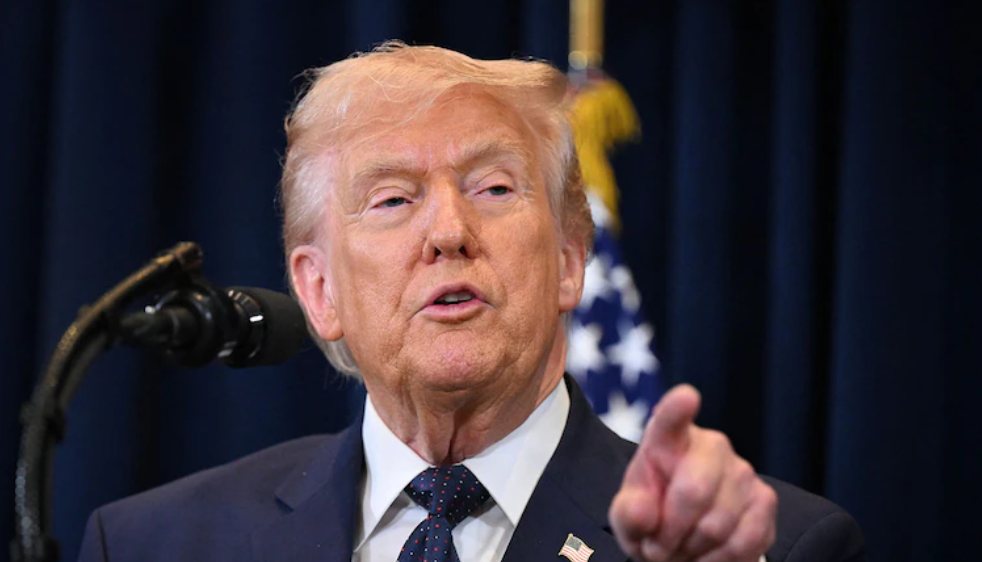
Despite the heated nature of the private call, President Trump publicly downplayed any permanent fracture in the US-Israel relationship. Speaking to reporters at Joint Base Andrews, Trump described Netanyahu as a “very, very good man” and confidently asserted, “He’ll do whatever I want him to do.”

Trump reiterated that the administration is giving diplomacy “one shot” and stated that negotiations are in their “final stages,” emphasizing his desire to minimize regional casualties. “It’s right on the borderline, believe me,” Trump later noted after returning to Washington from the Coast Guard Academy in Connecticut. “If we don’t get the right answers, it goes very quickly. We’re all ready to go.”

The planned US strikes were reportedly paused earlier in the week following direct requests from Gulf allies, including Saudi Arabia and the UAE, to allow time for the updated proposal to be reviewed.

Regional reactions and next steps

In Tehran, the Iranian foreign ministry confirmed that it is currently reviewing the updated proposal, which includes clauses regarding clearer nuclear commitments from Iran and the potential release of frozen Iranian financial assets. Pakistani and Qatari officials have been actively facilitating the message exchanges between the sides. However, Iranian officials continue to hold firm on demands that Washington halt actions against Iranian shipping operations.

While Israeli officials expressed profound worry over the potential deal, media reports noted that Netanyahu has shown similar anxiety during prior rounds of negotiations that ultimately fell through. Sources indicate that Netanyahu is now considering an upcoming trip to Washington for direct, face-to-face talks with Trump to resolve the strategic impasse.

Continue Reading

Latest world news

Outrage erupts over Norwegian daily’s cartoon portraying PM Modi as snake charmer

A major controversy has erupted after Norway’s largest newspaper published a cartoon depicting PM Narendra Modi as a snake charmer, drawing widespread allegations of racism and a colonial mindset.

Published

on

PM Modi

A major diplomatic and social media row has erupted following the publication of a highly controversial cartoon by Norway’s largest broadsheet newspaper, Aftenposten, which depicts Indian Prime Minister Narendra Modi as a “snake charmer”. The illustration has drawn widespread condemnation online, with critics, journalists, and citizens calling it “blatantly racist,” “derogatory,” and deeply rooted in old colonial-era stereotypes.

The cartoon, created by illustrator Marvin Halleraker, accompanied an opinion piece written by staff commentator Frank Rossavik ahead of the Prime Minister’s official visit to Oslo for the India-Nordic summit. The article featured a headline that auto-translates from Norwegian to “A clever and slightly annoying man” (or “A cunning and slightly disturbing man” in alternative translations). In the visual caricature, the Prime Minister of the world’s most populous country is shown cross-legged, holding a fuel-station pump nozzle shaped like a serpent rising out of a basket.

Lingering colonial mindsets in Western media

The “snake charmer” trope has historically been used by European colonial powers as an Orientalist shorthand to portray India as an exotic, primitive, and backward civilization rather than a technologically advancing global power. Netizens quickly highlighted the hypocrisy and irony of the imagery, noting that Western media frequently falls back on archaic visual slurs when they cannot counter India’s modern achievements, such as its massive digital public infrastructure and leading GDP growth rates.

The controversy has also drawn parallels to a similar incident in October 2022, when a prominent Spanish newspaper faced intense backlash for using snake-charmer symbolism to illustrate India’s economic rise. Social media users pointed out the deep irony that the Prime Minister himself has previously spoken at global forums—including his famous 2014 Madison Square Garden speech—about how India has successfully transitioned from being stereotyped as a “land of snake charmers” to a globally recognized powerhouse of technology-driven “mouse charmers”.

Simmering press row in Oslo

The inflammatory cartoon landed right in the middle of an already tense situation during the Prime Minister’s state visit to Norway. Earlier, a confrontation sparked online after a local commentator, Helle Lyng, publicly questioned why the Prime Minister did not open the floor to media queries during a joint press appearance with Norwegian Prime Minister Jonas Gahr Støre. Lyng recorded the interaction and posted it on social media platforms, questioning whether international partners should trust New Delhi amid allegations concerning press freedom and human rights.

Responding firmly to the allegations during a subsequent press briefing, India’s Ministry of External Affairs Secretary, Sibi George, vehemently defended the nation’s democratic framework and robust press environment. The diplomat rebuked critics for forming highly distorted opinions based on selective reports published by “ignorant NGOs” without understanding the sheer scale, depth, and institutional complexity of modern India.

He highlighted that Delhi alone possesses at least 200 vibrant 24/7 news channels broadcasting across English, Hindi, and regional languages. The diplomat concluded by reaffirming that the Constitution fully guarantees fundamental rights and provides comprehensive legal remedies to all its citizens, countering the narrative pushed by sections of the European commentariat.

Continue Reading

Latest world news

Italian Prime Minister Meloni welcomes friend PM Modi to Rome with viral Colosseum selfie

Prime Minister Narendra Modi arrived in Rome for the final leg of his five-nation tour, receiving a warm welcome from Italian PM Giorgia Meloni, who shared an iconic selfie from the Colosseum. The visit aims to boost bilateral ties and review the Joint Strategic Action Plan.

Published

on

Prime Minister Narendra Modi has arrived in Rome, Italy, marking the final and crucial leg of his five-nation international tour. Commemorating the significant visit, Italian Prime Minister Giorgia Meloni extended a warm welcome to her Indian counterpart by sharing a candid selfie on the social media platform X. The photograph, captured against the illuminated backdrop of the historic Colosseum—originally known as the Flavian Amphitheatre—instantly took the internet by storm. Sharing the post, Meloni affectionately captioned it, “Welcome to Rome, my friend!” alongside the national flags of Italy and India.

The viral image quickly generated massive traction online, amassing millions of views and thousands of interactions within hours. Social media users globally celebrated the popular diplomatic reunion, frequently referring to their camaraderie with the trending “Melodi” moniker, a portmanteau representing the close friendship between the two leaders. This follows similar high-profile social media moments between them, including a viral selfie video during the G7 summit in Apulia in 2024 and a popular click at the COP28 climate summit in Dubai in 2023.

Strong diaspora welcome and official engagements

Upon touching down at the airport, PM Modi was formally received by Italy’s Deputy Prime Minister and Minister of Foreign Affairs and International Cooperation, Antonio Tajani. Following his arrival, the Prime Minister received an enthusiastic welcome from members of the Indian diaspora at his hotel. He witnessed vibrant cultural performances and interacted closely with the gathering, even signing an autograph for a young child who presented him with a hand-drawn portrait. PM Modi also viewed an Indian culture-inspired painting depicting the traditional ghats of Varanasi, created by a local Italian artist.

Taking to X to acknowledge his arrival from Oslo, Norway, where he had been participating in the 3rd India-Nordic Summit, PM Modi outlined the strategic objectives of his visit. He confirmed that he will be holding high-level discussions with both Italian President Sergio Mattarella and Prime Minister Giorgia Meloni.

Boosting economic and strategic cooperation

The ongoing state visit lands at a time of robust momentum for India-Italy relations, as both nations actively look to review and advance the Joint Strategic Action Plan 2025–2029. “This visit will focus on how to boost India-Italy cooperation, especially focusing on the India-Middle East-Europe Economic Corridor (IMEC),” PM Modi stated, underlining the massive infrastructure and connectivity project that remains a core focal point for both administrations.

In addition to the bilateral dialogues, the Prime Minister’s itinerary includes an official visit to the headquarters of the United Nations Food and Agriculture Organization (FAO) located in Rome, reinforcing India’s commitment to global food security and multilateral diplomatic efforts.

Continue Reading

Trending

© Copyright 2022 APNLIVE.com

Left Menu Icon