English हिन्दी
Connect with us

Latest world news

The Trumpean Paradox

Published

on

Donald Trump

Cool towards new friends while strong-arming frenemies, the US president’s first fortnight is a study in contradictory decision-making

By Sujit Bhar

Here are some weird weekend vignettes from the US of A.

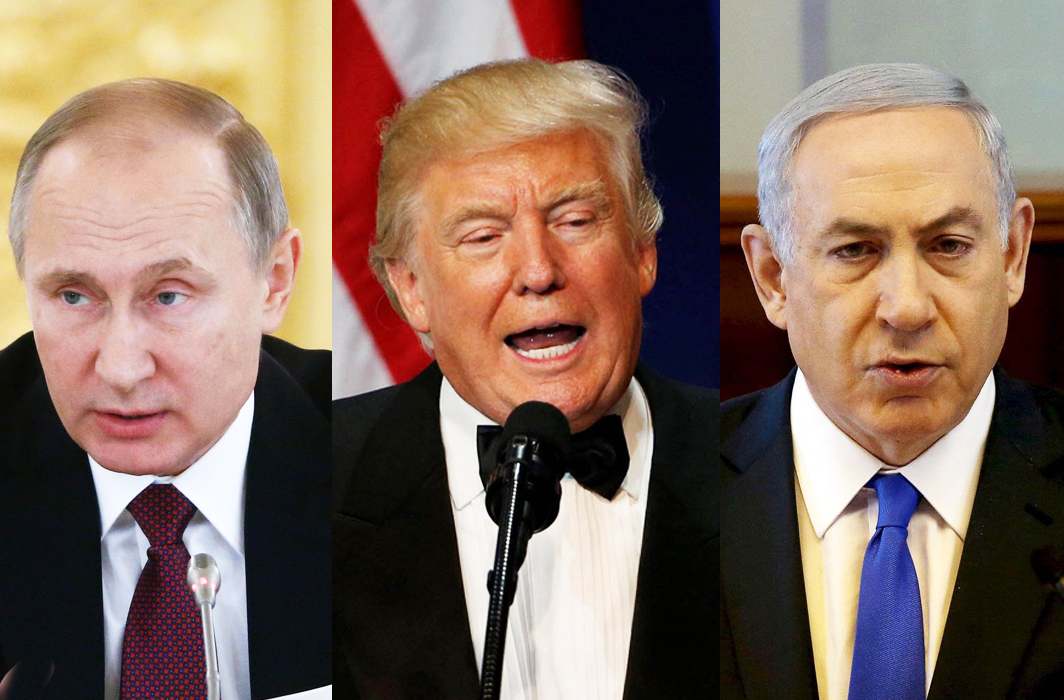
President Donald J Trump somehow forgot how bally-ho Israeli Prime Minister Benjamin Netanyahu was at his election, ordering more settlements to be built on disputed Palestinian territory. Netanyahu’s decision was to build 3,600 new homes on Palestinian territory in the West Bank.

The White House released a statement on February 2, saying: “While we don’t believe the existence of settlements is an impediment to peace, the construction of new settlements or the expansion of existing settlements beyond the current borders may not be helpful.”

White House spokesman Sean Spicer added: “The Trump administration has not taken an official position on settlement activity and looks forward to continuing discussions, including with Prime Minister (Benjamin) Netanyahu when he visits with President Trump later this month.”

There has been a combined gulp of disbelief within the American borders, while Danny Danon, Israel’s ambassador to the UN, has been careful in what he had to say. He reportedly told Israel Radio: “It’s too early to tell… I would not categorise this as a U-turn by the US administration but the issue is clearly on their agenda… the issue will be discussed when the prime minister (Netanyahu) meets the president in Washington. We will not always agree on everything.”

Fair enough. But, wait, there is more, and it has nothing to do with Trump aide Kellyanne Conway’s obtuse reference to an imaginary “Bowling Green massacre” in Kentucky where many people who did not die apparently didn’t even get  mentioned in the national media because it just “did not cover” this non-incident. Of course, Conway apologised later for her imagination run awry, but we are here to talk more important things that Trump has done.

Yes, the other incident, that did actually happen, has to do with Trump’s new buddy-buddy, Vladimir Putin, the Russian chief executive. This was the other massive combined “gulp” incident.

US ambassador to the UN, Nikki Haley, was giving her inaugural statement when she went ahead and condemned Russian aggression in Ukraine. America’s far rightist electorate was aghast. How is this India-origin ex Governor of South Carolina making such sacrilegious statements?

Said Haley: “I consider it unfortunate that the occasion of my first appearance is one in which I must condemn the aggressive actions of Russia. It is unfortunate because it is a replay of too many instances over many years in which United States representatives have had to do that.”

Mind this, The New York Post’s observation is that this comment might actually improve the image of Trump.

Haley warned, it has been reported, saying: “This escalation of violence must stop. The United States stands with the people of Ukraine who have suffered for nearly three years under Russian occupation and military intervention.”

Hmm. So that was a weird weekend, right? Hold it, that isn’t all. Trump became Trump again in issuing another order through which he slapped sanctions on Iran over its missile test. The signals are so mixed, even the die-hard Trump follower would be left scratching his/her White Supremacist head.

That too happened on February 3.

Technically, this has nothing o do with the nuclear treaty with Iran that the Barack Obama administration so meticulously put together and Trump criticised. This was to purportedly “mark a more aggressive approach by the Trump administration to counter Tehran’s ballistic missile development and support for militant groups across the Middle East,” as USA Today put it.

The daily asked and answered some key questions. First question it handled was the timing.

Regarding last Sunday’s missile test by Iran, the daily quoted a senior administration official: “The sanctions are initial steps to retaliate for provocative actions that violate regional norms.” Interestingly, the daily points out that the official was speaking anonymously, because he “was not authorized to speak publicly on the subject.”

The daily then came to the critical question. Could all this lead to yet another war? Guess the reading from the Trump side? In the 1988 Iran-Iraq war, when the US took Iraq’s side Iran supposedly developed weak knees and negotiated peace. And the reading was also that Iran was made to sit at the negotiating table regarding the nuclear deal when it was scared the US would invade it, because there was now the precedent of the US having already invaded Iraq.

So, yes, no war; Iran is scared.

Without going into the after-effects of the George Bush-led misadventure with the “The Axis of Evil”, one must realise that the first two actions do clash with this one. How’s that?

Of course, Trump had already signed the executive order banning the entry of refugees and even visa holders from seven Muslim countries. That had already created a massive uproar with several federal courts simply rejecting the order.

Are you counting? That’s 2-2 actually. Two against and two self-goals.

Phew! That was some crazy week at office. So Trump takes off for his first presidential holiday, in the weekend. While you are reading this, he is relaxing with family and acolytes at Mar-a-Lago, Palm Beach. A fortnight at his job and he is tired.

That’s Trump 3 vs Trump 2.

Latest world news

Trump approves nearly $9 billion weapons sales to Israel, UAE and other allies amid Iran tensions

The US has fast-tracked nearly $9 billion in weapons sales to Israel, UAE and other allies as tensions linked to the Iran conflict continue despite a fragile ceasefire.

Published

on

Donald Trump statement

The United States has approved nearly $9 billion worth of weapons sales to key Middle Eastern allies, including Israel and the United Arab Emirates, amid ongoing tensions linked to the Iran conflict.

The decision, cleared by the administration of Donald Trump, includes expedited military transfers to Israel, the UAE, Qatar, and Kuwait. The approvals were granted under an emergency provision, allowing authorities to bypass the usual congressional review process.

Emergency clearance amid ongoing conflict

Officials said the move was necessary due to the evolving security situation in the region, particularly as the conflict involving Iran continues despite a fragile ceasefire. The war, which began earlier in 2026, has heightened instability across West Asia.

US Secretary of State Marco Rubio invoked emergency powers to fast-track the deals, citing urgent defence requirements for allied nations.

What the arms package includes

The approved package includes a mix of advanced defence systems and precision weapons:

  • Patriot missile defence replenishments worth over $4 billion for Qatar
  • Precision-guided weapon systems for multiple countries
  • Integrated battle command systems for Kuwait
  • Additional advanced weapons support for Israel and the UAE

The total value of these deals is estimated at over $8.6 billion, often rounded to nearly $9 billion.

Timing linked to iran war

The approval comes nearly nine weeks into the conflict involving the US, Israel, and Iran, with tensions still high despite a ceasefire that has been in place for several weeks.

Analysts note that the move signals continued US military backing for its regional allies, particularly in strengthening air defence and precision strike capabilities during uncertain conditions.

Criticism and concerns

The decision to bypass congressional oversight has drawn criticism from some quarters, particularly over transparency and the broader implications of increasing arms supplies in a conflict-prone region.

Continue Reading

Latest world news

Trump and Putin hold over 90-minute call, discuss Iran war and Ukraine conflict

Trump and Putin held a 90-minute call focusing on Iran tensions and the Ukraine conflict, with warnings over escalation and talks of ceasefire.

Published

on

Vladimir Putin and Donald Trump

US President Donald Trump and Russian President Vladimir Putin held a phone conversation lasting more than 90 minutes, focusing on escalating tensions in the Middle East and the ongoing war in Ukraine.

According to official statements, the discussion was described as “frank and businesslike,” with both leaders addressing key global security concerns. A major part of the conversation centred on the situation involving Iran and developments in the Persian Gulf.

Putin supported Trump’s decision to extend the ceasefire related to Iran, suggesting that continued restraint could create space for negotiations and help stabilise the region. However, he also issued a strong warning, stating that renewed military action by the United States or Israel could lead to “extremely damaging consequences” not only for Iran but for the wider international community.

Ukraine conflict also discussed

The leaders also discussed the ongoing war in Ukraine, which has continued for several years since Russia’s invasion in 2022. During the call, there were indications of potential efforts toward a temporary ceasefire, although no final agreement has been confirmed.

Reports suggest that the idea of a short-term pause in hostilities was explored, possibly linked to upcoming symbolic dates, but significant differences between the parties remain unresolved.

Focus on diplomacy amid global tensions

The call highlights ongoing diplomatic engagement between Washington and Moscow at a time of heightened geopolitical tensions involving both the Middle East and Eastern Europe.

While both sides acknowledged the importance of dialogue, the situation on the ground in both conflict zones remains complex, with no immediate resolution in sight.

Continue Reading

Latest world news

Trump rejects Iran peace plan as tensions rise, Tehran signals military readiness

Trump rejects Iran’s peace plan, keeping focus on nuclear concerns as Tehran signals readiness and tensions continue to rise.

Published

on

Donald Trump statement

U.S. President Donald Trump has rejected a proposal from Iran aimed at easing ongoing tensions, signaling a continued deadlock between the two countries.

The proposal reportedly included steps linked to easing restrictions around the Strait of Hormuz, a key global oil route. However, the United States declined the offer, maintaining that any agreement must address concerns related to Iran’s nuclear programme.

Washington has made it clear that resolving nuclear issues remains a priority and that partial measures without broader commitments will not be accepted.

Nuclear issue remains central

The U.S. position continues to focus on preventing Iran from advancing its nuclear capabilities. Officials believe that without a comprehensive agreement, temporary arrangements could delay a long-term resolution.

The rejection of the proposal indicates that negotiations remain stalled, with both sides holding firm on key demands.

Iran issues warning

Following the rejection, Iranian officials have issued strong statements, indicating readiness to respond if pressure from the U.S. continues.

Reports suggest that Iran has asserted its military preparedness, warning that any escalation could lead to serious consequences. The remarks reflect growing tensions as diplomatic efforts struggle to produce results.

Rising geopolitical tension

The situation remains volatile, with both countries engaged in a prolonged standoff. Measures such as restrictions on trade routes and strategic pressure points continue to impact the broader region.

The Strait of Hormuz remains a critical factor in the conflict, given its importance for global energy supplies.

Outlook uncertain

With no immediate breakthrough in sight, tensions between the United States and Iran are expected to persist. The lack of agreement on key issues, particularly the nuclear programme, continues to hinder progress toward de-escalation.

Continue Reading

Trending

© Copyright 2022 APNLIVE.com