English हिन्दी
Connect with us

Latest world news

Tips For Trump As He Meets Muslim Leaders in Riyadh

Published

on

Tips For Trump As He Meets Muslim Leaders in Riyadh
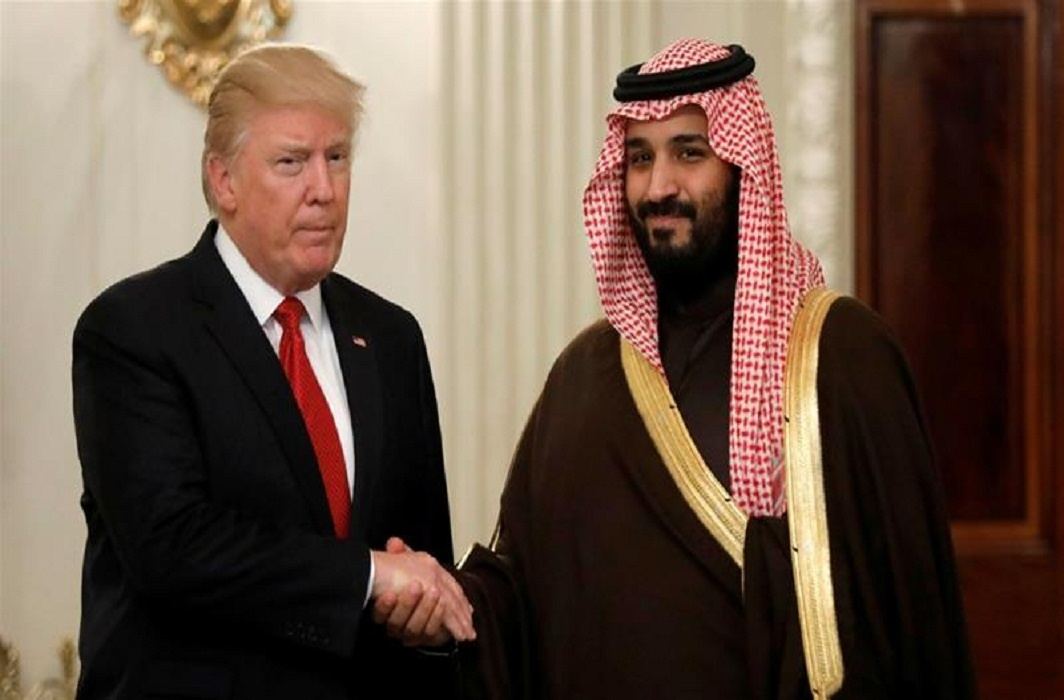
[vc_row][vc_column][vc_column_text]By Saeed Naqvi

On May 21, Saudi Deputy Crown Prince Mohammad bin Sultan has organized a Muslim Jamboree for President Trump. He will thereby attempt to demonstrate that the entire Sunni world is under Saudi influence.

Trump should check a few facts himself. He should walk across to some of the leaders – Nawaz Sharif of Pakistan, for instance.

Sharif will say that he is of Sunni persuasion but he leads a country with various sects of Muslims, including a 20 percent Shia population.

Mohammad bin Sultan will have his ears cocked when he learns that Pakistan’s ex army Chief Gen. Raheel Sharif, who now heads the Saudi sponsored Islamic forces in Riyadh, has grown up on Pakistan army’s battle cry “Naaraye Haideri: Ya Ali, Ya Ali”. The very name of Ali, the Prophet’s son-in-law and the First Imam of the Shias, is anathema to the Wahabi creed.

Trump may find all of this instructive.

Many in Trumps entourage would have internalized a fallacy that the Saudis are the leaders of the world’s Sunnis. This is far from the truth. Yes, the Saudis are forging and leading an anti Iran front. Saudis are followers of an 18th century extremist Muslim reformer Abdel Wahab. This is quite distinct from leading the Sunnis. Abdul Wahab’s followers include people like Osama bin Laden, Al Qaeda and Takfiris for whom almost any other sect is an apostate.

When Mohammad Morsi was ousted from the Presidency of Egypt by the army strongman, Abdel Fatah al Sisi, King Abdullah of Saudi Arabia, rewarded Sisi with eight billion dollars (and more to follow).

Morsi represented the hard core, Muslim Brotherhood which is something of a nightmare for the Saudis. Thereby hangs a tale. Almost synchronizing with Islamic Revolution which brought the Ayatollahs to power in Iran, happened an even more dramatic event which traumatized Saudi society for years to come but which they pushed under the carpet. Indeed, reverberations from that event explain a great deal of Saudi nervousness to this day.

On November 26, 1979, Juhayman al-Otaybi, a Saudi religious activist and militant, a creature of the Muslim Brotherhood like formation, along with 400 men seized the Grand Mosque at Mecca to protest against the corruption and decadence of the Saudi Monarchy. The siege lasted two weeks. Pakistani, French and US Special Forces had to enter the mosque to flush out the militants. This led to a piquant situation. U.S. and French officers temporarily converted to Islam to be able to enter the great mosque. Trump will be amused by this story.

Far from leading the Sunni world, Saudis are mortally afraid of diverse Sunni schools, most specifically the Ikhwanul Muslimin or the Muslim Brotherhood, which has considerable grassroots support in countries like Egypt and Turkey and the Hamas in Gaza and numerous other societies.

By accentuating the Sunni-Shia divide the Saudis hope to redirect Sunni sentiment against Shiism and Iran. It wants the Shia-Sunni fault line to supersede the Wahabi-Sunni conflict. The Saudi monarchy’s yen for western razzle dazzle must be downplayed in opposition to austere, Sunni egalitarianism. It does not want the Otaybi phenomenon ever to resurface again. Opposition to Iran is strategic; fear of Otaybi visceral. Remember Wahabi Riyadh and Shia Iran were once twin pillars of western interests in West Asia when the Shah ruled Iran. The Shah never challenged the Saudi monarchy. The Ayatollahs, like the Muslim Brotherhood, consider monarchies unIslamic.

The recent skirmish across Iranian and Pakistani Baloch territories is an extension of Shia-Sunni conflict the Saudis are working overtime to expand. This has the potential of throwing the monkey wrench in the China-Pakistan economic corridor, a key element in China’s One Belt-One Road mega initiative. That ten Iranian soldiers were killed is a serious matter. The Iranian army chief’s warning against further Saudi provocation cannot be ignored. Unless the Saudis mend their ways, “Mecca and Medina are the only cities that will survive” should an Iranian retaliation become necessary? Tehran seldom speaks in such intemperate tones. Saudi Defense Minister (he is the virtual ruler) Mohammad bin Sultan, claiming ownership of a Pakistani cross border military action is also extraordinary. Whether this displays Saudi design or desperation only time will tell. But what a pathetic mercenary role Pakistan is being assigned in this exchange? If it does not flinch from this game it will get burnt again. Pakistan set up hundreds of Madrasas as hatcheries to help American defeat the Soviets and assist Saudis to nurture Wahabized Mujahideen as a bulwark against Iran. Then in October 2001, US began air strikes in Afghanistan. Gen. Musharraf was forced to join the War against exactly the assets Pakistan had helped nurture. Pakistan is still paying a heavy price. The blow back from that “betrayal” continues.

The difficulty with the Shia-Sunni divide, the Saudis (and Israelis) are trying to delineate, cannot be gauged arithmetically.

When an aggressively communistic offshoot of the Ismaili Shias, the Qarmatians, ruled vast territories from Yemen, Southern Iraq (Kufa), Syria, Bahrain for over a 150 years, beginning in 899 CE, they left behind a culture, traces of which can still be found in, say, Bahrain, a unique country where 70 percent of its Shia population is treated as the opposition by the Sunni rulers. Trump should know that the Bin Khalifas ruling Bahrain have minimal loyalty among the population. Likewise, Mansur Hadi who lives largely in Riyadh under Saudi protection but claims to be the President of Yemen, has a huge question mark on his legitimacy.

Iran, Iraq, Syria, Lebanon, Yemen, Pakistan have large and very influential Shia populations. Moreover, the Sufis, turning to Ali for inspiration, have permeated Sunni enclaves extensively.

Fatimids, a sect of Shias ruled a vast empire in North Africa from Tunisia. They founded Cairo in 969 AD. A common saying in Cairo to this day is: “Suuna bil Deen; Shia bil Hawa”, which means Sunni by belief but Shia by culture. Indeed, their rule extended to Sicily. Palermo, Sicily’s capital, was once witness to Moharram processions.

A bequest from the Begums of Oudh (Lucknow) since the 19th century financed scholars in Najaf and Karbala which the Indian government discontinued only when Saddam Hussain came into conflict with Shias in Southern Iraq. The Shia expanse cannot be minimized even by the propaganda machine at Saudi disposal. This Trump should note.[/vc_column_text][/vc_column][/vc_row]

Latest world news

Israel-Lebanon ceasefire to begin within hours as Trump announces 10-day truce

Israel and Lebanon may begin a 10-day ceasefire within hours after a proposal announced by Donald Trump amid ongoing tensions.

Published

on

Donald Trump

A temporary halt in hostilities between Israel and Lebanon is expected to begin within hours after US President Donald Trump announced a proposed 10-day ceasefire between the two sides, amid ongoing tensions in the region.

According to his statement, the ceasefire is likely to take effect around 5 p.m. Eastern Time, although independent confirmation from both sides is still awaited.

The development follows discussions involving Israeli Prime Minister Benjamin Netanyahu and Lebanese President Joseph Aoun, with mediation efforts led by the United States.

Officials indicated that the proposed truce is aimed at creating a limited window to reduce violence and potentially pave the way for broader diplomatic engagement. The situation along the Israel-Lebanon border has remained tense in recent weeks, with escalation linked to the activities of Hezbollah.

Diplomatic efforts have intensified in recent days, with discussions facilitated by the United States, including the involvement of US Secretary of State Marco Rubio. However, details of the agreement and the extent of coordination between the parties remain unclear.

The situation remains fluid, and the success of the ceasefire will depend on adherence by all sides involved. The conflict has already led to significant humanitarian and geopolitical consequences, including displacement and disruption in affected areas.

While the proposed ceasefire is being seen as an important step toward de-escalation, broader negotiations involving regional stakeholders are expected to be necessary for any lasting resolution.

Continue Reading

Latest world news

US ends oil sanctions waiver for Iran and Russia, impact likely on India’s energy imports

The US decision to end the Iran and Russia oil waiver may impact India’s oil imports, fuel prices and global energy markets.

Published

on

US oil tanker

The United States has decided not to extend a temporary sanctions waiver that allowed limited trade in Iranian and Russian oil, marking a shift towards stricter enforcement of economic restrictions.

The waiver, introduced in March 2026, had permitted the sale of oil already loaded on ships to stabilise global supply during heightened geopolitical tensions. However, it is now set to expire around mid-April without renewal.

US officials have indicated that the move is part of a broader strategy to increase pressure on both Iran and Russia amid ongoing conflicts and geopolitical tensions.

What the waiver did and why it mattered

The short-term waiver allowed millions of barrels of oil—estimated at around 140 million barrels—to enter global markets, helping ease supply shortages and prevent sharp price spikes.

It also enabled countries like India to purchase discounted crude oil from Russia and resume limited imports from Iran after years of restrictions.

Impact on India

India, one of the world’s largest oil importers, is expected to feel the impact of the decision in several ways:

  • Reduced access to discounted oil
    India had been buying cheaper Russian crude and recently resumed Iranian imports under the waiver. Its end may limit these options.
  • Potential rise in fuel costs
    With fewer discounted supplies available, India may need to rely more on costlier sources, which could increase domestic fuel prices.
  • Supply diversification pressure
    India may need to explore alternative suppliers in the Middle East, Africa, or the US to maintain energy security.
  • Geopolitical balancing challenge
    The move adds pressure on India to align with US sanctions while managing its own economic interests.

Global energy market concerns

The end of the waiver comes at a time when global oil markets are already under stress due to conflict in West Asia and disruptions in key routes like the Strait of Hormuz.

Analysts warn that tightening sanctions could:

  • Reduce global oil supply
  • Increase price volatility
  • Intensify competition among major buyers like India and China

Bigger picture

The US decision reflects a broader shift from temporary relief measures to stricter enforcement of sanctions, even if it risks tightening global energy markets.

For India, the development highlights a recurring challenge—balancing affordable energy access with geopolitical realities.

Continue Reading

Latest world news

Sanctioned tanker fails to breach US blockade, turns back near Strait of Hormuz

A US-sanctioned tanker failed to cross the Hormuz blockade and turned back, underscoring rising tensions and disruption in global shipping routes.

Published

on

A US-sanctioned oil tanker failed to break through a newly imposed American naval blockade and was forced to turn back near the Strait of Hormuz, highlighting growing tensions in the region.

The vessel, identified as the Rich Starry, reversed its course after attempting to exit the Gulf, according to shipping data. The development comes just days after the United States enforced restrictions on ships linked to Iranian ports.

The blockade was announced by Donald Trump following the collapse of recent diplomatic talks with Iran. The move aims to restrict maritime traffic associated with Iranian trade.

Officials said that during the first 24 hours of enforcement, no vessel successfully crossed the blockade. Several ships, including the sanctioned tanker, complied with instructions from US forces and turned back toward regional waters.

The tanker is reported to be linked to a Chinese company previously sanctioned for dealing with Iran. It was carrying a cargo of methanol loaded from the United Arab Emirates at the time of the incident.

The situation underscores the rising risks in one of the world’s most critical oil transit routes. The Strait of Hormuz typically handles a significant share of global energy shipments, but traffic has sharply declined due to ongoing geopolitical tensions.

The blockade, which applies specifically to vessels travelling to or from Iranian ports, has added further uncertainty for shipping companies, insurers and global energy markets.

Continue Reading

Trending

© Copyright 2022 APNLIVE.com