English हिन्दी
Connect with us

Latest world news

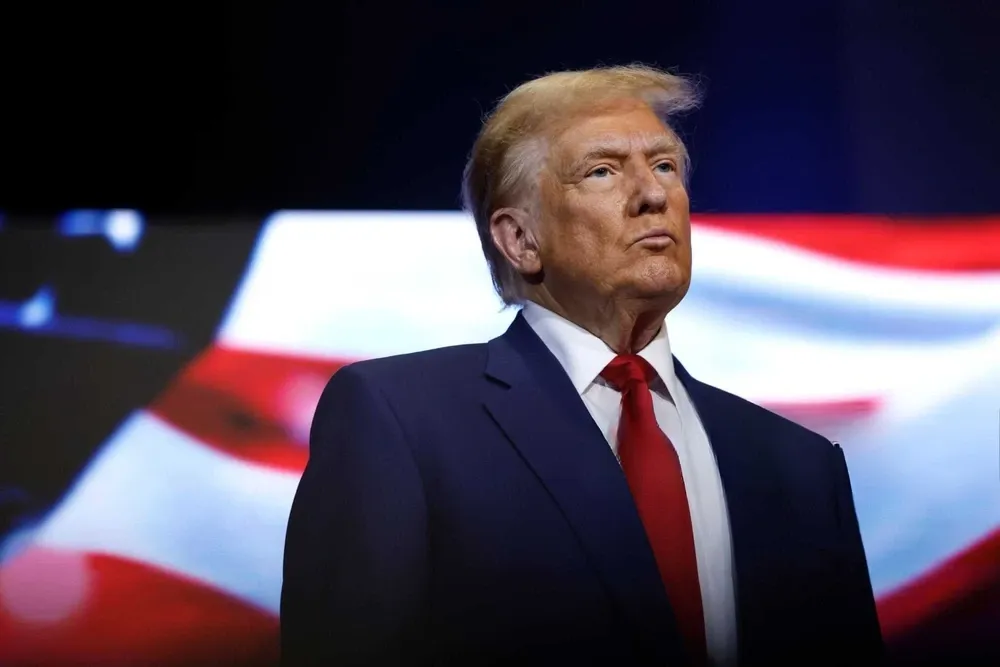
Trump backs sanctions bill proposing 500% tariff on countries buying Russian oil

Trump has backed a bipartisan US sanctions bill that could impose tariffs up to 500% on countries purchasing Russian oil or uranium, potentially affecting India and others.

Published

on

trump

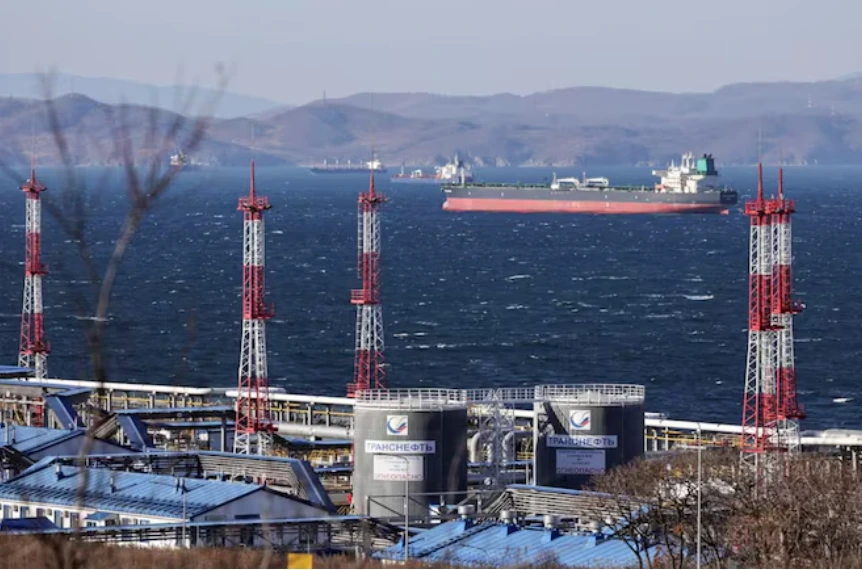
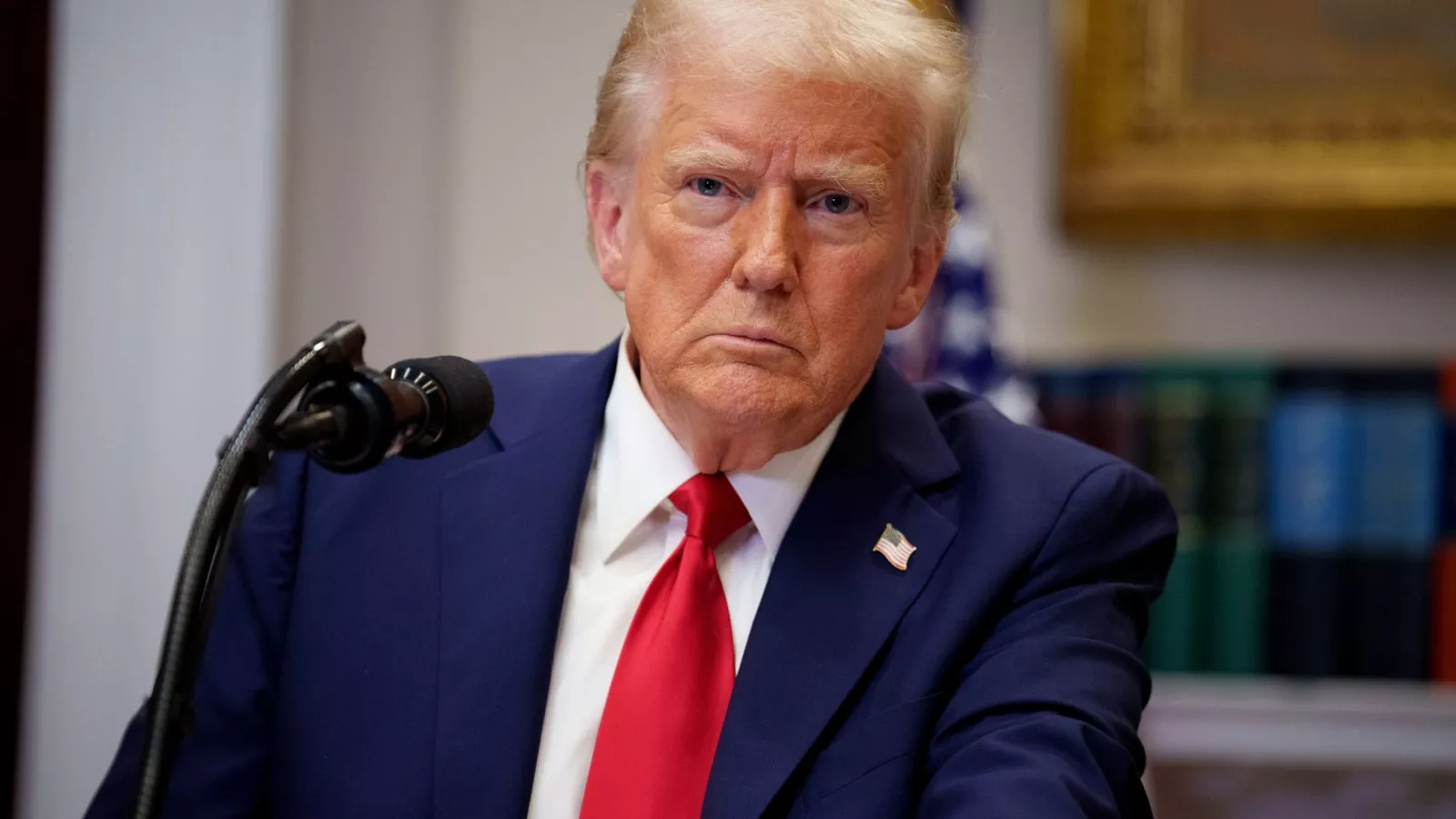
US President Donald Trump has backed a bipartisan Russia sanctions bill that could allow the United States to impose tariffs of up to 500 per cent on countries purchasing Russian oil or uranium, a move that may impact nations such as India, China and Brazil.

Republican Senator Lindsey Graham said Trump has “greenlit” the proposed legislation, which is aimed at increasing economic pressure on Moscow as the administration continues negotiations to end the Ukraine war.

What the Russia sanctions bill proposes

If passed, the Graham-Blumenthal sanctions bill would authorise the US President to impose steep tariffs and secondary sanctions on countries that knowingly buy Russian oil, gas, uranium and other exports. The bill argues that such trade helps finance Russian President Vladimir Putin’s military campaign in Ukraine.

The proposed sanctions are designed to significantly restrict Russia’s revenue streams at a time when the conflict is nearing its fourth year.

Trump’s support and Senate timeline

Graham said he met Trump at the White House on Wednesday, where the President expressed support for the bill that has been under preparation for several months.

“This will be well-timed, as Ukraine is making concessions for peace and Putin is all talk, continuing to kill the innocent,” Graham said in a statement.

The senator added that a Senate vote could take place as early as next week, although the timeline remains uncertain. The Senate is expected to focus first on a government funding package, followed by a recess linked to Martin Luther King Jr Day.

Wider political backing

The legislation has dozens of co-sponsors in the Senate and a companion bill in the House of Representatives. While the White House has previously sought revisions to retain flexibility for the President, it remains unclear whether changes have been incorporated.

The Trump administration is currently attempting to finalise a peace deal to end the Ukraine conflict, with special envoys leading negotiations on Washington’s behalf.

Latest world news

PM Modi, Macron, Sundar Pichai to address India AI Impact Summit 2026 in New Delhi

PM Modi, Emmanuel Macron and leading tech CEOs including Sundar Pichai and Sam Altman address the India AI Impact Summit 2026 in New Delhi.

Published

on

PM Modi with French President Emmanuel Macron

Prime Minister Narendra Modi, French President Emmanuel Macron, and leading global technology executives including Sundar Pichai and Sam Altman are set to address the India AI Impact Summit 2026 in New Delhi.

The six-day summit began on Monday at Bharat Mandapam and carries the theme “Sarvajan Hitaya, Sarvajan Sukhaya”, meaning welfare for all and happiness for all.

Fourth edition of international AI gathering

This year marks the fourth annual global AI summit. Previous editions were held in the UK in 2023, South Korea in 2024, and France in 2025. The 2026 edition is being described as the largest so far.

More than 20 heads of state and over 500 global AI leaders are expected to participate. The summit will also host nearly 100 CEOs and founders from leading technology firms.

Among prominent speakers scheduled to participate are Anthropic CEO Dario Amodei, Google DeepMind chief Demis Hassabis, Adobe CEO Shantanu Narayen, and Wipro executive chairman Rishad Premji.

Modi highlights human-centric AI vision

Prime Minister Modi said the summit’s theme reflects India’s commitment to ensuring that artificial intelligence drives inclusive and human-focused progress.

In a message posted on X, he said AI is reshaping key sectors such as healthcare, education, agriculture, governance, and enterprise. He expressed confidence that discussions around innovation, collaboration, and responsible use would help define a progressive and opportunity-driven future.

He also noted that India, supported by its 1.4 billion citizens, is emerging as a key force in AI transformation, citing digital public infrastructure, a growing startup ecosystem, and advanced research efforts.

Investment outlook and global partnerships

Union IT Minister Ashwini Vaishnaw stated that India expects investments exceeding $200 billion over the next two years in the technology space.

Sundar Pichai said India is on track for an “extraordinary trajectory” in artificial intelligence. He added that Google intends to strengthen its partnership with India, including plans to build subsea cables under its existing $15 billion AI infrastructure investment.

Reflecting on his roots, Pichai said India has witnessed significant transformation since his childhood in Chennai. He also met Prime Minister Modi during the summit.

Meanwhile, US chipmaker Nvidia announced collaborations with Indian cloud service providers to supply advanced processors for AI-focused data centres capable of training and running AI systems.

Focus on responsible AI governance

At the conclusion of the summit, world leaders are expected to release a joint statement outlining approaches to governing AI technologies.

Experts have underlined the need for stronger safeguards to address challenges such as sexualised deepfakes, AI-driven online fraud, and concerns related to surveillance.

Continue Reading

Latest world news

PM Modi announces Special Global Strategic Partnership between India and France

PM Modi announced a Special Global Strategic Partnership between India and France after bilateral talks with President Emmanuel Macron during his official visit to India.

Published

on

Prime Minister Narendra Modi on Monday announced a “Special Global Strategic Partnership” between India and France after holding talks with French President Emmanuel Macron. The two leaders also inaugurated the “India-France Year of Innovation 2026” during their meeting in Mumbai.

President Macron is on an official visit to India from February 17 to 19 at the invitation of Prime Minister Modi to participate in the AI Impact Summit being hosted by India.

Leaders highlight innovation, stability and multipolar world

Addressing a joint press conference with President Macron, PM Modi said the India-France partnership “knows no boundaries” and extends from “deep oceans to highest mountains.”

He stressed that innovation thrives through cooperation. “Innovation needs collaboration, not isolation,” the Prime Minister said, adding that the partnership would expand across defence, energy, space, technology and critical minerals.

PM Modi also said that at a time of global uncertainty, ties between the two countries would act as a force for global stability. He reiterated India’s support for a multipolar world order.

Shared democratic values and commitment to peace

The Prime Minister said India and France share democratic values and a commitment to the rule of law. He added that both nations believe reform of global institutions is necessary to address contemporary global challenges.

He further stated that India and France support peace efforts in regions including Ukraine, West Asia and the Indo-Pacific. Both countries, he said, are united in their commitment to eradicate terrorism in all its forms and manifestations.

Macron’s fourth India visit

This marks President Macron’s fourth visit to India and his first visit to Mumbai. The “India-France Year of Innovation 2026” aims to showcase the expanding strategic and technological cooperation between the two nations.

The two sides are also looking ahead to a potential multibillion-dollar fighter jet deal, reflecting the growing depth of defence cooperation between India and France.

Continue Reading

Latest world news

Muhammad Yunus references India’s Seven Sisters, China ties in farewell speech

Muhammad Yunus, in his farewell speech as Bangladesh’s chief adviser, stressed sovereignty in foreign policy, referenced India’s Seven Sisters and highlighted China-backed projects amid domestic criticism.

Published

on

Bangladesh’s outgoing Chief Adviser Muhammad Yunus used his farewell address to underline a sovereignty-focused foreign policy, making pointed references to India’s northeastern region and deepening ties with China at a time of mounting criticism at home.

Facing sustained scrutiny over his interim administration’s handling of democratic transition and minority protection, Yunus projected an assertive tone in his closing speech. He maintained that Bangladesh had restored its “sovereignty, dignity, and independence” in foreign affairs and was “no longer guided by others’ directives.”

His remarks were widely viewed as directed at India, Bangladesh’s largest neighbour, particularly after he referred to regional economic integration involving Nepal, Bhutan and the “Seven Sisters” — a term commonly used for India’s northeastern states.

Regional integration and economic vision

Yunus spoke about leveraging Bangladesh’s maritime access and positioning the country as a gateway to broader regional trade.

“Our open seas are not just borders—they are gateways to the global economy. With Nepal, Bhutan, and the Seven Sisters, this region has immense economic potential. Economic zones, trade agreements, and duty-free market access can establish us as a global manufacturing hub,” he said.

By grouping India’s northeastern states alongside sovereign nations within a shared economic framework, Yunus appeared to outline a regional model centred on Bangladesh’s ports and connectivity infrastructure. The formulation is likely to draw attention in New Delhi, which has invested significantly in connectivity projects through Bangladesh to better integrate its northeast with the rest of India.

His remarks suggested that future access and opportunity for the landlocked northeastern region could be shaped by Bangladesh’s strategic and economic decisions.

China factor and strategic balance

Yunus also emphasised what he described as a policy of “strategic balance,” highlighting expanding engagement with China, Japan, the United States and Europe.

He cited progress on China-backed initiatives, including the Teesta River project and a 1,000-bed international hospital in Nilphamari. The Teesta project is located near India’s strategically sensitive Siliguri corridor.

“We have also deepened cooperation with China. Significant progress has been made on the Teesta River project and a 1,000-bed international hospital in Nilphamari,” Yunus said.

Rather than directly addressing regional sensitivities, his speech underscored Bangladesh’s intent to pursue partnerships based on what he described as national interest and mutual respect.

Military modernisation and domestic criticism

The outgoing chief adviser also referred to military modernisation, stating that Bangladesh had begun strengthening its armed forces to “counter any aggression.” Though not directed at any specific country, the phrasing added to the speech’s firm tone.

Notably, Yunus did not directly address criticism over his government’s handling of communal tensions and minority protection during his 18-month tenure. His interim administration came to power following widespread unrest after years of former Prime Minister Sheikh Hasina’s rule.

Rights groups and minority representatives had earlier raised concerns about attacks on Hindu communities in several districts, including incidents of vandalism and intimidation. Critics have argued that the interim government’s response was uneven and that it fell short of fully restoring democratic confidence.

As Yunus exits office, his farewell address presented a narrative focused on foreign policy recalibration and national assertion, while leaving domestic controversies largely unaddressed.

Continue Reading

Trending

© Copyright 2022 APNLIVE.com