
Latest world news
Trump Taking Palestinian Right Of Return ‘Off The Table,’ Report Claims


Continuing his pro-Israeli hard-line policy forward, US President Donald Trump administration is set to announce that it will no longer recognize millions of Palestinian refugees’ “right of return” to the territories occupied by the present day Israel.
According to Jerusalem Post, Israel’s Channel 2 television report claimed on Saturday that the White House will announce its stance on the refugee matter – one of the core sticking points in the Israeli-Palestinian conflict – sometime in the next few days, ahead of the start of the UN General Assembly in New York.
The move will not recognize the refugees’ decedents’ right to return their homeland. Washington will contradict UN statistics which classify five million Palestinians as refugees.
This would be another major shift in US foreign policy in public domain after Trump recognizing Jerusalem as Israel’s capital and moving its embassy from Tel Aviv to the holy city.
Read More: US withdraws from UN Human Rights Council, Supports Israel

Jerusalem Post’s Washington based journalist Micheal Wilner say that US administration officials did not respond to requests for comment on the veracity of the report.
The report referred by Channel 2 claims that US administration will state fewer than one million Palestinians should classify as refugees. It is considered to be a dramatic divergence from United Nations Relief and Works Agency statistics which claims more than five million Palestinians qualify for refugee status.
Earlier this month, the American magazine Foreign Policy published emails written by Jared Kushner, Trump’s senior advisor and son-in-law to senior administration officials in which he pressured Jordan to move the refugee status of millions of Palestinians in a bid to disrupt UN work.
Gaza based Palestinians have been holding huge protests in support of their “right to return” since March this year. So far dozens of Palestinians have been killed and hundreds others injured in Israeli security forces tough retaliation.
Read More: Supporting Israel: US more isolated on Palestine at UNSC
Right to return of Palestinian refugees was one of the basic elements in what proved later as non-credible peace talks mediated by US for decades under different US administrations.
Palestinian Liberation Organization (PLO) President Yasser Arafat, who was one of the signatories of Camp David agreement recognising Israel as a country, was instrumental in participating in the peace talks.
The Ramallah based Palestinian Authority in the West Bank, now headed by Mahmoud Abbas alias Abu Mazen, till Trump’s recognition of Jerusalem as Israel capital, was toeing the US and also Israel’s plan while participating the peace talks which has never resulted in retrieving even an inch of Palestinian land. Instead Israel continued building its new residential units in the occupied territories.
Read More: OIC Summit: Erdogan call Muslim leaders to confront Israel
After US President Donald Trump’s recognition of Jerusalem as Israel’s capital Mahmoud Abbas and his co-horts have lost their credibility among Palestinians. He was vocal in criticising Trump administration saying that US has lost the position of being an honest mediator for resolving the Middle East crisis.
Israel Katz, member of Israel’s parliament known as Knesset has commended President Trump upon hearing the television report saying, “I congratulate Donald Trump on his decision to retract his recognition of UNRWA and ipso facto cancel the recognition in the Palestinian right of return. This measure joins the historic decision to transfer the US embassy to Jerusalem and as such annuls two UN resolutions. This is a great victory for the State of Israel.”
Read More: US, Saudi Arabia ask Palestinians to talk to Israel
US President Donald Trump’s peace team has repeatedly questioned United Nations Relief and Works Agency for Palestine (UNRWA)’s mandate, and accuses the world body of perpetuating the conflict by treating the descendants of refugees as refugees themselves.
The Palestinian Authority officials have recently warned that US President Donald Trump seeks to end the refugee issue while Israel has long held that the Palestinians seek two Arab states – an Arab state of Israel and an Arab state of Palestine – by flooding the Jewish state with the descendants of refugees under claims of a “right of return.”
Read More: Hezbollah leader: US offered money to relinquish anti-Israel fight
Washington’s longstanding position has been to support “two states for two peoples” – one Jewish state, and one Arab state. The Trump administration during last 20-month could not take a position on the two-state solution, which was advocated by earlier US governments.










Latest world news
Magnitude 7 earthquake strikes Tibet after floods
A magnitude 7 earthquake struck northern Tibet on Thursday, October 22. The tremor came weeks after deadly flash floods and landslides hit the mountainous region near the Nepal-China border. Initial reports did not confirm casualties or damage from the earthquake.


Latest world news
Macron rejects Trump’s immigration claims over France riots
French President Emmanuel Macron criticised Donald Trump and other foreign leaders over their comments on France’s recent unrest. Macron rejected claims that the country was being overrun by migrants and Islamists, calling such assertions false.

Latest world news
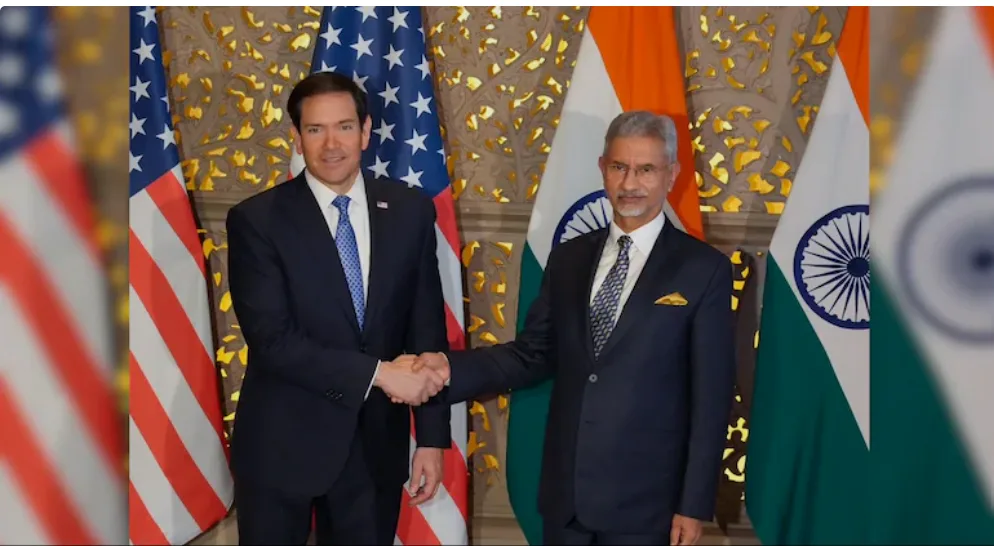
Marco Rubio says India and US share extraordinary alignment on key issues
US Secretary of State Marco Rubio said India and the United States share an extraordinary alignment on core issues, even though disagreements between the two countries may arise.

PM Modi to inaugurate Rs 169-crore RBI data centre in Odisha on October 25

MEA responds after ITBP chief flags ongoing face-offs with China in Arunachal

Delhi High Court rejects Neha Bora’s plea against peace bond notice

Thousands bang utensils, beat drums in Manipur protest over continued killings

Congress seeks 175-200 seats in UP, Samajwadi Party stresses on winnability

Jamia Millia Islamia shifts classes online after student-guard clash
Congress seeks 175-200 seats in UP, Samajwadi Party stresses on winnability
Thousands bang utensils, beat drums in Manipur protest over continued killings
MEA responds after ITBP chief flags ongoing face-offs with China in Arunachal
Delhi High Court rejects Neha Bora’s plea against peace bond notice

Afghan Men Try To Hang With The Jet Engine Of The Aircraft in Kabul- Afghanistan News – Kabul News
Trending Top 10 News: 10000 Crore Fine on Flipkart, Apple to Launch Unique Feature, Hdfc Bank Job Ad

Trending Top 10 News: Nokia 6310, Apple sales, Bachpan ka Pyar Video Kid, Dainik Bhaskar IT Raid

Trending Top 10 News: Canada bans Indian flights, Rain in Delhi NCR, AIMIM Twitter hacked, Raj Kundra case

Trending Top 10 News: Shein India, Apple New Service, Pocket Oxygen, Oppo Launched New Phone
-
 India News24 hours ago
PM Modi to inaugurate Rs 169-crore RBI data centre in Odisha on October 25
-
 India News22 hours ago
MEA responds after ITBP chief flags ongoing face-offs with China in Arunachal
-
 India News22 hours ago
Delhi High Court rejects Neha Bora’s plea against peace bond notice
-
 India News9 hours ago
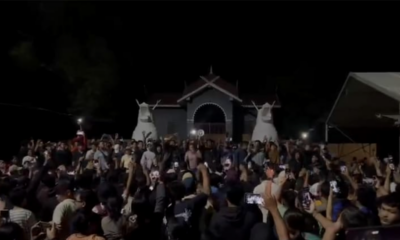
Thousands bang utensils, beat drums in Manipur protest over continued killings
-
 India News9 hours ago
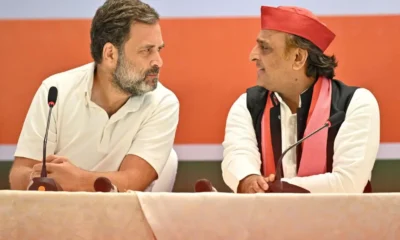
Congress seeks 175-200 seats in UP, Samajwadi Party stresses on winnability
-
 India News4 mins ago
Jamia Millia Islamia shifts classes online after student-guard clash
