
Latest world news
UAE supports anti Mansour Hadi elements in Yeman


Houthis bound to be stronger with cracks in GCC member states
New cracks are developing in Saudi Arabia led Gulf Cooperation Council (GCC) in the ongoing war in Yemen. There are indications of UAE distancing from “internationally recognised” Saudi supported Abd Rabbu Mansour Hadi government based in southern city Aden.
Prime Minister in Hadi headed government Ahmed Obeid bin Daghr has accused Southern Transitional Council (STC), separatist group backed by the United Arab Emirates (UAE), Sunday, of staging a “coup” after they seized several government offices during deadly clashes in the port city of Aden.
PM said in a statement on Sunday “In Aden, legitimacy is being overturned. What is happening is very dangerous and affects the security, stability and unity of Yemen… This wrongdoing is no different than the crimes committed by the Houthis in Sanaa.”
Most of Yemen is under Houthi rule while Saudi Arabia’s ally Abd Rabbu Mansour Hadi’s government is given legitimacy by US led international community.
Hadi remains in Riyadh for most of the time in recent years. Former President Ali Abdullah Saleh was killed recently by Houthis for working for Saudi interests during the ongoing campaign since March 2015.
The present crisis in Yemen was triggered in 2011 when masses raised their voice against the than President Ali Abdullah Selah, who led the country for more than two decades. In 2012, Saleh handed over the government to Mansour Hadi. But, Houthis alleged Hadi for violating the agreement and swept into the capital in 2014. Saudis began bombing Yemen March 2015 immediately after Hadi fled to Saudi Arabia.
UAE forces have been fighting against Houthis along with Saudi Arabia and sacrificed hundreds of its soldiers so far. Observers believe that Houthis will gain benefit of UAE’s supports to anti-Hadi forces in Yemen.
Clashes erupted in Aden early on Sunday after the army of President Abd-Rabbu Mansour Hadi tried to prevent UAE backed Southern Transitional Council (STC) separatists from entering the city.
Aljazeera reports that the hospital sources have confirmed the death of at least 10 people and wounding 30 others. Aden’s main airport was also reported closed.
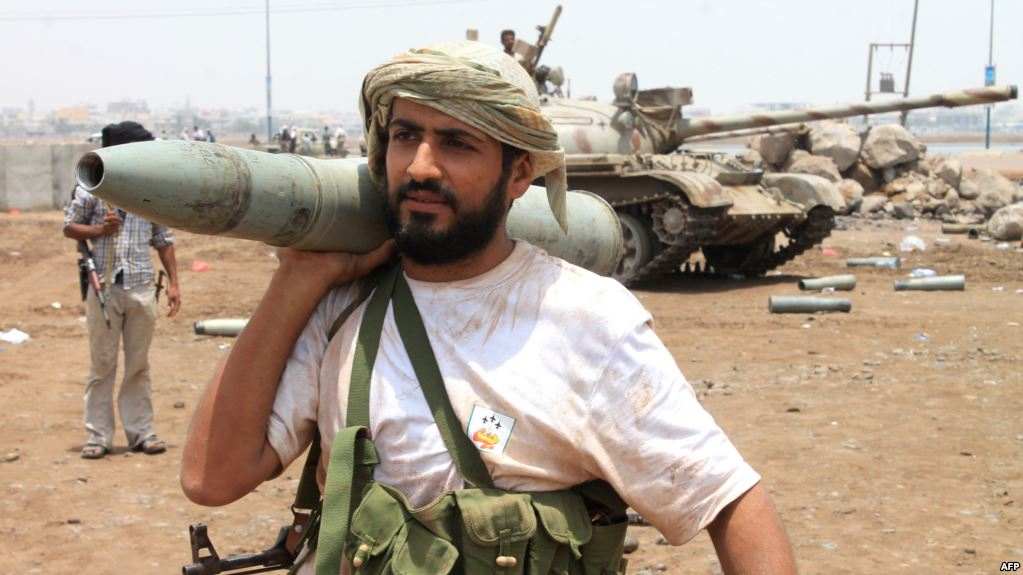
Last week, the STC – a movement demanding secession for southern Yemen – had given Hadi’s government a 7-day ultimatum to either dismiss his prime minister Ahmed Obeid bin Daghr and his cabinet, or face an overthrow.
Responding to the STC’s threat, Hadi government deployed presidential guard which triggering fierce confrontation. Heavy gunfire were heard throughout much of the city with pitched street battles in Aden’s Khormaksar, al-Mansoura, and Dar Sad districts. The streets remained empty of traffic with schools, government offices, and most shops closed on Sunday.
In the meantime, Zaid al-Jamal, secretary of STC Aidarous al-Zubaidi, vowed the “uprising” would continue until Hadi’s government was “toppled”.
“We have announced a new programme of popular uprising that will start tomorrow. People have already started flooding into al-Orouth Square and will not leave until the government is overthrown.”
However, Saudi based media has reported about Hadi calling for an immediate ceasefire and for all sides to withdraw fighters from the city.
UAE is one of the important Saudi Arabia’s ally in its Yemen’s war began in March 2015 aimed to remove Houthi rebels, who were traditionally based in northwest region. Houthis took control on much of the country, including the capital Sanaa, in 2014.
According to Aljazeera, UAE has been financing and training armed groups in the south who answer to the STC’s leader Zubaidi, 50, who emerged from relative obscurity in late 2015 after helping purge Houthis Ansarullah force from Aden.
The ongoing Saudi-led campaign against Houthis has so far failed to achieve its stated aims as they continue to hold Sanaa and much of the north. So far more than 10,000 people have been killed and millions were facing acute shortage of food and medicines and other civic facilities. UN has recently warned a humanitarian catastrophe due to Saudi blockade around that country.
Earlier this month, UN had released a report about human rights violations due to Saudi led campaign against Yemen. It examined ten air strikes on migrant boat, night market, five residential buildings, a motel and vehicle and government forces in 2017, killing 157 people
Gulf Cooperation Council (GCC) is already passing through Qatar crisis. Saudi Arabia, UAE, Bahrain and Egypt had severed ties with Doha in early June last year. Kuwait has recently expressed displeasure on Saudi royal tweet against its deputy foreign minister’s visit to Qatar. Kuwait and Oman have so far remained adamant to follow Riyadh’s dictates to cut their ties with Qatar.
Saudi led quartet alleged Qatar for supporting terrorism, which is denied by Doha. Riyadh had also demanded that Doha should downgrade ties with Iran, close new Turkish army base and shut down Aljazeera network.










Latest world news
Magnitude 7 earthquake strikes Tibet after floods
A magnitude 7 earthquake struck northern Tibet on Thursday, October 22. The tremor came weeks after deadly flash floods and landslides hit the mountainous region near the Nepal-China border. Initial reports did not confirm casualties or damage from the earthquake.


Latest world news
Macron rejects Trump’s immigration claims over France riots
French President Emmanuel Macron criticised Donald Trump and other foreign leaders over their comments on France’s recent unrest. Macron rejected claims that the country was being overrun by migrants and Islamists, calling such assertions false.

Latest world news
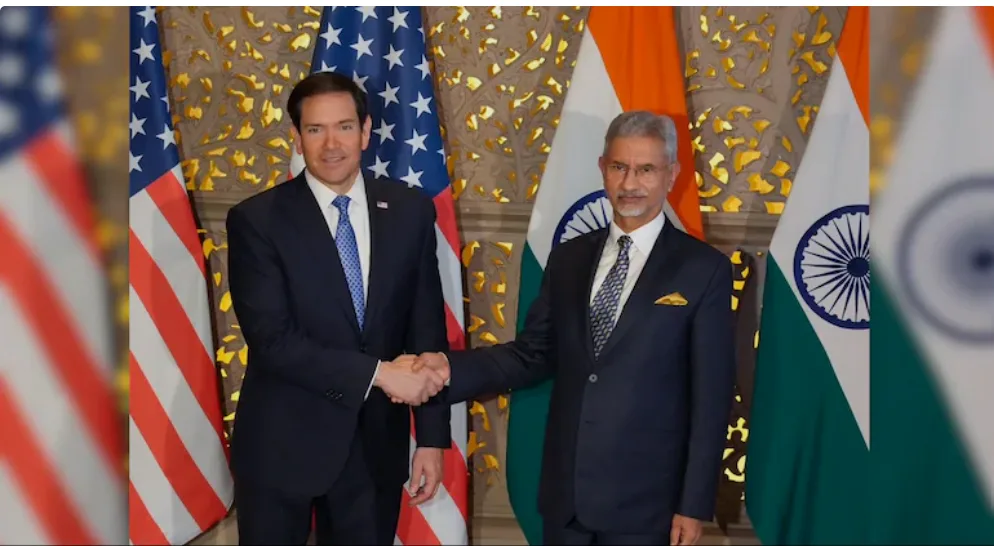
Marco Rubio says India and US share extraordinary alignment on key issues
US Secretary of State Marco Rubio said India and the United States share an extraordinary alignment on core issues, even though disagreements between the two countries may arise.

Magnitude 7 earthquake strikes Tibet after floods

PM Modi attacks Rahul Gandhi with failed product jibe

Amit Shah says congress won’t return to power for 30 years

Punjab strike hits public services as 3 lakh employees and roadways workers protest

Two election commissioners complained against senior poll officer, RTI reveals
Two election commissioners complained against senior poll officer, RTI reveals
Punjab strike hits public services as 3 lakh employees and roadways workers protest
Amit Shah says congress won’t return to power for 30 years
Magnitude 7 earthquake strikes Tibet after floods
PM Modi attacks Rahul Gandhi with failed product jibe

Afghan Men Try To Hang With The Jet Engine Of The Aircraft in Kabul- Afghanistan News – Kabul News
Trending Top 10 News: 10000 Crore Fine on Flipkart, Apple to Launch Unique Feature, Hdfc Bank Job Ad

Trending Top 10 News: Nokia 6310, Apple sales, Bachpan ka Pyar Video Kid, Dainik Bhaskar IT Raid

Trending Top 10 News: Canada bans Indian flights, Rain in Delhi NCR, AIMIM Twitter hacked, Raj Kundra case

Trending Top 10 News: Shein India, Apple New Service, Pocket Oxygen, Oppo Launched New Phone
-
 Latest world news21 hours ago
Magnitude 7 earthquake strikes Tibet after floods
-
 India News21 hours ago
PM Modi attacks Rahul Gandhi with failed product jibe
-
 India News21 hours ago
Amit Shah says congress won’t return to power for 30 years
-
 India News10 hours ago
Punjab strike hits public services as 3 lakh employees and roadways workers protest
-
 India News9 hours ago
Two election commissioners complained against senior poll officer, RTI reveals
