
Latest world news
US Cancels $300m Aid to Pakistan for Inaction against Terrorists


Acting on the heels of US shutting aid for Palestinian refugees fund at UNRWA, Pentagon has cancelled $300m (£230m) worth of aid to Pakistan,on Saturday, for a perceived failure to decisively fight back against militants.
Lt Col Kone Faulkner, the Pentagon spokesman said, “Due to a lack of Pakistani decisive actions in support of the South Asia Strategy the remaining $300 (million) was reprogrammed.” The money will be spent” other urgent priorities” if approved by Congress, he added.
He further said that US defence department “is awaiting a congressional determination on whether this reprogramming request will be approved or denied”.
Read More: US Questions Fairness of Pakistan Elections, UN Praises Commitment To Democracy
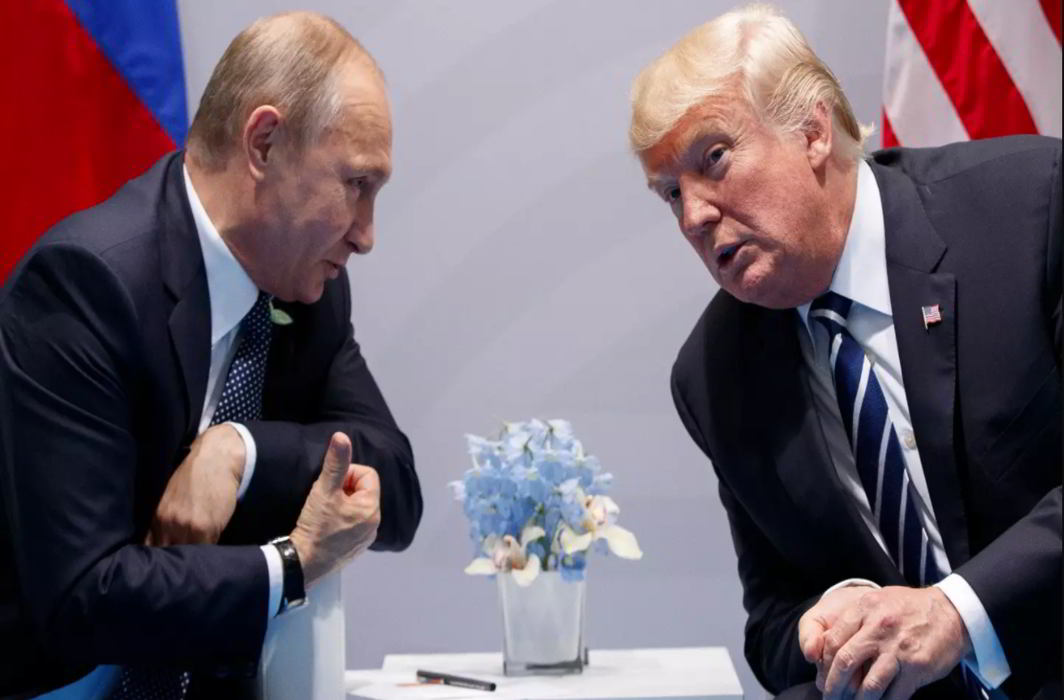
London based Independent writes that the decision came months after US President Donald Trump suggested that the US has repeatedly helped Pakistan, only to be rewarded with “nothing but lies and deceit”.
US Congress stripped $500m (£365m) in coalition support funds from Islamabad earlier this year. This means US has by now removed $800m (£616m) in total.
The US military will now ask Congress for approval to re-appropriate those funds for other priorities.
The Pentagon’s move comes ahead of Secretary of State Michael Pompeo and Chairman of Joint Chiefs of Staff Committee General Joseph F Dunford’s visit to Islamabad next week. They will also meet Prime Minister Imran Khan.
 The Trump administration has alleged that Islamabad is granting safe haven to insurgents who are waging a 17-year-old war in neighbouring Afghanistan, a charge the country has denied.
Read More: Pakistan dismisses US allegations of diplomats’ mistreatment
Present US administration does not like to recall that Washington had funded Afghan Mujahedeen through Saudi Arabia and Pakistan to fight against Russian forces in Afghanistan in 1980s. Former Secretary of State Hillary Clinton spoke about US connivance with Afghan militants in one of her address in Congress. Her video was uploaded on You Tube in March 2011.
See video:
The decision is likely to increase pressure on Islamabad’s security apparatus as Pakistan’s economy continues to struggle, experts have said.
Pakistan is reportedly considering applying for a bailout from the International Monetary Fund (IMF), an international body in which the US has the most number of votes.
 On Friday, Pakistan’s Foreign Minister Shah Mehmood Qureshi in a meeting with Iranian counterpart Javad Zarif had expressed his country’s support to Iran on multilateral nuclear deal.
Previous Pakistani government headed by Nawaz Sharif had never spoke of this kind of support for Iran, the arch rival of US-Saudi Arabia-Israel axis.
According to reports from Islamabad, detailed discussions were held between the two foreign ministers on regional and global issues including situation in Afghanistan and the US decision to unilaterally withdraw from the 2015 nuclear deal, also known as JCPOA.
Pakistan’s foreign office statement said, “As regards JCPOA, while supporting Iran’s principled stance, Qureshi expressed the hope that remaining parties to the Agreement would uphold their commitments in letter and spirit.”
Qureshi told his Iranian counterpart that “Pakistan stands with Iran in this hour of need.” The statement said, “This was important given International Atomic Energy Agency repeated verification that Iran has strictly adhered to the terms of agreement.”
Pakistan’s new Prime Minister, Imran Khan has suggested he would shoot down US drones if they enter Pakistani airspace and has been critical of the open-ended US war in neighbouring Afghanistan.
Pakistan has received more than $33bn in US assistance since 2002, including more than $14bn from a fund set up to help allies that incur military costs as they help with counter-insurgency operations.
The US has been exerting pressure on Pakistan to crack down on the alleged militant safe havens along the Afghan border, which is denied by Islamabad. US officials accuse Pakistan of ignoring or even collaborating with terror groups.








Latest world news
Trump waives Russia-related sanctions, tariffs in relief for India
Donald Trump has waived several Russia-related sanctions, restrictions and duties under a new US law, potentially easing tariff pressure on India and China, two major buyers of Russian energy.

Latest world news
Magnitude 7 earthquake strikes Russia’s Kamchatka Peninsula
A magnitude 7 earthquake struck Russia’s Kamchatka Peninsula region on Friday. The initial report placed the earthquake at a depth of 140 kilometres.

Latest world news
S Jaishankar says India is a natural option for Russia amid Europe tensions
External Affairs Minister S Jaishankar said India remained a natural option for Russia as Moscow increasingly turned towards Asia amid strained relations with Europe. He highlighted the continuity of India-Russia ties and their significance for the balance of power in Asia.


Devendra Fadnavis says no one will be spared after firing at Tiger Shroff

Mumbai Police book 3 unidentified shooters in Tiger Shroff firing case
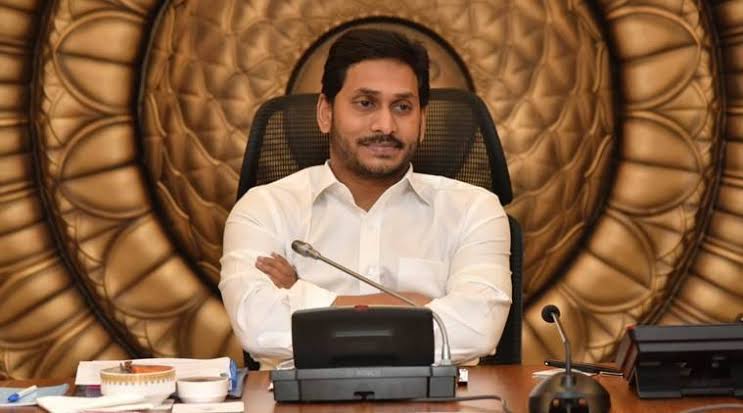
Jagan Reddy seeks President’s rule in Andhra Pradesh amid poll violence

Delhi records October’s coldest morning so far, air quality may worsen
Delhi records October’s coldest morning so far, air quality may worsen
Jagan Reddy seeks President’s rule in Andhra Pradesh amid poll violence
Mumbai Police book 3 unidentified shooters in Tiger Shroff firing case
Devendra Fadnavis says no one will be spared after firing at Tiger Shroff

Journalist files police complaint against Rahul Gandhi over push allegation

Afghan Men Try To Hang With The Jet Engine Of The Aircraft in Kabul- Afghanistan News – Kabul News
Trending Top 10 News: 10000 Crore Fine on Flipkart, Apple to Launch Unique Feature, Hdfc Bank Job Ad

Trending Top 10 News: Nokia 6310, Apple sales, Bachpan ka Pyar Video Kid, Dainik Bhaskar IT Raid

Trending Top 10 News: Canada bans Indian flights, Rain in Delhi NCR, AIMIM Twitter hacked, Raj Kundra case

Trending Top 10 News: Shein India, Apple New Service, Pocket Oxygen, Oppo Launched New Phone
-
 India News16 hours ago
Devendra Fadnavis says no one will be spared after firing at Tiger Shroff
-
 India News15 hours ago
Mumbai Police book 3 unidentified shooters in Tiger Shroff firing case
-
India News7 hours ago
Jagan Reddy seeks President’s rule in Andhra Pradesh amid poll violence
-
 India News5 hours ago
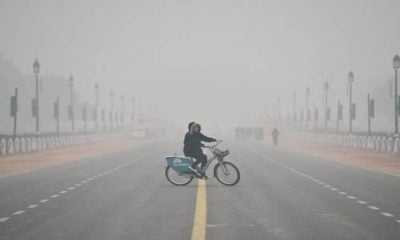
Delhi records October’s coldest morning so far, air quality may worsen
