English हिन्दी
Connect with us

Latest world news

US lawmakers move resolution to roll back Trump’s 50% tariffs on Indian imports

Three US lawmakers have moved a resolution to end Trump’s emergency declaration that imposed 50% tariffs on Indian goods, calling the move illegal and harmful to trade ties.

Published

on

trump

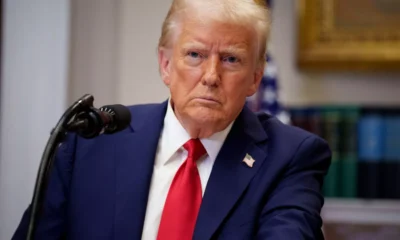
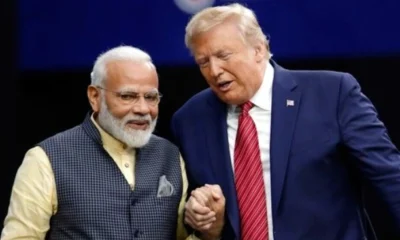
Three members of the US House of Representatives have introduced a resolution seeking to end former President Donald Trump’s national emergency declaration that led to steep tariffs on imports from India. The lawmakers termed the duties illegal and warned that they have hurt American consumers, workers and long-standing India-US economic ties.

The resolution has been moved by Representatives Deborah Ross, Marc Veasey and Raja Krishnamoorthi. It aims to terminate the emergency powers used to impose import duties that cumulatively raised tariffs on several Indian-origin goods to 50 per cent.

What the resolution seeks to change

According to details shared by media, the proposal specifically seeks to rescind an additional 25 per cent “secondary” tariff imposed on August 27, 2025. This was levied over and above earlier reciprocal tariffs, taking the total duty to 50 per cent under the International Emergency Economic Powers Act.

The House move follows a separate bipartisan effort in the US Senate that targeted similar tariffs imposed on Brazil, signalling growing resistance in Congress to the use of emergency powers for trade actions.

Lawmakers flag impact on US economy and consumers

Congresswoman Deborah Ross highlighted the deep economic links between India and her home state of North Carolina, noting that Indian companies have invested over a billion dollars there, creating thousands of jobs in sectors such as technology and life sciences. She also pointed out that manufacturers from the state export hundreds of millions of dollars’ worth of goods to India each year.

Congressman Marc Veasey said the tariffs amount to a tax on American households already facing high costs, stressing that India remains an important cultural, economic and strategic partner for the United States.

Indian-American Congressman Raja Krishnamoorthi described the duties as counterproductive, saying they disrupt supply chains, harm American workers and push up prices for consumers. He added that rolling back the tariffs would help strengthen economic and security cooperation between the two countries.

Background of the tariff hike

Earlier in August 2025, the Trump administration imposed a 25 per cent tariff on Indian goods, which came into effect from August 1. This was followed days later by another 25 per cent increase, citing India’s continued purchase of Russian oil. The combined duties were justified by the administration as a measure linked to Moscow’s war efforts in Ukraine.

Wider push against unilateral trade actions

The latest resolution is part of a broader push by congressional Democrats to challenge unilateral trade measures and reassert Congress’ constitutional authority over trade policy. In October, the same lawmakers, along with several other members of Congress, had urged the President to reverse the tariff decisions and work towards repairing strained bilateral relations with India.

Latest world news

US to control Venezuela oil exports indefinitely under Trump plan

The US says it will control and sell Venezuelan oil indefinitely, holding revenues in American accounts as it pushes US energy companies to revive the country’s oil industry.

Published

on

donald trump

Washington says proceeds from crude sales will be held in US accounts as American firms are encouraged to rebuild Venezuela’s oil sector

The United States will take control of Venezuela’s oil exports indefinitely and market the crude on global markets, holding the proceeds in US Treasury accounts, Energy Secretary Chris Wright said, outlining Washington’s clearest strategy yet for managing the South American nation’s most valuable resource.

Speaking at a conference in Miami on Wednesday, Wright said the plan would begin with crude currently stored in Venezuela, which has been piling up due to US restrictions and risks forcing production shutdowns.

“We’re going to get that crude moving again and sell it,” Wright said, adding that the US would continue selling Venezuelan oil production going forward.

The move comes as the Trump administration pushes for American energy companies to help rebuild Venezuela’s decaying oil infrastructure and revive output that has suffered after years of underinvestment, corruption and sanctions.

President Donald Trump said earlier this week that Venezuela would relinquish as much as 50 million barrels of oil for the US to sell, worth around $2.8 billion at current prices. The White House confirmed that Washington has already begun marketing Venezuelan crude.

According to officials, revenue from the oil sales will be placed in US Treasury accounts, shielding the funds from Venezuela’s creditors. The money will be used for the benefit of both the American and Venezuelan people.

“We’re not stealing anyone’s oil,” Wright said in a separate interview, stressing that the funds would remain in Venezuela’s name and eventually be brought back for public benefit.

Sanctions eased, compensation put on hold

As part of the strategy, the US is selectively rolling back sanctions on Venezuela’s oil sector. However, Wright said proceeds from early oil sales would not be used to compensate US companies such as Exxon Mobil and ConocoPhillips, whose assets were nationalised under former president Hugo Chávez. Compensation, he said, remains a long-term issue.

Venezuela’s state oil company confirmed it is negotiating with Washington over crude sales under a framework similar to its existing arrangement with Chevron, the only major US oil firm still operating in the country.

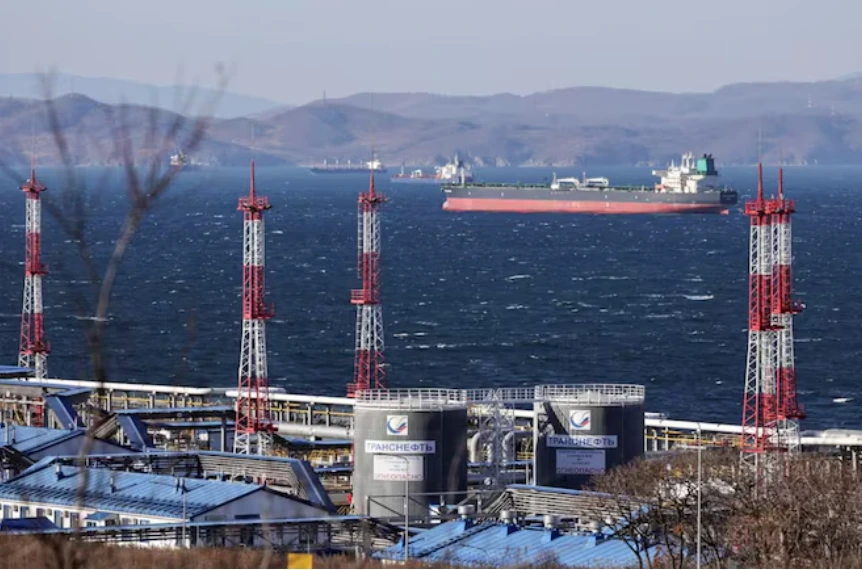
Meanwhile, US forces have seized two additional sanctioned oil tankers as the administration tightens control over Venezuelan crude exports. One vessel was intercepted in the Atlantic south of Iceland, while the other was seized in the Caribbean.

US firms urged to revive oil production

The Trump administration is urging companies including Chevron, ConocoPhillips and Exxon to help restore Venezuela’s oil infrastructure after the removal of former president Nicolás Maduro. Officials said discussions have already taken place, and Trump is expected to meet energy executives later this week. Secretary of State Marco Rubio may also attend.

Venezuela’s oil output has fallen to less than one million barrels per day. Wright estimated production could rise by several hundred thousand barrels per day in the short to medium term, though restoring the industry fully would require massive investment over many years.

Global oil prices slipped about 1.5 per cent on Wednesday, trading near $60 a barrel.

Continue Reading

Latest world news

Trump backs sanctions bill proposing 500% tariff on countries buying Russian oil

Trump has backed a bipartisan US sanctions bill that could impose tariffs up to 500% on countries purchasing Russian oil or uranium, potentially affecting India and others.

Published

on

US President Donald Trump has backed a bipartisan Russia sanctions bill that could allow the United States to impose tariffs of up to 500 per cent on countries purchasing Russian oil or uranium, a move that may impact nations such as India, China and Brazil.

Republican Senator Lindsey Graham said Trump has “greenlit” the proposed legislation, which is aimed at increasing economic pressure on Moscow as the administration continues negotiations to end the Ukraine war.

What the Russia sanctions bill proposes

If passed, the Graham-Blumenthal sanctions bill would authorise the US President to impose steep tariffs and secondary sanctions on countries that knowingly buy Russian oil, gas, uranium and other exports. The bill argues that such trade helps finance Russian President Vladimir Putin’s military campaign in Ukraine.

The proposed sanctions are designed to significantly restrict Russia’s revenue streams at a time when the conflict is nearing its fourth year.

Trump’s support and Senate timeline

Graham said he met Trump at the White House on Wednesday, where the President expressed support for the bill that has been under preparation for several months.

“This will be well-timed, as Ukraine is making concessions for peace and Putin is all talk, continuing to kill the innocent,” Graham said in a statement.

The senator added that a Senate vote could take place as early as next week, although the timeline remains uncertain. The Senate is expected to focus first on a government funding package, followed by a recess linked to Martin Luther King Jr Day.

Wider political backing

The legislation has dozens of co-sponsors in the Senate and a companion bill in the House of Representatives. While the White House has previously sought revisions to retain flexibility for the President, it remains unclear whether changes have been incorporated.

The Trump administration is currently attempting to finalise a peace deal to end the Ukraine conflict, with special envoys leading negotiations on Washington’s behalf.

Continue Reading

Latest world news

US seizes Russia-flagged oil tanker in Atlantic after weeks-long pursuit

US authorities have seized a Russia-flagged oil tanker in the Atlantic after a weeks-long pursuit and coordinated enforcement operation.

Published

on

US seizes Russia-flagged oil tanker in Atlantic after weeks-long pursuit

The United States has seized a Russian-flagged oil tanker, Marinera, following a prolonged pursuit in the North Sea and the Atlantic, in an operation involving multiple American agencies. The tanker had been under surveillance for over two weeks and was seized for violations of US sanctions.

The operation was confirmed by the US military’s European Command in a statement posted on social media. According to the statement, the tanker was seized by the Justice Department, Department of Homeland Security, and the Defence Department as part of enforcement actions against sanctioned vessels.

The statement said the move was carried out under a presidential proclamation targeting vessels operating in violation of sanctions and threatening regional security, highlighting a coordinated, whole-of-government approach.

‘Ghost fleet’ tankers targeted in coordinated operation

US Homeland Security Secretary Kristi Noem said the Coast Guard conducted two pre-dawn boarding operations targeting so-called “ghost fleet” tankers. One operation took place in the North Atlantic, while the other occurred in international waters near the Caribbean.

She said the two vessels involved — Motor Tanker Bella I and Motor Tanker Sophia — had either recently docked in Venezuela or were en route there. She added that the actions were aimed at disrupting funding networks linked to criminal and narco-terror activities.

No Russian vessels nearby during boarding

Media reports said there were no Russian naval vessels in the vicinity when the US Coast Guard boarded Marinera, averting the possibility of a direct confrontation between American and Russian forces. Images released by Russian state media showed a helicopter approaching the tanker during the operation.

The tanker, originally named Bella 1, was sanctioned by the United States in 2024. It was later renamed Marinera and had been travelling from Iran to Venezuela before altering its course and heading back into the Atlantic, reportedly in an attempt to evade US enforcement actions near Venezuelan waters.

Vessel monitored closely before seizure

In the days before the seizure, the tanker was under intense surveillance, with multiple aircraft observed monitoring its movement, including flights operating from US bases in Iceland. British assets were also reported to have participated in the monitoring effort.

This was not the first attempt by US forces to stop the tanker. In December, the crew reportedly repelled a boarding attempt near Venezuelan waters. Following that incident, a Russian flag was painted onto the hull, the vessel was added to Russia’s official shipping registry, and Moscow lodged a formal diplomatic protest demanding that the US halt its pursuit.

A later statement described the operation as a pre-dawn action in which a sanctioned, stateless dark fleet tanker was apprehended without incident by US authorities in coordination with homeland security agencies.

Continue Reading

Trending

© Copyright 2022 APNLIVE.com